Faux Plants That Don't Look Naff: 5 Picks for Light-Starved UK Flats
I have killed, conservatively, eleven plants in this flat. So when a friend asked which nursery the olive tree was from, I felt a small, mean kind of triumph. It's plastic. Most of the greenery in here is, now.
I have killed, conservatively, eleven plants in this flat. Two ferns to the radiator, a fiddle-leaf fig to the north-facing bay, and a string-of-pearls that survived nine months before I forgot about it for a fortnight in August. The flat is Edwardian, the windows face the wrong way, and the cat treats anything in a terracotta pot as a personal grudge. So when a friend pointed at the olive tree by my fireplace last month and asked which nursery I'd got it from, I felt a small, mean kind of triumph. It's plastic. Most of the greenery in here is, now.
Faux plants used to be embarrassing. The bright-green plastic ferns from the late nineties had a lot to answer for. The new wave is different — silk leaves with proper grey-green tonal variation, twisted trunks that mimic real growth, cement-weighted pots that don't blow over the second the patio door opens. The good ones cost between £35 and £120 a pair, and you can tell them apart from the bad ones at a glance once you know what to look for.
These are the five I'd actually buy if I were starting again, picked specifically for the kind of UK rooms I keep getting asked about — north-facing flats, rentals where you can't drill, hallways with no natural light, and the sort of conservatory that goes from 4°C in February to 32°C in July.
How I picked
A faux plant gives itself away on three things, in this order: the leaf shape, the colour gradient, and the pot weight. Plastic-looking foliage is the obvious tell, but cheap pots are the second one — anything that wobbles when you brush past it reads as fake immediately, even if the leaves are convincing. I've ruled out anything in a featherweight foam-fill base. Everything below has either cement weighting or a sensibly heavy nursery pot.
I've also stuck to pairs, with one exception. Single artificial plants tend to look like styled props on Instagram; matched pairs flanking a console, fireplace or doorway look intentional. It's the cheapest interiors trick I know.
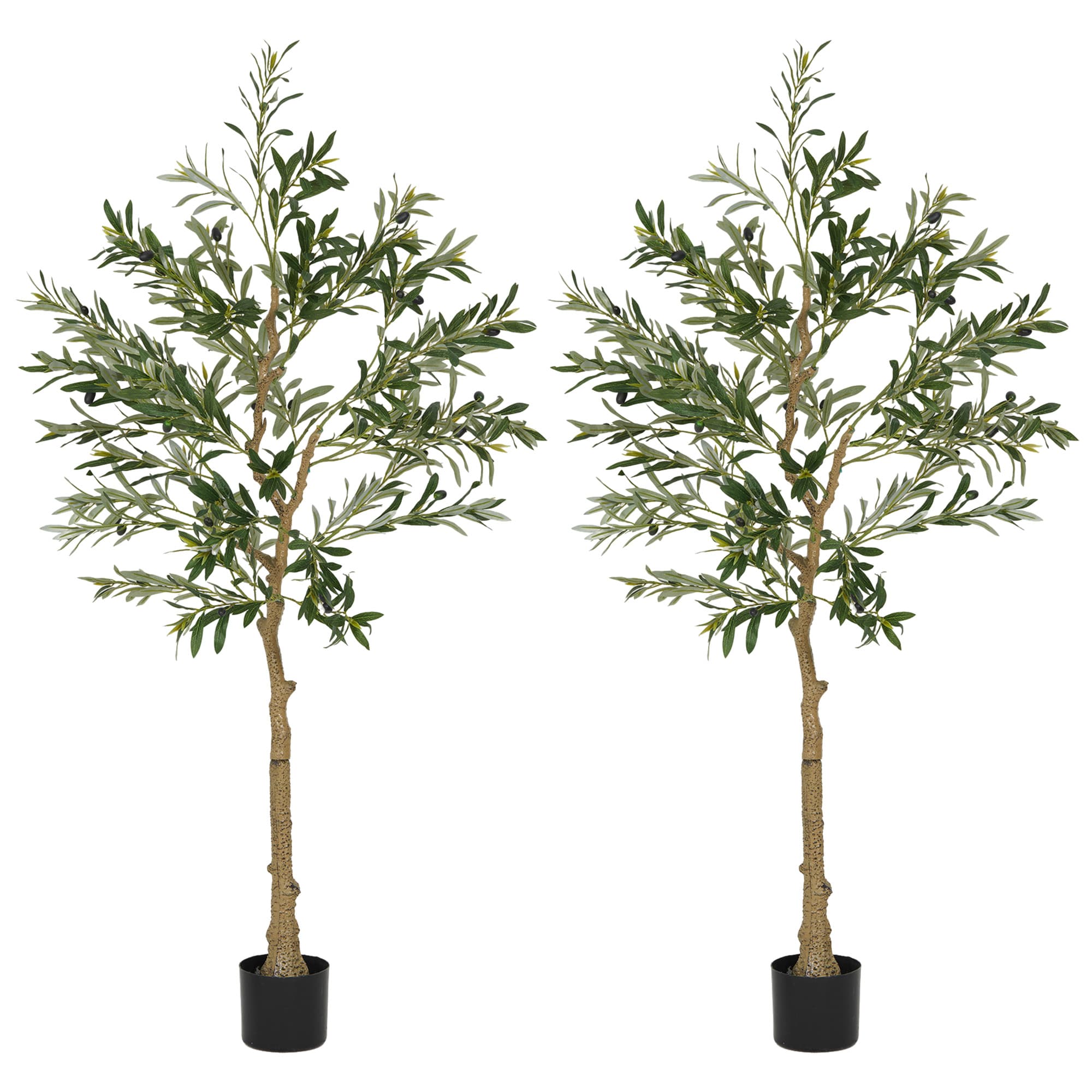
1. The Mediterranean front-room pick — Artificial Olive Trees, Set of Two · £60.62
Olive trees are the most over-done faux plant of the last five years and most of them are awful. The leaves on these are silk rather than plastic, with proper grey-green tonal variation between leaves, and the branches bend so you can shape the canopy. I've got mine flanking a small marble fireplace and they read as real from the sofa, which is the only distance that matters. The cement-weighted pots are the bit cheaper olive trees skip — most are sat in dry foam and topple if the cat sneezes near them.
The honest caveat: silk leaves gather dust horizontally. Once a fortnight with the soft-bristle attachment on the hoover, or they start looking grey rather than grey-green. If you can't be arsed with that, get plastic.
Best for: Victorian or Edwardian sitting rooms, fireplaces, anyone who's seen one in a Sunday-supplement house tour and quietly wanted one.
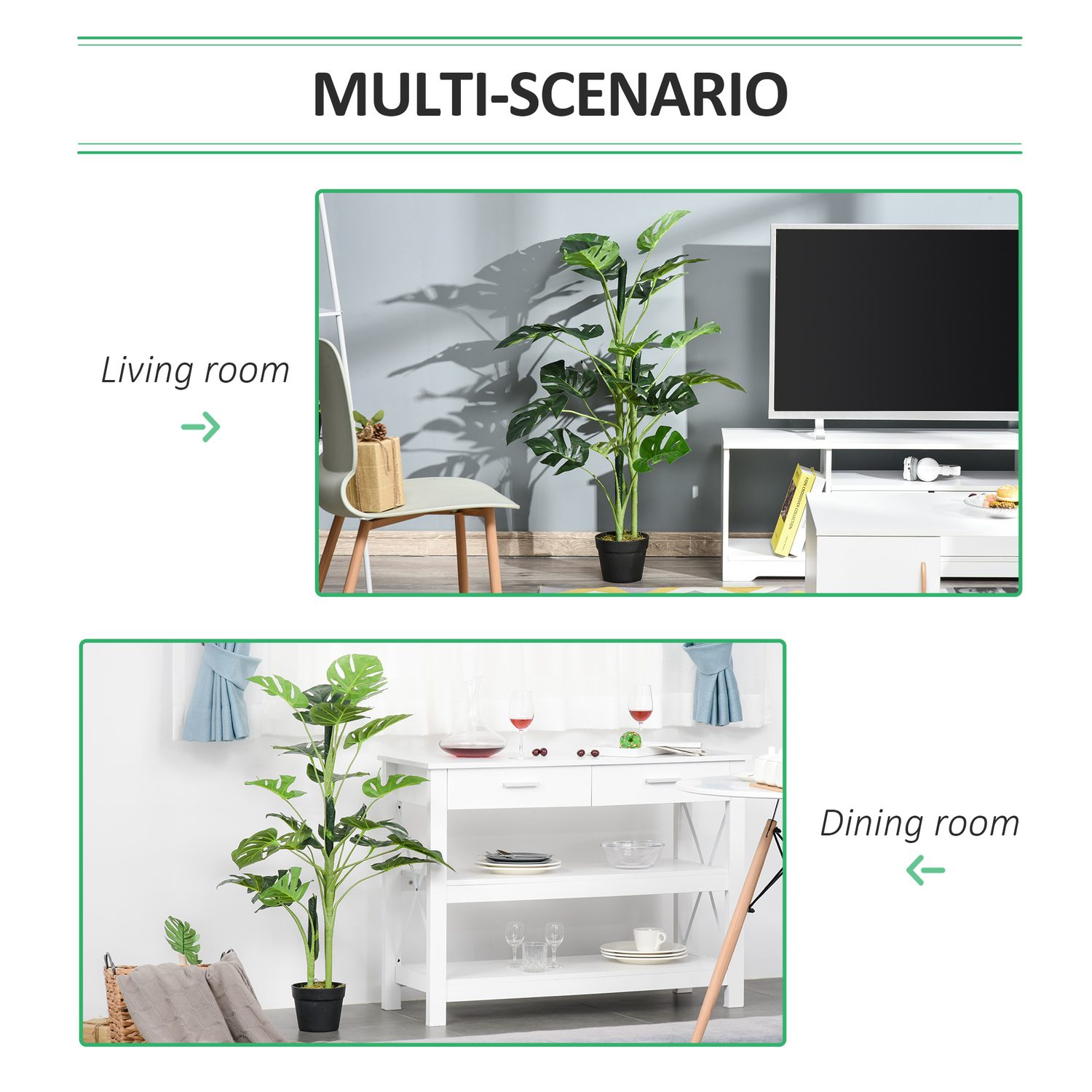
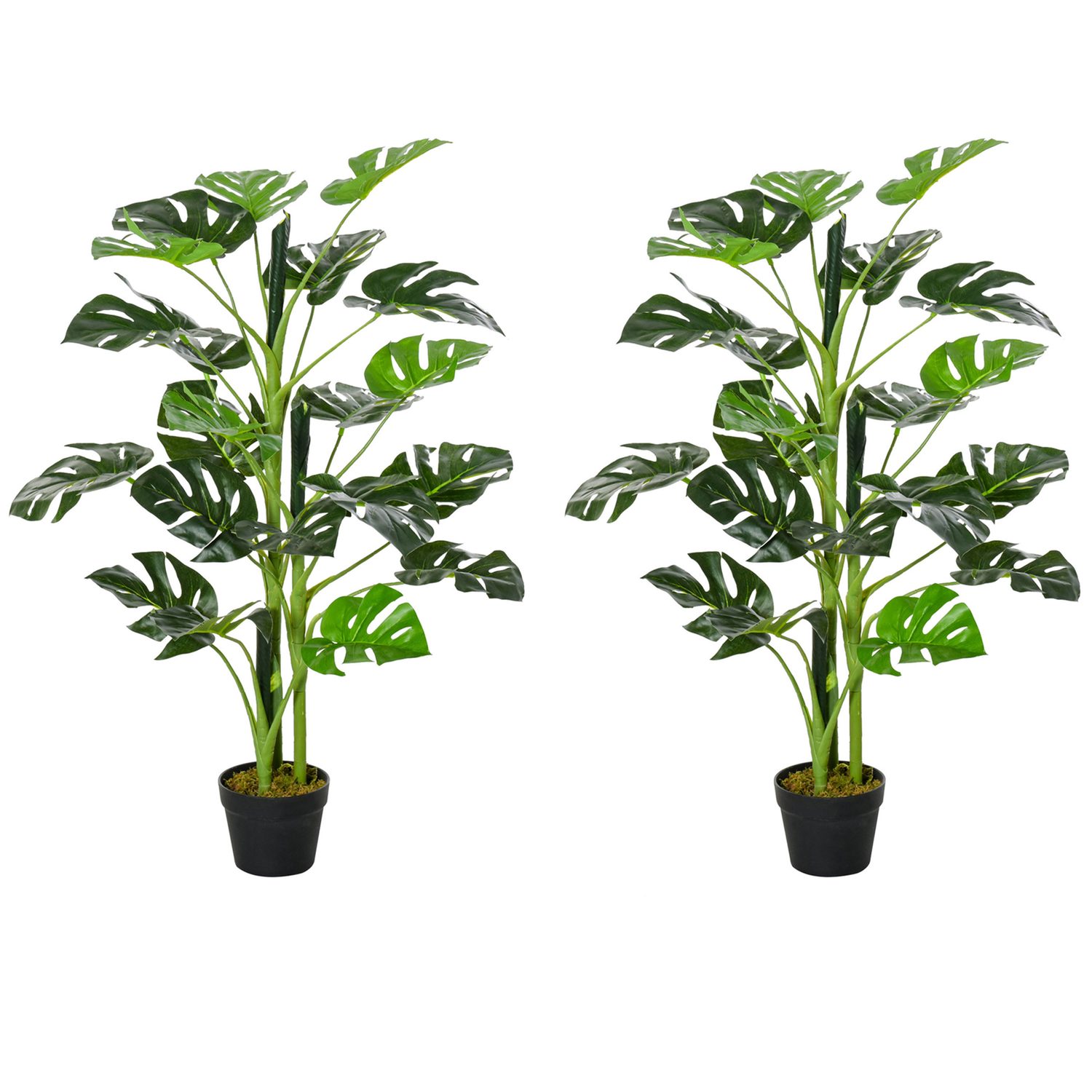
2. The north-facing rental pick — Artificial Monstera, Set of Two · £65.20
A real monstera in a north-facing London flat is a slow-motion suicide pact. The leaves go yellow, the new growth comes in small and pale, and after a year you're left with a sad green stick. These two come at 3.3 ft each with proper fenestration — the holes and splits in the leaves are the right shape and proportion, not the symmetrical cookie-cutter slits you get on the tat versions. The leaves vary in green tone across each plant, which is the bit that actually sells the illusion.
Caveat: they arrive in plain black nursery pots. That's fine if you're slipping them into a basket or a ceramic cachepot, but if you want them as-is you'll be staring at a black plastic pot. Budget another tenner for something woven from a homewares shop.
Best for: rentals with one north-facing window per room, anyone who's tried and failed with a real monstera, parents whose toddlers eat soil.
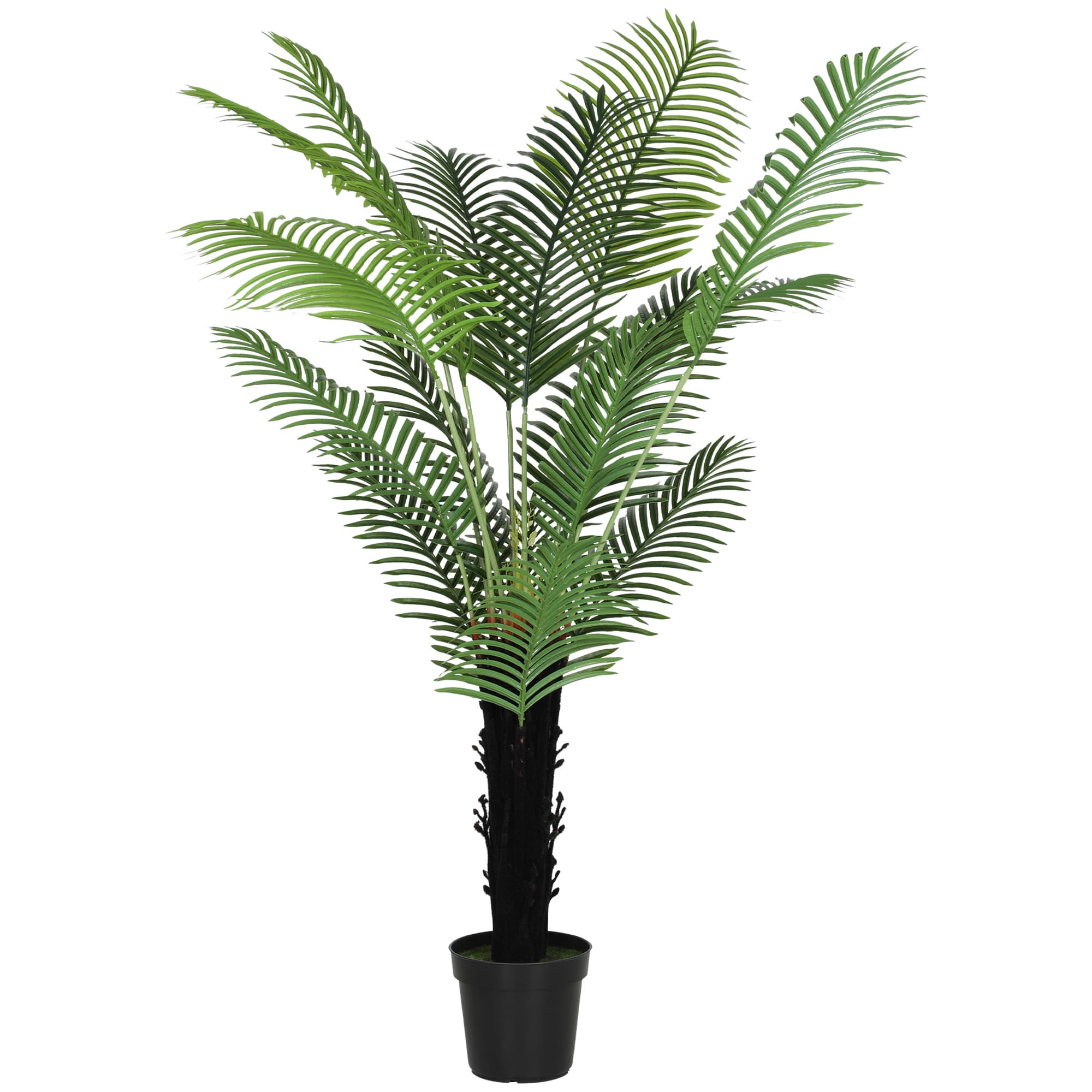
3. The hallway statement pick (the splurge) — 150 cm Tropical Ferns, Set of Two · £118.96
This is the most you should spend on faux plants, and only if you have the floor space to justify a 150 cm pair. Mine flank the start of the hallway, between the front door and the radiator, and they instantly fixed a corner that had been awkward for three years. Ferns are the hardest faux plant to get right — get the frond curve wrong and they read as fake from across the street — but these curve naturally rather than fanning out flat. The pots are properly heavy (cement-filled), which matters in a hallway where every coat catches them on the way past.
The honest bit: at this price you're paying for the size, not a step up in materials. The fronds are the same plastic as cheaper ferns, just better shaped and more of them. If you've only got 90 cm to play with, save your money and buy the agave below.
Best for: wide hallways, double-height entryways, conservatories with cold winters that kill real ferns.
4. The sculptural, no-flowers pick — Artificial Agave, Set of Two · £52.61
If you've got a modern flat, an architect's house, or you just don't want anything floral, agaves are the right call. The serrated leaf edge is the tell on real agaves and these get it right; there's a subtle green-to-yellow gradient at the base of each leaf that the cheap ones skip entirely. They sit at 90 cm in cement-weighted black pots — the height is right for flanking a low sideboard or sat either side of a bedroom doorway.
The thing that lets these down for some people: they're spiky. Not properly sharp, but the leaf tips are firm and pointed, so they're a no in households with crawling babies or cats who chew everything. In an adults-only flat they're great.
Best for: modern interiors, mid-century furniture, anyone who finds faux flowers a bit naff.
5. The cheap, small, sit-anywhere pick — 60 cm Palm Trees, Set of Two · £36.60
The hardest worker on this list at the lowest price. 60 cm is the size that fits where nothing else does — Bedside Tables, console tables, either side of a desk, on top of a Bathroom cabinet. The fronds are well shaped and the pots are honestly plain (just black plastic nursery pots), which means they slip into a ceramic or rattan cover pot without a fight.
The catch: they're small. If you put a single one of these on its own in a corner of a living room it'll look lost. Use them in pairs, on small surfaces, where the symmetry does the work. I've got one pair flanking the bedroom mirror and another on a console in the hall — both work.
Best for: desks, consoles, small surfaces, renters who move every couple of years and want something they can pack into a single box.
What I'd avoid
A few things I've learnt the hard way and would tell anyone before they buy:
Anything described as "vibrant" or "bold green". Real plants are not uniformly bright green. The colour-realistic faux plants are slightly grey, slightly yellow, slightly brown at the edges. If the listing photo shows a single saturated green, the plant will look fake on day one.
Single tall stems for under £40. Anything over a metre tall at this price is almost always cheap-foam-filled with a wobble issue. Either spend more, or go shorter.
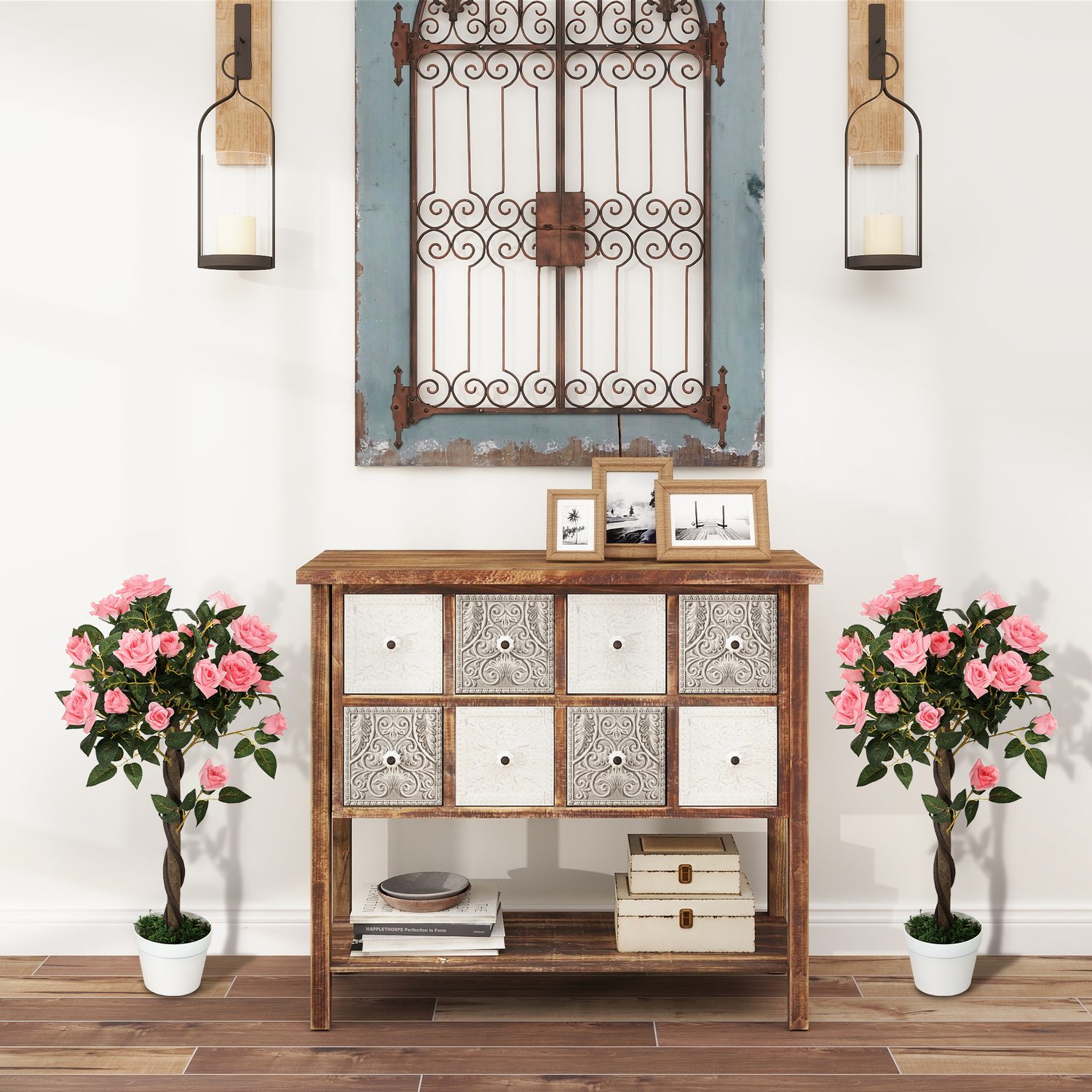
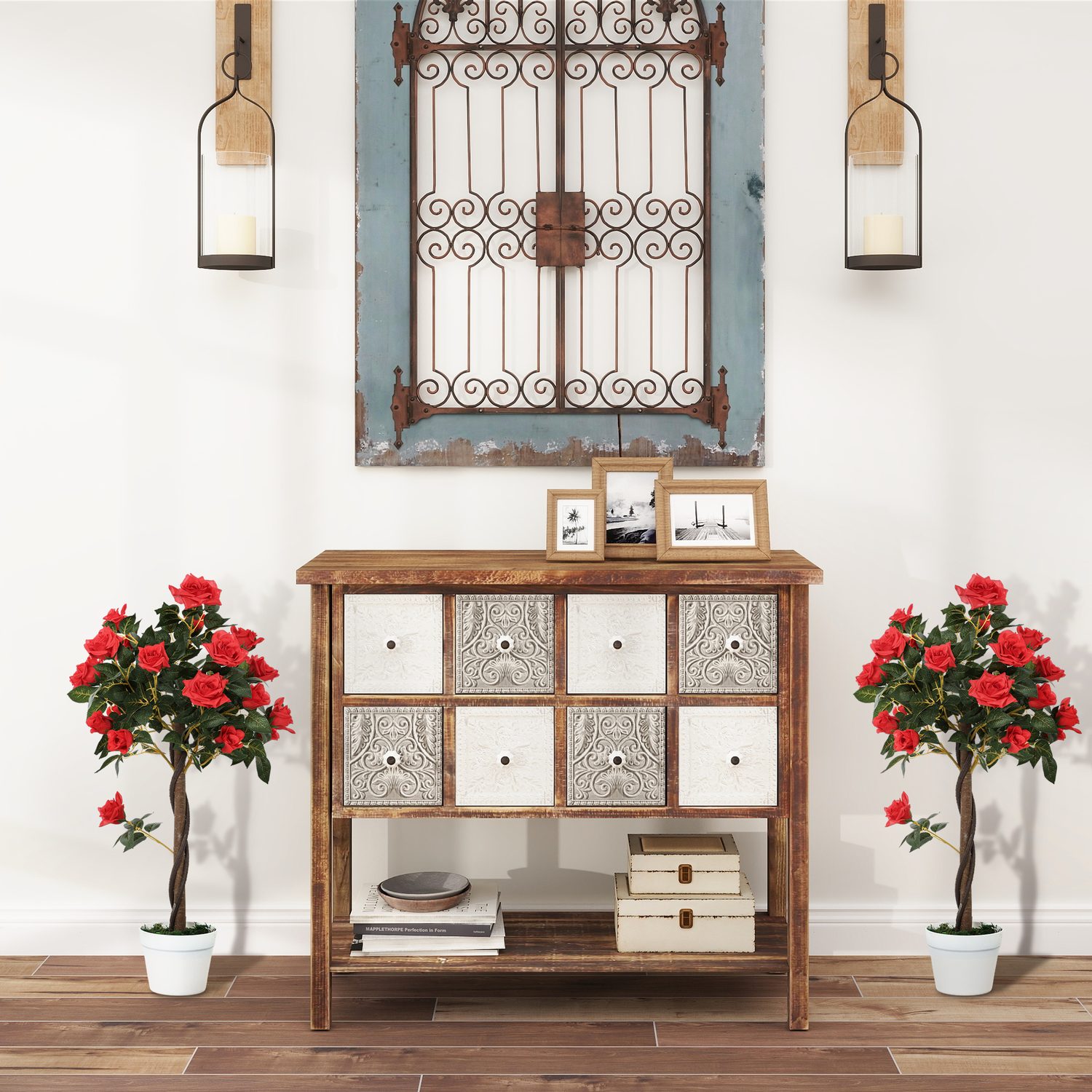
Cheap rose topiaries. They date faster than fashion. The blue, orange and white versions of these come up cheap from time to time, but they're a stronger commitment than a bit of greenery — buy with caution.
"UV-stable" claims for anything you're putting outside in a UK winter. Outside in the rain and frost for six months of the year, every faux plant fades. Bring them in or accept they'll need replacing.
The verdict
If you're buying just one set, get the olive trees — they're the most versatile, the most flattering in photos, and they suit the widest range of British interiors. If your flat is north-facing or you've previously killed every plant you've owned, swap to the monstera pair for the same money. And if you've got a hallway that needs rescuing and a budget that stretches, the tall ferns are the splurge that earns its keep.
The rest are properly good too — but those are the ones I'd buy first.
Villalta Home Editorial is the in-house byline used for buying guides and product roundups on villaltaco.uk. Each guide is written by the editorial team, drawing on the catalogue's measurable data — real dimensions, materials, UK use cases, price bands — and on hands-on research into how products actually perform in UK homes. Every post tagged with this byline is reviewed and approved by Juan Antonio Villalta Pacheco, the founder and editor, before it goes live. See our editorial standards for the full process.
My neighbours opposite have real bay laurels by their porch — and they spend half the bank holiday weekend dragging them inside whenever the forecast turns. Five faux topiary picks that survive a wet British summer without going greasy or grey.
Five floor-standing faux trees tested for how they read from the sofa, what they fix in a UK sitting room, and which awkward corner each one is actually for.