
If you are choosing bar stools for a kitchen island, the real question is not simply which looks better. It is whether your island is the right height, whether people will actually want to sit there for more than ten minutes, and whether the seating suits the way your kitchen works day to day. In many UK homes, especially open-plan layouts and narrower galley kitchens, the breakfast bar has to do several jobs at once: weekday coffee spot, homework station, extra prep area and occasional dining table.
That is why the bar stools versus Dining Chairs debate matters. Bar stools can make a kitchen island feel sociable and streamlined, but they are not always the most comfortable choice for long meals. Dining-height chairs can be easier to live with, though they need a lower surface and more floor space. Below, we break down the height rules, comfort differences and style considerations so you can choose seating that works in practice, not just in showroom photos. If you are planning a wider update, it is also worth browsing our kitchen furniture collection alongside your seating options.
Start with the most important factor: island height
Before comparing comfort or style, measure the surface height of your island or breakfast bar. This determines whether you need bar stools, counter stools or standard dining chairs. It sounds obvious, but it is the point most often missed.
Standard kitchen island and breakfast bar heights in the UK
Most Kitchen Islands in UK homes fall into one of three broad categories:
- Standard worktop height: around 90cm to 92cm
- Raised breakfast bar height: around 100cm to 110cm
- Dining-height surface: around 74cm to 76cm
A standard worktop-height island usually works best with counter stools, not full-height bar stools. A raised breakfast bar suits true bar stools. A lower island extension or built-in table section is where dining chairs come into their own.
The ideal seat-to-surface gap
A comfortable gap between seat and underside of the worktop is usually 25cm to 30cm. Less than that and knees feel cramped; more than that and the surface can feel awkwardly high for eating.
As a quick guide:
- Worktop at 90cm to 92cm: seat height around 65cm
- Breakfast bar at 100cm to 105cm: seat height around 75cm
- Dining surface at 74cm to 76cm: standard dining chair seat height around 45cm to 48cm
Expert tip: Measure to the underside of the counter, not just the top. Thick worktops, waterfall edges and support rails can steal several centimetres of knee room, which makes a bigger difference than people expect.
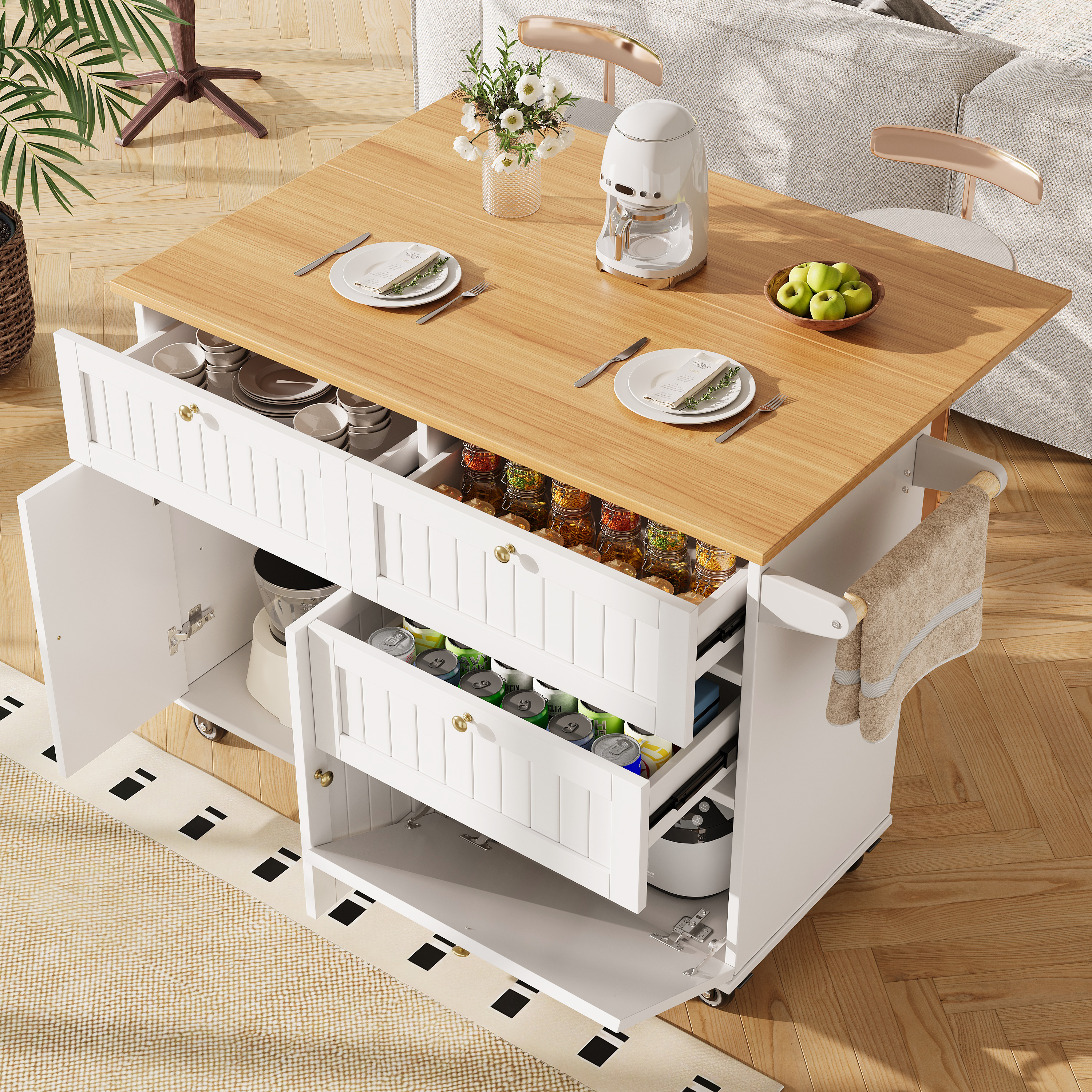
If you are buying a movable island or breakfast bar rather than fitting a permanent one, check the product dimensions carefully. Pieces such as an kitchen furniture island with drop-leaf seating can vary quite a bit in finished height.
Bar stools vs dining chairs at a kitchen island: the practical comparison
Both options can work well, but they suit different layouts and habits. The table below gives a realistic side-by-side view.
| Feature | Bar stools | Dining chairs |
|---|---|---|
| Best surface height | 90cm to 110cm depending on stool type | 74cm to 76cm dining-height surfaces |
| Space efficiency | Usually better for compact kitchens; can tuck under neatly | Need more pull-out space behind each chair |
| Comfort for long sitting | Varies widely; backrests and padded seats help | Generally better for full meals and longer conversations |
| Ease of getting on and off | Less ideal for young children, some older adults or anyone with mobility issues | Easier and more familiar for most people |
| Visual impact | Creates a lighter, more informal breakfast bar look | Feels more like a dining area and can look heavier |
| Family friendliness | Can work, but choose stable frames and footrests | Often the safer and more practical option |
| Cleaning around them | Often easier if they stack or tuck in fully | More legs and larger footprints can make cleaning slower |
| Best use case | Quick meals, coffee, social cooking, compact open-plan kitchens | Daily dining, homework, longer sitting, accessible seating |
When bar stools are the better choice
For many kitchen islands, bar stools are the obvious fit because the surface is simply too high for dining chairs. But even where both are possible, stools have a few clear strengths.
They suit compact and open-plan kitchens
In smaller UK kitchens, circulation space matters. You ideally want at least 90cm of walkway around an island, and more if appliances or cupboards open into that route. Bar stools can slide under the overhang, keeping the room feeling less crowded. That is particularly useful in flats, Victorian terraces and new-build kitchens where every centimetre counts.
They create a casual, sociable feel
A row of stools encourages quick breakfasts, chatting while someone cooks, or perching with a laptop for half an hour. If your island is more of a social hub than a formal dining spot, stools often feel more natural.
They can look lighter and more contemporary
Slim metal frames, wooden seats and low-profile silhouettes tend to keep sightlines open. In smaller rooms or kitchens with limited natural light, that can make the whole space feel less visually busy.
The trade-off is comfort. A backless stool may look sleek, but it is rarely the seat guests choose for a long lunch. If you genuinely use your island for eating most days, a stool with a shaped back, supportive footrest and some padding is usually worth it.
When dining chairs work better
Dining chairs are sometimes overlooked in breakfast bar discussions, but they can be the smarter option if your island includes a lower table-height section or an attached dining extension.
They are usually more comfortable for longer meals
A proper dining chair supports your back more naturally, and the seat height makes eating feel less perched. For families who use the island as their main dining area, this matters. It is also easier for children to sit comfortably at a dining-height surface than on a tall stool.
They are more accessible
Older relatives, anyone recovering from injury, and many people with limited mobility will generally find a dining chair easier to use than a stool. In a multigenerational home, that practical point can outweigh any style preference.
They make a kitchen-diner feel more cohesive
If your kitchen island sits close to a dining table, using chairs in similar finishes can tie the zones together. For example, upholstered dining chairs can soften a kitchen with lots of hard cabinetry and stone-look surfaces. If you are coordinating seating across the room, our bedroom furniture link would not be relevant here, but matching tones with dining pieces and cabinetry in the kitchen certainly is.
The downside is bulk. Dining chairs need more room behind them and can make a compact island feel crowded. They also only work if the surface height is appropriate.
How to choose comfortable bar stools for a kitchen island
If your island height points you towards stools, comfort should be your next filter. This is where many purchases go wrong, because people focus on finish and forget how the seat feels after twenty minutes.
Backless, low-back or full-back?
- Backless stools: best for a neat, tuck-away look; least supportive
- Low-back stools: a good compromise between comfort and visual lightness
- Full-back stools: most supportive, but can look bulkier and need more space
If the island is used mainly for breakfast or a quick coffee, backless can be fine. For regular meals or working from home at the island, a backrest is usually a better investment.
Do not ignore the footrest
A footrest is not a minor detail. On a taller stool, it is essential for comfort and stability. Without one, people tend to perch awkwardly, which quickly becomes tiring.
Padded seats vs wipe-clean finishes
Upholstered stools feel warmer and more comfortable, especially in colder months when leather-look or timber seats can feel chilly in the morning. However, wipe-clean faux leather, polypropylene or sealed wood is usually easier in busy family kitchens where spills are common.
In the UK climate, where kitchens can feel cool in winter unless underfloor heating is installed, material choice affects comfort more than many expect. Timber and fabric often feel less stark than metal or acrylic first thing in the morning.
Swivel stools: useful or annoying?
Swivel stools can be practical in tight spots because they are easier to get on and off without dragging the whole frame back. But they are not always ideal for young children, and cheaper swivel mechanisms can loosen over time. If you choose swivel seating, build quality matters.
Spacing and fit: how many seats can your island really take?
One of the easiest mistakes is squeezing in too many stools. It may look generous on paper, but if elbows knock and seats are hard to pull out, the island becomes less usable.
A realistic spacing guide
Allow roughly 55cm to 60cm per person for comfortable everyday seating. You can go a little tighter with very slim stools, but not if they have arms or wide backs.
As a rough rule:
- 120cm island overhang: 2 stools
- 180cm island overhang: 3 stools comfortably
- 240cm island overhang: 4 stools, depending on width
Also check leg placement. Central pedestal supports are usually easier for seating than chunky corner legs, which can block knees and limit where stools can go.
Expert tip: Mark out each stool position with masking tape on the floor before buying. In compact kitchens, this quickly shows whether appliance doors, drawers and walkways will still work once people are seated.
Style matching: how to make island seating look right
Once height and comfort are sorted, style is the part most people enjoy. The best results come from matching the seating not only to the island, but to the whole kitchen.
For modern kitchens
Look for clean-lined stools in black metal, brushed steel, moulded seats or simple upholstered shapes. If your kitchen has handleless units and a crisp palette, bulky traditional stools can feel out of place.
For shaker or classic kitchens
Wooden stools, painted finishes and gently curved backs tend to sit more naturally with shaker cabinetry. A slightly softer silhouette usually works better than ultra-industrial metal designs.
For small kitchens
Choose stools that visually disappear a bit: slim legs, open backs, pale timber or seats that tuck fully under the counter. Heavy upholstered chairs can dominate a compact footprint.
For open-plan rooms
Think about continuity. If the island sits near your dining area, repeat one or two elements such as black legs, oak tones or upholstery colour. It does not need to match perfectly, but it should feel intentional.
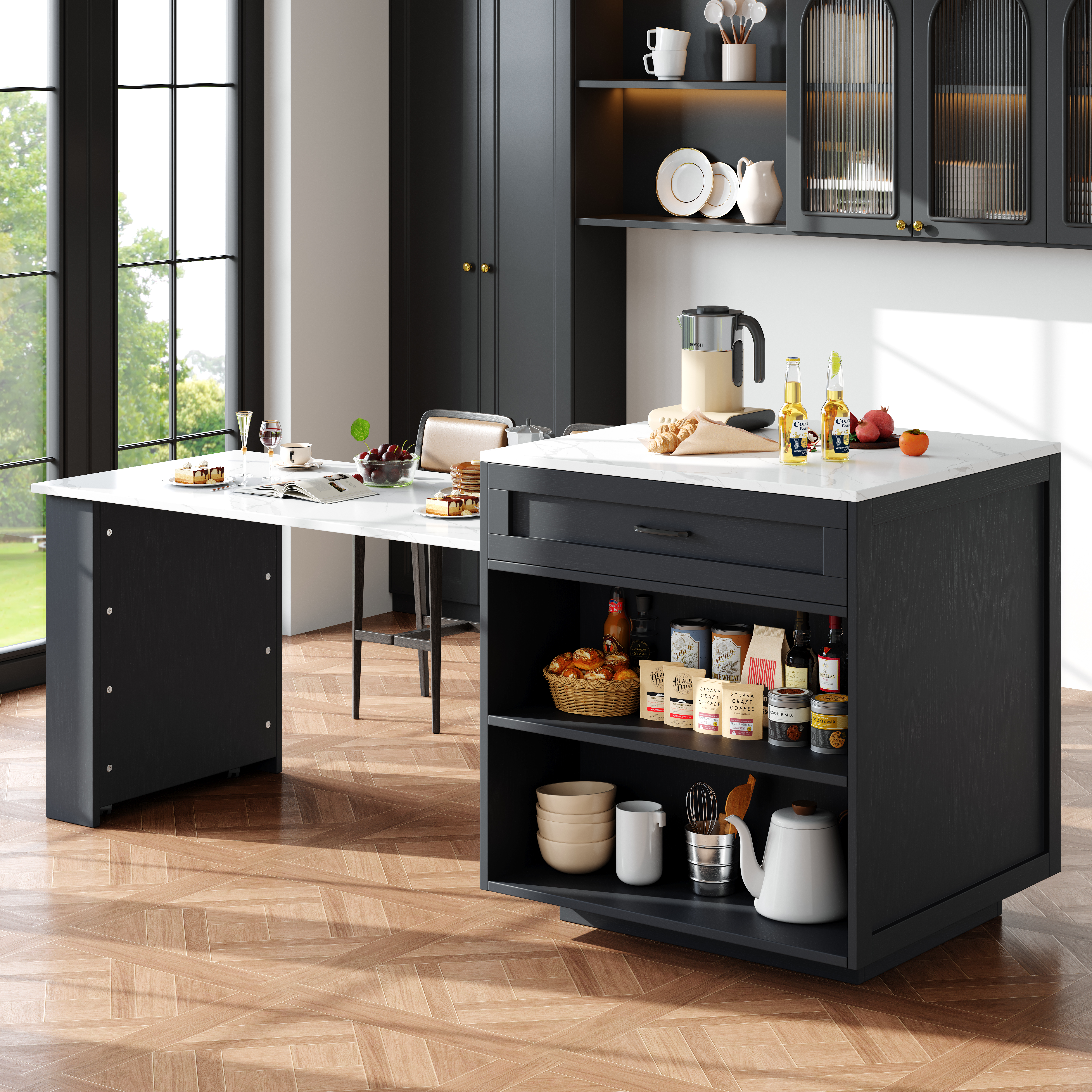
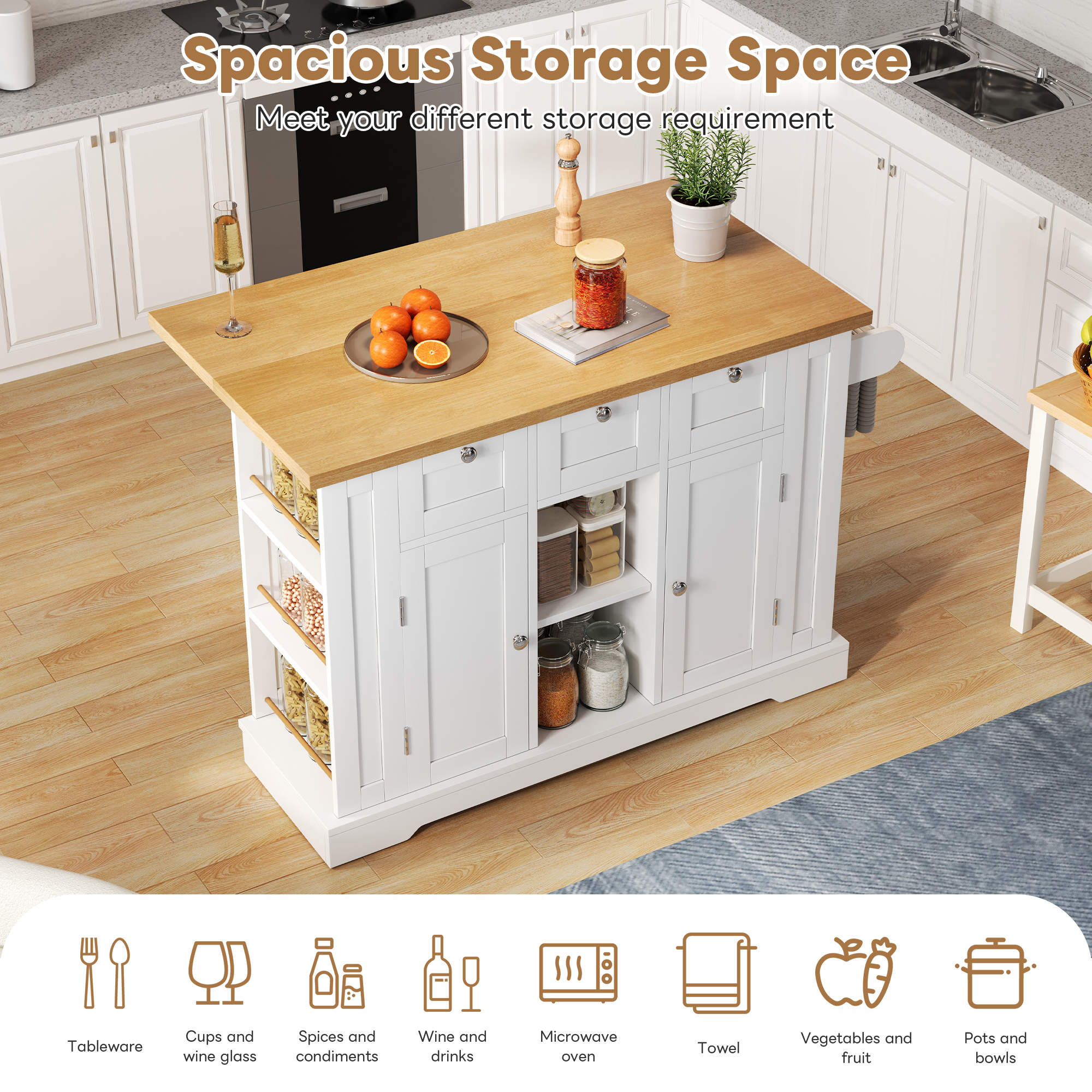
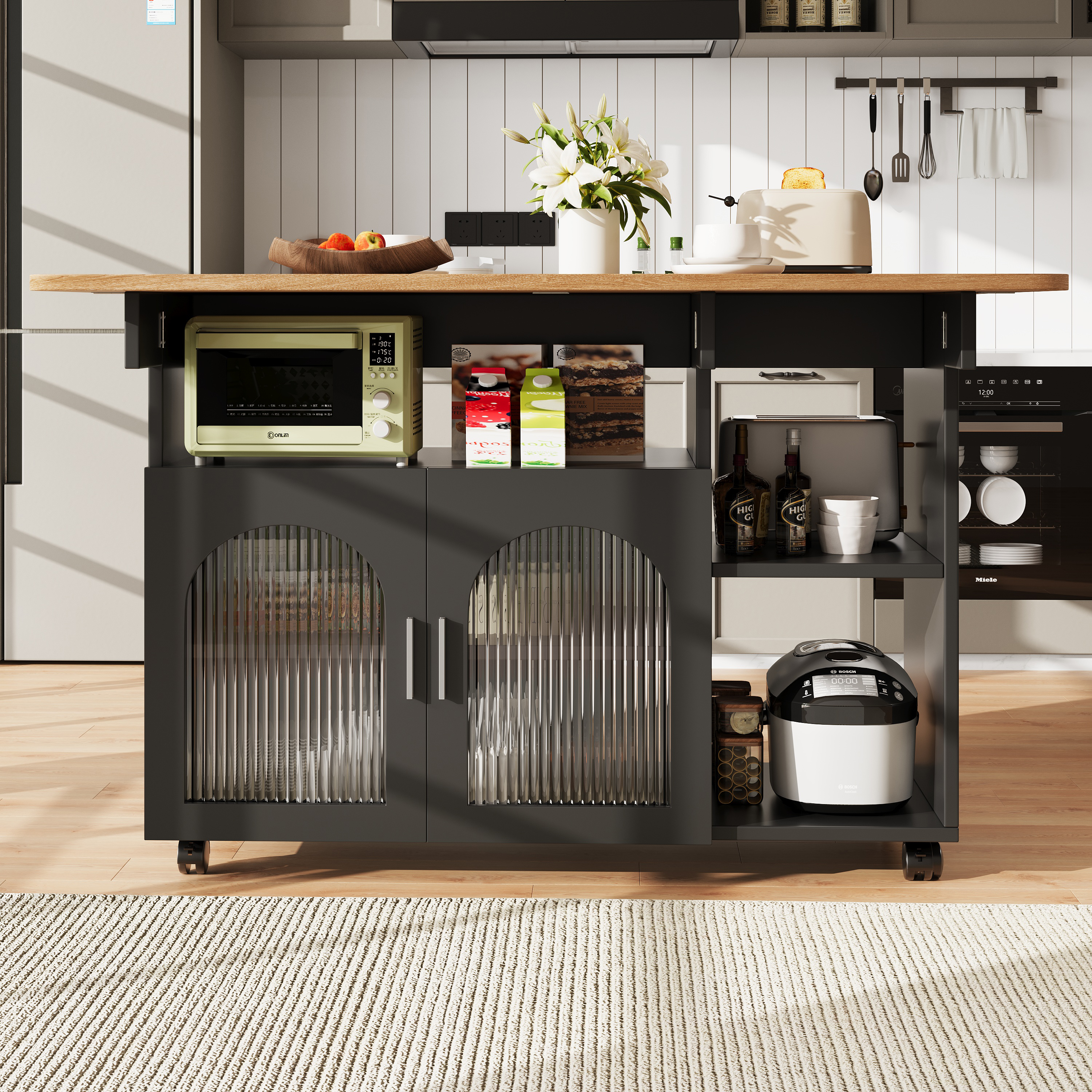
If you are furnishing from scratch, flexible pieces such as a movable island or drop-leaf unit can help create a breakfast bar where none existed before. Options like the extendable-kitchen-island-bar-table-with-storage-black-finis, mobile-kitchen-island-cart-with-drop-leaf-breakfast-bar-whit or kitchen-island-on-wheels-with-extendable-dropleaf-countertop can be useful in smaller homes where a fixed island is not practical.
Common mistakes to avoid
Buying standard bar stools for a standard-height worktop
This is the classic error. Many people order 75cm-high bar stools, only to discover they are too tall for a 90cm worktop. Always check the actual seat height.
Choosing style over support
Minimal stools photograph beautifully, but if there is no back support, no footrest and a tiny seat pad, they may end up barely used.
Ignoring overhang depth
You need enough overhang for knees to sit comfortably. Around 25cm to 30cm is a useful minimum for seating, though more is often better.
Forgetting who will use the island most
A couple who mainly use the island for coffee can make different choices from a family of five eating there twice a day. Be honest about your routine.
So, which works best at a kitchen island?
For most kitchen islands, bar stools are the right answer because the surface height is designed for them and they make the best use of space. They are especially effective in smaller UK kitchens, open-plan layouts and homes where the island is used for quick meals and socialising rather than formal dining.
That said, dining chairs are better if you have a true dining-height section, need more accessible seating, or use the island as your main place to sit for longer periods. They are not second best; they simply suit a different kind of setup.
In short, measure first, prioritise comfort second, and only then think about finish and style. If you are building a practical breakfast bar arrangement from the ground up, start with the dimensions of your island and choose seating that fits the way your household really lives.
FAQs
What height bar stools do I need for a kitchen island?
It depends on the island height. For a standard 90cm to 92cm worktop, look for a seat height of about 65cm. For a raised breakfast bar around 100cm to 105cm, a 75cm seat height is usually better. Aim for a 25cm to 30cm gap between the seat and the underside of the worktop.
Are bar stools comfortable enough for everyday use?
They can be, but only if you choose carefully. A stool with a supportive back, a proper footrest and some seat padding is far more comfortable for daily use than a backless or very narrow design. If you regularly sit for long meals, dining chairs or lower seating may still be more comfortable.
How many bar stools fit on a kitchen island?
Allow around 55cm to 60cm of width per person for comfortable seating. As a guide, a 120cm overhang suits 2 stools, 180cm suits 3, and 240cm may suit 4 depending on the stool width and whether the island legs get in the way.
Can I use dining chairs at a kitchen island?
Only if the surface is dining height, usually around 74cm to 76cm, or if the island has a lowered table section. Standard dining chairs will be too low for most kitchen islands and breakfast bars.
What is better for a small kitchen island: stools or chairs?
Stools are usually better in small kitchens because they tuck underneath the overhang and take up less visual and physical space. Dining chairs are bulkier and need more room to pull out, though they are often more comfortable if the surface height allows them.
If you want the safest all-round choice, buy bar stools only after measuring your island properly and thinking honestly about how long people will sit there. In most homes, a well-sized stool with a backrest and footrest is the best balance of comfort, space-saving and style.