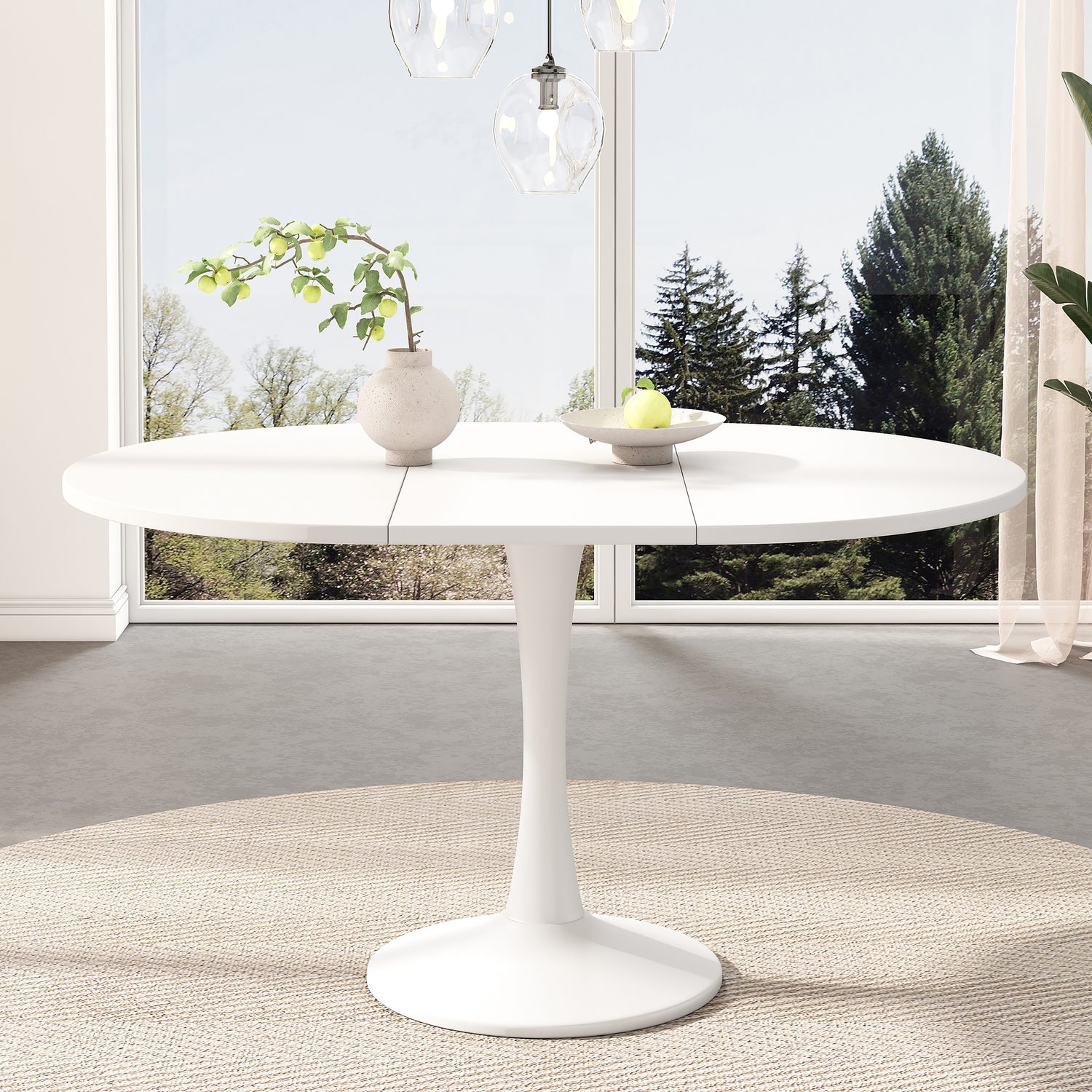
If you are weighing up a round vs rectangular dining table, the right answer usually comes down to more than style. Table shape changes how people move through the room, how many seats you can use comfortably, and whether a dining area feels relaxed or constantly cramped. In many UK homes, where dining rooms are often narrower, open-plan layouts can be awkwardly zoned, and older properties come with alcoves, chimney breasts or tight circulation routes, shape matters just as much as finish.
A round table can soften a compact room and make conversation easier, while a rectangular table often gives you more predictable seating and makes better use of long walls. Neither is automatically better. The best choice depends on your room proportions, who you need to seat day to day, and whether the table has to multitask as part of your wider kitchen furniture setup. Below, we break down the real trade-offs so you can choose confidently.
Why dining table shape matters more than you think
When people shop for a dining table, they often start with the number of seats or the finish. Those are important, but shape affects the practical side of living with the table every day.
A table is not just a surface. It creates a footprint, influences walkways and determines where chairs sit when pulled out. In a typical UK dining room or kitchen-diner, you need enough space not only for the table itself but for people to sit down, stand up and pass behind one another without scraping walls or radiators.
As a rule, aim for around 75 to 90cm of clearance around the table where possible. In tighter homes, you may get away with slightly less on one side if that side is against a wall or used less frequently, but anything much tighter can become frustrating very quickly.
Expert tip: Before buying, mark the table size on the floor with masking tape and pull Dining Chairs into position. It sounds simple, but it is the quickest way to see whether a “perfect on paper” table will actually work with doors, cabinets, and everyday movement.
Round tables are often the most forgiving option in compact spaces because there are no sharp corners jutting into walkways. In smaller square dining rooms, bay-fronted rooms, or open-plan kitchen corners, that softer footprint can make the room feel easier to move through.
This is particularly useful in UK homes where dining zones are often carved out of kitchens rather than set in a separate formal room. If you are trying to keep circulation open between worktops, patio doors and living areas, a round table can reduce that boxed-in feeling.
More sociable seating
For conversation, round tables are hard to beat. Everyone faces towards the centre, so meals feel more inclusive and less segmented. For couples, small families and households that entertain casually, this can create a more relaxed atmosphere than a longer rectangular table.
They also work well in breakfast areas and informal dining spaces, especially when paired with lighter-looking furniture elsewhere in the home to keep a cohesive, uncluttered feel.
The limitations of round tables
The main drawback is efficiency. A round table needs more overall floor area than many people expect, especially once chairs are added. A 100cm round table may suit four people for everyday use, but four adults dining properly can feel snug if you like larger place settings or serve dishes in the middle.
As round tables get larger, they can also become less practical. A very large round table takes up a lot of space and can make reaching shared dishes awkward unless you add a lazy Susan or keep the centre styling minimal.
Another point worth noting: round tables do not always sit neatly against walls or within narrow rooms. In a long, slim dining room, they can leave wasted space at the ends while still narrowing the central walkway.
Rectangular dining tables: where they make the most sense
Ideal for longer UK rooms
Rectangular tables are usually the most practical choice for the proportions found in many British homes. Victorian and Edwardian dining rooms, open-plan kitchen-diners, and newer-build family spaces often have a longer footprint rather than a square one. A rectangular table follows that shape naturally, making better use of the room without pushing too far into circulation areas.
If your table needs to sit parallel to a wall, radiator, island or sideboard, rectangular designs are easier to position neatly. That can be especially important in homes where every centimetre counts.
More flexible seating capacity
For regular family dining or hosting, rectangular tables tend to offer clearer seating capacity. Two people can sit on each long side, with one at each end if needed, and larger versions scale up more efficiently than round designs.
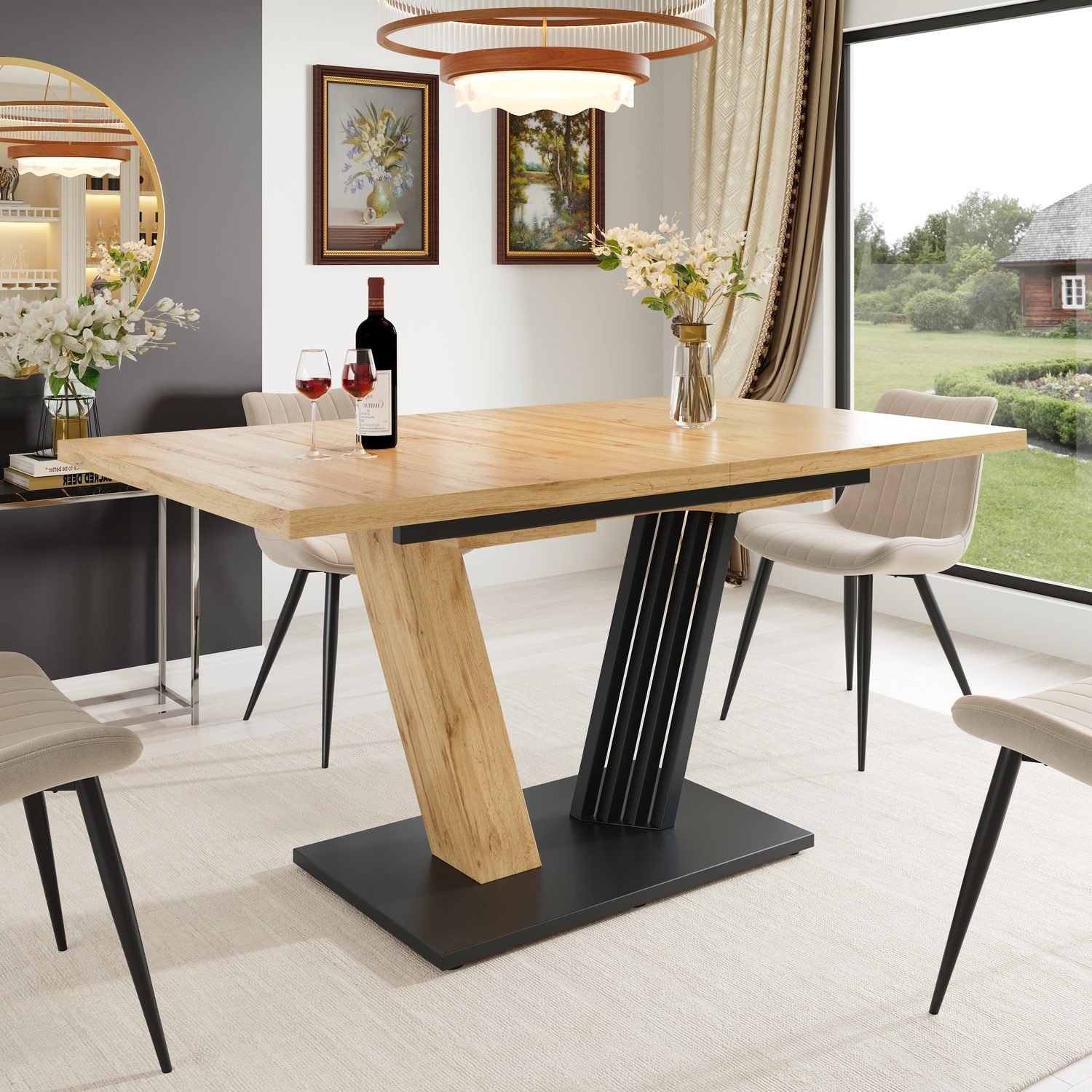
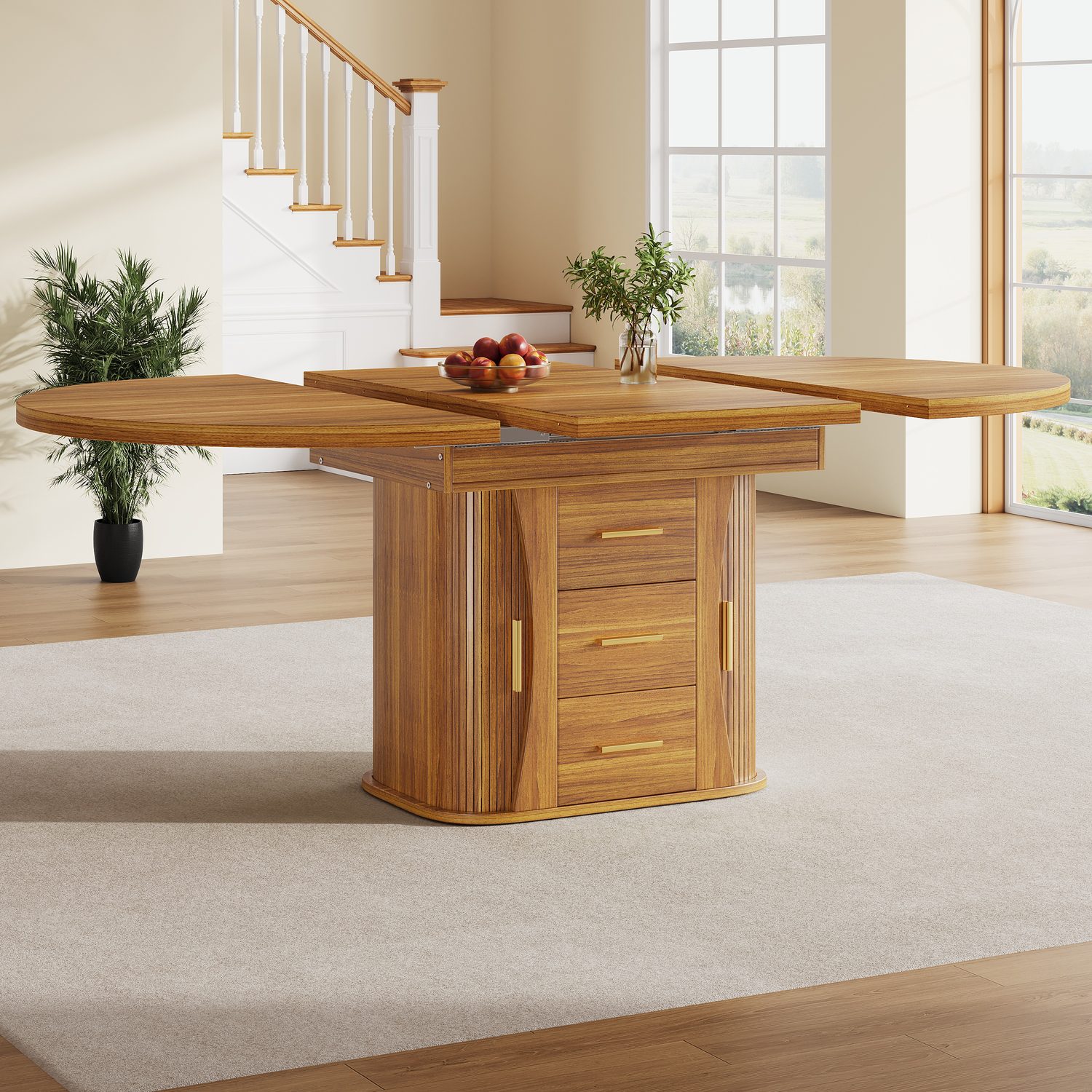
They are also the usual winner if you want an extending table. Many households only need four seats most of the time but want six or eight for guests. In that case, a rectangular extendable model is often the most sensible compromise. Options such as an extendable dining setup within your kitchen furniture scheme can be especially useful in homes where one table has to do everything from weekday dinners to Sunday lunch.
The limitations of rectangular tables
Rectangular tables can look heavy in a compact room, especially if paired with bulky upholstered chairs. Corners can interrupt flow, and in very tight spaces they are easier to bump into. Conversation can also feel a little less intimate on longer tables, particularly when six or more people are seated.
If the room is almost square rather than long, a rectangular table can make the layout feel rigid. In those cases, the practical advantage may be outweighed by a room that simply feels less balanced.
Round vs rectangular dining table: quick comparison
Feature
Round dining table
Rectangular dining table
Best room shape
Square rooms, compact dining corners, awkward open-plan zones
Longer rooms, traditional dining rooms, kitchen-diners
Room flow
Usually better in tight spaces due to no corners
Works well if aligned with room shape, but corners need more care
Conversation
Excellent for inclusive, sociable dining
Good, though less intimate on longer tables
Seating efficiency
Good for 2-4, less efficient as size increases
Usually better for 4-8 and larger gatherings
Works against a wall?
Not especially well
Yes, often more practical
Best for extending options
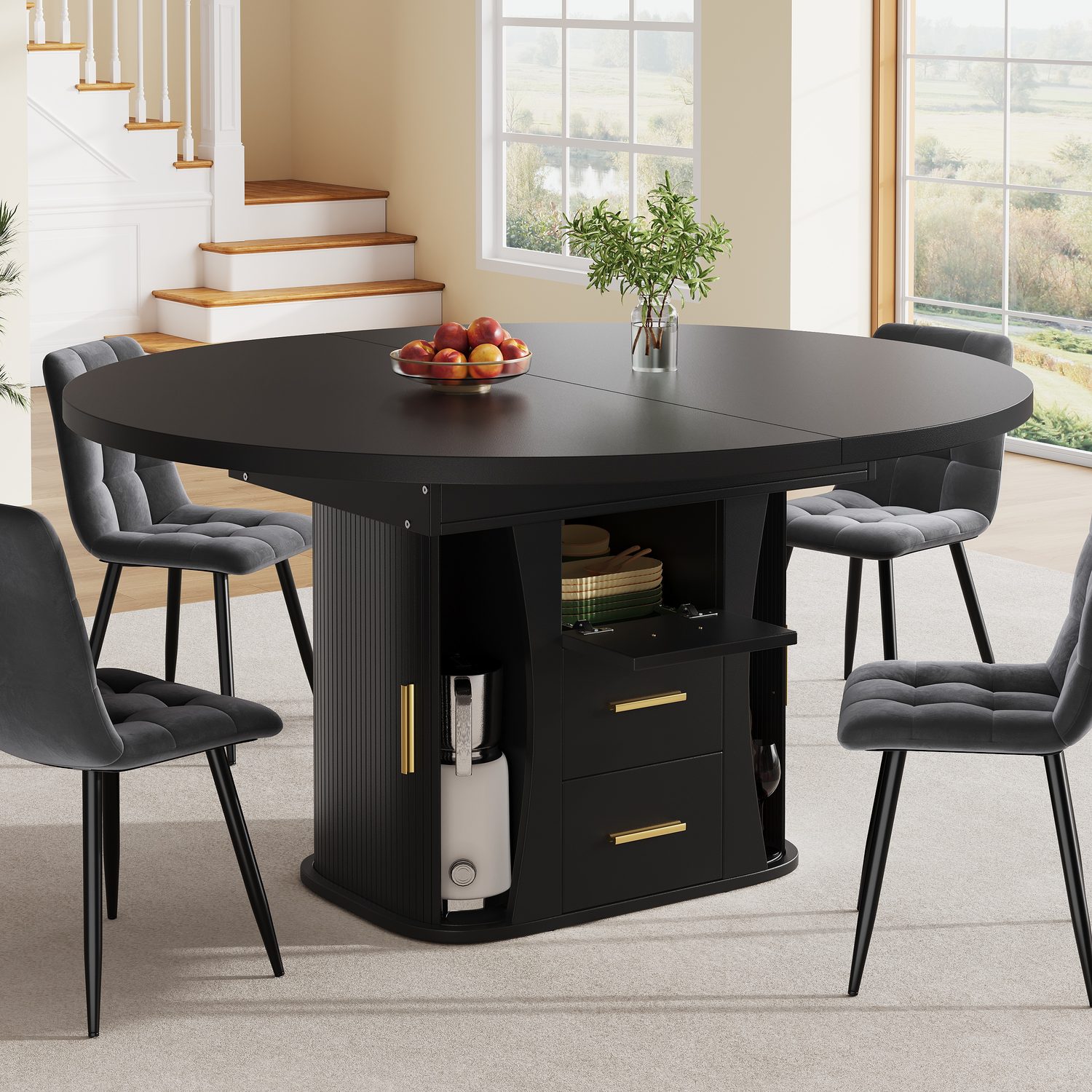
Available, but less common and often bulky
Usually the most practical and versatile choice
Visual effect
Softer, lighter, less formal
Structured, classic, often more substantial
How to match table shape to UK room proportions
Small kitchen-diners
In a compact kitchen-diner, a round table often helps movement, especially if there is a route to the garden or utility area nearby. But if the room is narrow, a small rectangular or drop-leaf table may still be the better fit.
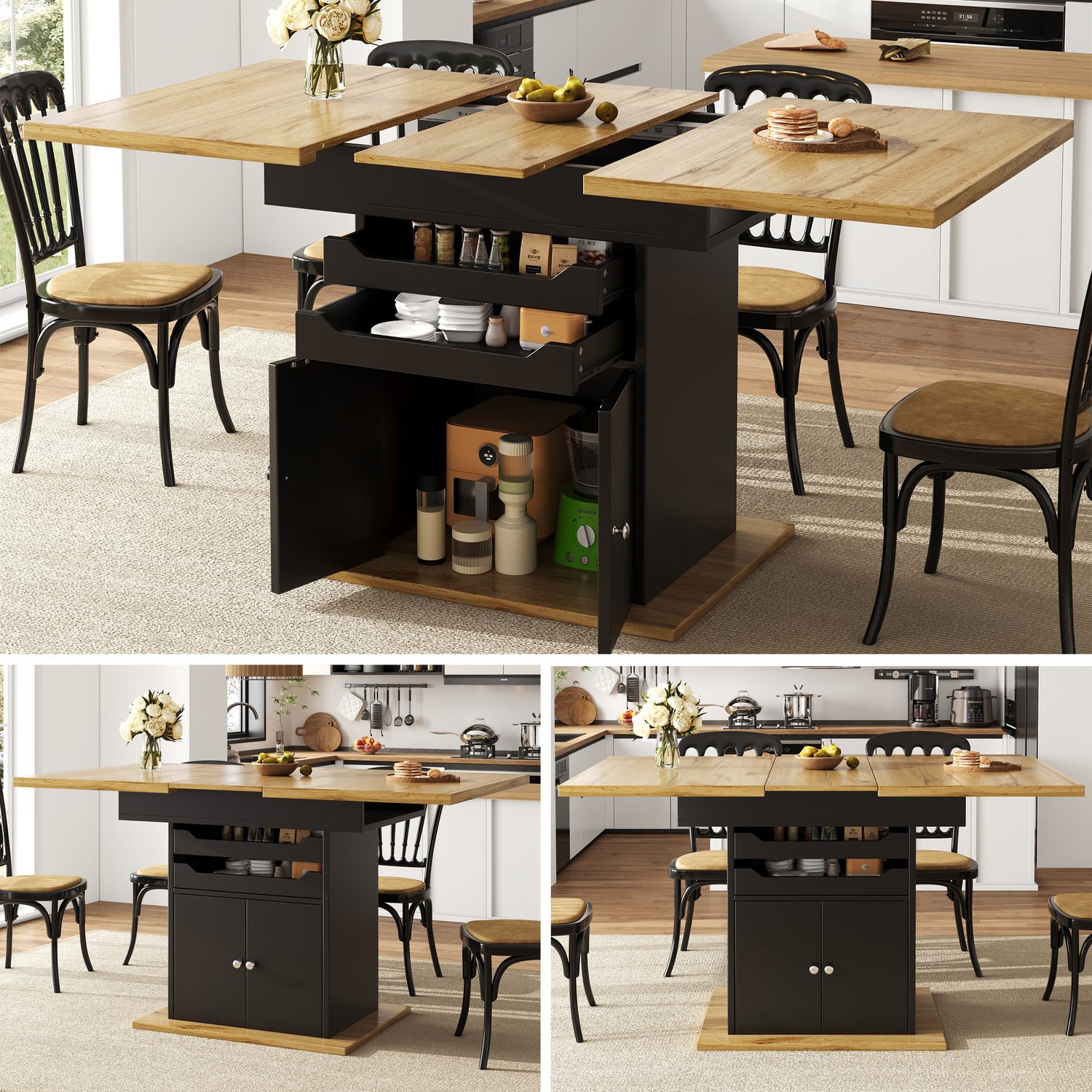
This is where it helps to think beyond a standard dining table. A folding island or breakfast-bar style piece can sometimes outperform both shapes in very small homes. Products such as a kitchen island with a drop-leaf or fold-out top can be practical when floor space needs to stay flexible.
Separate dining rooms in period homes
Many period homes in the UK have dining rooms with chimney breasts, alcoves and a longer-than-wide footprint. In these spaces, rectangular tables tend to feel more natural because they echo the architecture. They also allow Sideboards and storage pieces to sit comfortably along the wall without making the room feel disjointed.
If your room is almost square and used mainly for relaxed family meals rather than formal entertaining, a round table can still work beautifully, particularly under a centred pendant light.
Open-plan family spaces
Open-plan layouts are often less about the room dimensions and more about circulation. If children run between the kitchen and garden doors, or if the dining area sits on a route between zones, a round table can be safer and easier to navigate. On the other hand, if you need the table to visually define the dining area, a rectangular design can create a stronger sense of structure.
Seating capacity: what fits in real life, not just in product listings
Manufacturers often list maximum seating capacity, but those numbers can be optimistic. The real question is how comfortable you want meals to feel.
For everyday use in the UK, these are sensible expectations:
100cm round: usually comfortable for 4, but best for 2-4 rather than four adults with lots of serving dishes.
120cm round: more comfortable for 4, possible for 5 in a pinch.
120-140cm rectangular: typically suits 4 well.
150-180cm rectangular: usually suits 6 comfortably depending on leg placement.
Extendable rectangular: ideal if you host occasionally but do not want a large footprint every day.
Also check the base. Pedestal round tables can be more forgiving for chair placement than four-legged designs. Likewise, on rectangular tables, corner legs or chunky X-frames can reduce usable seating space more than the stated dimensions suggest.
Style, practicality and maintenance
Visual weight matters
Table shape affects how heavy a room feels. A round table, particularly in glass, light wood or marble-effect finishes, often reads as less imposing. A rectangular table can anchor a room beautifully, but if the top is thick and the base is solid, it may dominate a modest space.
If you want a softer look, a compact round option such as the marble-effect-dining-table-with-gold-metal-legs-100cm-round can suit smaller dining areas nicely. If flexibility matters more, an extendable model may be the smarter buy.
There is not a dramatic difference in maintenance between round and rectangular tables, but edge profile and finish matter. High-gloss and marble-effect tops can look striking, though fingerprints and smears may show more readily in bright kitchens. Wood-look finishes are often more forgiving for family use.
In the UK climate, where damp and fluctuating indoor temperatures can affect some materials over time, it is worth avoiding prolonged moisture exposure on joins or edges, especially near patio doors, conservatories or poorly ventilated dining spaces.
When an extendable or multifunctional option is the better answer
Sometimes the round vs rectangular dining table debate misses the bigger point: in smaller homes, flexibility may matter more than shape alone. If your dining area doubles as a workspace, homework zone or food prep overspill, an extendable or fold-away design can make everyday life easier.
For example, the extendable-dining-table-with-internal-leaf-storage-x-legs is useful if you want a standard footprint most of the week but extra room for guests. In compact kitchens, a piece like the kitchen-island-on-wheels-with-extendable-dropleaf-countertop or kitchen-island-trolley-with-folding-dining-table-storage can work better than a fixed dining table altogether.
That said, multifunctional furniture is not always as elegant as a dedicated dining table. Folding sections, castors and built-in storage are practical, but they can look more utilitarian. If your dining room is a key entertaining space, you may still prefer the cleaner lines of a standard table.
So, which should you choose?
Choose a round dining table if…
Your room is square or slightly awkwardly shaped.
You want better flow around the table.
You usually seat 2 to 4 people.
You value sociable, face-to-face dining.
You want the room to feel softer and less formal.
Choose a rectangular dining table if…
Your room is long or narrow.
You regularly need to seat 4 to 6 or more.
You want an extendable option.
The table needs to sit neatly with walls or storage.
You prefer a more classic, structured look.
FAQs
Is a round or rectangular dining table better for a small room?
A round table is often better for a small square room because it improves flow and removes sharp corners. In a narrow room, though, a small rectangular or drop-leaf table may use the space more efficiently.
How much space should I leave around a dining table?
Ideally leave 75 to 90cm around the table for chairs and movement. In tighter UK homes you may manage with a little less on one side, but anything too tight quickly becomes inconvenient.
Do round dining tables seat more people?
Not usually. Round tables can feel more sociable, but rectangular tables are typically more efficient for seating larger numbers, especially in longer rooms and when extension leaves are involved.
Are rectangular dining tables better for UK homes?
Often yes, because many UK dining rooms and kitchen-diners are longer rather than square. But for compact open-plan corners or smaller square rooms, a round table can be the more practical choice.
Should I buy an extendable dining table instead?
If you only host occasionally, an extendable table is often the smartest option. It gives you a manageable everyday footprint with the flexibility to seat extra guests when needed.
For most UK homes, a rectangular table is the safest all-round choice because it suits common room proportions and offers the best seating flexibility. But if your space is compact, square or awkward to move through, a round table can feel noticeably better to live with day to day.
Villalta Home Editorial is the in-house byline used for buying guides and product roundups on villaltaco.uk. Each guide is written by the editorial team, drawing on the catalogue's measurable data — real dimensions, materials, UK use cases, price bands — and on hands-on research into how products actually perform in UK homes. Every post tagged with this byline is reviewed and approved by Juan Antonio Villalta Pacheco, the founder and editor, before it goes live. See our editorial standards for the full process.