The 158 cm alcove beside my chimney breast looked generous until a 60 cm fridge, a 40 cm bin and the swing of a lower cabinet door all tried to occupy it at once. That is the problem with UK kitchen design: the room often measures fine on paper, then the kettle, washing-up bowl, school-run lunchboxes and a BS 1363 plug with a chunky moulded cable make it feel half the size by 8:15.
This UK Kitchen Design Guide: Cabinets, Islands, Tables and Tools is about making ordinary kitchens work harder without pretending everyone has a show-home extension. It covers freestanding and fitted cabinets, islands that can double as dining, bar tables and stools, dining sets, table shapes, Chopping Boards, Small Appliances and the little gadgets that either save time or colonise a drawer forever. The thesis is simple and arguable: for most UK kitchens under 12 sq m, the best design decision is to buy fewer fixed units and make two or three movable pieces do the awkward work.
This guide assumes a rented flat, a terraced house, a compact semi or a modest new-build kitchen where storage, socket positions and circulation are real constraints. If you are commissioning a 28 sq m rear extension with a separate utility room, walk-in pantry and a joiner on speed dial, some of this will feel too cautious. It also does not cover full plumbing, gas works, extractor installation or Part P electrical jobs. Those need qualified trades, not a clever trolley and a decent tape measure.
Why this matters in UK homes specifically
UK kitchens are rarely blank rectangles. Victorian terraces bring chimney breasts, sloping floors and back doors that steal the best wall. 1930s houses often have ceiling heights around 2.4 m but awkward service runs boxed into corners. Rented flats may give you one double socket above the worktop and a landlord who says no to drilling tile. Manchester new-builds can have the opposite issue: a neat open-plan box where the kitchen wall is technically long enough, yet the dining area floats about with no useful edge.
Delivery and disposal matter too. A 180 cm cabinet may be fine once built, but it still has to get through a 76 cm front door and up narrow stairs. Council recycling collections can be fussy about bulky flat-pack waste, and kerbside pickup rules vary by borough. A design that ignores doors, sockets, bins and packaging is not design. It is faff with nicer handles.
Cabinets: fitted, freestanding and the renter-safe middle ground
Cabinets are the bones of a kitchen, but they do not all need to be screwed permanently to a wall. Fitted cabinets give a clean run and can hide services, while freestanding cabinets give renters and hesitant homeowners a way to add storage without committing to a full refit. The trick is to treat freestanding units as furniture with kitchen-grade duties: heavy enough to feel stable, wipeable enough to survive sauce splatter, and measured against the room rather than the website photo.
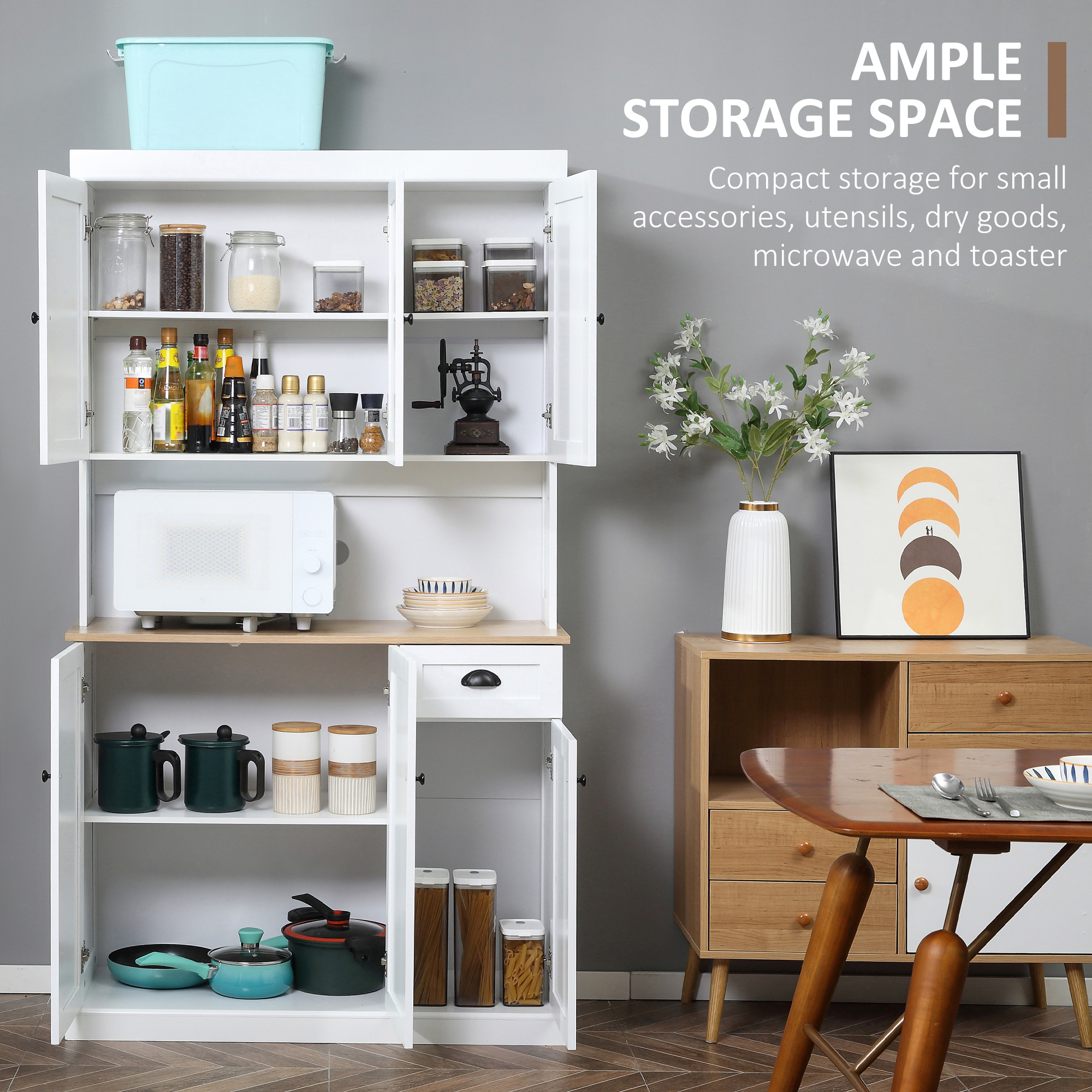
A freestanding cabinet around 176-183 cm high can act as pantry, breakfast station or spare crockery store. A unit such as a modern 180 cm freestanding kitchen cabinet with countertop illustrates the category well because it adds a short prep surface rather than only shelves. The compromise is bulk. Tall units make a small kitchen feel calmer if they sit in one vertical block, but they can look oppressive beside a low window or radiator.
Height and ceiling gap: allow at least 10 cm above a 180 cm cabinet if the floor is uneven or you need to tip it upright after assembly.
Depth: 35-45 cm is useful for dry goods; 50-60 cm starts to behave like a base unit and can pinch a galley kitchen.
Load rating: look for shelves rated around 10-15 kg each if storing tins, plates or a stand mixer.
Budget sense: £120.00-£350.00 is the realistic band for renter-friendly freestanding storage; much cheaper units can wobble once loaded.
The common mistake is buying height without checking door swing. A 40 cm cupboard door needs somewhere to open; in a 90 cm walkway that can be the difference between sorted storage and bruised shins.
Kitchen Islands: prep surface, storage and dining in one lump
A kitchen island is not a status symbol. In a UK home it is a traffic decision. A good island gives you a working edge, a place for pans or plates, and sometimes a perch for tea. A bad one blocks the fridge, crowds the oven door and becomes a very expensive dumping ground for post.
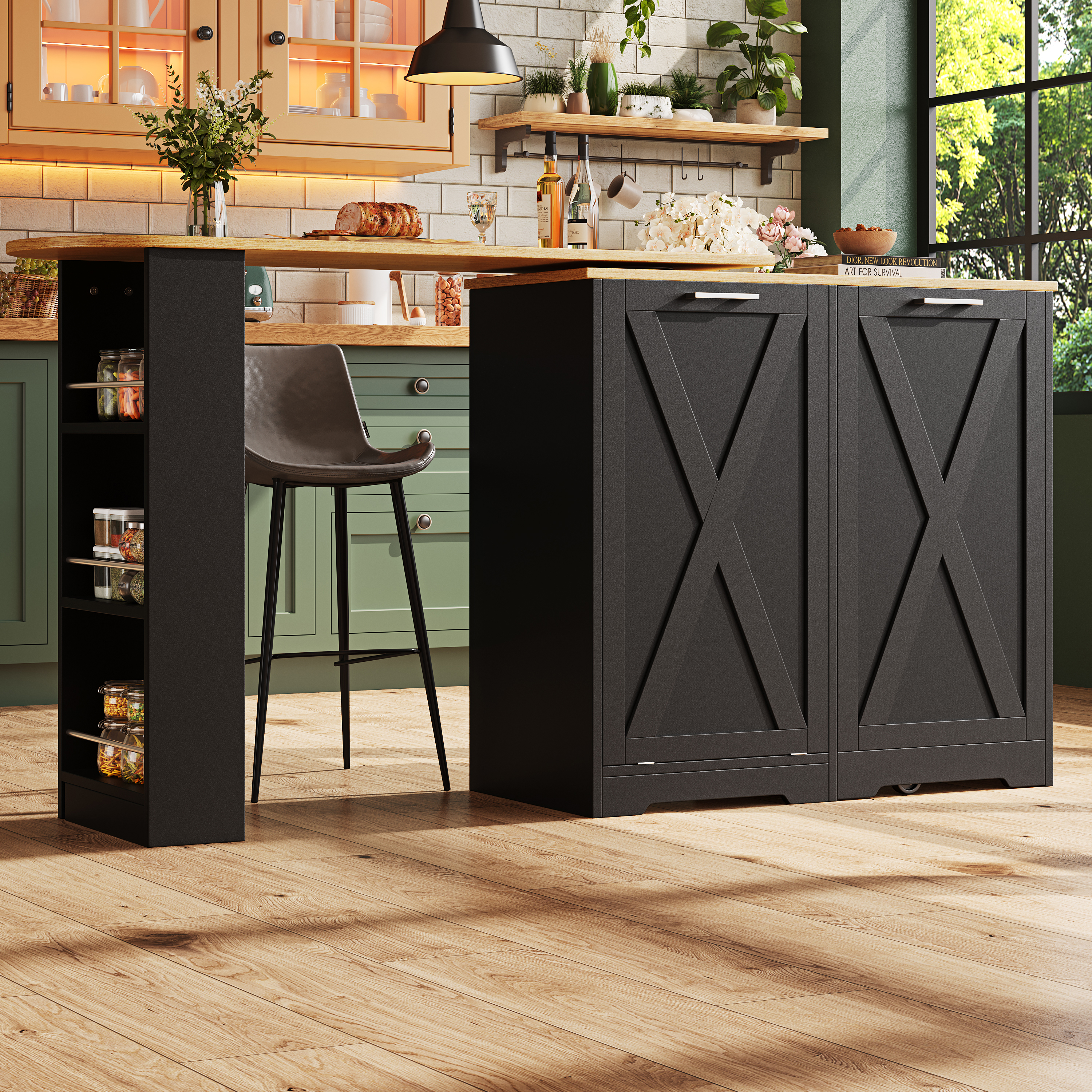
For small kitchens, the useful category is often a compact island, trolley or rotating bar table rather than a fixed slab with plumbing. Movable or swivelling islands are especially interesting in open-plan flats because they can face the kitchen during cooking and turn towards the sofa when used as a casual table. A rotating kitchen island with 360 swivel extendable storage is a good illustration of the idea: clever, space-savvy, but only if the rotation path is kept clear. The chrome or gloss hardware on these pieces can show fingerprints in certain light, and LED versions may not include bulbs or may need a nearby socket.
Clearance: 90 cm around an island is comfortable; 75 cm is workable for one cook; below 70 cm gets annoying quickly.
Worktop size: aim for at least 80 x 50 cm if you want to chop properly rather than balance a board beside the toaster.
Seating overhang: 25-30 cm helps knees fit under a breakfast-bar edge.
Price band: compact islands and bar-island hybrids tend to sit between £150.00 and £600.00 before you get into bespoke territory.
The common mistake is copying an island from a bigger kitchen and shrinking nothing except the room. If the dishwasher, fridge or oven door cannot open while someone sits at the island, the island is wrong.
The dining table is where UK kitchen design often loses its nerve. People either buy a table too small to feel hospitable or one so large that every chair has to be shuffled in like a parking manoeuvre. The right answer depends less on how many people live in the house and more on how the room is crossed. A table beside a back door behaves differently from a table tucked under a window.
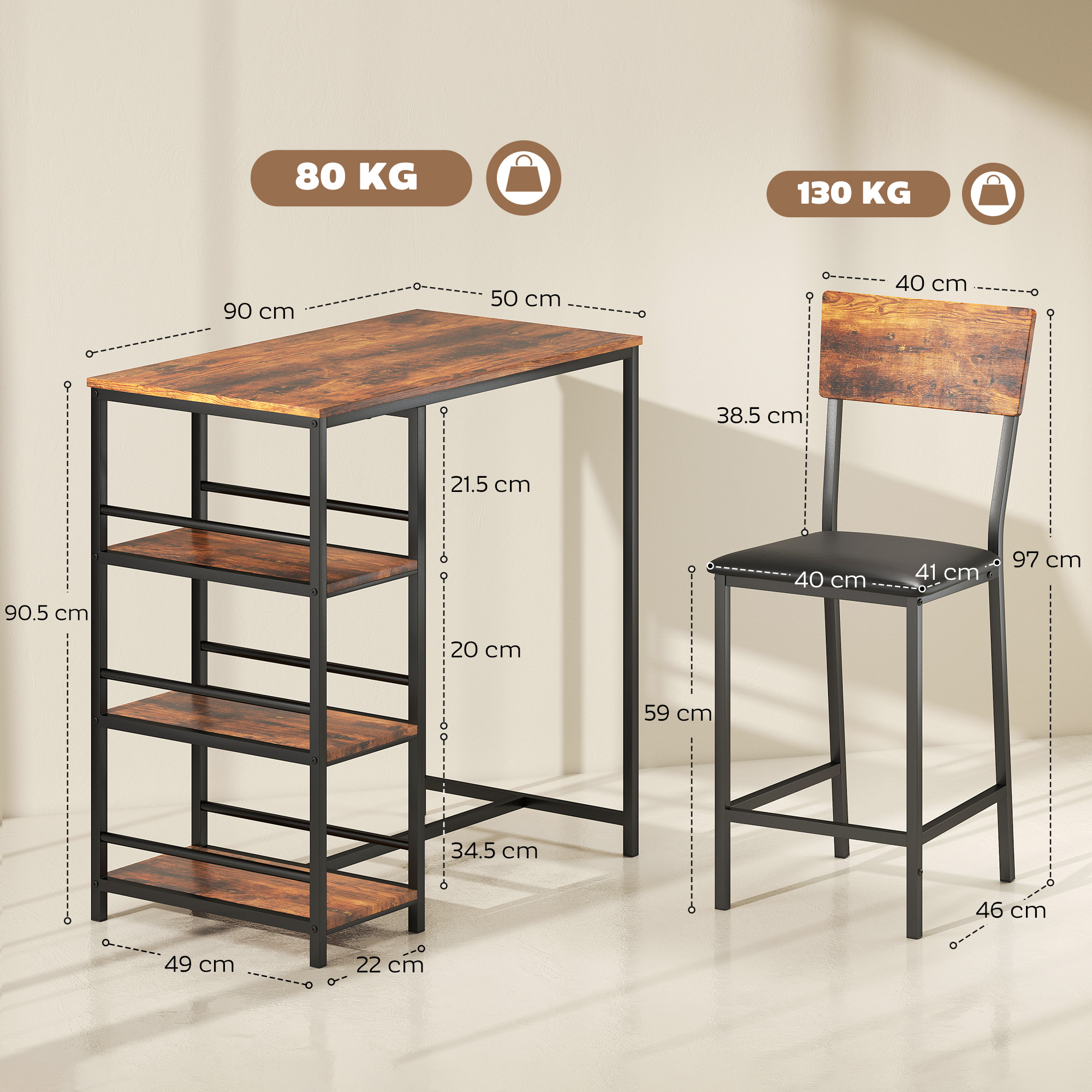
Round tables soften corners and suit square-ish rooms, but they waste wall space. Rectangular tables are easier to push against a wall and work better with benches. Bar tables can be brilliant in a tight flat because they give a worktop-height surface for eating, laptops and sorting shopping, though they are less forgiving for small children or anyone who prefers both feet flat on the floor. A compact 3-piece bar table set with built-in storage shelves shows the appeal: two stools parked under a narrow top, with shelves for mugs or cereal boxes. Useful, not magic.
Chair clearance: allow 75-90 cm from table edge to wall if chairs need to pull out; 60 cm only works with a bench or occasional seating.
Table width: 70 cm is tight but usable for two; 80-90 cm feels more civilised for shared plates.
Bench logic: a 102 cm bench can seat two adults if they like each other, and it tucks away better than two chairs.
The common mistake is ignoring chair backs. A 120 cm table may fit the floor plan, but four chairs with angled backs can add another 40 cm of visual clutter and make the room feel boxed in.
Cabinets and tables get the attention, but tools decide how a kitchen feels at 6pm. A chopping board that slips, an air fryer that blocks the only socket, a spice rack that steals prep space: these are small annoyances that repeat daily. The design question is not how many gadgets you can fit. It is which tools deserve permanent worktop status.
Most UK kitchens need a hierarchy. Kettle and toaster usually stay out. Coffee machine, microwave, air fryer, blender and stand mixer have to earn their place. A standard double socket gives two plug points, but many small appliances have stiff cables and oversized plugs, so a four-appliance corner can become a tangle. Extension leads beside sinks are dodgy; if that is the plan, change the plan.
Chopping boards: choose at least 35 x 25 cm for daily cooking; anything smaller is a garnish board pretending to be useful.
Appliance footprint: measure width and depth with the handle included; many air fryers need 10 cm breathing space behind them.
Vertical storage: spice racks, bakers racks and bread bins can work if they keep the front 40 cm of worktop clear for prep.
Running costs: check wattage; a 2,000 W gadget may be quick, but it still needs a safe socket and space to vent.
The common mistake is buying storage gadgets before editing the contents. A two-tier bread bin will not solve three opened loaves, six packets of wraps and a rogue panettone from Christmas.
The counterargument: fitted kitchens can be the better answer
There is a fair case against freestanding fixes and clever hybrids. Fitted kitchens can use every centimetre, look calmer and add value if the house needs a proper overhaul. In a family kitchen with heavy daily cooking, integrated bins, full-height larders and continuous worktop runs can beat a collection of movable pieces. If your room is structurally awkward but you own it, a good fitter can scribe units around wonky walls in a way flat-pack furniture never will.
The answer is not to pretend fitted kitchens are bad. The answer is to separate permanence from performance. Spend on fixed work where services, safety or long-term value are involved: plumbing, electrics, extraction, durable worktops. Use freestanding pieces where life changes: breakfast storage, extra prep, occasional dining, overflow crockery. That mixed approach is less photogenic than a magazine kitchen, but it suits real homes with changing tenants, children, pets and budgets.
Own versus rent: renters should avoid drilling tile or altering services without written permission; owners can justify permanent cabinetry if staying 5 years or more.
Service walls: keep sinks, dishwashers and washing machines near existing plumbing where possible; moving them can cost more than the cabinets.
Resale taste: plain doors and standard widths age better than highly specific colours or odd custom sizes.
Waste planning: fitted refits create bulky waste, so check council collection rules before ripping out old units.
The common mistake is assuming fitted means finished. A poorly planned fitted kitchen with too few sockets and no landing space beside the hob is just an expensive inconvenience.
Start with clearance, not aspiration. If the kitchen is under 8 sq m, skip a fixed island and look at a narrow bar table, a freestanding pantry cabinet no deeper than 45 cm, and wall-friendly storage that does not need drilling if you rent. Keep the main prep zone at least 60 cm wide and protect it from gadget creep. One good chopping board, a kettle, a toaster and one genuinely used small appliance beat a crowded worktop that has to be cleared before every meal.
Victorian terrace with awkward rooms
Respect the chimney breast and the back door. Tall storage often works best in the alcove, but only after checking skirting depth, radiator position and whether the floor drops over the width of the unit. A rectangular table or bench against a wall usually behaves better than a round table in a through-room. If the kitchen is the route to the garden, leave a proper walking line from hall to back door rather than threading everyone past hot pans.
Modern new-build with the opposite problem
New-build kitchens can feel oddly under-defined: enough floor space to look empty, not enough wall space for generous storage. Use an island or bar-height piece to create a boundary between cooking and sitting, but do not oversize it because the developer's open-plan rectangle still needs circulation. A four-seater dining set can work, provided chairs do not block patio doors. Add one tall cabinet if the base units are shallow; many new-build kitchens look sleek because half the dry goods are homeless.
FAQs
What is the best kitchen layout for a small UK flat?
A single-wall or galley layout usually works best, with one clear prep zone of at least 60 cm and storage stacked vertically. Avoid fixed islands unless you can keep 75-90 cm clearance around them.
Yes, if they are stable, not too deep and do not need wall fixing in a way your tenancy forbids. For tall units, use anti-tip safety hardware where permitted and keep heavy items low.
How much space do I need around a kitchen island?
Plan for 90 cm if two people cook or pass through the kitchen. A 75 cm gap can work in a one-person kitchen, but below 70 cm doors, drawers and bodies start clashing.
Is a bar table better than a dining table in a small kitchen?
A bar table is better if you need a narrow surface that doubles as extra prep. A standard dining table is better for children, longer meals and anyone who dislikes high stools.
What dining table shape saves the most space?
Rectangular tables usually save the most space because they can sit against a wall and pair with benches. Round tables are sociable but need breathing room on all sides.
Which small kitchen appliances should stay on the worktop?
Keep out the appliances used daily. For most homes that means kettle and toaster, possibly coffee machine or air fryer. Anything used weekly can live in a cabinet if lifting it is manageable.
How do I add kitchen storage without drilling walls?
Use freestanding cabinets, narrow bakers racks, over-counter organisers and table sets with built-in shelves. Check depth carefully so the room does not lose its walking route.
No. Measure appliances with handles, plugs and ventilation gaps included. A cabinet that fits the microwave body but not the cable is a classic small-kitchen headache.
What to do next
Measure the room as it behaves, not as the estate agent floor plan claims. Write down the width of the narrowest doorway, the clear gap between opposite units, the socket positions, radiator depth, window sill height and the swing of every door. Then mark one protected prep zone, one storage problem and one eating problem. Solve those before looking at colours.
If you are comparing freestanding cabinets, islands, bar tables or compact dining pieces, browse the kitchen furniture category with your measurements beside you. Do not buy anything taller than your route can handle or deeper than your walkway can spare. For tools, empty the drawer first. The cheapest design win in a UK kitchen is often getting rid of the gadget you never use, then buying the one piece of furniture that fixes the real daily irritation.
Villalta Home Editorial is the in-house byline used for buying guides and product roundups on villaltaco.uk. Each guide is written by the editorial team, drawing on the catalogue's measurable data — real dimensions, materials, UK use cases, price bands — and on hands-on research into how products actually perform in UK homes. Every post tagged with this byline is reviewed and approved by Juan Antonio Villalta Pacheco, the founder and editor, before it goes live. See our editorial standards for the full process.