There's a stage of UK home ownership — usually three or four weekends in — where the basic toolkit your dad sent you off with stops being enough. You can hang a picture. You can tighten the cupboard hinge. The moment you want to make something — a stair-tread bookcase, a piece of laminate that fits around the bog pipe, a pegboard run for the utility room — the gap between "owns a hammer" and "owns the right tool" is the whole project.
These are the five cheap DIY tools I'd hand someone who's already got the £30 household kit and wants to start finishing things properly. None of it is professional gear. All of it earns its drawer space the first weekend you use it. Total bill is about £125 for the lot, and you'd unfreeze five different jobs that have been sat on the list since you moved in.
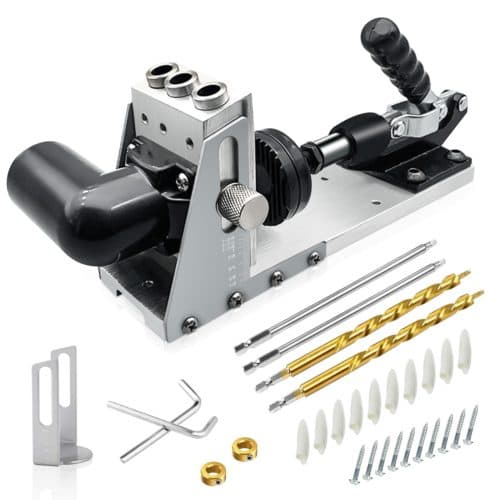
If you only buy one piece: the pocket hole jig at £27.52. It turns scrap pine board into actual furniture and gets you further than any other tool here. Add the laminate fitting kit (£15.36) if there's a spare-room floor you've been dreading.
The picks
1. The cordless starter — Rechargeable Electric Screwdriver Kit, 47 pieces · £14.39
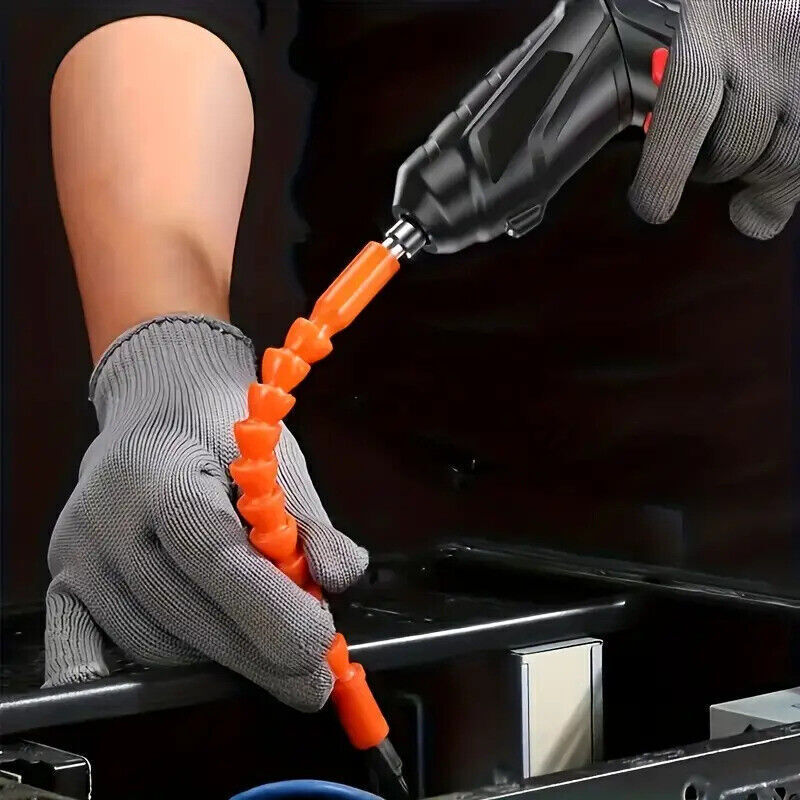
There's a hump in the screwdriver-vs-drill argument: you don't strictly need a drill for most flat-pack assembly, but a manual screwdriver gives you a sore wrist by the third Billy bookcase. This lithium screwdriver fills the gap. Small enough to live in the kitchen drawer next to the can opener, USB-rechargeable, and the 47-piece bit set covers every screw head you'll meet for the first year of home owning.
It is not a drill replacement. The chuck won't take 6mm bits, so it won't pilot-hole through wood and it won't go through plasterboard. What it does brilliantly is drive the cabinet screws you'd otherwise be doing by hand — IKEA assembly, hinge adjustments, taking the panels off a washing machine to clear the filter. After three months mine had paid for itself in shoulder pain alone. Find it here: rechargeable electric screwdriver.
- Pros: USB charging (no proprietary brick), 47-bit set covers Pozi, Torx and hex, fits in a kitchen drawer
- Cons: No torque clutch — it'll happily strip a soft brass screw if you don't ease off the trigger; not powerful enough for drilling holes
- Best for: Renters and first-time owners who want a drill without committing shed space to one
2. The bit upgrade — 44-Piece Impact Driver Bit and Nut Set · £13.47
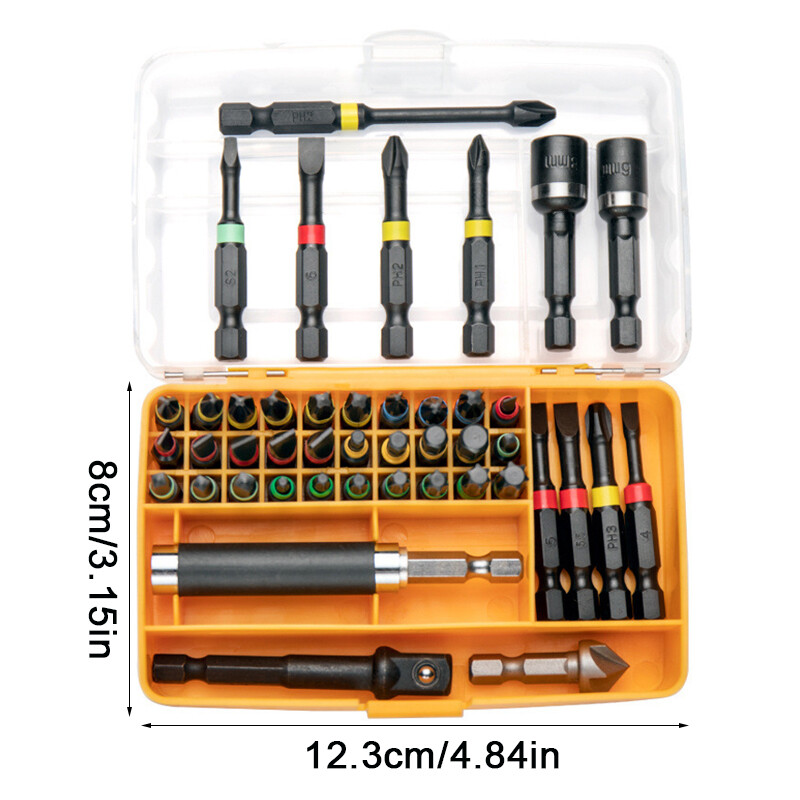
If you already own a drill, your existing bit set is probably the cheap one that came in the case. This is the upgrade. Forty-four hardened impact-grade bits, plus a magnetic adapter and the nut-driver heads you need for shed bolts and washing-machine fascia panels. The colour-coding on the rack actually helps — you'll stop pulling out a PH2 every time you wanted a PZ2 and wondering why screws keep camming out.
The impact-rated steel is the part that matters. The bits in the £4 supermarket set chew themselves into uselessness on the third Hex 5mm bolt. These don't. The case is plastic-flimsy — bin it and chuck the bits in an old tobacco tin, that's how you'll actually use them. Pair this with whatever drill you already own and it's the cheapest meaningful upgrade in the toolbox. Have a look: impact bit set.
- Pros: Impact-rated steel, colour-coded ID, includes the magnetic adapter most kits leave out
- Cons: Case latches break inside a month; no SDS shanks for masonry work
- Best for: Anyone who already owns a drill and is on their second set of stripped bits
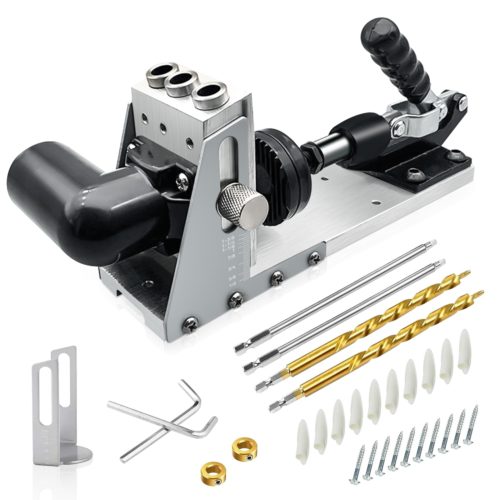
This is the one that earns its place loudest. A pocket hole jig drills an angled screw hole through one piece of timber into another, hiding the fixing and giving you a joint that holds without clamps or wood glue. Translation: you can knock together a bookcase, a window seat or a built-in pantry shelf from B&Q pine in an afternoon and it'll look like something that came from Habitat.
The 12-33mm depth range covers everything from skirting board to standard 18mm shelving. The stepped drill bit and stop collar means you only have to set it once for a given timber thickness. First project I built with one was a kitchen spice rack that's still on the wall four years on; second was a 1.8m bookcase that cost £35 in pine and screws. Take a look: pocket hole jig.
- Pros: 12-33mm range covers most UK softwood, stepped bit and screws included, no clamps required
- Cons: Mid-grade aluminium — repeat-precise on softwood, less reliable on hardwood; the jig footprint is fiddly on narrow rails under 50mm
- Best for: The "I want to actually make a piece of furniture" pick — the biggest jump on this list
4. The dreaded-floor pick — Laminate Floor Fitting Kit with 60 Spacers · £15.36
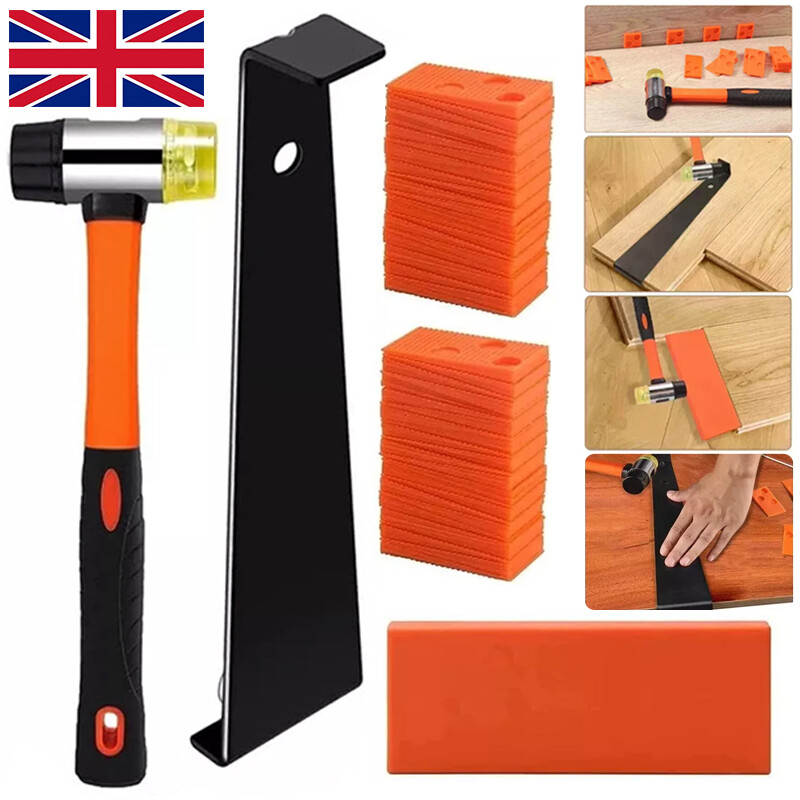
If there's a laminate or vinyl floor in the spare room that's been on the to-do list since you moved in, the missing piece probably isn't the floor itself — it's the kit to fit it. Sixty spacers, a steel pull bar for the last row, a tapping block and a hammer head means you can fit the floor without recruiting two friends and a Sunday afternoon of swearing in a 14 m² bedroom.
The pull bar is the part that matters. It lets you lock the last board tight against the skirting without lifting the row before it. The tapping block stops you mushrooming the click-lock joint with a misjudged hammer blow. Fifteen quid against the £80 of damaged boards you'd otherwise have to replace mid-job. Pick it up here: laminate fitting kit.
- Pros: 60 spacers (you need more than you think), pull bar for the awkward last row, the tapping block actually earns its weight
- Cons: Plastic spacers crack if you kneel on them; no knee pad in the kit and you'll wish there was
- Best for: Anyone who's been quoted £400 to lay a 12 m² spare room floor
5. The splurge — Digital Torque Screwdriver with LCD · £51.67
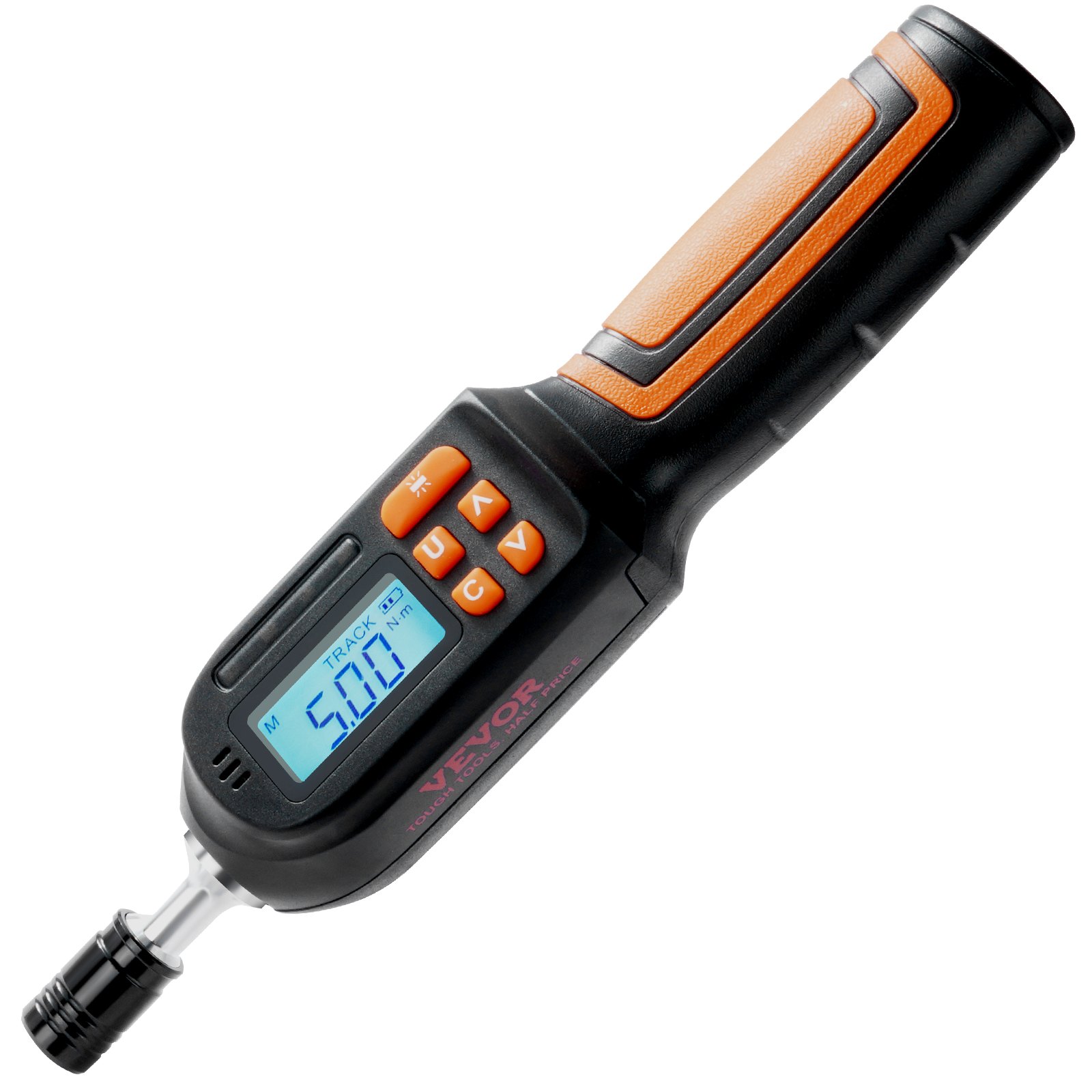
This is the most expensive pick on the list and the one you'll use the least often. The day you need it, though, nothing else does the job. A torque-controlled screwdriver tightens a fixing to a specific Newton-metre setting — useful for bicycle stems and bars, taps that say hand tight only, brass plumbing fittings, and the tiny screws on the back of a guitar that strip if you breathe on them wrong.
The LCD reads to 0.1 Nm. The bits aren't anything special — buy a Wera set separately if you care about that. What you're paying for is the calibrated click and digital readout. If you've never owned one you don't think you need one; after the first £60 bike stem snapped by overtightening, you do. Pick it up: digital torque screwdriver.
- Pros: 0.1 Nm precision, LCD readout means no guessing, properly calibrated for the work where torque matters
- Cons: Bit selection is mediocre, no carry case, batteries drain when stored vertically
- Best for: Cyclists, bike-stem savvy parents, anyone with delicate brass fittings or musical instruments
The verdict
If you can only buy one thing, get the pocket hole jig. It earns its £28 in the first weekend project and you'll keep finding excuses to use it. If you've got £125 the lot is honestly worth it — five tools that each fix a different stuck job, and the most expensive one still costs less than a tradesman's call-out for a shelf.
Honest framing: this is starter and step-up gear, not lifetime kit. The pocket hole jig will see you through twenty projects. The cordless screwdriver might last two years on heavy use. The torque screwdriver, looked after, will outlive your car. Replace each one with the named-brand equivalent when it breaks — by then you'll know which ones you actually reach for.
By the Villalta Home Editorial team, June 2026. Edited by Juan Antonio Villalta Pacheco.