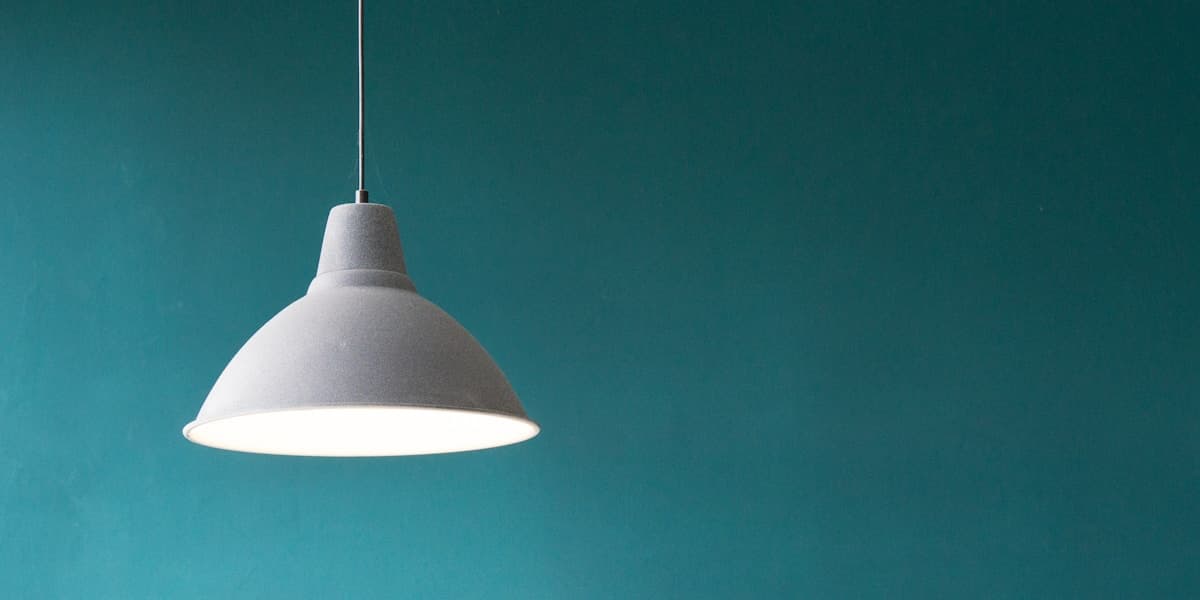
The first chandelier I ever bought was a metre tall. I had measured the ceiling — 2.42m, generous for a 1930s semi — and not the chandelier. When the crate landed I held the thing up against the dining wall and worked out my husband would brain himself every time he stood up. It went back the next morning, and I started measuring drops as obsessively as widths.
This is the thing nobody quite says about chandeliers: most of the ones the algorithm shows you are sized for a hotel atrium. UK ceilings tend to sit between 2.30m and 2.50m in newer builds, and 2.40m on the dot in most Victorian-and-later terraces. Anything dropping 60cm-plus from the rose either looms over your dining table or, worse, lives in your sightline when you stand to clear plates. The picks below are the ones I'd actually buy for a normal-sized British dining room, sitting room or bedroom — sparkly enough to feel like a fitting, sane enough to clear your head.
How I picked
Three filters. Drop: under 30cm for the flush mounts; under 60cm including the chain on the adjustable ones (and adjustable is non-negotiable — fixed-chain chandeliers are a fool's errand in a rental). Bulb fittings: E14 or G9, both stocked at every Sainsbury's and Wickes, so when one blows on a Sunday you're not on Amazon Prime praying for next-day. Sparkle vs glare: a real chandelier needs proper crystal or glass diffusion. If the only "crystal" is a plastic-y stamped acrylic ring, it'll look cheap the day a low winter sun hits it. The five below are all real glass or K9, which is the cheaper-but-honest crystal substitute and the standard for fixtures under £200.
The other thing I do — and you should too — is wire-test before you commit to anything more than £60. Most UK ceiling roses sit on a single live drop and a loop-in earth; a 12kg chandelier (the splurge pick below) needs more than that. If yours is a plasterboard ceiling with no joist visible behind the rose, get a sparky in. £80 for a proper fixing is cheaper than redoing the dining room ceiling.
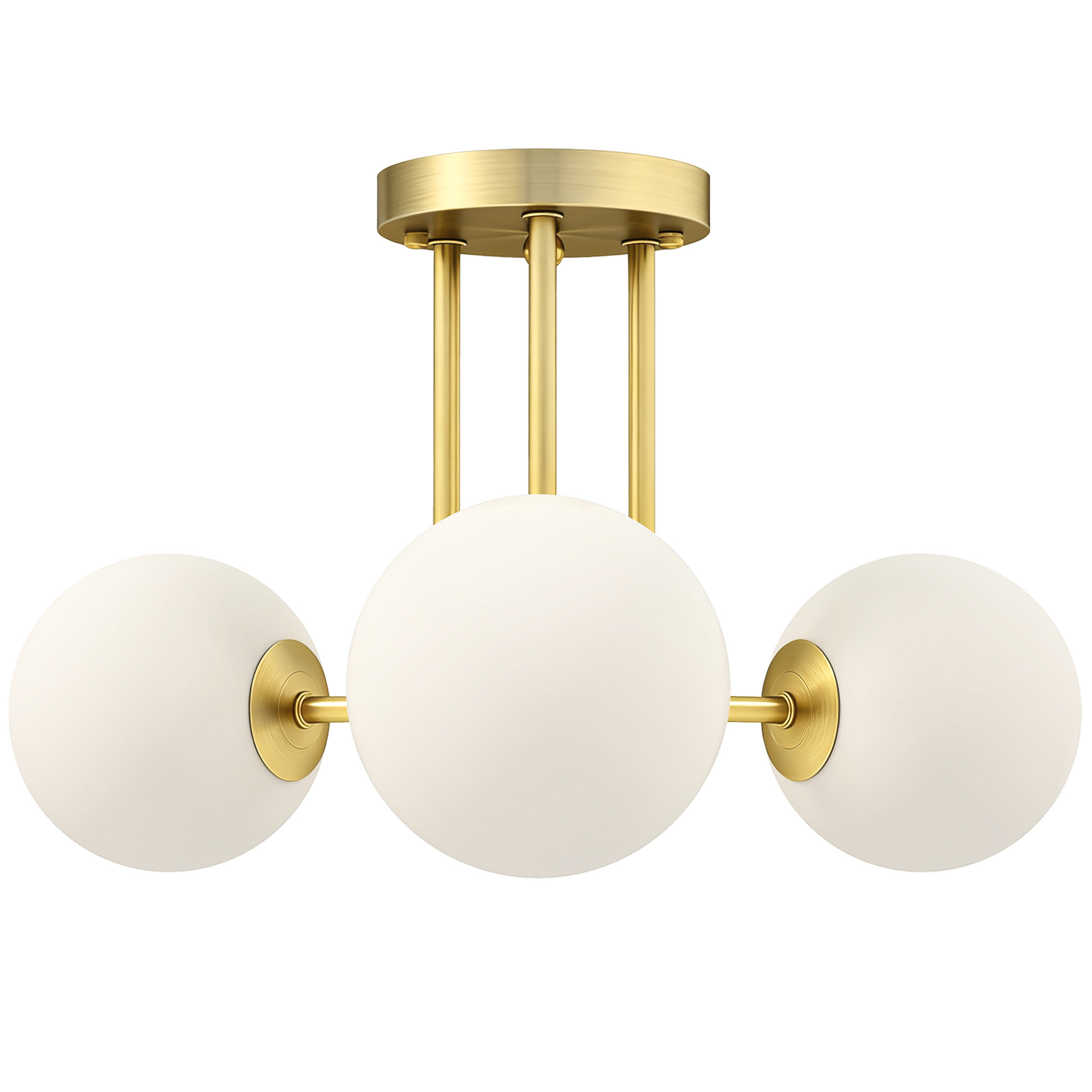
Three frosted globes on brushed gold arms, spread out horizontally rather than dangling. This is the one I'd put in a rented flat above a kitchen table — light spreads across the full width of the table rather than hot-spotting on one plate, and the G9 sockets take warm-white 2700K bulbs that don't make your beigey Wickes worktop look surgical. The frosted glass kills the bulb glare completely, even when you're sitting low.
The caveat: it's not a chandelier. If you're after actual sparkle — the kind that throws little rainbows across a Sunday afternoon wall — this isn't it. Bulbs aren't included (none of these fittings come with bulbs, which is normal but worth saying once), so factor in a fiver for a three-pack of G9 LEDs.
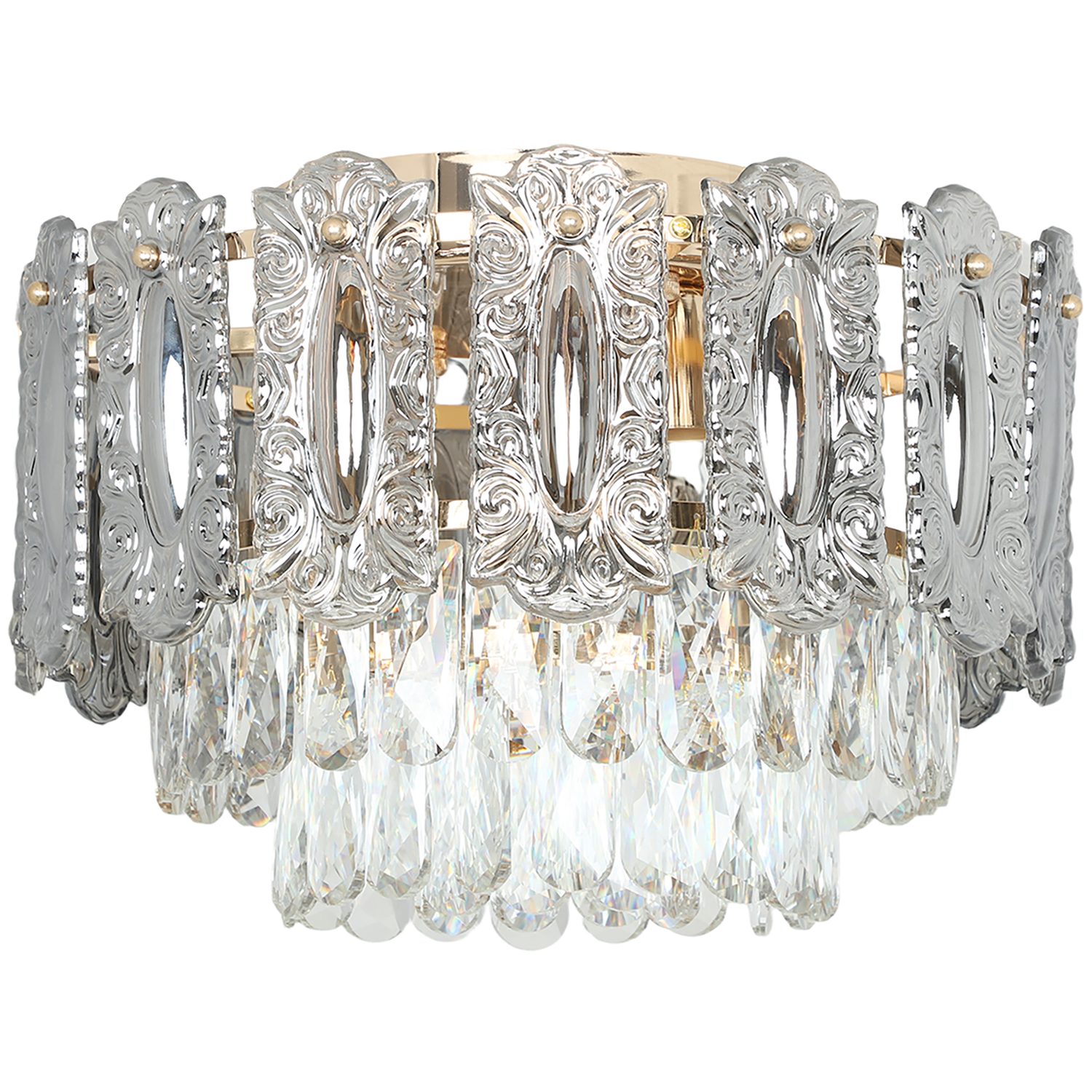
2. Vintage Flush Mount Crystal Chandelier — Gold Tone, £52.61 — the low-ceiling pick
Twenty-five centimetres of total drop. That's flush enough for a 2.30m hallway ceiling and you'll still walk under it in heels without a thought. The frame is smoke-grey glass on the outside with gold-tone steel and clear crystal drops underneath — it actually has some material variety, which is what stops it reading "cheap stamped metal." Three E14 sockets up to 40W each.
Where it falls down: the crystal collects dust, properly. If your hallway opens off the kitchen or you've got a wood-burner in the next room, plan on a Hoover-brush-and-microfibre session every six weeks. Also it's decorative rather than task light — a 40cm fitting at 25cm drop won't light a working corridor by itself, so pair it with a wall sconce or a table lamp on the side console.
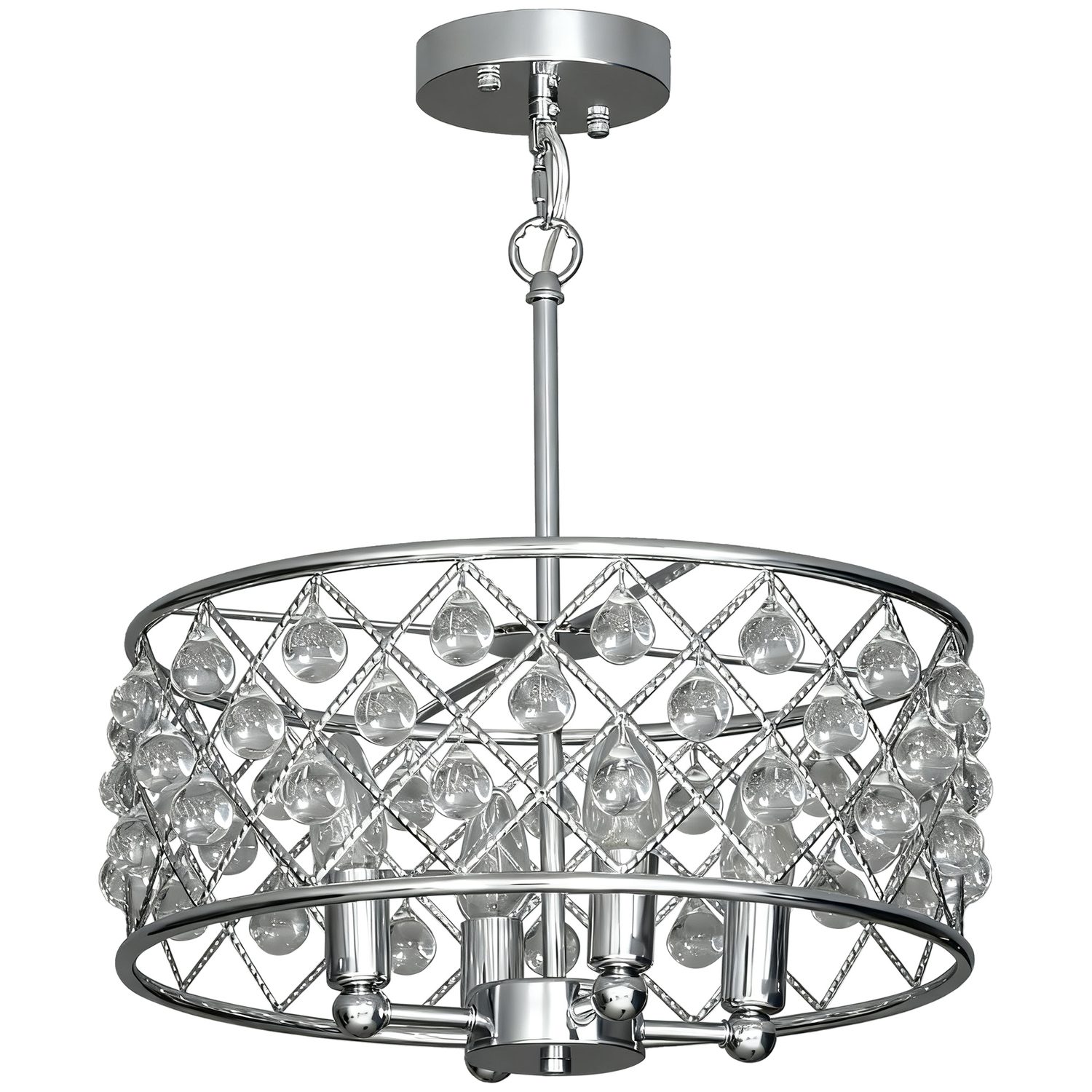
3. Silver Four-Bulb Crystal Chandelier, £48 — the bedroom one
Forty centimetres across, 51 small crystal balls in a silver-tone lattice, adjustable chain up to 130cm. The diameter is the trick — it's small enough to look in proportion above a double bed or in a 3m × 3m box bedroom, and the silver finish sits cleaner against cool greys and off-whites than gold does. Of the five, this is the one I'd put in a bedroom — it doesn't dominate when the light's off.
Two honest caveats. The "crystal balls" are crystallite, which is fine glass but not leaded crystal; you'll get sparkle but not the deep prismatic refraction of a £400 fitting. And those 51 little balls take ten minutes with a feather duster every couple of months — they're a magnet for cobwebs in older flats.
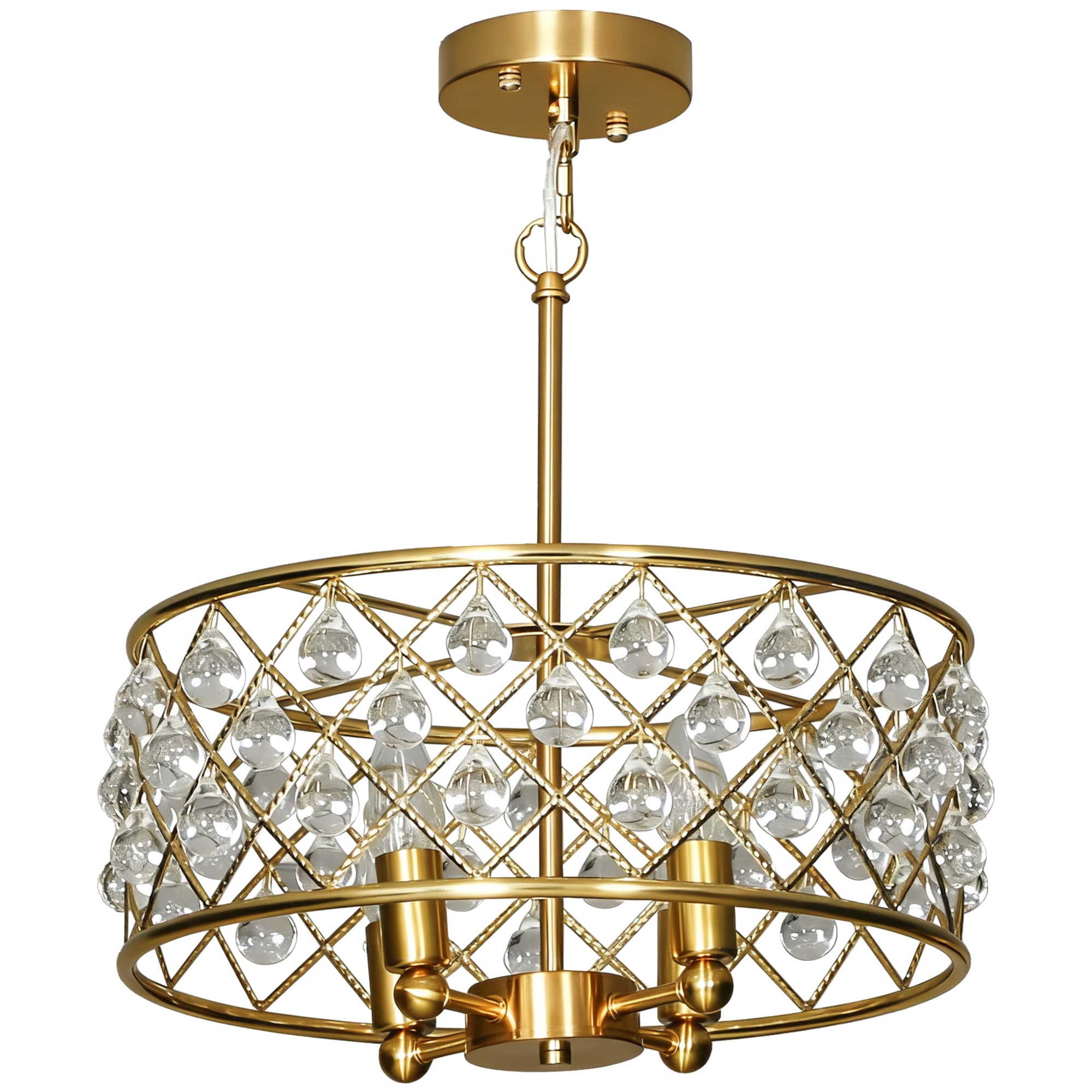
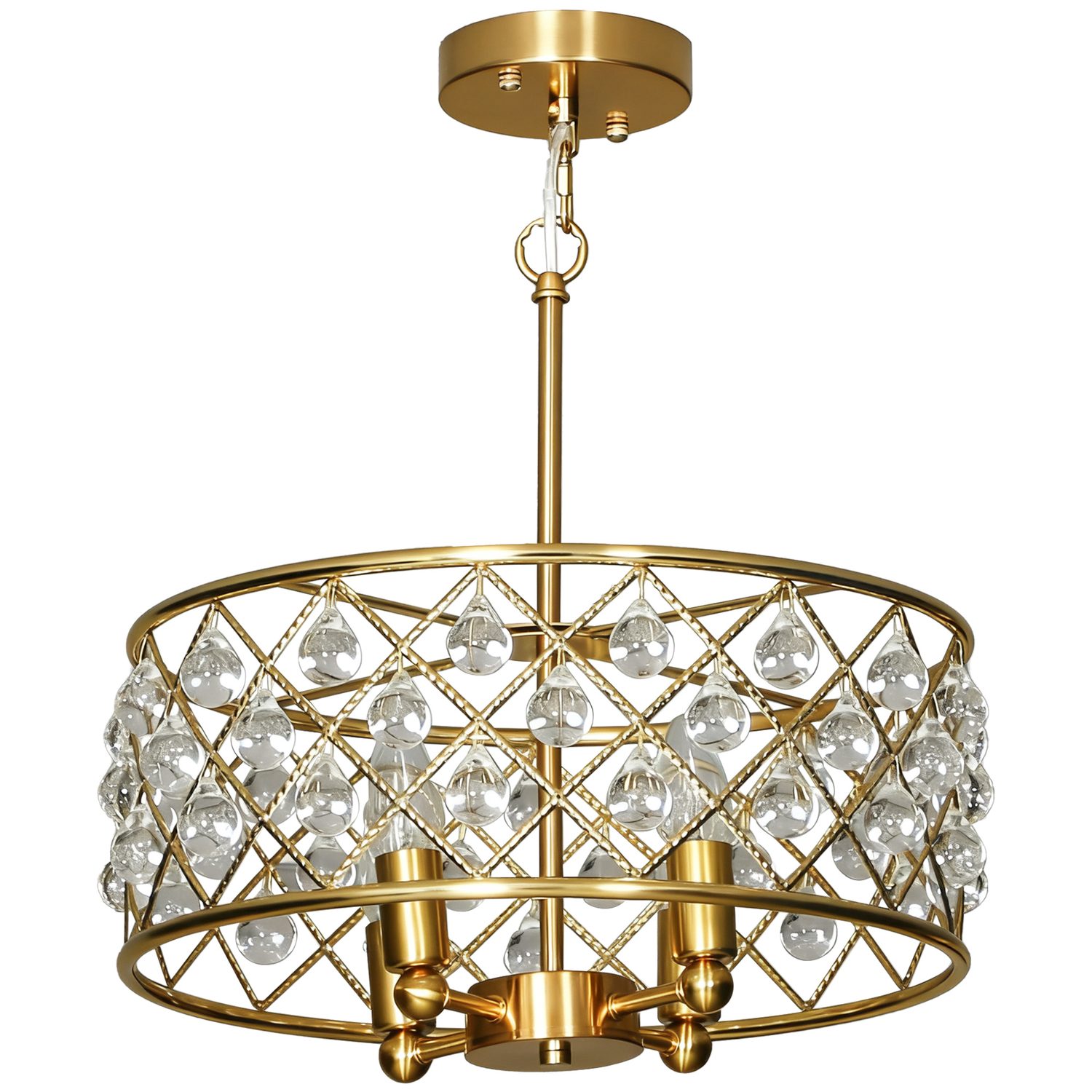
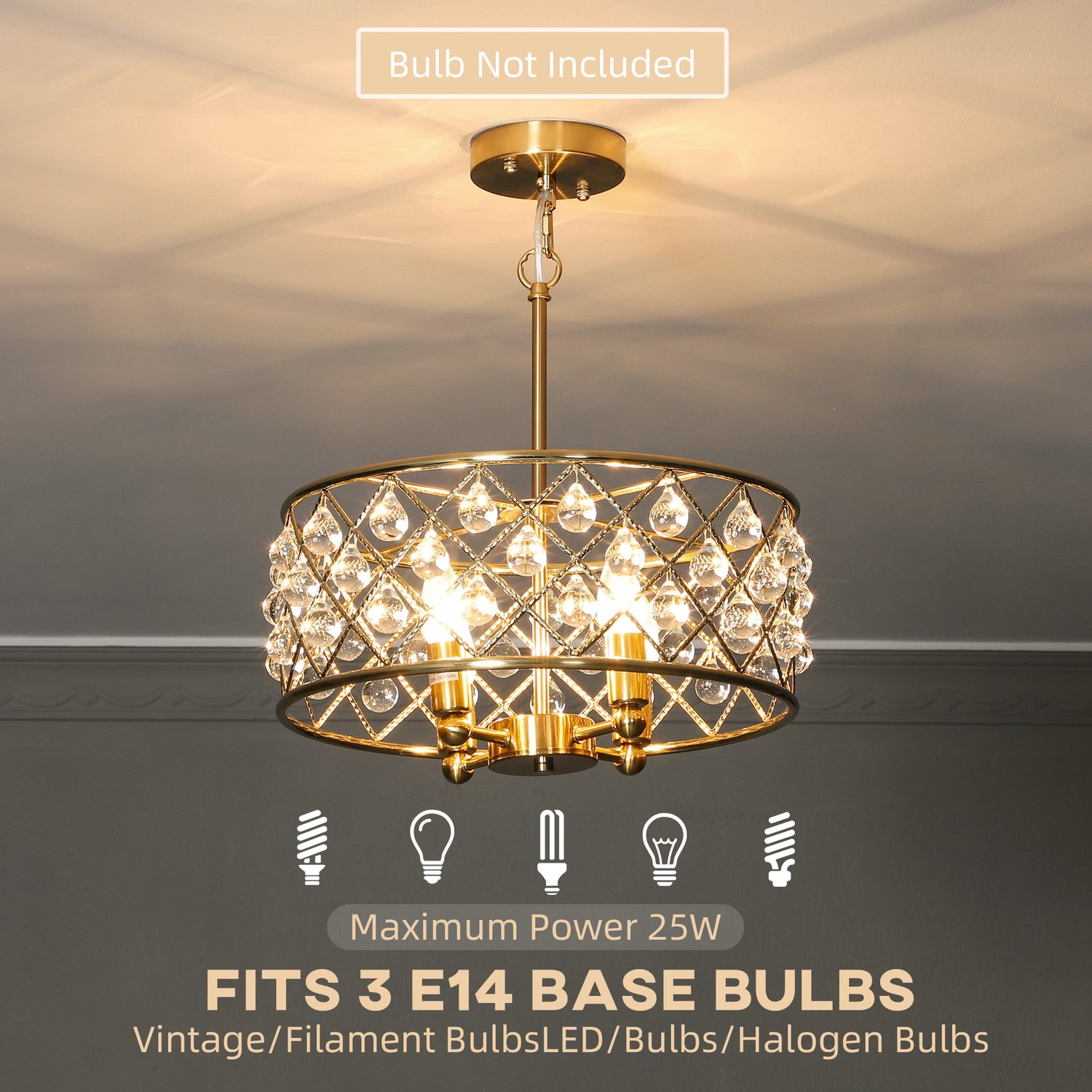
4. Gold-Tone 4-Bulb Crystal Chandelier with Adjustable Chain, £65.20 — the dining room one
Same 40cm diameter as the silver pick but in gold tone with a slightly warmer crystal cut, and rated for 30kg on the adjustable chain (which means the chain is overengineered for its own weight — useful confidence on a ceiling job). It's the natural one for a dining room with a yellower-toned wall — Farrow & Ball's India Yellow, anything in the Setting Plaster family, or honest beige.
Caveat: four E14 bulbs at full bore can be glarey above a small dining table. I'd go with 4W warm-white dimmable bulbs and either pair it with a dimmer switch (£25 fitted on a normal circuit) or get used to running it at 70% via smart bulbs. The chain has a 130cm maximum, which is generous — set it about 75cm above your table for proper proportions.
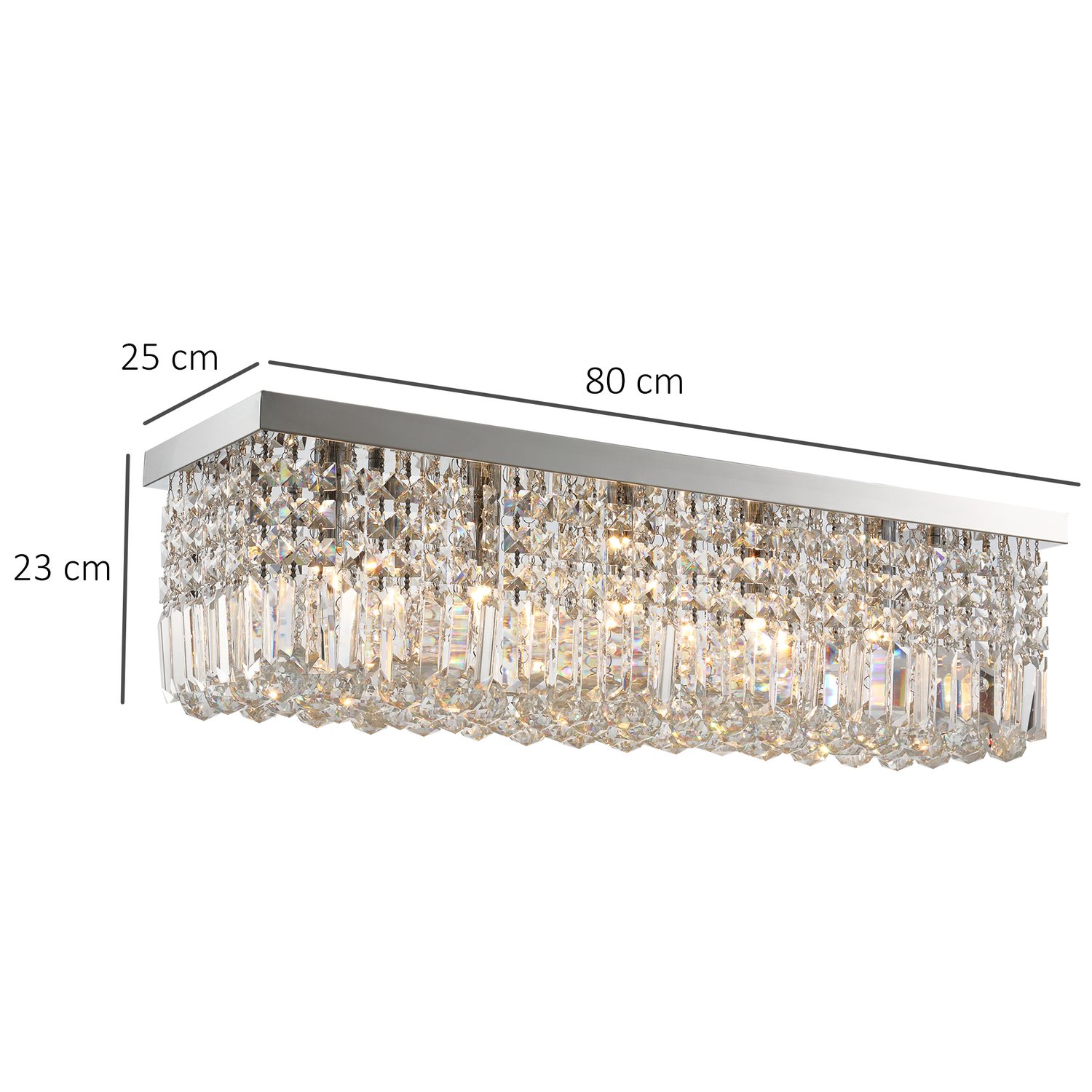
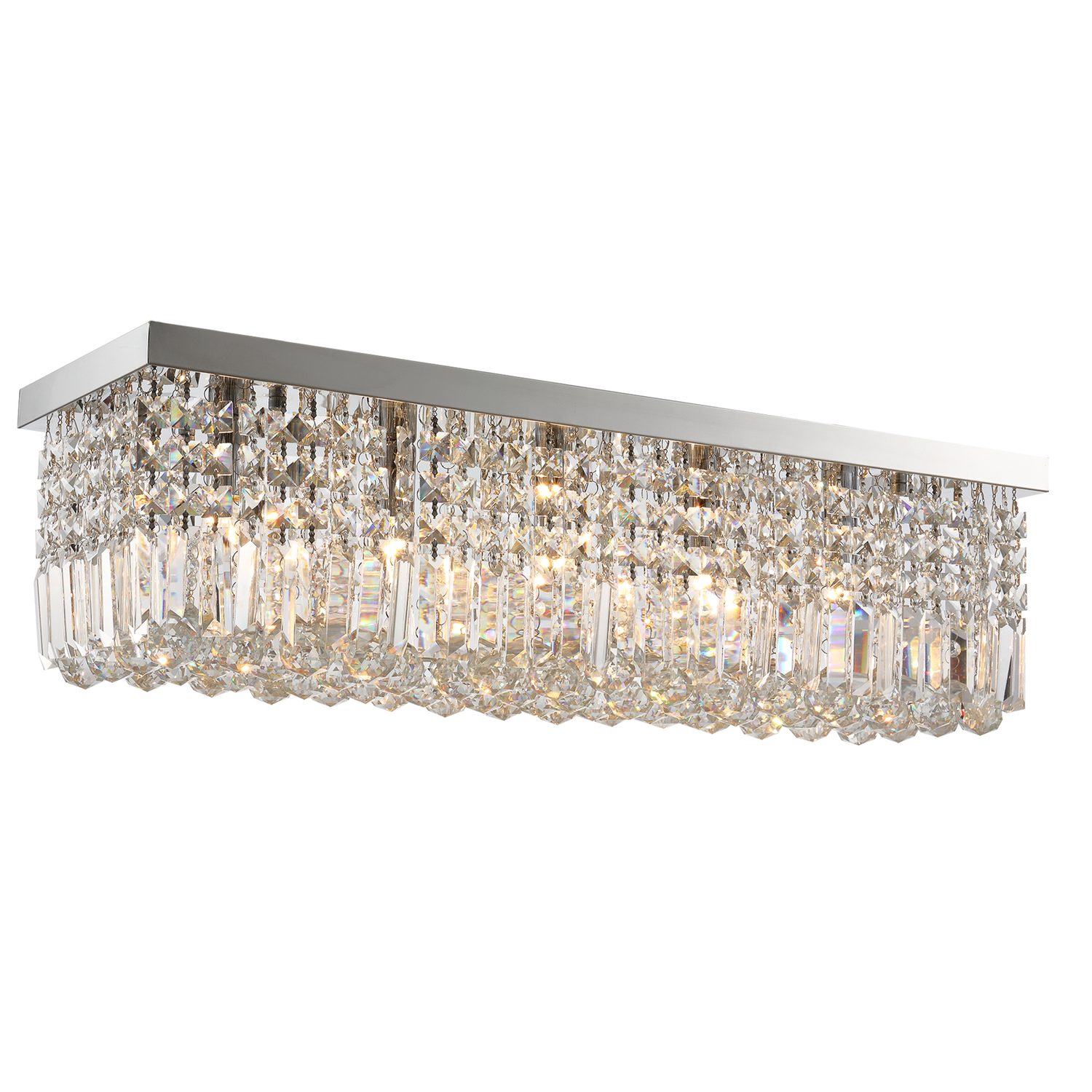
5. Modern Square Crystal Ceiling Light — Silver Finish, £93.80 — the splurge
The one I'd save for. Eighty centimetres long, 12.8kg, K9 crystal in a rectangular layout with 80 strings of triangle crystals plus 60 strings of crystal balls. That weight is the catch — you cannot fit this to a plasterboard ceiling without a proper joist or a structural fixing pad. If you live in a new-build with timber-frame ceilings, get a sparky to check the joist position before ordering.
Where it earns its place: in a long sitting room with a 3m-plus centre, or above an extended dining table in a knock-through. The rectangular layout means it throws light along its length rather than in a single circle, which fits how British rooms actually shape (long and rectangular, not square). Caveats beyond the weight: it's not a fitting for a 2.30m ceiling — the body itself takes 30cm before the chain, so you want 2.45m minimum to clear the bottom of the crystals with breathing room.
Anything advertised as "real crystal" under £100 with no mention of K9 or leaded — it's stamped acrylic and will look tired in a year. Fixed-chain chandeliers — useless unless you've measured a specific dining table position to the millimetre. And anything heavier than 8kg if you don't know what's behind your ceiling rose.
If you've got a flat with a 2.30m ceiling, start with the £40 globes or the £52 flush mount and forget the rest exists. If you've got a normal-ish UK dining room and budget for one nice fitting, the £65 gold-tone is the natural pick — it's the right size, the right finish for warm walls, and the chain gives you actual hanging flexibility. The £93 splurge is wonderful, but only if your ceiling is up to it.
By the Villalta Home Editorial team, June 2026. Edited by Juan Antonio Villalta Pacheco.
Villalta Home Editorial is the in-house byline used for buying guides and product roundups on villaltaco.uk. Each guide is written by the editorial team, drawing on the catalogue's measurable data — real dimensions, materials, UK use cases, price bands — and on hands-on research into how products actually perform in UK homes. Every post tagged with this byline is reviewed and approved by Juan Antonio Villalta Pacheco, the founder and editor, before it goes live. See our editorial standards for the full process.
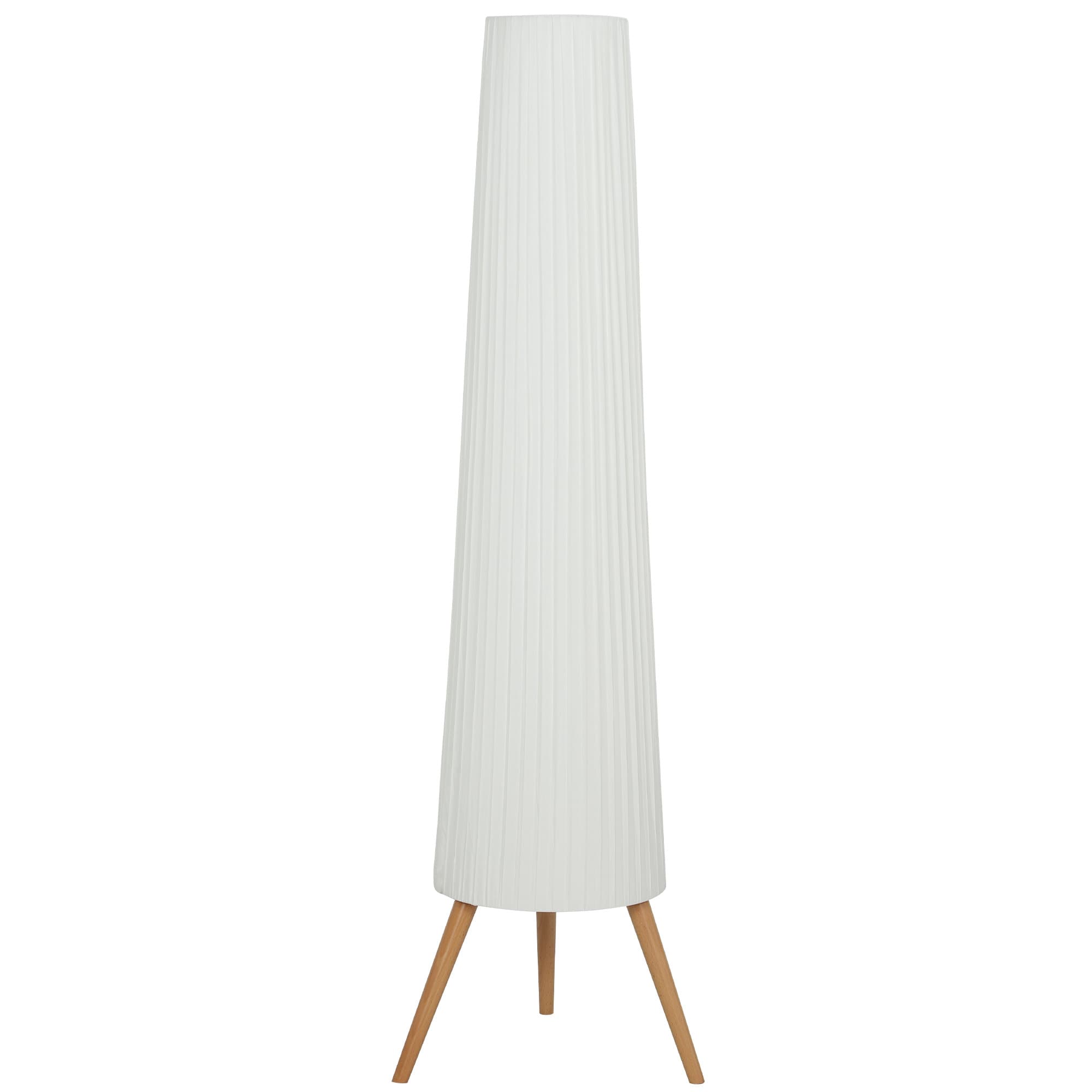
Most UK rental sitting rooms have one sad ceiling pendant and a corner that swallows all the light. Five tripod floor lamps from about £55, across pleated white, bronze nautical, beige linen, black-and-gold and all-black searchlight — picked for the corner they earn, not just the bulb they hold.