If you are weighing up an ottoman bed vs divan bed, you are probably trying to solve the same problem most UK homeowners and renters face: not enough bedroom space, and far too much stuff. In smaller homes, Victorian terraces, new-build flats and box rooms, the bed often takes up most of the floor area, so choosing one that doubles as proper storage can make a real difference.
The trouble is that ottoman and divan beds solve storage in very different ways. One gives you a large hidden cavity under the mattress, while the other usually relies on built-in drawers. Neither is automatically “better” for every room. The right choice depends on your room size, where the doors and wardrobes sit, how often you need access to storage, and how much lifting or bending you are happy to do day to day.
Below, we compare ottoman and divan beds in practical UK terms: typical bedroom dimensions, realistic price ranges, storage capacity, assembly considerations, and where each style works best. If you are shopping across bedroom furniture for a compact room, this guide should help you buy once and buy well.
Ottoman bed vs divan bed: the short answer
An ottoman bed is usually best if your main priority is maximising storage in a small bedroom. Because the whole mattress base lifts, you can use nearly the entire footprint of the bed for storage, which is especially useful where there is no clearance for drawers to open.
A divan bed is often better if you want simpler access, a more traditional look, and a bed that can be easier to move in sections. Drawer divans suit rooms where you have enough side or foot clearance to pull drawers out fully.
In other words:
Choose an ottoman bed if floor space is tight and you need the most storage possible.
Choose a divan bed if you prefer quick drawer access and your room layout leaves enough opening space.
What is an ottoman bed?
An ottoman bed has a lift-up mattress platform, usually assisted by gas-lift hydraulics. Instead of separate drawers, the entire area beneath the mattress becomes storage. Access can be from the foot end or the side, depending on the design.
This style is particularly popular in UK homes because it makes use of dead space that would otherwise be wasted. In a compact double bedroom, that can mean storing spare bedding, out-of-season clothes, towels, or even suitcases without needing an extra chest of drawers.
Pros of an ottoman bed
Excellent storage capacity across almost the full bed base
No need for drawer clearance around the bed
Often looks neater and more streamlined in modern rooms
Useful in awkward layouts where wardrobes, radiators or walls block drawer access
Cons of an ottoman bed
You need to lift the mattress platform to access storage
Not ideal if you want to grab items quickly every day
Usually heavier and sometimes more involved to assemble
Can cost more than basic divan options
What is a divan bed?
A divan bed usually has a solid upholstered base made in sections, topped with a mattress. Storage, if included, tends to come via built-in drawers: two drawers, four drawers, or continental drawers in tighter layouts. Some divans are sold as a base-and-mattress combination, though frame-only options are also common.
Divans have long been a staple in UK bedrooms because they are practical, compact-looking and relatively easy to fit through narrow hallways and staircases. For older properties with tight landings, that sectional construction can be genuinely useful.
Pros of a divan bed
Drawer access is straightforward and familiar
Often easier to move because the base comes in sections
Can work well with classic bedroom schemes
Often available at a wide range of price points
Cons of a divan bed
Drawers need clearance to open fully
Less total storage than a full ottoman base
Drawer positions can be awkward near Bedside Tables or wardrobes
Cheaper models can feel more basic in appearance
Which bed works best in small UK bedroom sizes?
This is where the ottoman bed vs divan bed decision becomes much clearer. In the UK, bedroom sizes vary widely, but many small doubles and second bedrooms are tighter than buyers expect once wardrobes, doors and circulation space are taken into account.
Box room: around 2.1m x 2.7m
In a true box room, every centimetre matters. If you are fitting a 3ft single or small double, an ottoman bed often makes more sense because there may be no practical room to open drawers. A side-opening or end-lift ottoman can let you use the full underbed area without needing extra floor space.
A divan with drawers can still work here, but only if the drawer side is unobstructed. In many box rooms, that is not the case once you add a wardrobe or desk.
Small double bedroom: around 2.4m x 3m
This is one of the most common UK bedroom sizes in terraces, semis and flats. A 4ft or 4ft6 bed can fit, but circulation space may be limited. Ottoman Beds are usually the stronger option if the bed sits close to walls or fitted wardrobes. Divan drawers can become frustrating if they clash with bedside tables or the room door.
Main bedroom: around 2.7m x 3.4m or larger
In a slightly more generous room, both options can work well. If you already have enough wardrobe storage and only need extra space for occasional items, a divan may be perfectly adequate. If you are short on built-in storage, an ottoman still gives you more flexibility.
Expert tip: Before choosing any storage bed, mark the bed footprint on the floor with masking tape, then simulate how drawers would open or where you would stand to lift the base. It sounds simple, but it quickly reveals whether a divan drawer will hit a bedside table or whether an ottoman opening direction feels awkward.
Storage capacity: which gives you more usable space?
On storage alone, ottoman beds usually win. Because the base lifts up, the cavity beneath can hold bulkier items and use almost the whole bed footprint. That makes ottomans especially useful for duvets, storage boxes, winter coats, and items you do not need every morning.
Divan drawers are more limited. They are easier to organise for smaller items, but they do not typically use the central area of the bed base. In real homes, this means less total volume and more constraints on what fits.
Feature
Ottoman bed
Divan bed
Storage capacity
Usually the highest; uses most of the bed base
Moderate; depends on number and size of drawers
Best for tight rooms
Excellent, as no drawer clearance is needed
Only good if drawers have room to open
Ease of daily access
Good for occasional access, less handy for quick grabs
Need enough space to lift and access the opening side or end
Need floor clearance for drawers to pull out fully
Price ranges in the UK: what should you expect to pay?
Prices vary by size, upholstery, headboard design, lift mechanism quality and whether a mattress is included, but there are some useful ballpark figures.
Ottoman bed prices
For a decent single or double ottoman bed frame in the UK, expect roughly £250 to £500 at entry to mid level. Upholstered styles with statement headboards, better hydraulics, USB charging, Lighting or premium fabrics can rise to £600 to £900+.
For example, a model such as the double ottoman bed with LED and USB storage suits buyers who want maximum function in one compact footprint, but those extras naturally push the price above a very basic frame.
Divan bed prices
Basic divan bases often start a little lower, with many options falling around £180 to £400 depending on size and drawer configuration. Better-upholstered or more design-led storage beds can climb into the £450 to £700+ bracket.
If you prefer drawer storage but want a softer upholstered look, something like an upholstered double bed with storage drawers can bridge the gap between a traditional divan feel and a more decorative bed frame.
The honest trade-off is this: ottomans often deliver more storage per pound spent, but divans can be the more budget-friendly route if your storage needs are modest.
Practical day-to-day use: which is easier to live with?
For frequent access
If you open the storage every day, divan drawers are often easier. You can pull out one drawer, grab what you need, and close it again in seconds. That is useful for children’s rooms, guest bedding, or everyday clothing overflow.
Ottomans are better for less frequent access. Modern gas-lift mechanisms are generally smooth, but lifting the mattress platform is still more of a two-step action than opening a drawer.
Ottoman beds usually keep stored items more enclosed and can reduce the visual clutter of underbed storage boxes. Divan drawers can also be tidy, but dust can gather around drawer edges and underneath the base depending on the design.
For moving house
Divans often have an advantage here. Their bases commonly split into manageable sections, which can be easier in narrow stairwells and loft conversions. Ottoman frames can be bulkier and heavier, so access measurements matter.
UK-specific considerations: damp, ventilation and building quirks
Storage beds in the UK are not just about floor space. Climate and housing stock matter too. In older homes, especially those with solid walls or cooler external walls, bedrooms can be prone to condensation. That means airflow around stored items is worth thinking about.
Whichever bed you choose, avoid cramming damp laundry, shoes or poorly aired bedding into underbed storage. Use breathable storage bags rather than sealing everything in plastic, and leave space around items where possible. If your bedroom tends to feel chilly or humid, an ottoman with a well-ventilated base or a divan with breathable Storage Solutions can help prevent musty smells.
Also consider skirting boards, radiator placement and narrow doorways. Many British homes have awkward alcoves or chimney breasts, so always check not just the mattress size but the full external dimensions of the bed frame or base.
Which style suits different households?
Best for renters and first homes
If storage is limited and you are trying to avoid buying extra furniture, an ottoman bed is often the smarter all-rounder. It can reduce the need for additional chests or bulky plastic tubs, freeing up floor area for a calmer room.
Best for family homes
For children’s and teen rooms, the answer depends on how the storage will be used. If toys, spare bedding or seasonal clothes need to be tucked away, ottoman beds are excellent. A practical example is the upholstered single bed with storage, which can help a smaller bedroom work harder without adding more cabinets.
For younger children, safety and ease of use matter more than raw capacity. A hydraulic design such as the children's pink velvet single bed with hydraulic storage can be useful, but adults should still supervise how storage is accessed.
Best for guest rooms
In guest rooms, ottoman beds are excellent for storing spare duvets and pillows because those items are bulky but not needed daily. Divans also work well here if you want visitors to access blankets or linens without lifting the bed base.
Design and appearance: does one look better?
This is more subjective than many buying guides admit. Divans can look understated and compact, which suits traditional bedrooms or spaces where you do not want the bed to dominate. Ottoman beds, particularly upholstered designs, often feel more contemporary and can look more like a statement piece.
If you are refreshing the whole room, it is worth considering how the bed works with your other bedroom furniture. In a very small room, a visually lighter design with a soft fabric finish can make the space feel less cramped. On the other hand, a plain divan can be easier to style if you prefer a simple, hotel-like look.
So, which storage bed is best?
For most small UK bedrooms, the ottoman bed is the better choice because it gives you more storage without demanding extra floor space for drawers. It is especially practical in box rooms, flats and compact doubles where every bit of circulation space counts.
That said, divan beds still make sense if you value easy everyday access, have enough clearance for drawers, or need a bed that is easier to move in separate sections. They are not outdated; they are simply better suited to different room layouts and habits.
If you are deciding between the two, start with the room rather than the bed. Measure clearances, think honestly about what you want to store, and choose the design that will feel easy to use six months from now, not just on delivery day.
FAQs
Is an ottoman bed better than a divan bed for a small bedroom?
Usually, yes. An ottoman bed is often better for a small bedroom because it uses the full underbed area for storage and does not need drawer clearance. In tight UK rooms, that makes layout planning much easier.
Are divan drawers practical in box rooms?
They can be, but only if there is enough space to pull them out fully. In many box rooms, wardrobes, walls or bedside tables get in the way, which is why ottoman beds are often the more practical option.
Do ottoman beds take more effort to open?
Yes, a little. Most modern ottoman beds use gas-lift hydraulics, so they are not difficult to raise, but accessing storage is still less immediate than opening a divan drawer. They are best for items you do not need constantly.
Which is cheaper: an ottoman bed or a divan bed?
Basic divan beds are often cheaper to buy upfront. However, ottoman beds can offer better value if you need maximum storage and want to avoid buying extra bedroom storage furniture.
Are storage beds suitable for UK homes with damp or condensation issues?
They can be, provided you store items carefully. Use breathable bags, avoid putting away damp textiles, and allow some airflow around stored belongings. This matters in older UK homes where bedrooms can be cooler or more prone to condensation.
If your bedroom is short on space and long on storage needs, an ottoman bed is usually the strongest investment. But if easy drawer access suits your routine better, a well-chosen divan can still be the right fit for a compact, practical bedroom.
Furniture product specialist and quality tester with 8 years evaluating home furnishings for durability, value and ergonomic design. Former buyer for a major UK retailer.
Last winter I helped a friend reshuffle a north-facing bedroom in a Walthamstow conversion — 3.2 metres on its longest wall, two of those swallowed by the bed.
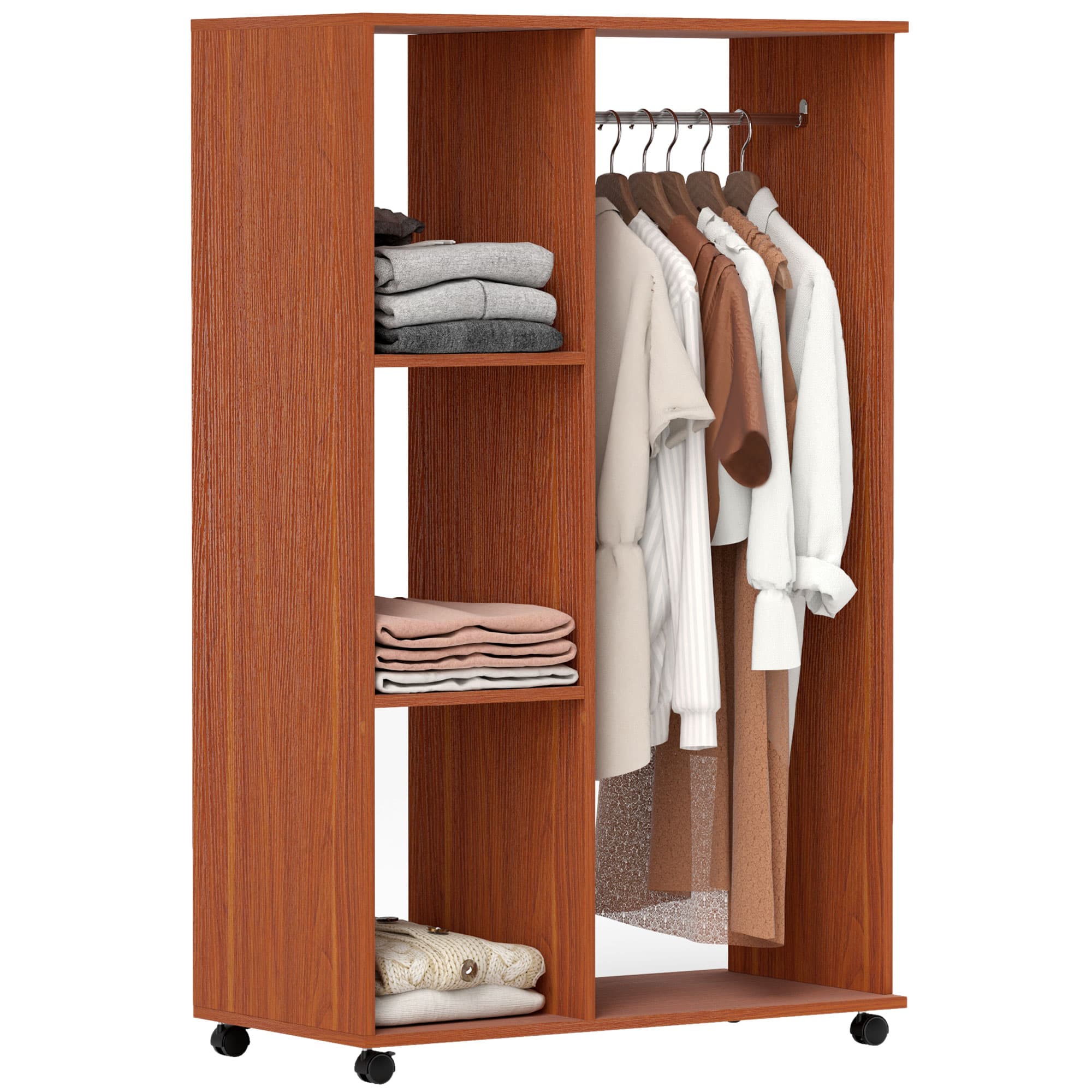
Five freestanding wardrobes and clothes rails that pull their weight in UK rented rooms — from a £29 fabric box-room fix to a walnut piece you'd happily leave on show. No drilling, no arguments with the landlord.