Somewhere around the second week of the summer holidays, my niece will corner me at a family barbecue and ask — with the specific persistence of a nearly-eight-year-old who has done research — whether she can have a rabbit. This year my sister has caved, and I've spent the last fortnight looking at hutches with the concentration you'd normally reserve for a first flat.
Here's what I've learned. Buying a small-pet hutch in the UK is less about the pet and more about the garden it has to live in. Boggy corner? Something raised. Foxy neighbourhood? Something lockable. Terraced side return, nowhere to store it? Something wheeled. Below are the five I've bookmarked at Villalta Home, from a £34 playpen for indoor free-roam to a £234 wheeled hutch that could see out a Yorkshire winter.
If you only read this: for a first rabbit or guinea pig going outdoors, the PawHut Elevated Hutch at £114.99 is the pick — anti-UV roof, lockable, ramped elevated design. On a tighter budget the PawHut Wooden Rabbit Hutch at £103.99 covers indoor or out.
The picks
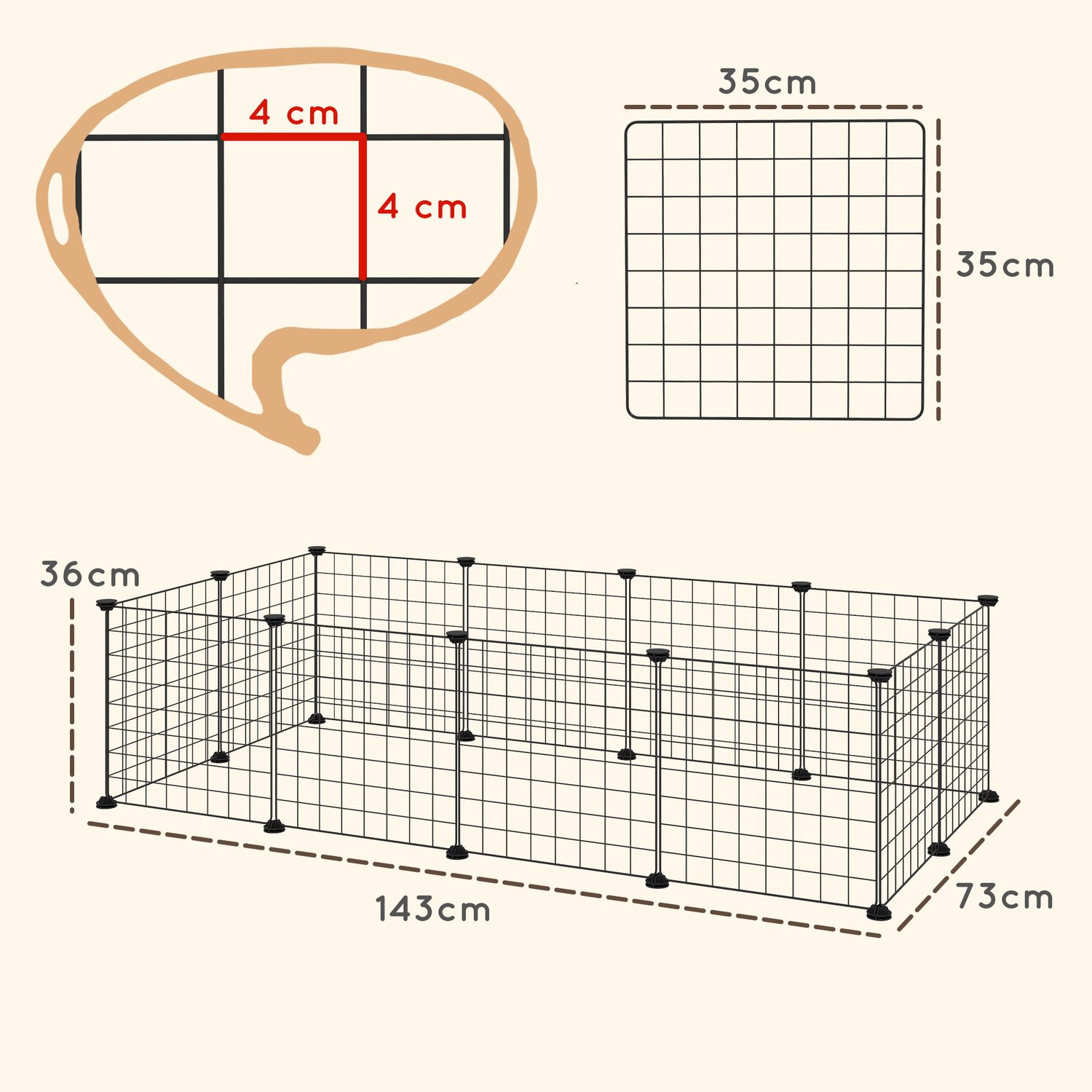
Not technically a hutch, but hear me out. Rabbits and guinea pigs do best with a proper enclosure at night and free-roam during the day, and this twelve-panel wire pen is the cheapest way to give them the second half. Clip the panels into whatever shape fits your sitting room, kitchen corner or patch of lawn — a circle for supervised play, a rectangle to bridge the hutch and a chew-safe zone, or a box round the skirting boards a rabbit has taken a liking to. Rounded panel edges are a small safety touch that matters more than the spec sheet suggests. The caveat: panel height won't stop a determined jumper, and juvenile animals can squeeze through if you haven't checked spacing. Supervised-play tool, not an unattended enclosure.
- Pros: under £35, reconfigurable, rounded safety edges, indoor or grass.
- Cons: not escape-proof, needs supervision.
- Best for: supplementing a hutch with proper free-roam space, especially for house rabbits.
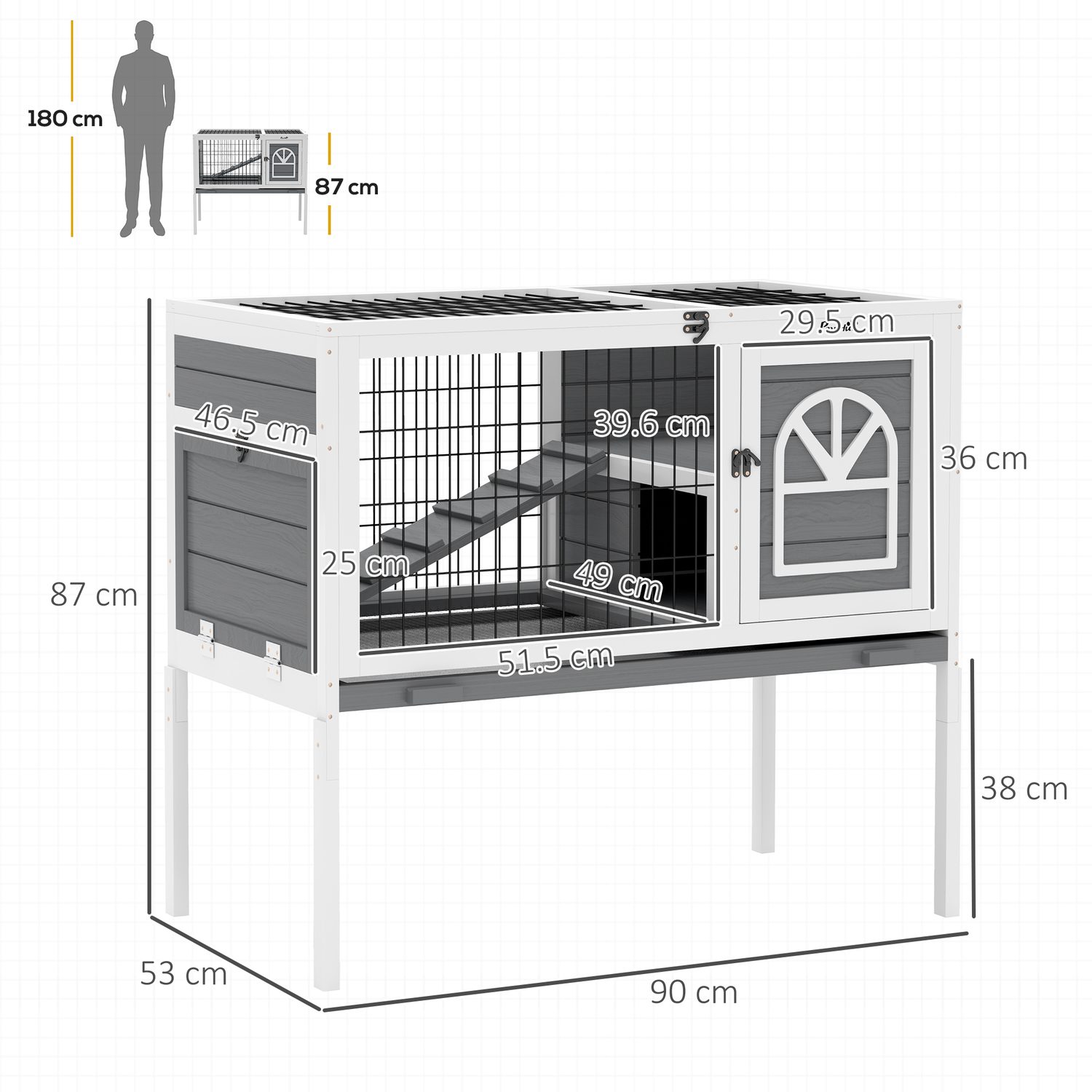
Solid fir house with a steel wire run — the classic small-pet setup. What earns the £104 over cheaper hutches is the openable roof and removable tray, which make daily cleaning a two-minute job rather than the reason you resent the pet. The detail I liked best is the removable legs: pop them off and it sits on a hard floor indoors; put them on and it clears wet grass outside. Two homes in one. Where it falls short is scale — fine for one rabbit or a pair of guinea pigs, but tight for bonded bunny pairs or a full-size rabbit after a year. Budget hinges too, so check them monthly.
- Pros: indoor or outdoor with removable legs, openable roof, removable tray.
- Cons: too small for bonded rabbit pairs, budget hinges.
- Best for: a first guinea pig or a single rabbit in a flat with garden access.
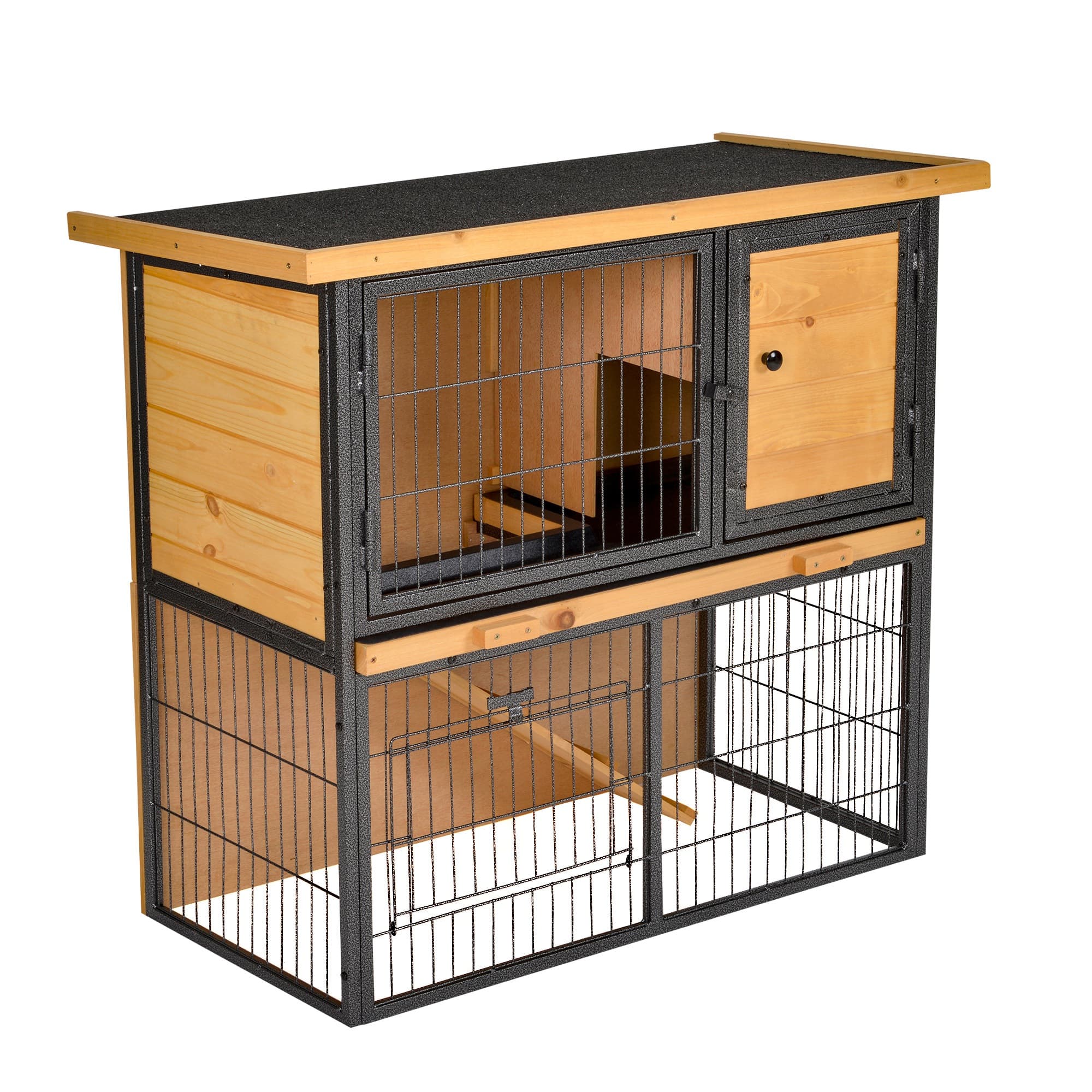
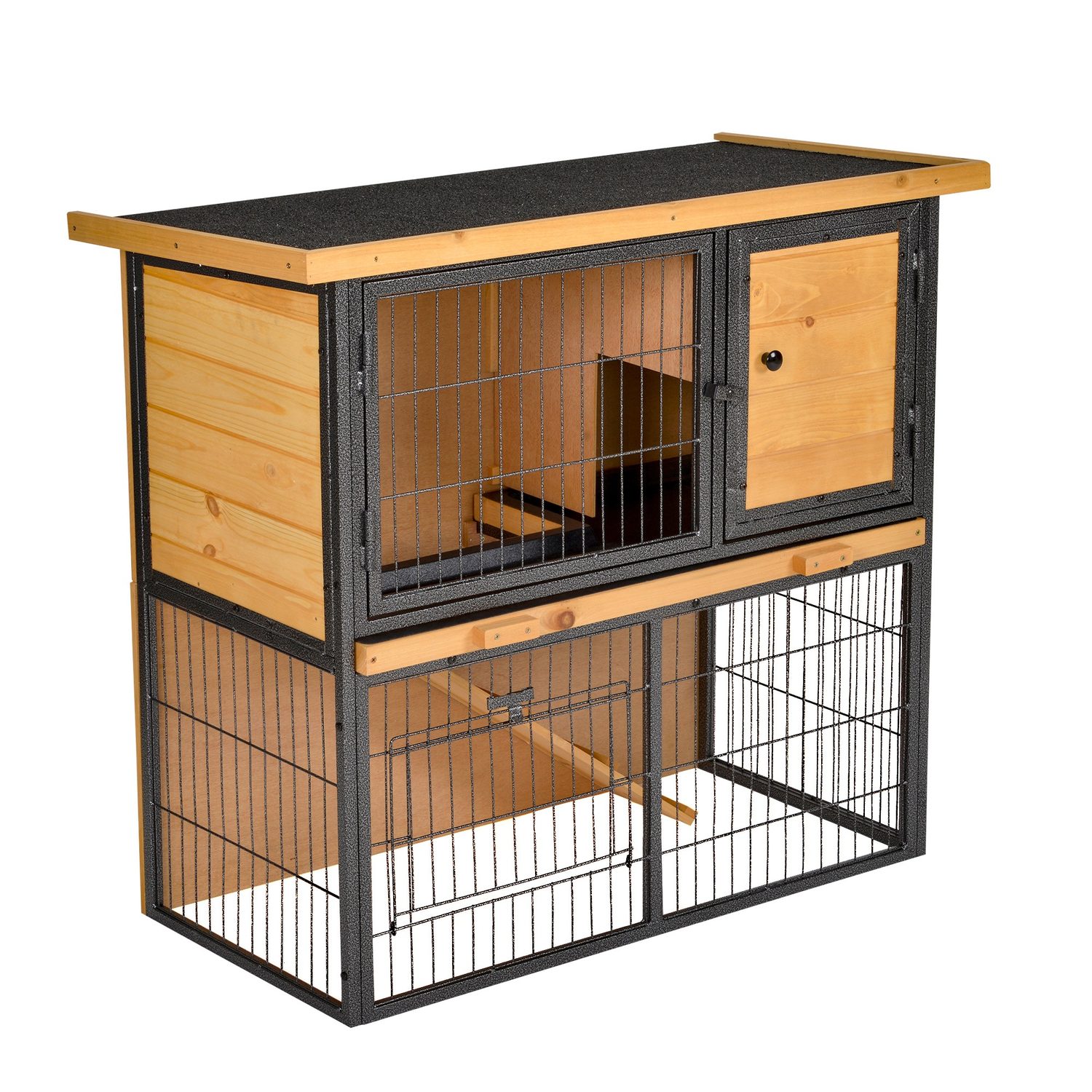
The one I'd buy if the hutch is going to live outdoors permanently. Elevated main room with a ramp to a run below — sheltered upstairs to sleep, open downstairs to move around. The anti-UV asphalt-effect roof isn't marketing fluff: a garden that catches direct afternoon sun will warp a plain fir roof inside a year, and this one holds. The lockable front door is the other detail worth paying for — foxes and cats are a bigger problem in a semi-rural back garden than most first-time owners expect. Downside: the light-yellow finish is Marmite. My sister loves it; my brother-in-law thinks it looks like a Wendy house.
- Pros: anti-UV roof, lockable door, elevated design with ramp, proper outdoor build.
- Cons: yellow finish isn't for everyone, still relatively compact.
- Best for: a first outdoor rabbit or guinea pig in a small-to-medium UK back garden.
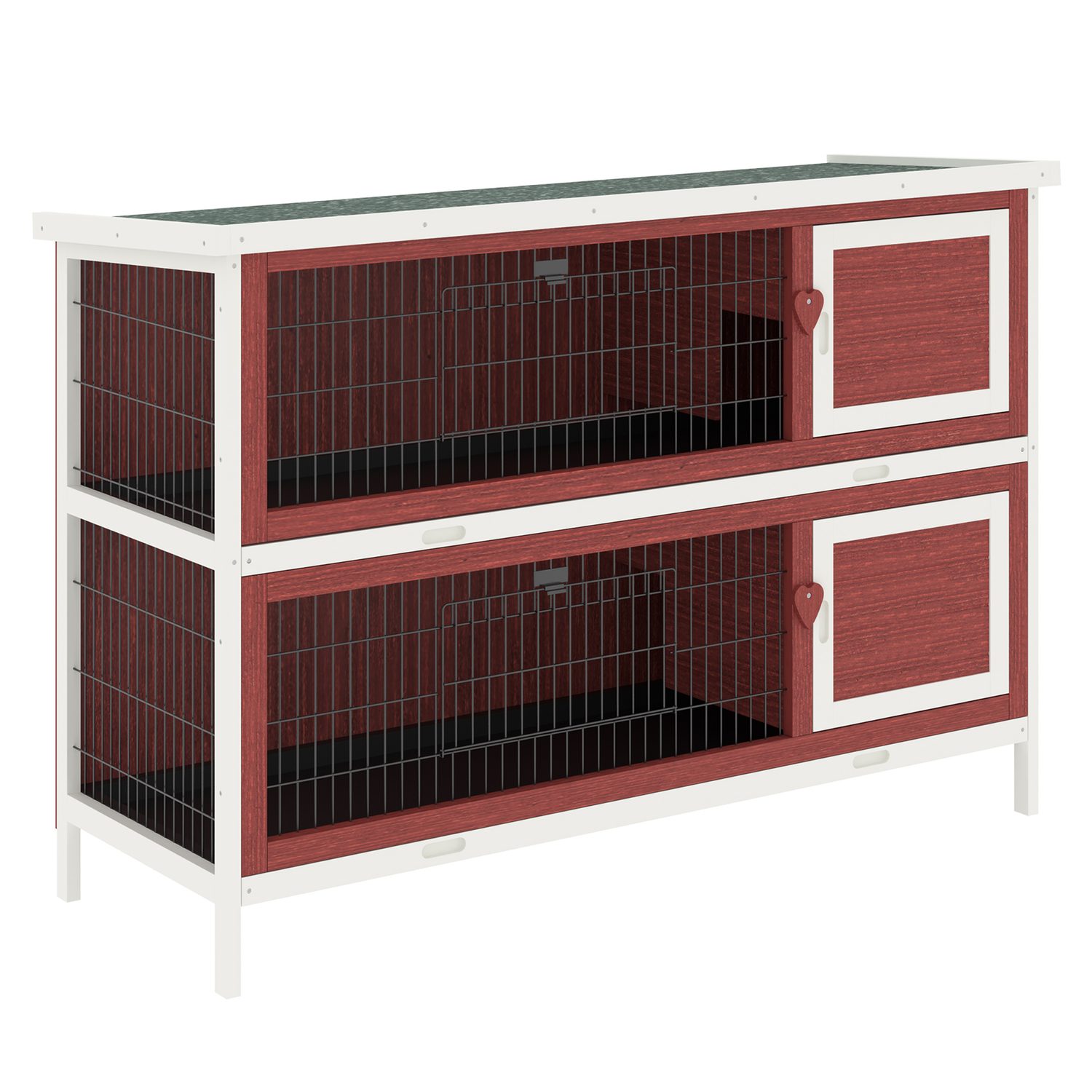
At 136 x 50 x 93 cm this is the first hutch here that feels like a proper home for a bonded rabbit pair rather than one lonely lop. Two full-size tiers, no-leak slide-out trays on each level (underrated — if you've ever cleaned a fixed-floor hutch, you'll know), and a weatherproof locking roof. The metal-wire reinforced fir frame is the overbuild that pays off in year three, when lesser hutches have started to sag and this one still holds square. Two catches: at 136 cm it eats a chunk of any UK garden — measure first — and it's heavy once assembled, with no wheels, so position it where you want it to stay.
- Pros: proper two-tier size, no-leak trays each level, reinforced build, lockable.
- Cons: 136 cm footprint, no wheels, heavy assembly.
- Best for: a bonded rabbit pair or a serious guinea pig herd, in a garden with 1.5 m of continuous ground to give.
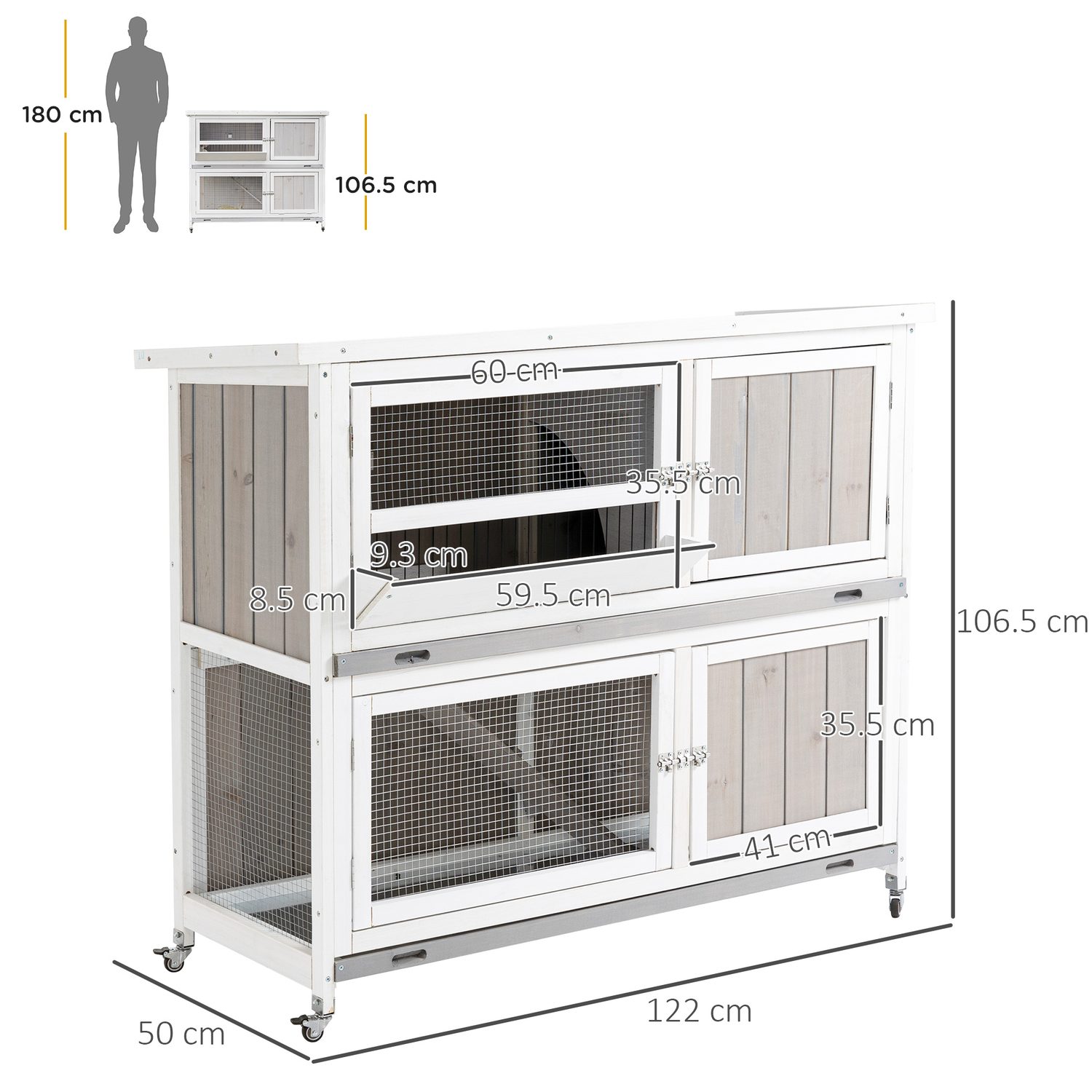
The one I'd buy if I could get away with it. Two-tier ramp design, solid fir with water-resistant paint, pull-out trays on both levels, and — critically — a rain cover plus four wheels. Wheels sound like a gimmick until you've tried to shift a soaked, occupied hutch across a lawn in October to get it under eaves cover. Then they're the reason you don't hate your life. The white finish looks smart in a small garden, though it wants a wipe-down every couple of months to stay that way in a British climate. At £234 you're paying premium money for a plywood-and-fir build, so it's best of what's here, not a lifetime piece.
- Pros: wheels, rain cover, water-resistant paint, pull-out trays each level, sharp white finish.
- Cons: £234 for a fir-plywood build, needs occasional wipe-down.
- Best for: owners who want a set-and-forget outdoor hutch that can move around the garden with the seasons.
The verdict
For most first-time UK owners the PawHut Elevated Hutch at £114.99 is the sensible middle — anti-UV roof, lockable door and ramped elevated design mean you're not upgrading in eighteen months. On a tight summer-holiday budget the £103.99 wooden hutch with removable legs still does the job. And if you've committed properly — a rabbit pair, a garden with room, a British winter to see through — the £233.99 wheeled two-tier is the one to stretch for.
By the Villalta Home Editorial team, July 2026. Edited by Juan Antonio Villalta Pacheco.