The hallway in a friend’s Victorian terrace in Leeds is 82 cm wide once the radiator is counted, and the morning shoe pile somehow manages to take up half of it by 8:15. That is the real test here: not which storage looks tidy in a catalogue, but whether you can get a school bag, a wet umbrella and two people past it without doing the sideways shuffle. For a genuinely narrow UK hallway, I’d pick a slim shoe cabinet over a shoe rack. The thesis is simple: under 90 cm of usable width, closed flip-front storage keeps the walkway clearer and the entrance calmer than an open rack.
The case for shoe cabinets
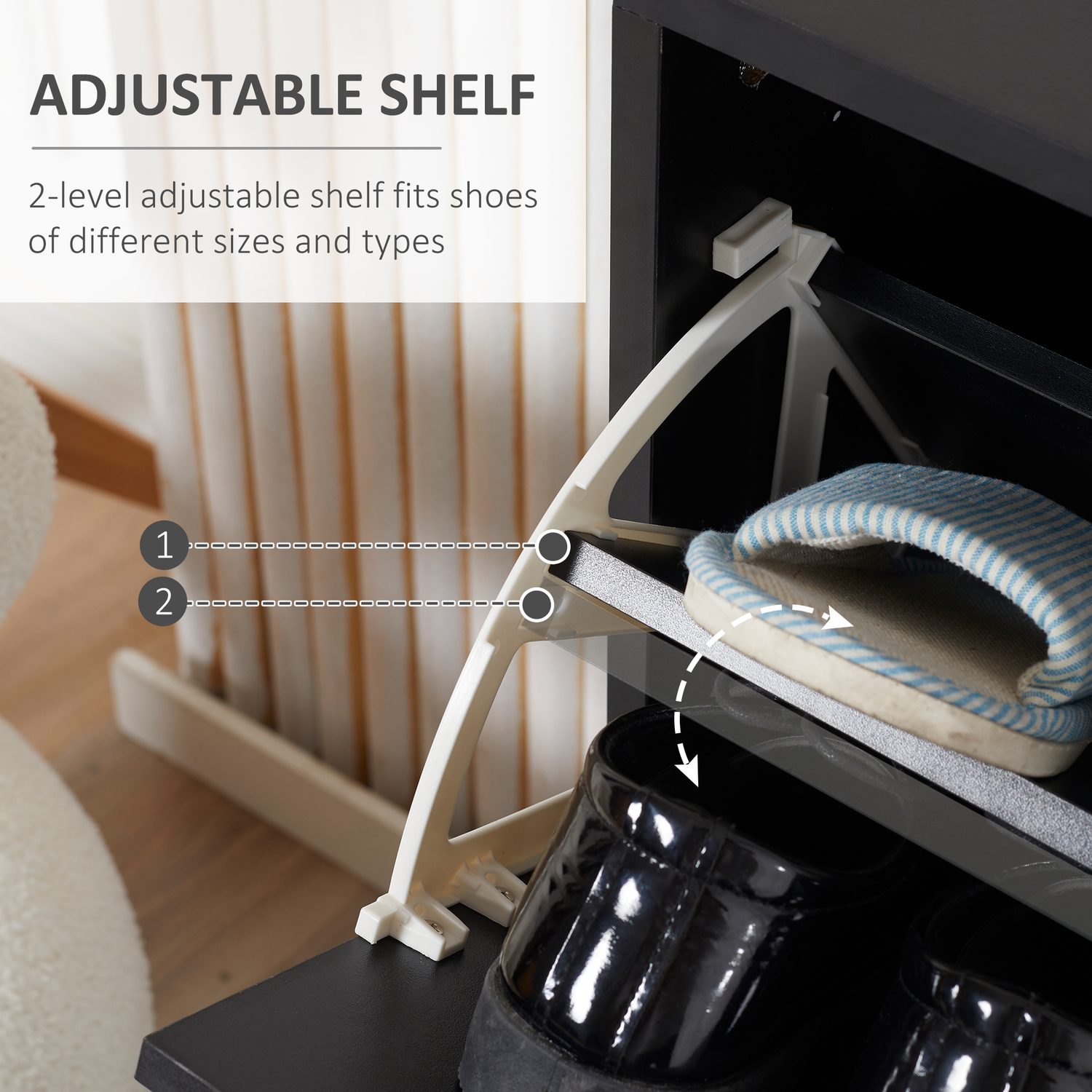
A slim shoe cabinet wins because depth matters more than total capacity in a narrow hall. The useful models are usually 18 cm to 30 cm deep, with tilt-out compartments rather than shelves you have to crouch into. That means a 78 cm hallway still has enough passable space after the cabinet is fitted, assuming you don’t choose one with silly handles sticking out. In a rented flat or a Manchester new-build with a tight entrance, that extra 10 cm can be the difference between sorted and constantly annoyed.
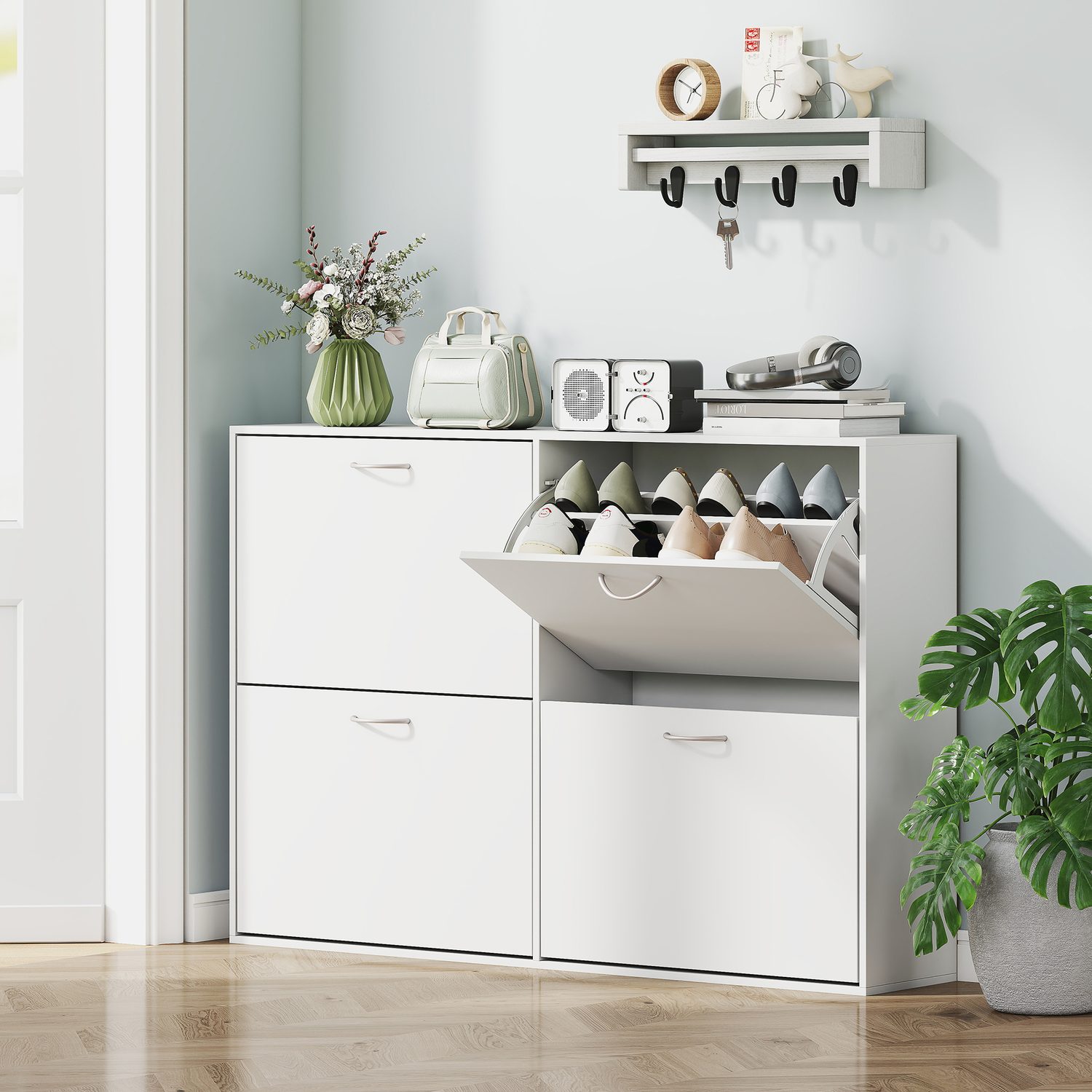
The other advantage is visual. Open footwear looks messy even when it’s technically organised. Trainers gape. Boots lean. The odd football boot brings in clods from the kerb. A cabinet shuts all that away, which is why a plain white or grey flip-front style often works better than a rack in small homes: it reads as furniture, not evidence. Something like a modern 4-drawer white shoe cabinet is the shape I’d be looking at for a slim hallway, especially if you need adult shoes separated from children’s pairs without building a tower.
Capacity claims need reading with suspicion. “18 pairs” often means women’s flats or neat low trainers, not UK size 11 boots. A two-compartment slim cabinet may realistically take 8 to 12 everyday pairs; a taller four-drawer cabinet can take 16 to 24 if you mix kids’ shoes and low-profile trainers. Price-wise, the decent band is roughly £69.99 to £189.99, with very cheap cabinets more likely to have thin backs and wobbly doors. The catches and hinges matter. If the flip-fronts don’t close square, the whole thing looks tired within six months.
There is one non-negotiable caveat: most slim cabinets should be fixed to the wall. They’re shallow by design, so a child pulling down a drawer can tip one forward. In older terraces with crumbly plaster, that can mean proper wall plugs, a stud hunt, or a bit of faff with masonry bits. Landlords may not love it. Still, for a narrow hallway used every day, I’d rather deal with two fixing points than live with shoes migrating across the floor.
The case for shoe racks
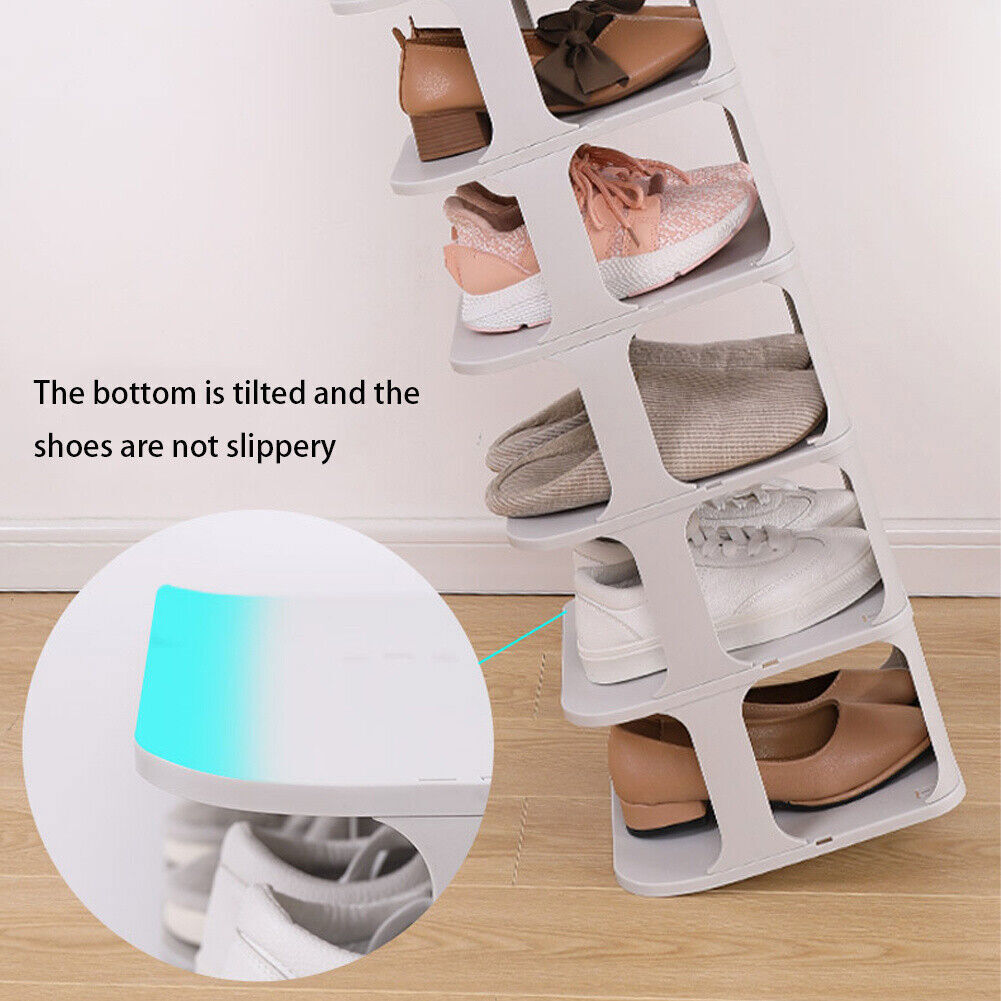
A shoe rack has one honest strength: it is cheap, simple storage that doesn’t pretend to be furniture. You can buy a basic metal or fabric rack for £18.99 to £35.99, a bamboo folding rack for about £39.99 to £69.99, and a taller rack with six or seven tiers in the £45.99 to £89.99 bracket. No drilling, no hinges, no mystery instructions that seem to have been translated through three languages. In a rented flat where the landlord has banned wall fixings, a rack is the pragmatic pick.
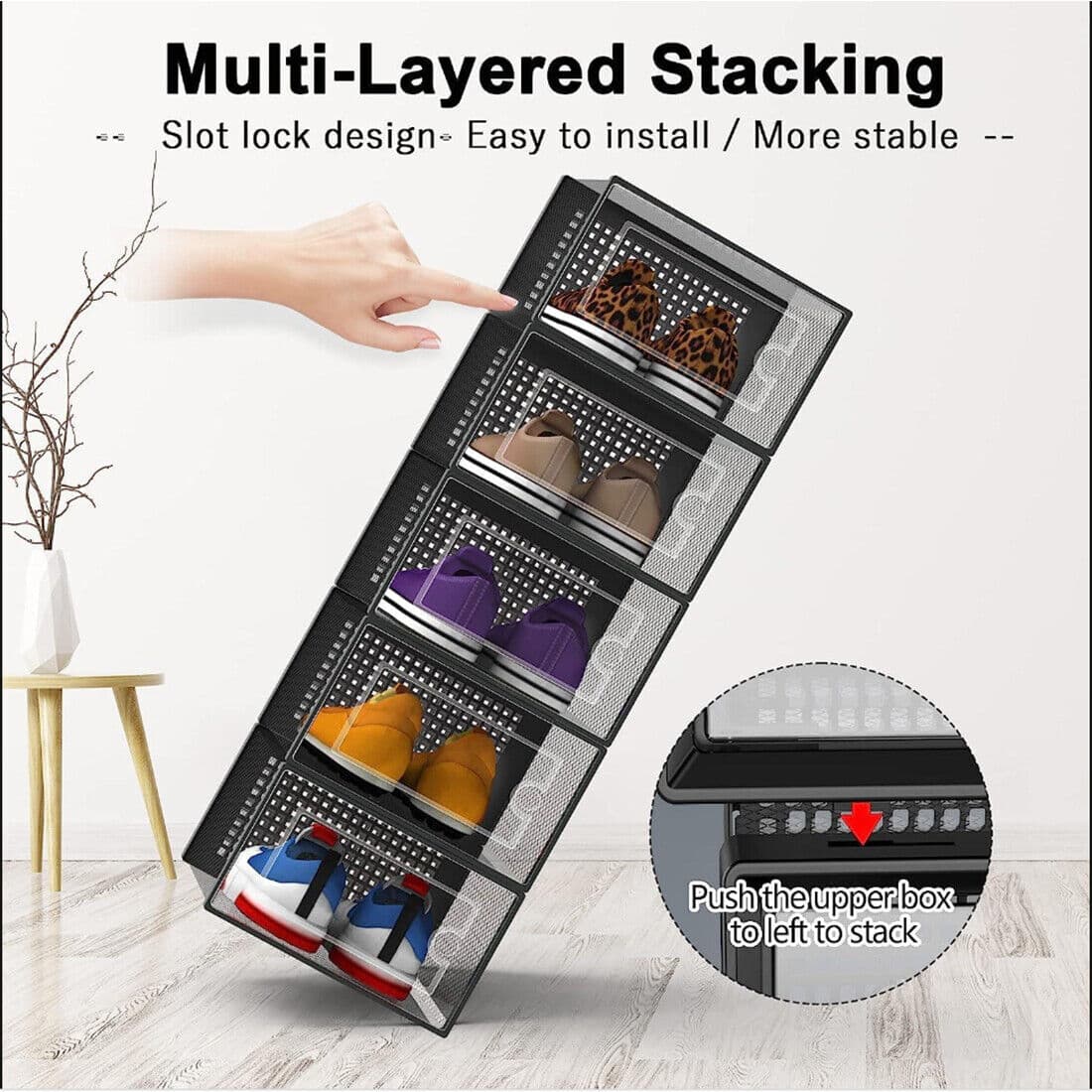
Racks are also better for wet shoes. A closed cabinet with damp trainers inside can get musty, especially in winter when the hall is cold and the coats are already steaming from the school run. An open rack lets shoes air out. If you’ve got football boots, dog-walking trainers or rain-soaked school shoes, an open tier near the door is genuinely useful. A five-tier bamboo rack or a tall 7-tier shoe rack can hold a surprising number of pairs for the footprint, although “surprising” often means vertical clutter rather than elegance.
The counterargument to my cabinet preference is strongest here: in real family homes, shoes are not museum objects. People kick them off, they’re muddy, someone is always late. A rack makes that behaviour easy. No drawer to open, no pair to angle into a narrow slot, no adult having to police the entrance like a nightclub doorman. For children, especially, open storage is easier to use properly.
I buy that argument for utility spaces, under-stairs cupboards and porches. I don’t buy it for a narrow front hallway where the storage is always visible. Racks sprawl. Even a rack that measures only 30 cm deep behaves larger once shoes hang over the front by 5 cm, laces dangle and boots sit sideways because they don’t fit the shelf height. The cheaper the rack, the more it tends to wobble when loaded unevenly. And if your hallway is already doing coat hooks, post, bags and a pushchair, the open rack becomes another little public display of household chaos.
The honest trade-off
The trade-off is discipline versus tolerance. A cabinet asks more of you: shoes need to be fairly dry, fairly flat and put away with half a second of intent. Larger boots may need a separate boot tray, because slim flip-front cabinets are not kind to ankle boots, wellies or chunky walking shoes. You may also lose capacity if your household wears larger sizes; UK size 10 and 11 trainers take up more room than the brochure mood shot admits.
A rack forgives messy behaviour but makes you look at the mess. It is cheaper and easier to move, which matters in rented flats with narrow stairs and awkward tenancy rules. It also avoids the tipping concern if you choose a low, stable design. Yet in the specific narrow-hallway problem, the open rack’s cheapness doesn’t solve the main issue: keeping the passage clear.
In a hallway under 90 cm wide, a slim cabinet controls the sprawl; a rack merely gives the sprawl shelves.
If you want a hybrid, a shoe bench can work in a squarer hallway, but many are 35 cm to 40 cm deep. That’s too greedy for a tight corridor unless the opposite wall is completely clear.
Which to pick by use case
- Victorian terrace hallway, 75 cm to 90 cm usable width: pick a slim shoe cabinet. Go for 18 cm to 28 cm depth, wall-fixed, with flat fronts. A slim black flip-front shoe cabinet is the kind of format that earns its keep here.
- Rented flat under 60 m², landlord won’t allow drilling: pick a low shoe rack. Keep it to two or three tiers, ideally under 80 cm wide, and accept that it needs regular editing. Tall racks can feel dodgy if they’re overloaded.
- Family hallway with school shoes, trainers and football boots: pick a cabinet plus a boot tray. The cabinet handles daily pairs; the tray takes wet, bulky shoes until they dry. One piece of storage cannot do both jobs neatly.
- Porch, utility room or cupboard away from the front door: pick a rack. Ventilation matters more there, and visual clutter is less of a crime if guests aren’t staring at it while taking off their coat.
FAQs
Are shoe cabinets better than shoe racks for a narrow hallway?
Yes, a slim shoe cabinet is usually better for a narrow hallway because it contains shoes behind flat fronts and reduces spill into the walkway. Choose a depth of about 18 cm to 30 cm for halls under 90 cm wide.
Do slim shoe cabinets need to be fixed to the wall?
Most slim shoe cabinets should be fixed to the wall because their shallow depth makes them easier to tip forward. This is especially important in homes with children or heavy adult trainers stored in the top drawers.
What is the best shoe rack for a rented UK flat?
The best shoe rack for a rented UK flat is a low, stable two- or three-tier rack that does not need drilling. Avoid very tall racks in tight hallways unless they can be secured safely and won’t block the route to the door.
How deep should hallway shoe storage be?
Hallway shoe storage should be no deeper than 30 cm in a narrow corridor, and 18 cm to 25 cm is better where space is really tight. Benches and open racks often exceed this once shoes overhang the front.
Can you put wet shoes straight into a shoe cabinet?
No, wet shoes should dry before going into a closed shoe cabinet, or the cabinet can smell musty and the internal panels may suffer. Use a washable boot tray by the door, then move the shoes into the cabinet later.
How many pairs fit in a slim shoe cabinet?
A slim shoe cabinet usually fits 8 to 24 pairs, depending on height, compartment count and shoe size. Treat catalogue capacity claims as optimistic if your household wears bulky trainers, boots or larger UK sizes.