I started buying bottles I actually liked — Languedoc reds at the Saturday market, a couple of Loire whites on a whim — and within six weeks they were stacked on top of the microwave, propped against the toaster, and one had rolled under the sofa. A UK flat without a cellar (which is, let's be honest, most of them) needs somewhere proper to put the wine. Otherwise it sprawls across the kitchen looking like the morning after a party that never happened.
What follows is five wine racks I'd actually live with. All under about £300, all sensible for the rooms British flats actually have: galley kitchens, dining alcoves, the awkward corner by the radiator.
How I picked
A wine rack is a small commitment that adds up. Five things to weigh before you click buy:
- Depth. Most British galley kitchens lose usable floor at around 60–70 cm before you start bumping into the cooker or fridge. Anything deeper than 30 cm is going to make you grumpy by Tuesday.
- Bottle angle. Cork needs to stay wet, so bottles should sit horizontal or with a slight nose-down tilt. Vertical "display" racks are fine for the bottle you're drinking this week, useless for anything ageing.
- Honest capacity. A "72-bottle" rack that bows under 20 is a waste of timber. Check the published weight load — anything under 1.5 kg per bottle slot is wishful thinking.
- Anti-tip kit in rentals. Tall freestanding racks must wall-anchor. The flatpack panic is real, and a 25 kg rack going over takes the plaster with it.
- It has to look right. Black steel and natural pine sit happily in nearly any kitchen. Anything with brushed gold or chrome legs is going to fight your worktop.
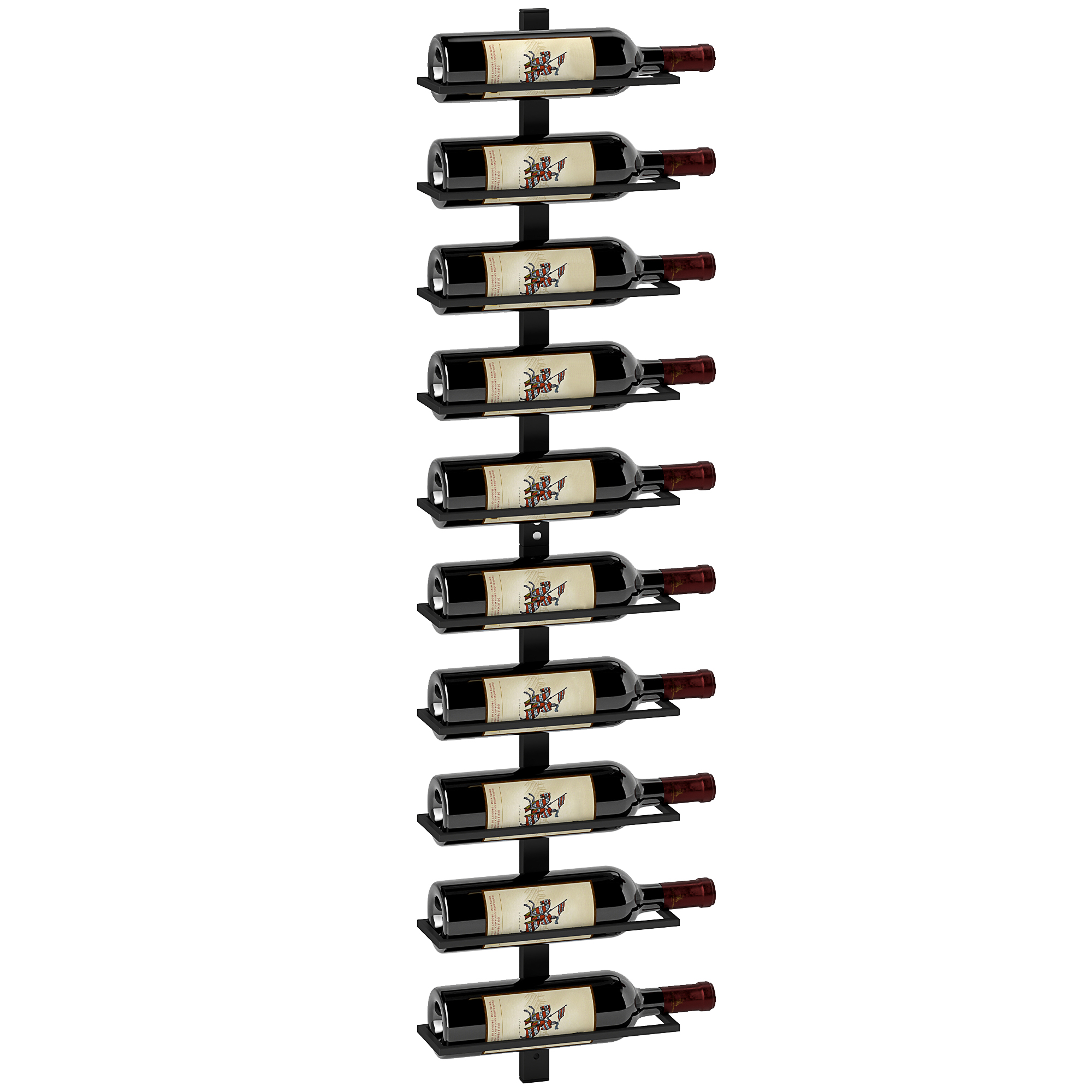
!Wall-mounted black 10-tier steel wine rack
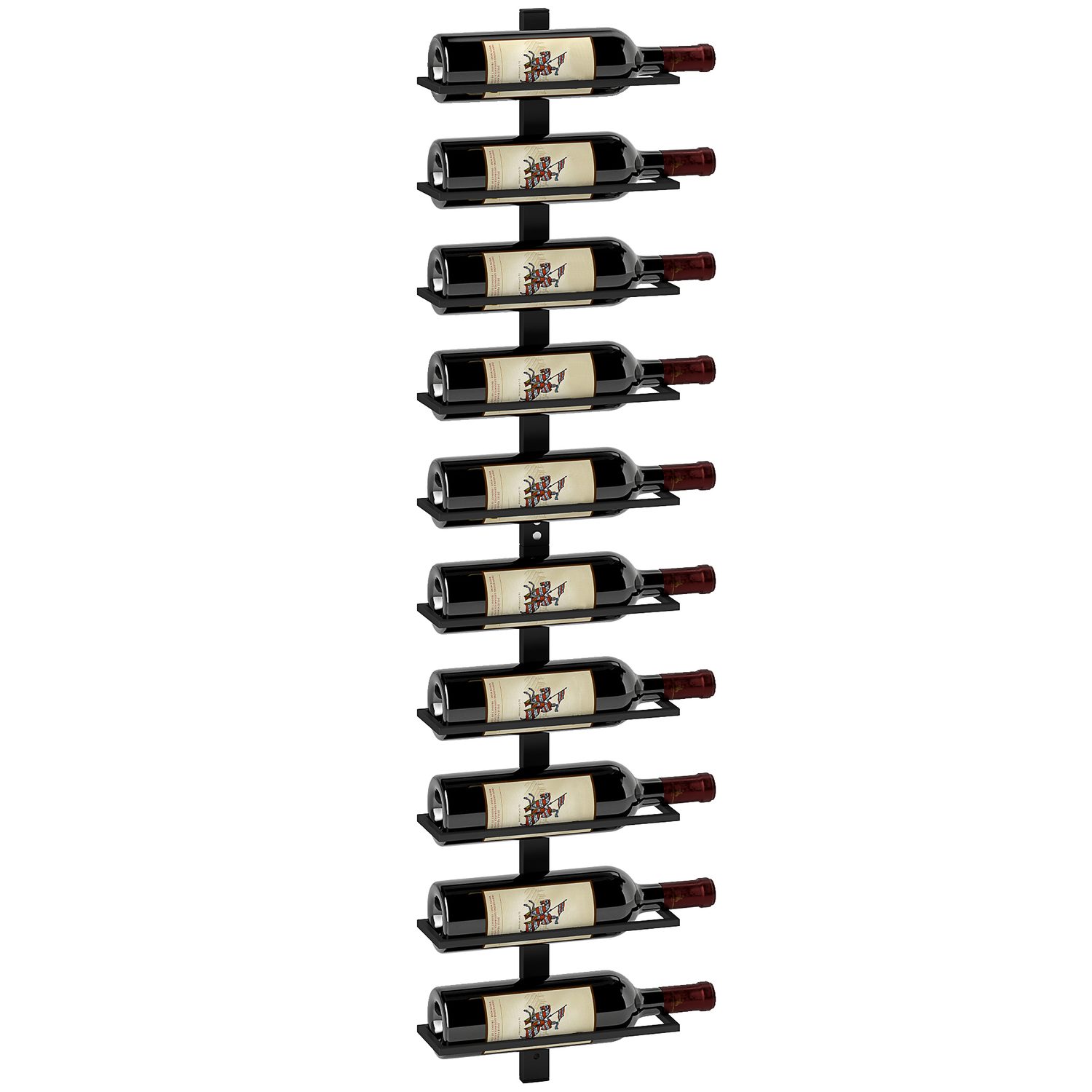
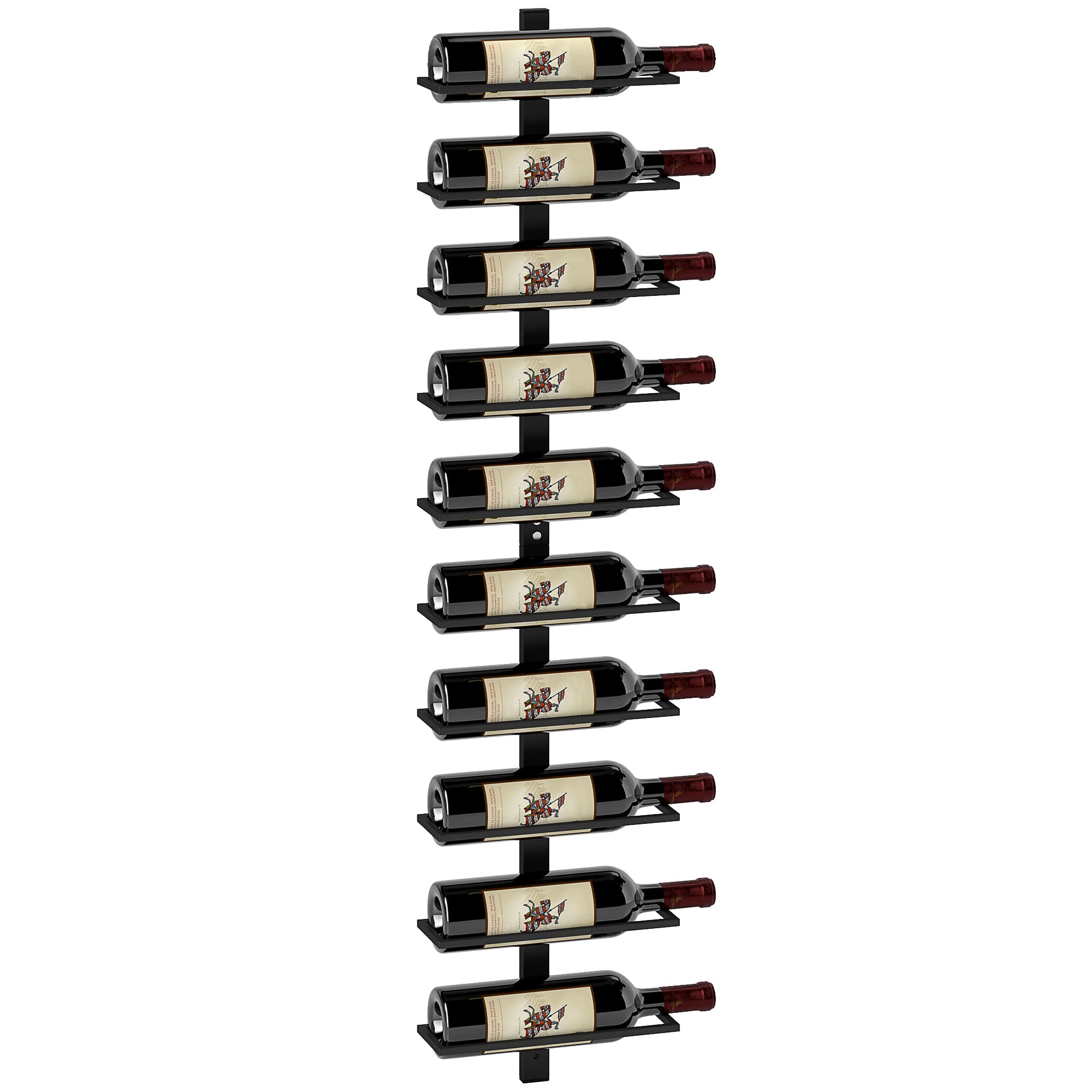
The pick for galley kitchens. A 10 cm depth is the standout figure here — that's the same depth as a magnetic knife strip, which means you can put this above a worktop and still have full elbow room underneath. It's powder-coated black steel, with bottles sat horizontal one above the other, so it reads as a display rail rather than a chunky storage unit. Ten bottles is about three weeks of weeknight pours for a couple who enjoy a glass with dinner, which feels honest.
The catch: it's wall-fixed, so you'll need to find studs in a stud wall, and the load is rated at 2 kg per tier — fine for standard 750 ml bottles, less fine if you start parking magnums on it. The black powder coat shows kitchen grease if it's near a hob, so position it well away from your splashback.
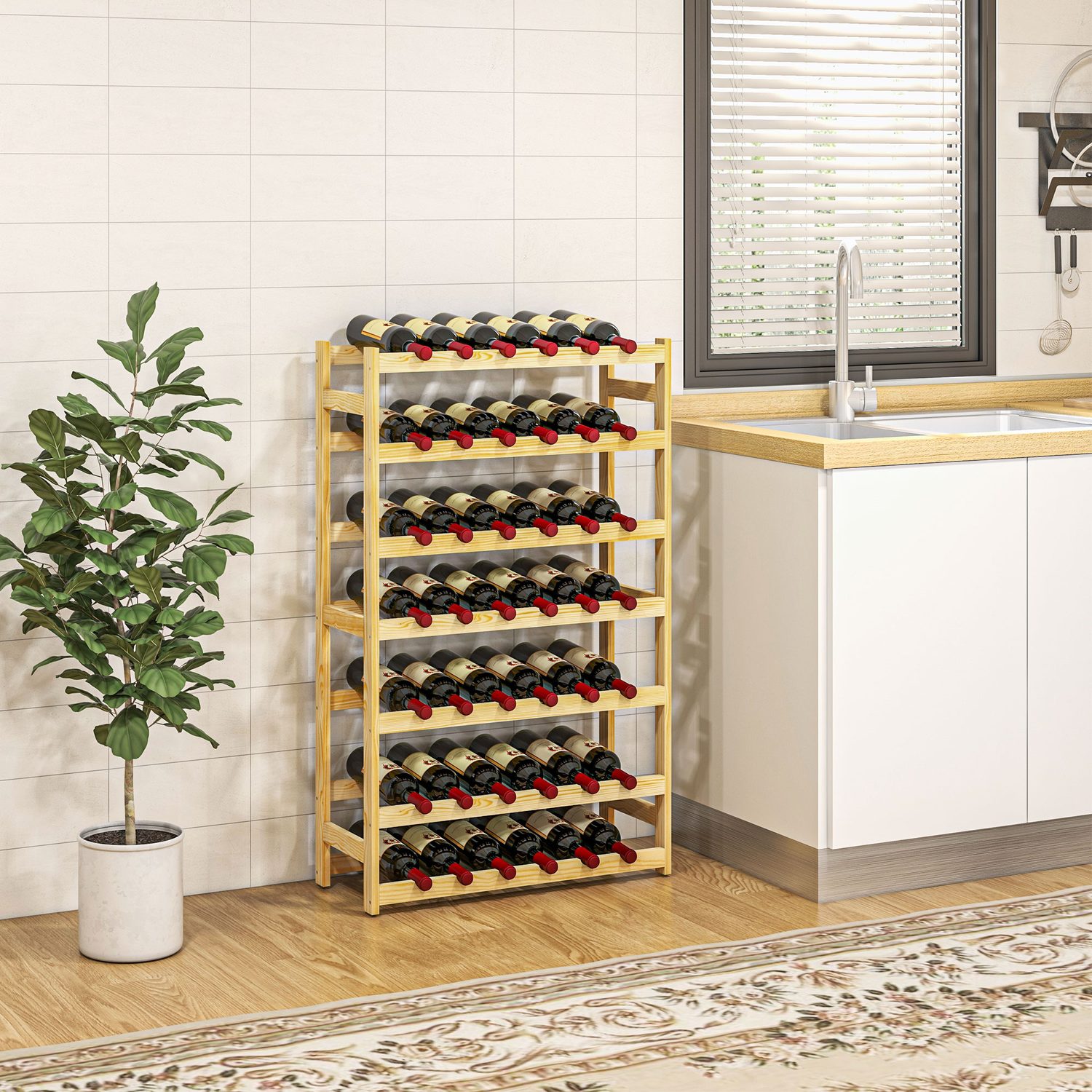
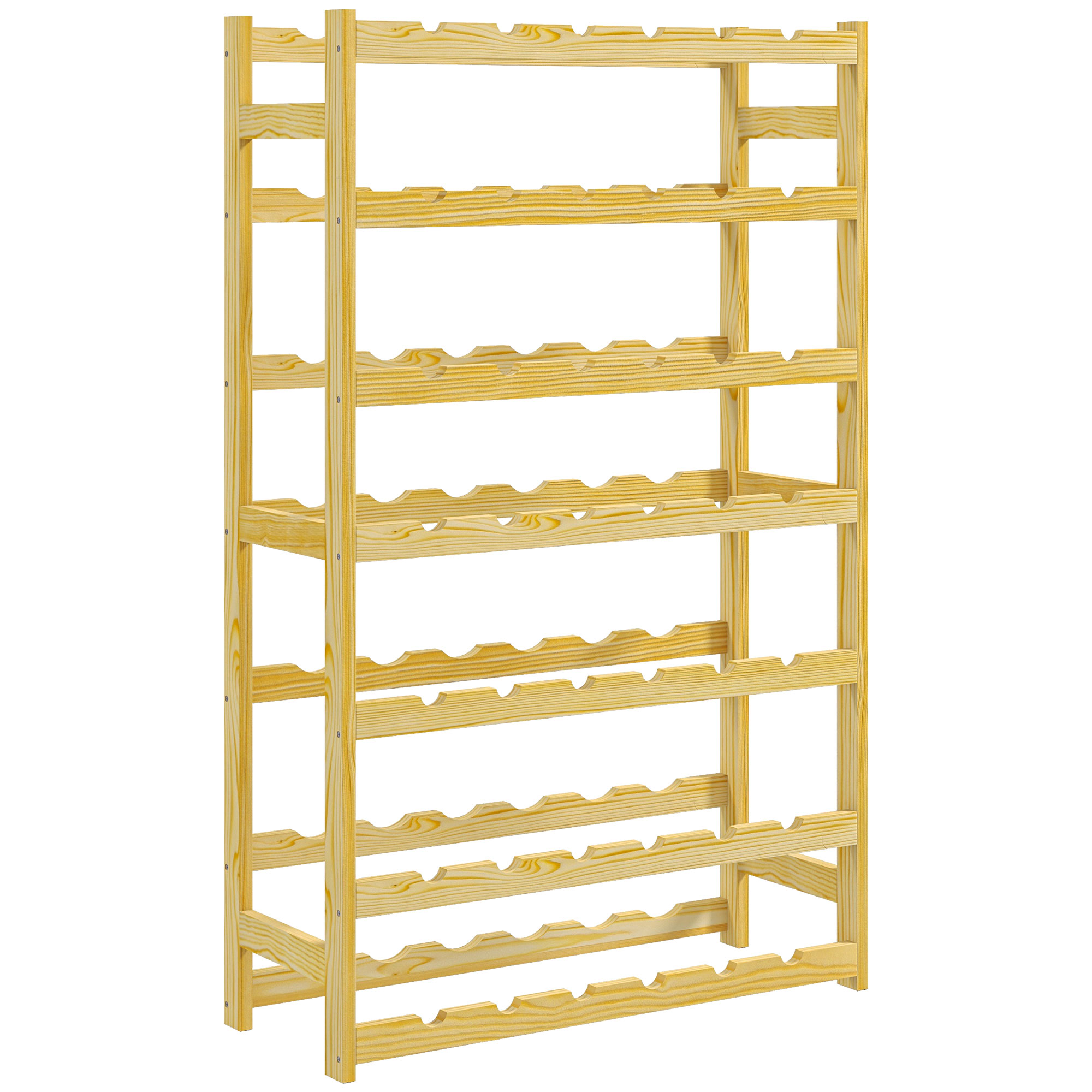
!42-bottle natural pine wood wine rack, seven tiers
The most rack per pound. This is the pick if you've gone past the "casual drinker" stage and you've started keeping a few bottles back. Forty-two slots in a 25 cm-deep footprint is properly efficient — it slots into the gap between fridge and wall in most kitchens, or against a dining-room wall behind the door. The shaped slots are the bit that matters: bottles sit nose-down at a sensible angle, not slumped flat like on a flatpack shoe rack.
It comes with anti-tip straps in the box, which says they know it'll wobble on a high pile carpet. Use them. The pine is unfinished-looking and a touch raw out the box, so factor in a coat of beeswax or matt clear varnish if you want it to look like a proper piece of furniture rather than a delivery crate. Standard 750 ml bottles only — sparkling-size won't sit cleanly.
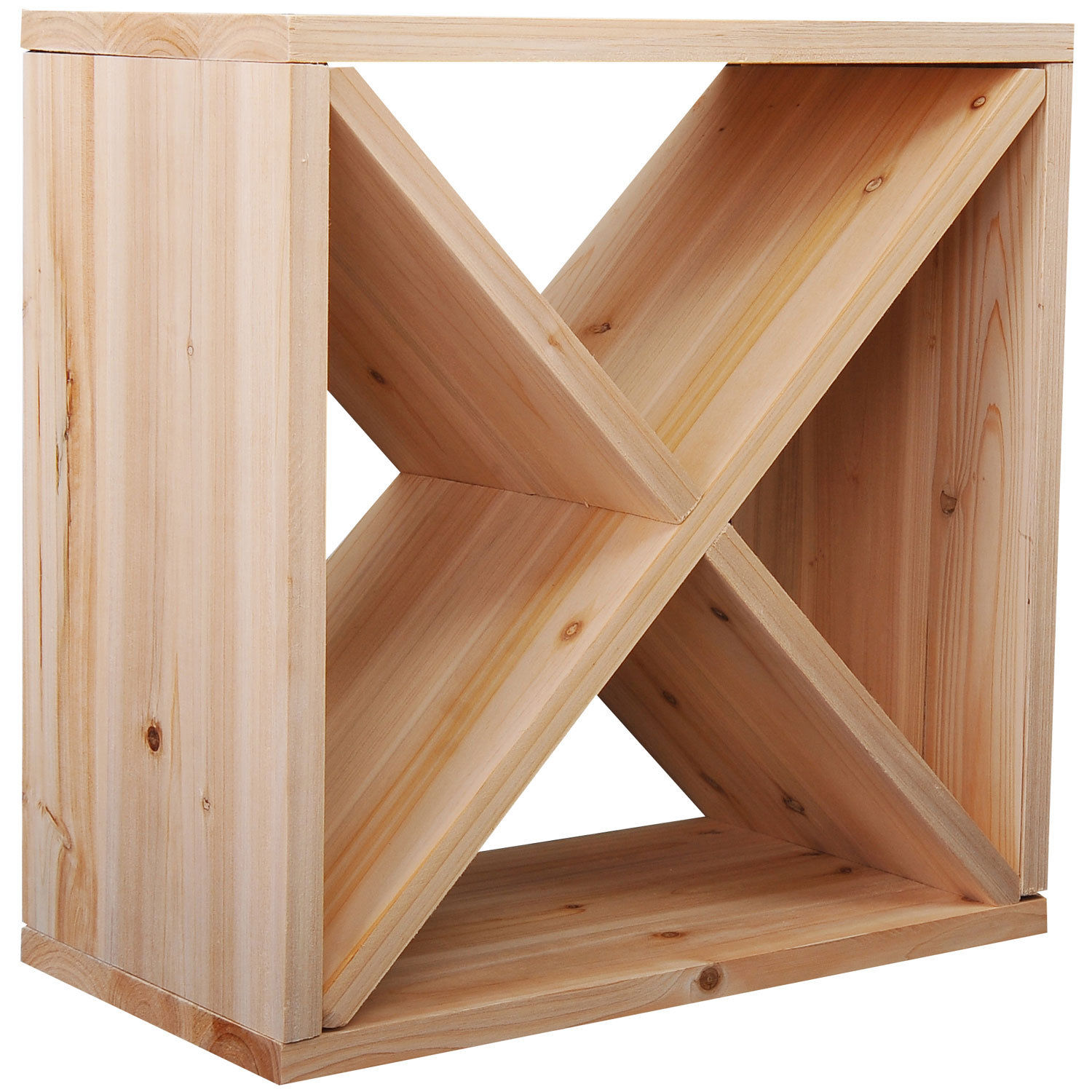
!24-bottle natural wooden tabletop wine rack with cross-braced frame
The dinner-party pick. Sits on a sideboard, kitchen island worktop or dining-room console and reads as deliberate. The cross-braced wood frame is simple and easy on the eye — none of the chrome-tube nonsense that older racks went in for. Holds 24 bottles in four neat sections, so you can sort them roughly by style (a row of reds, a row of whites, a row to be opened sharpish, a row to leave alone) without trying to remember which is which.
It's tabletop, not freestanding, so the surface underneath has to take 35 kg loaded — a flatpack sideboard with thin top board won't. The natural wood is honest but it does mark; a coaster underneath the bottles you're decanting is a sensible move. Best for sideboards with at least 30 cm of usable depth, which rules out most narrow hallway consoles.
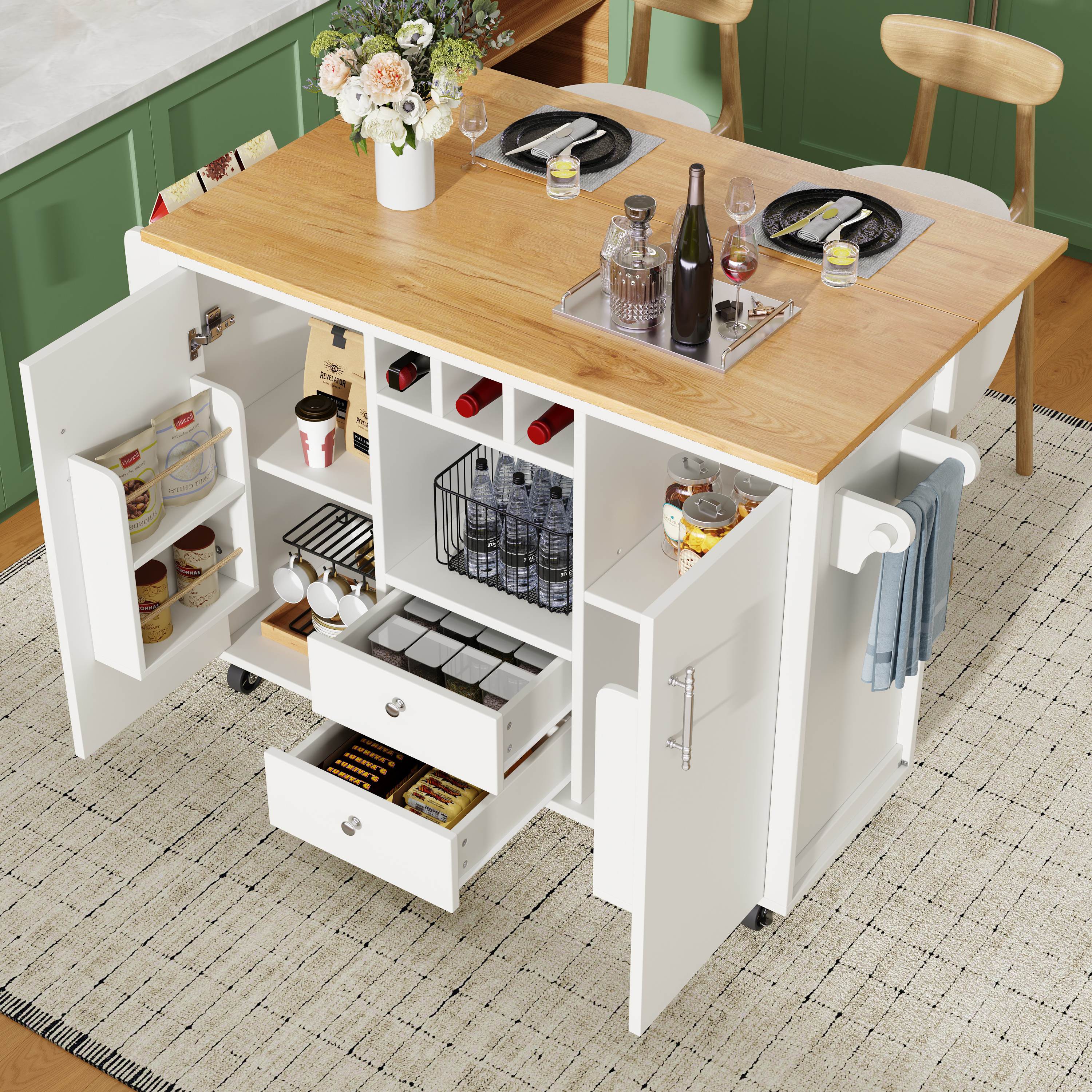
!White kitchen cart with folding worktop, drawers and wine rack
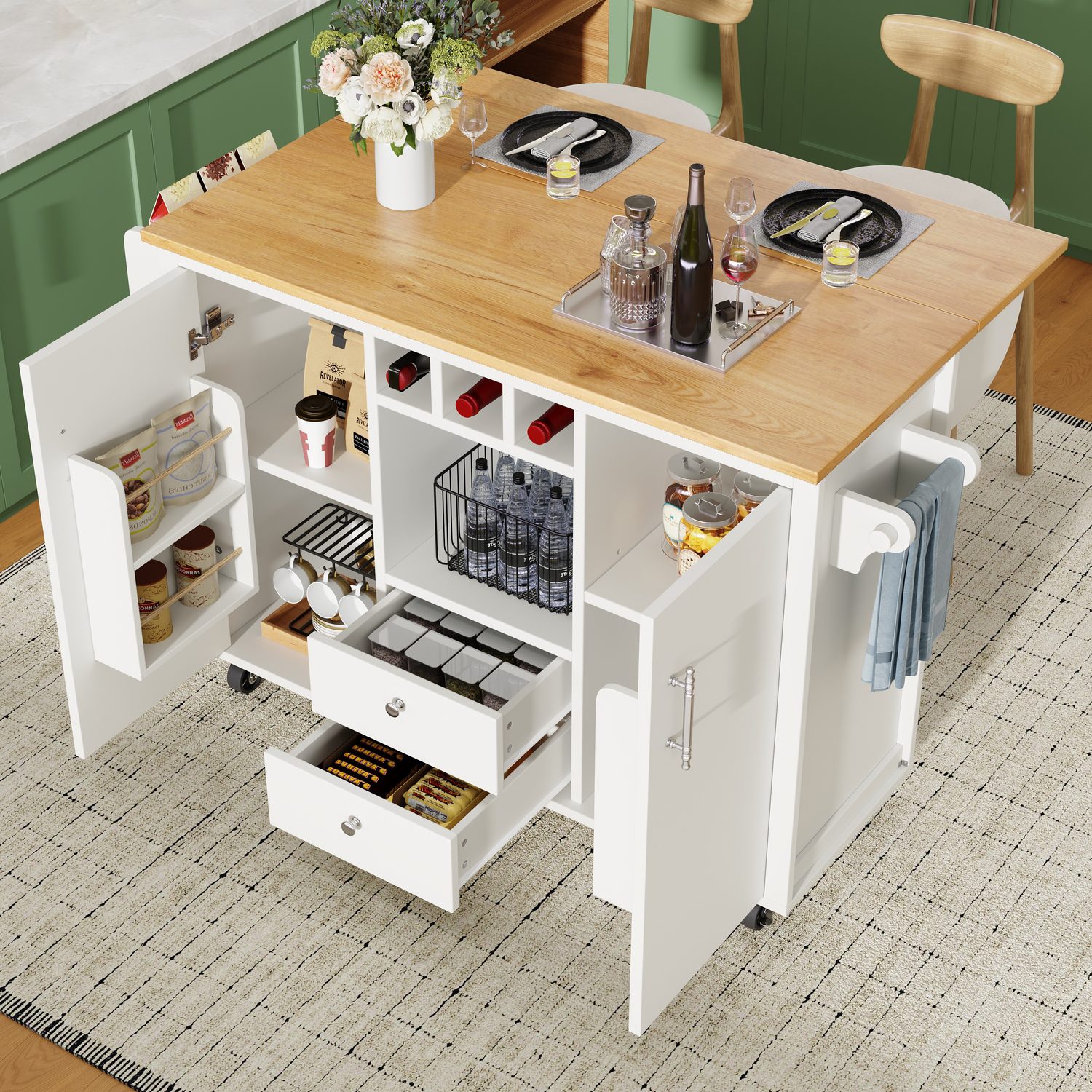
The renter's double-duty pick. Half wine rack, half prep table, on wheels — it's the answer if you don't have the floor for both a kitchen island and a freestanding rack. The folding worktop on top gives you an extra slab of prep space when you need it (Saturday morning baking, hosting four for dinner) and tucks back away when you don't. The wine slots sit under the worktop and hold about ten bottles plus a spice shelf, which is a sensible everyday allowance.
It's MDF rather than solid wood, so don't pretend it's a butcher block — it'll dent if you go at it with a heavy cleaver. The wheels lock, which they need to, because four caster wheels on a kitchen lino make for a lively thing if you lean on it. Best for tenants who'd rather pay £130 for one piece that does two jobs than £200 for two pieces that don't fit.
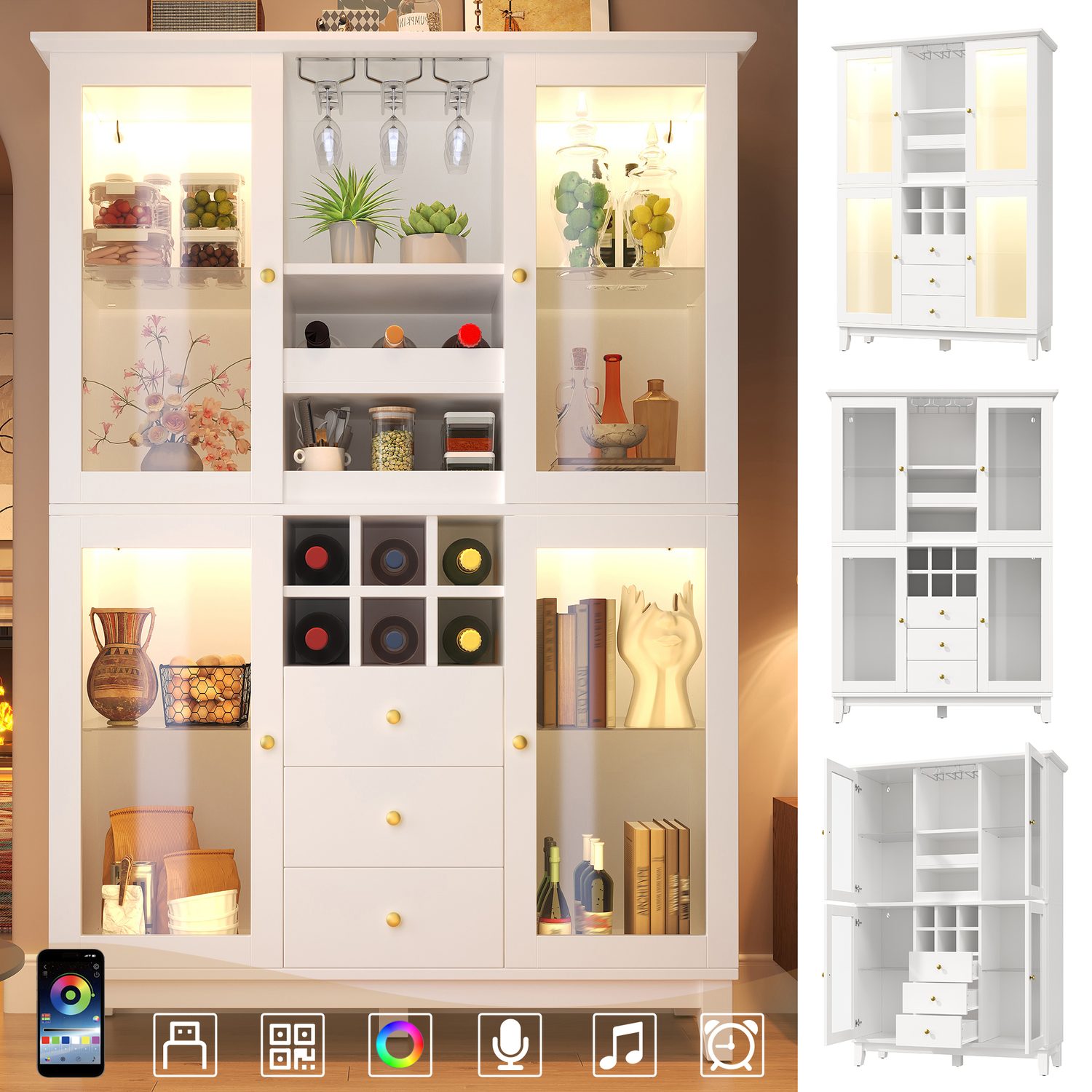
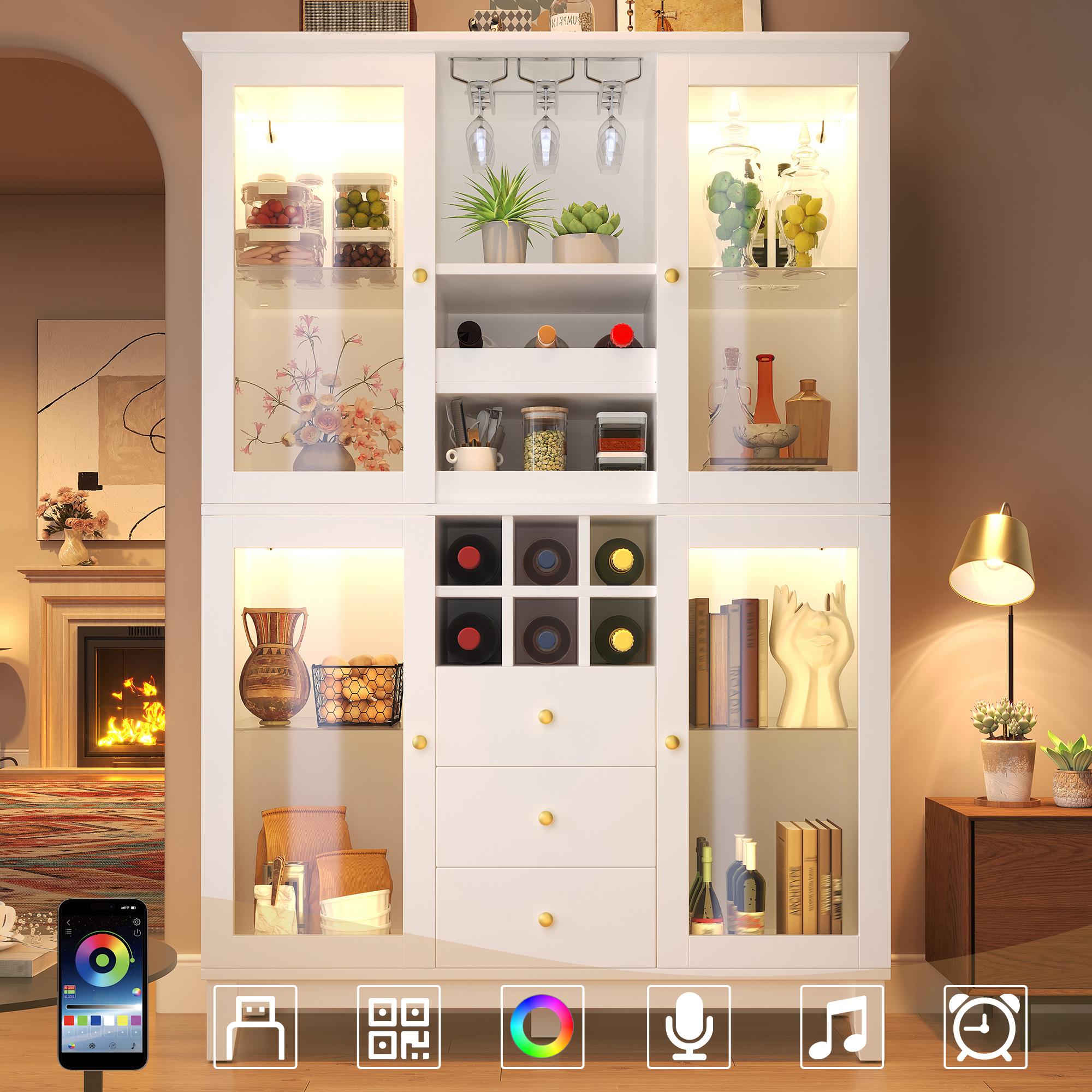
!Tall white wine cabinet with smart LED lights and clear glass doors
For when wine has stopped being a hobby. A proper cabinet with glass doors, three drawers, an integrated glass holder and app-controlled RGB lighting. The lighting sounds gimmicky written down — it isn't, really; on a warm white setting it makes a dark dining-room corner usable, and you can switch it off entirely when you've had enough of mood lighting. The drawers under the bottle storage are surprisingly handy: corkscrews, a vacuum stopper, the half-used bag of coffee beans.
The honest caveats. It's MDF, so don't pretend it's heirloom oak. The clear glass doors mean dust is visible — you'll wipe them weekly. And RGB lighting in a sitting room is a strong design statement; if your aesthetic is "Edwardian terrace with greens and browns", the white finish will fight everything else. Best for a modern open-plan kitchen-diner where the cabinet is supposed to be part of the show.
What I'd avoid
A handful of category-wide traps the photography hides:
- Stackable cube racks under £20. They wobble within six bottles, and there's no anti-tip. False economy.
- Vertical "tower" racks that store bottles upright. Fine for the one you're drinking. Bad for everything else, because the cork dries out.
- Chrome-and-glass display cabinets sold as "wine bars". Stunning in the listing photo, fingerprint magnets in real life, and the glass shelves crack if you sneeze near them.
- Racks rated by bottle count alone with no weight figure. If the seller can't tell you how many kilos the shelves take, assume the answer is "not enough".
The verdict
If you're starting out and you live in a flat, the 42-bottle slim pine rack is the one I'd buy — it's the most useful £38 in this whole roundup. If wall space matters more than capacity (galley kitchens, narrow alcoves), the black 10-tier wall mount keeps the floor clear. And if your wine has graduated from "weeknight habit" to "actual collection", the LED wine cabinet is the upgrade that says you've taken it seriously.
By the Villalta Home Editorial team, June 2026. Edited by Juan Antonio Villalta Pacheco.