Use the pad on your back, not as your boiler
At 8:15 on a wet Tuesday, with the school run half-done and the kitchen thermometer in our Victorian terrace reading 14.8°C, I had a 30 x 40 cm electric heat pad pressed into my lower back while making tea. It felt blissful. It also did absolutely nothing for my cold feet, the damp towel on the radiator, or the draught under the back door. That is the whole argument: are heat pads good for back pain in a UK winter, or are we pretending they’re a heating plan?
The short answer
Yes, heat pads can be good for winter back pain if the pain is muscular, stiff or spasm-like, and you use the pad for a limited spell on the sore area. The thesis is simple and arguable: a heat pad is a recovery tool, not a substitute for heating a cold home. NHS guidance supports heat packs or hot water bottles wrapped in a towel for stiffness or muscle spasms, while still stressing movement and red-flag symptoms.
The longer answer
What does heat actually do for a sore back?
Heat is useful because it can relax tight muscles and make a stiff area feel easier to move. The NHS says people may use a heat pack or hot water bottle wrapped in a towel to relieve joint stiffness or muscle spasms. That wording matters. It’s precise. It doesn’t say a heat pad fixes all back pain, and it doesn’t say lying still under one for half a day is a treatment plan.
For the common winter back — the one that complains after carrying shopping up narrow stairs, sitting too long at the kitchen table, or sleeping badly in a chilly room — heat can take the edge off enough to get moving. Movement is the other half of the advice. Gentle walking, ordinary house movement and not guarding the back all day usually matter more than another hour plugged into the wall.
How should you use a heat pad without making a faff of it?
Use it like a targeted dose. Put the pad over the sore area, keep a layer of clothing or fabric between your skin and the heat, and stop before your skin looks angry. Many electric pads sold in the UK use a standard BS 1363 plug and sit around 60W to 100W; our old one is 100W and has three heat settings. The hottest setting feels decent for five minutes, then a bit much.
Fifteen to twenty minutes is a sensible starting point. If you’re using a hot water bottle, wrap it in a towel, as the NHS suggests, and don’t press it directly into bare skin. Be more cautious if you have reduced sensation, diabetes, poor circulation, are pregnant, or you’ve taken strong painkillers that might make you less aware of heat. Don’t sleep on an electric pad. Auto-off switches help, but they’re not a permission slip for a kip on a live appliance.
Isn’t a heat pad cheaper than putting the heating on?
This is the fair counterargument, and it’s the one that fills UK threads every autumn. In an AskUK discussion on 19 October 2026, people talked about delaying central heating and using heated pads, hot water bottles and blankets to stay warm. Another AskUK thread on 10 October 2026 had the familiar annual argument over whether the heating was “on yet”, with warmth framed as frugality, discomfort tolerance or necessity.
A 100W pad will use much less electricity than a gas boiler running central heating. That part is true. For one person at a desk for an hour, targeted warmth can be savvy. But your back feeling warm is not the same as your room being safe or comfortable. A cold home can mean stiff hands, tense shoulders, damp bedding and mould creeping behind wardrobes. If the pad becomes the thing that lets you sit in a 13°C room every evening, the maths has started to get dodgy. You’ve saved heat in the air by asking your body to cope with the cold around the patch of warmth.
Where do belt-style heat pads fit?
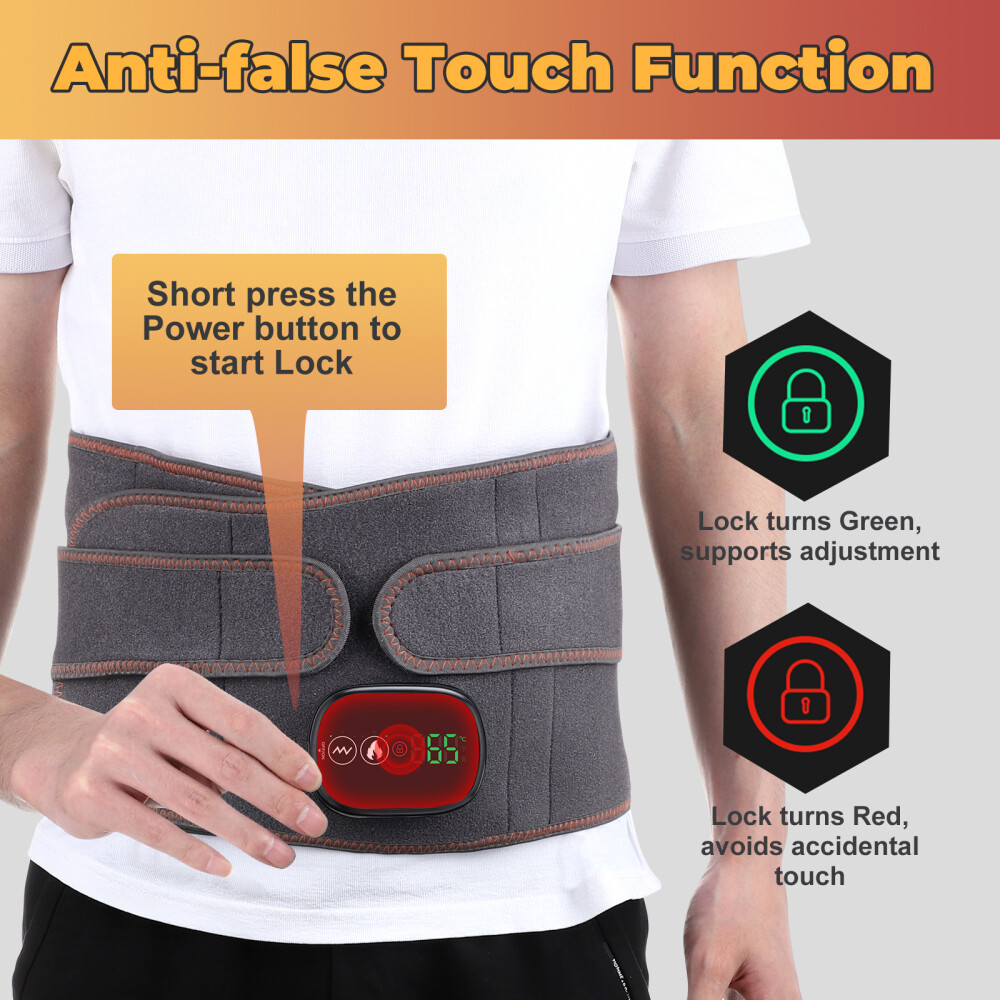
A belt-style pad can make sense if your pain is in one repeatable spot and you want heat to stay put while you stand, make lunch or shuffle round the house. A product such as the heated waist belt with vibration massage is a good example of the category rather than a magic answer: it aims heat at the lower back and leaves your hands free. The vibration is comfort, not a clinical fix.
The caveat is comfort marketing. A belt can make a sore patch feel supported, but it shouldn’t persuade you to overdo lifting, skip movement breaks or ignore worsening symptoms. Watch cables, battery packs and bulky controls under jumpers; in a small rented flat, catching a lead on a chair is more common than the photos suggest.
When is back pain no longer a heat-pad problem?
If back pain comes with numbness around the genitals or bottom, loss of bladder or bowel control, weakness in the legs, fever, unexplained weight loss, a fall, or pain that is severe and not improving, don’t treat it as ordinary winter stiffness. Seek NHS advice urgently. If pain is not improving after a few weeks, or it keeps returning and limiting normal life, book a GP appointment or use NHS 111.
Also pay attention to the pattern. Heat helping for twenty minutes is one thing. Needing it every night because your back seizes up after working from a dining chair in a cold spare room is a setup problem. The pad is telling you something useful, but it may be pointing at posture, workload, mattress support, room temperature or stress.
Should I use heat or ice for lower back pain in winter?
Use heat for stiffness, muscle spasm or a dull ache that eases as you move. Ice is more useful for a fresh strain with sharp pain or swelling, especially in the first day or two. If you’re unsure, keep either treatment brief, protect your skin, and stop if the pain worsens.
How long should I keep a heat pad on my back?
Use a heat pad for about 15 to 20 minutes at a time, then take a break and check your skin. Longer is not automatically better. If you need repeated sessions, keep moving gently between them rather than staying fixed in one position on the sofa.
Can I sleep with a heat pad on?
No, you should not sleep with an electric heat pad switched on. Falling asleep reduces your ability to notice overheating, pressure marks or a fault. If you want warmth in bed, warm the bed briefly before getting in, switch the pad off, and never trap it under your body.
Is a hot water bottle as good as an electric heat pad for back pain?
A hot water bottle can work just as well for simple stiffness if it’s wrapped in a towel and not filled with boiling water straight against the skin. Electric pads are easier to control and flatter against the back, but bottles win for simplicity and no trailing lead.
What’s the safest way to use heat therapy in a cold UK flat?
Warm the person and the room where you can: use the pad briefly on the sore area, wear layers, block draughts, and avoid sitting motionless in a very cold room. If damp, mould or low indoor temperatures are persistent, the back pain conversation has become a housing and heating conversation too.
When should I get medical help for back pain instead of using heat?
Get urgent help for back pain with bladder or bowel changes, numbness around the saddle area, leg weakness, fever, major injury or unexplained weight loss. Speak to a GP if pain lasts several weeks, keeps returning, or stops you doing normal daily tasks despite sensible self-care.
So yes: a heat pad is a proper winter back-pain tool when it’s used deliberately, for a sore patch, for a short stretch, alongside movement. It is not a moral badge for holding off the heating until November, and it’s not a cure for a cold, damp home. If your back loosens and you get on with the day, sorted. If the pad is the only warm thing in the room, the problem has moved beyond back pain.