My KitchenAid-shaped gap on the worktop has been empty for the better part of a decade. Every January I'd open the John Lewis tab, look at the £429 sticker on the Artisan, work out that I make proper bread maybe four Sundays a year, and close it again. The maths never quite worked for a flat in Sheffield with a galley kitchen and a cupboard the size of a microwave.
So this is the round-up I wish I'd had. Five stand mixers that handle the things a UK home baker actually does — Saturday-morning sponges for kids' birthdays, a bloomer on a rainy Sunday, the odd batch of pasta dough — without asking you to give up a square foot of worktop or four hundred quid.
If you only read this: the Premium 1300W White Stand Mixer at £68.63 is the one I'd buy for most UK kitchens — 4.5L is the sweet spot, the motor genuinely handles bread dough, and you won't wince every time you lift it out of the cupboard. If you're tight for cash or for space, skip to the £12.69 1.2 kg lightweight at the bottom.
The picks
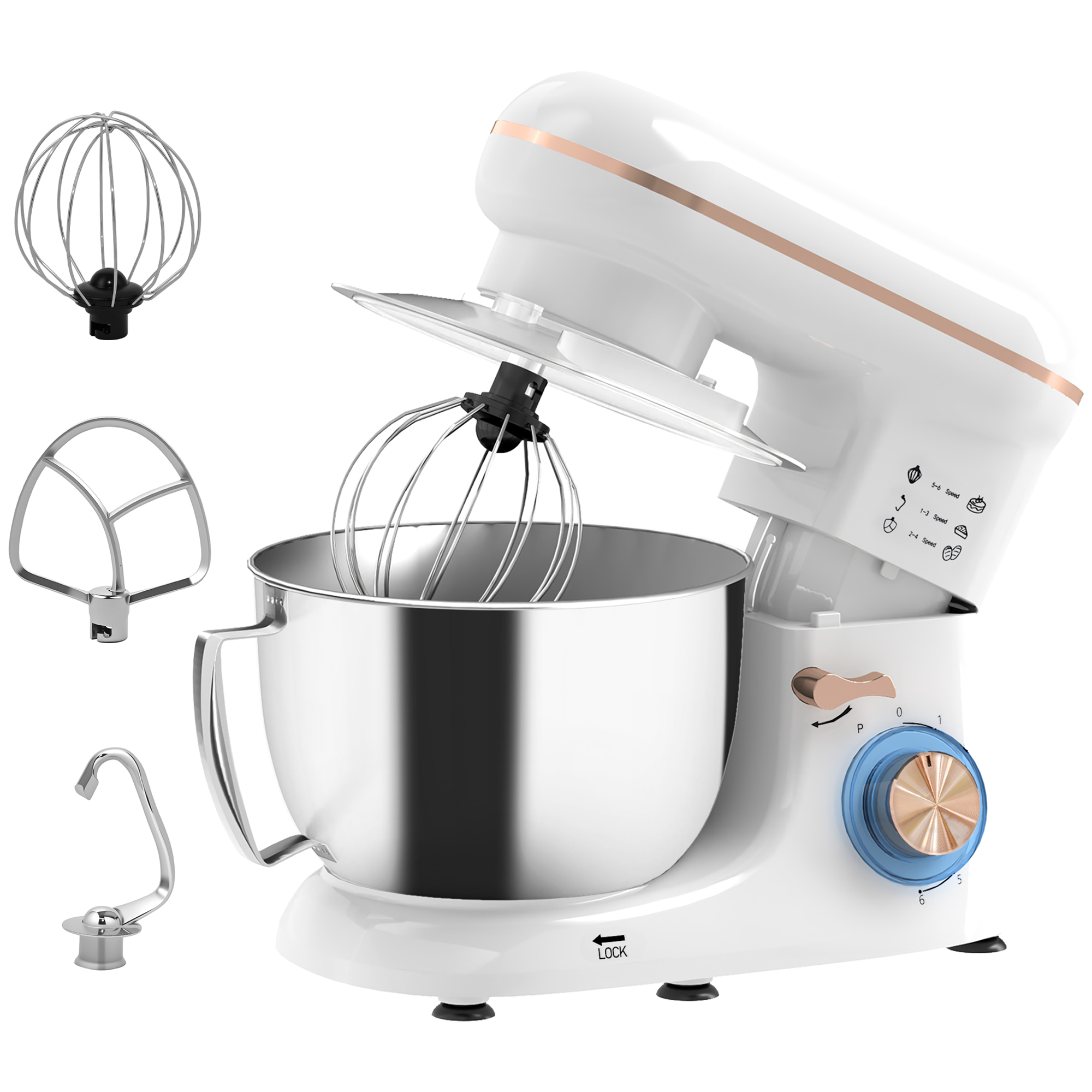
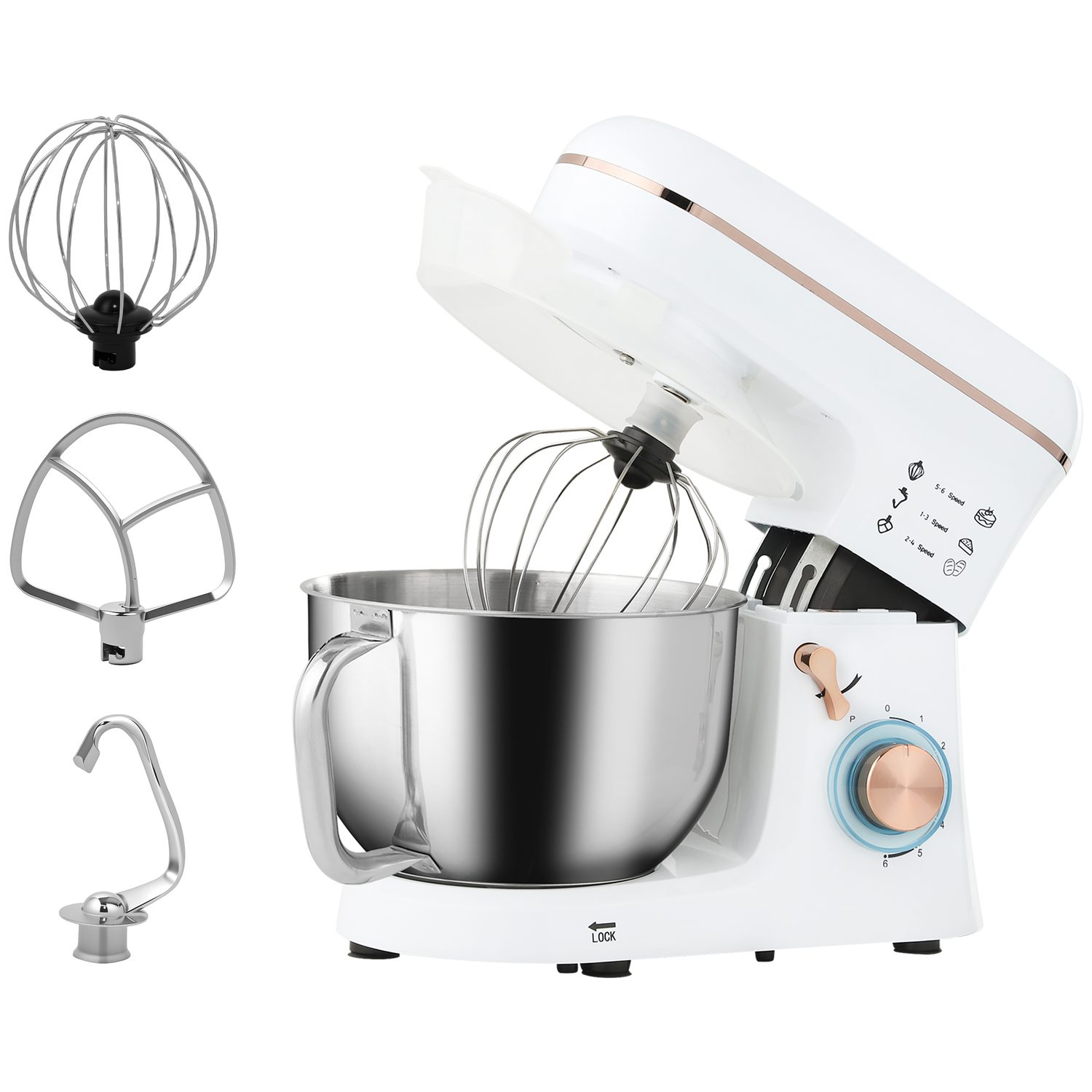
This is the one I kept coming back to. The 1300W motor handles a 750 g bread dough without the head juddering, which is the bar that separates a real stand mixer from a fancy hand whisk on a stand. The 4.5L stainless bowl has a proper handle — small detail, huge difference when you're tipping a heavy batter into a tin one-handed because the other hand's holding a spatula.
Six speeds plus a pulse, three attachments, anti-slip base, overheat shut-off. The clear splash guard is hand-wash only — irritating but normal at this price. White-and-silver finish is a bit Argos rather than Smeg, but in a 2.4 m galley nobody's photographing your worktop anyway.
- Pros: kneads real bread dough, 4.5L bowl with handle, dishwasher-safe attachments, sensible footprint at about 35 cm deep.
- Cons: splash guard needs hand-washing; the white plastic housing will yellow if it lives next to a south-facing window.
- Best for: the weekend baker who makes one loaf and one cake a week and doesn't want to spend three figures.
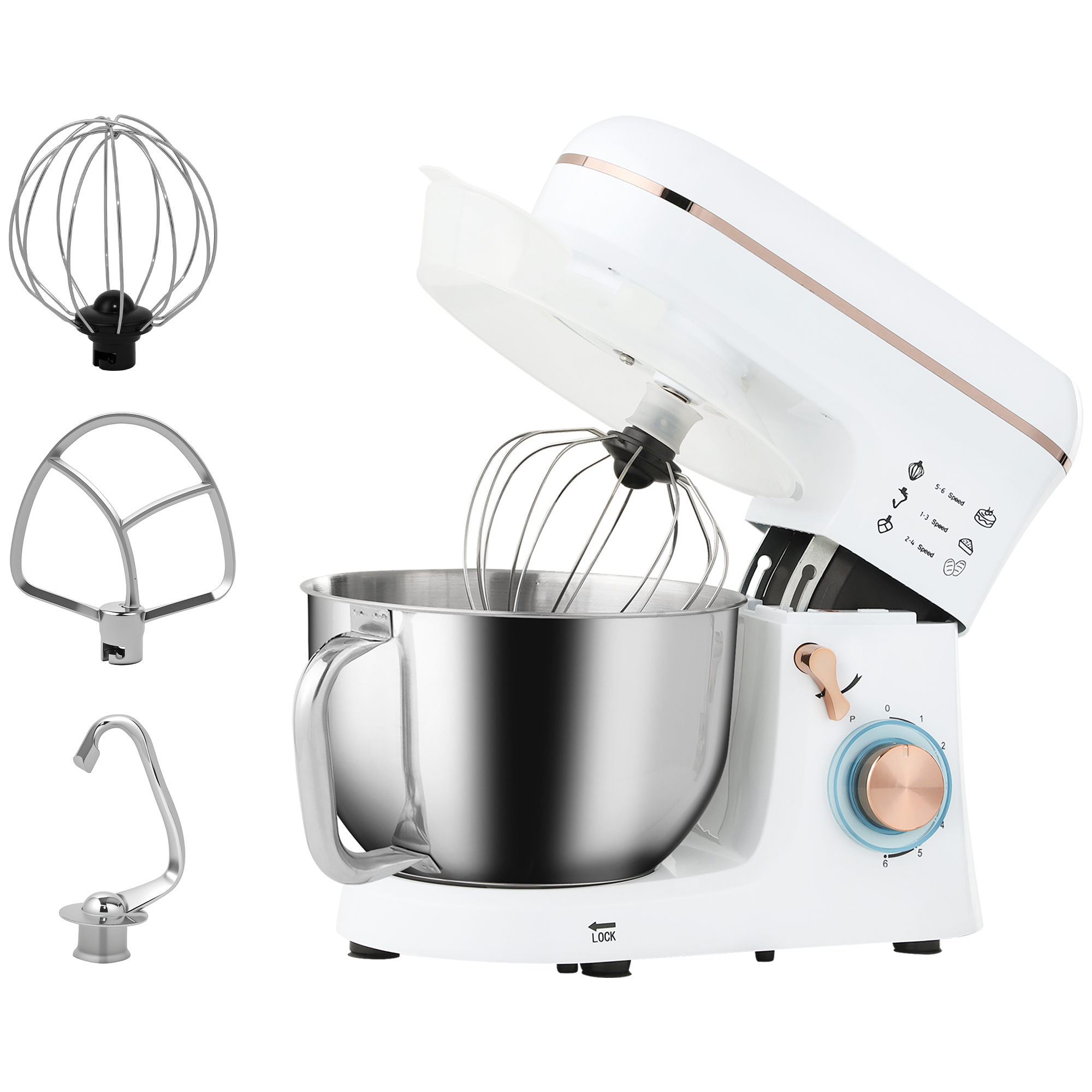
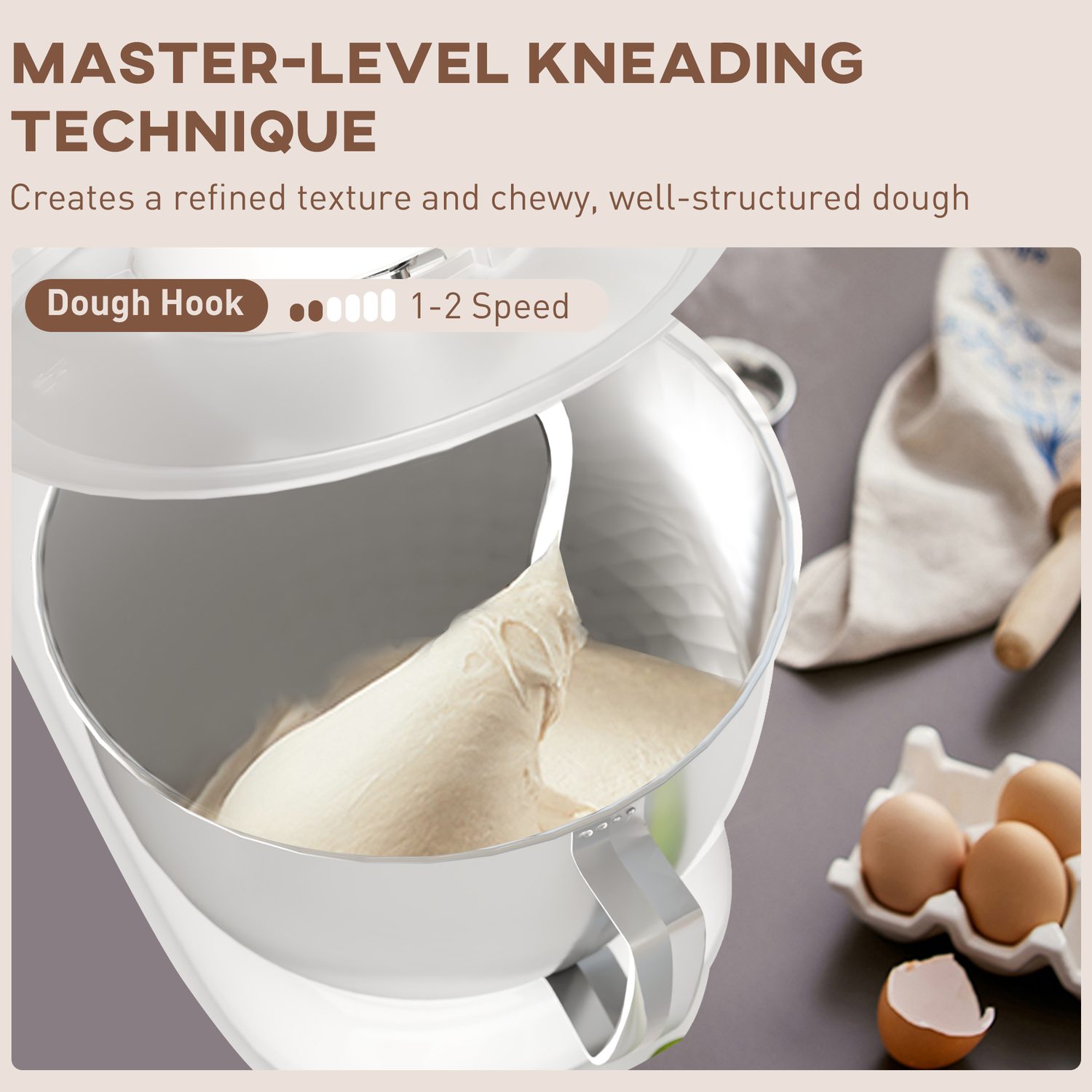
If you're the household sourdough person, or you bake for a family of five, the extra 100W and the jump from 4.5L to 5L matters. The 5L bowl swallows a 1 kg loaf and the motor doesn't grumble after eight minutes of slow kneading — which is the test most mid-range mixers fail somewhere around minute five.
Footprint is a fraction larger than the 4.5L pick but not enough to notice in a normal kitchen. The tilt-head feels reassuringly solid; the anti-slip base actually grips a melamine worktop, which a lot of cheaper machines don't.
- Pros: properly capable on enriched and high-hydration doughs, 5L bowl with handle, overheat cut-off engages predictably rather than after a worrying smell.
- Cons: still mostly plastic housing; at this price you'd hope for a metal body, you don't get one.
- Best for: family bakers, regular bread bakers, anyone who's tired of mixers that can't finish a knead.
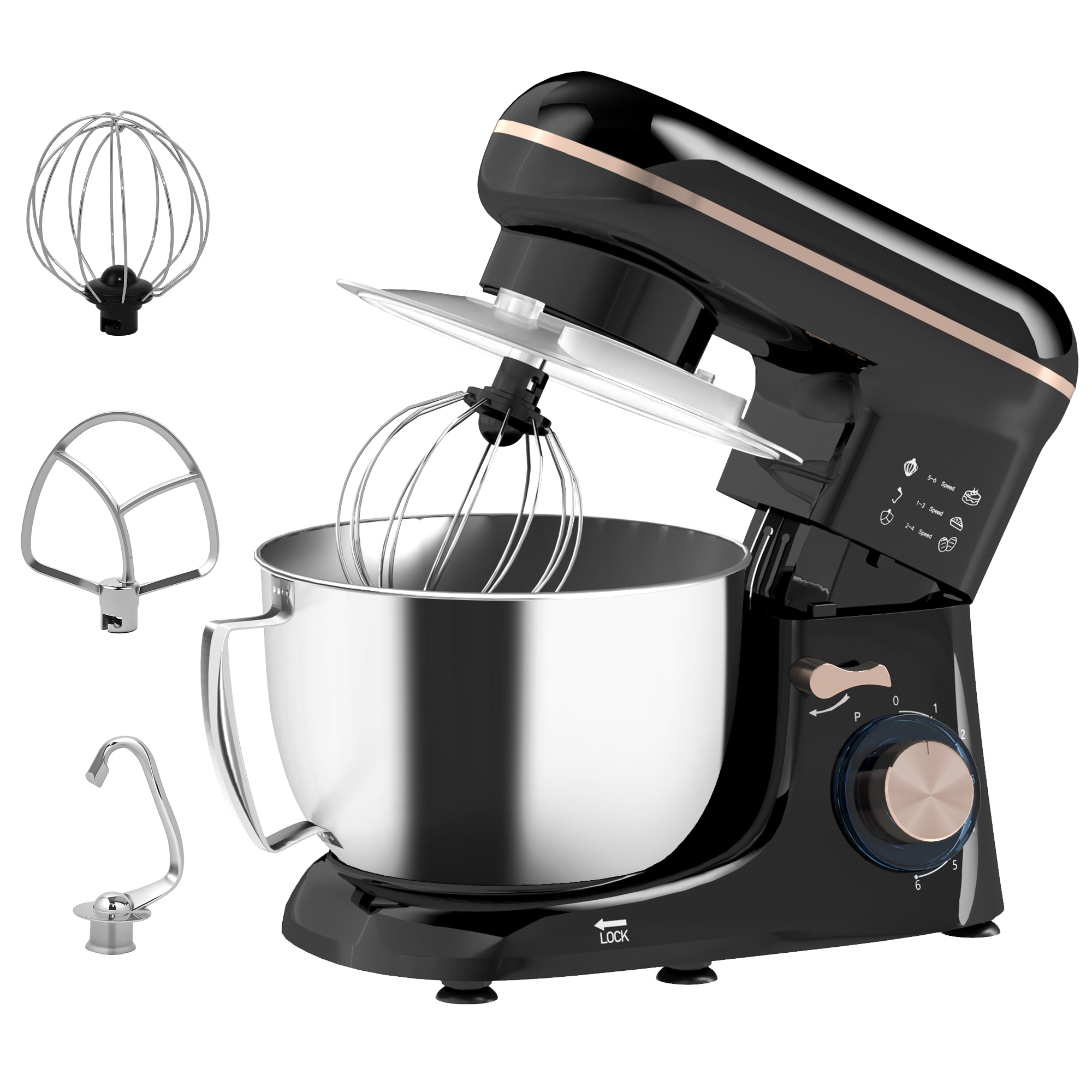
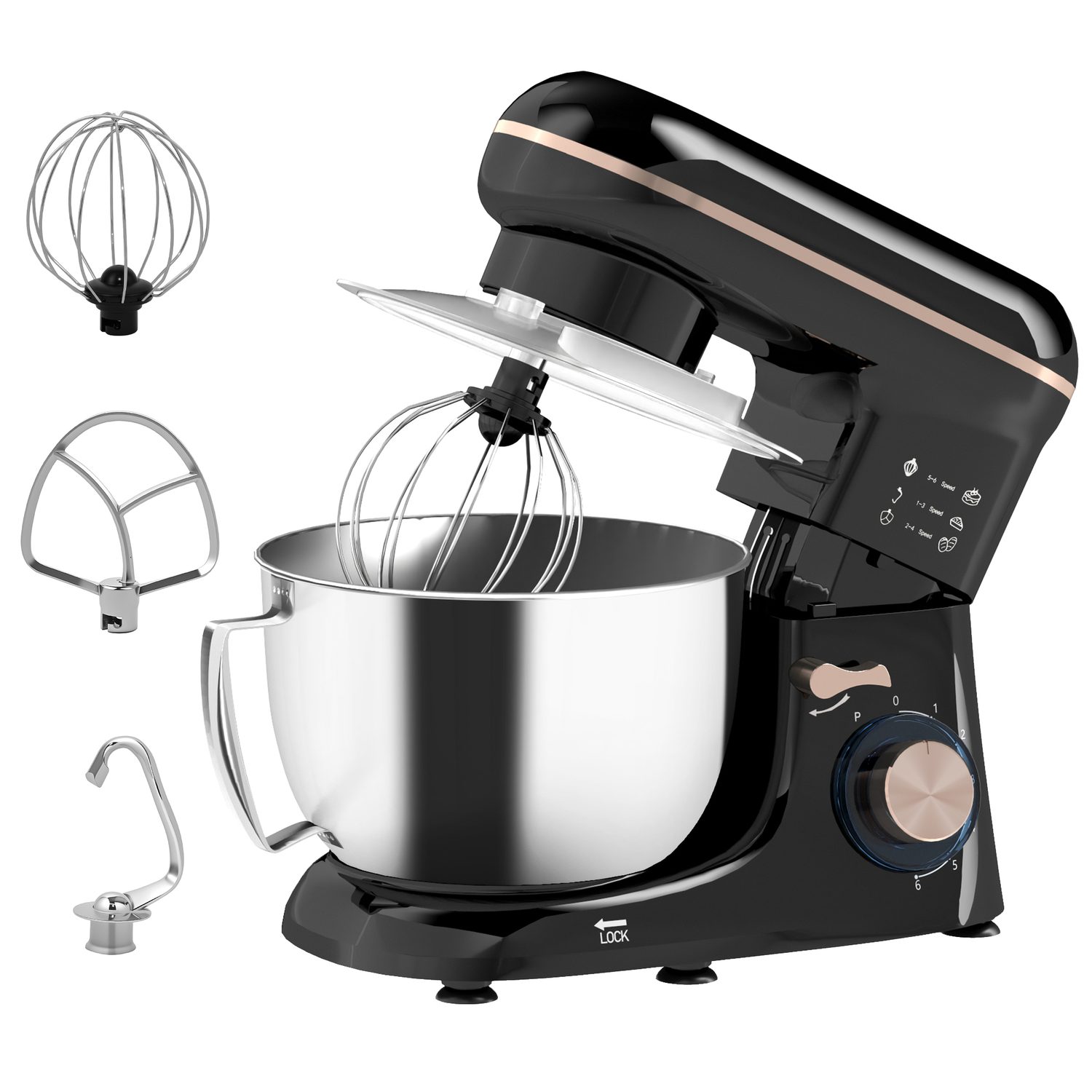
Mechanically this is the white 1300W's twin, but if your kitchen is the now-ubiquitous matte black-and-brass combo, the white version looks oddly clinical sitting next to your Ninja and your kettle. The black housing hides splatter better too — useful, given splash guards never quite catch everything.
The trade-off is heat: the black plastic gets noticeably warmer under sustained use. Not unsafe, but it'll feel toastier than the white one if you're doing a long bread knead in a small kitchen.
- Pros: same proven 1300W motor, matches modern dark kitchens, hides splatter.
- Cons: housing warms up under long runs; £2 more than the white for the same machine.
- Best for: dark kitchens where a white mixer would stick out.
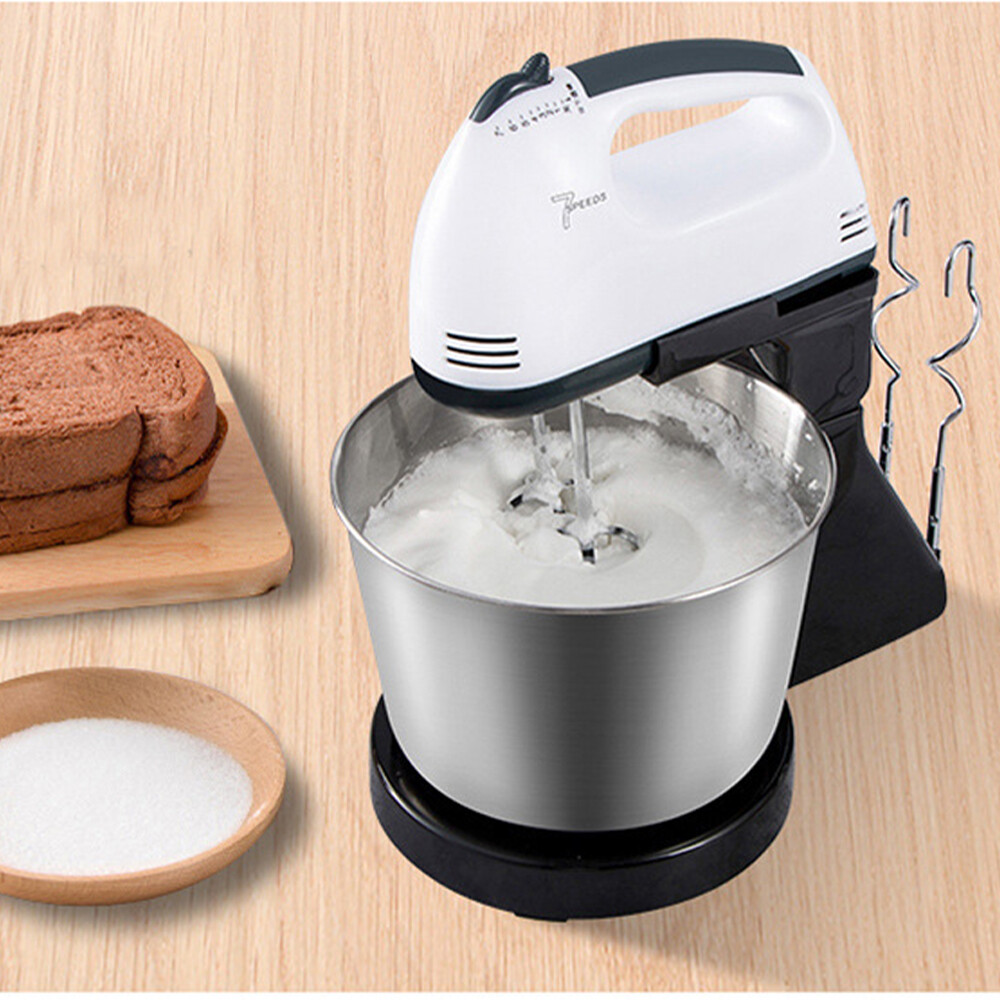
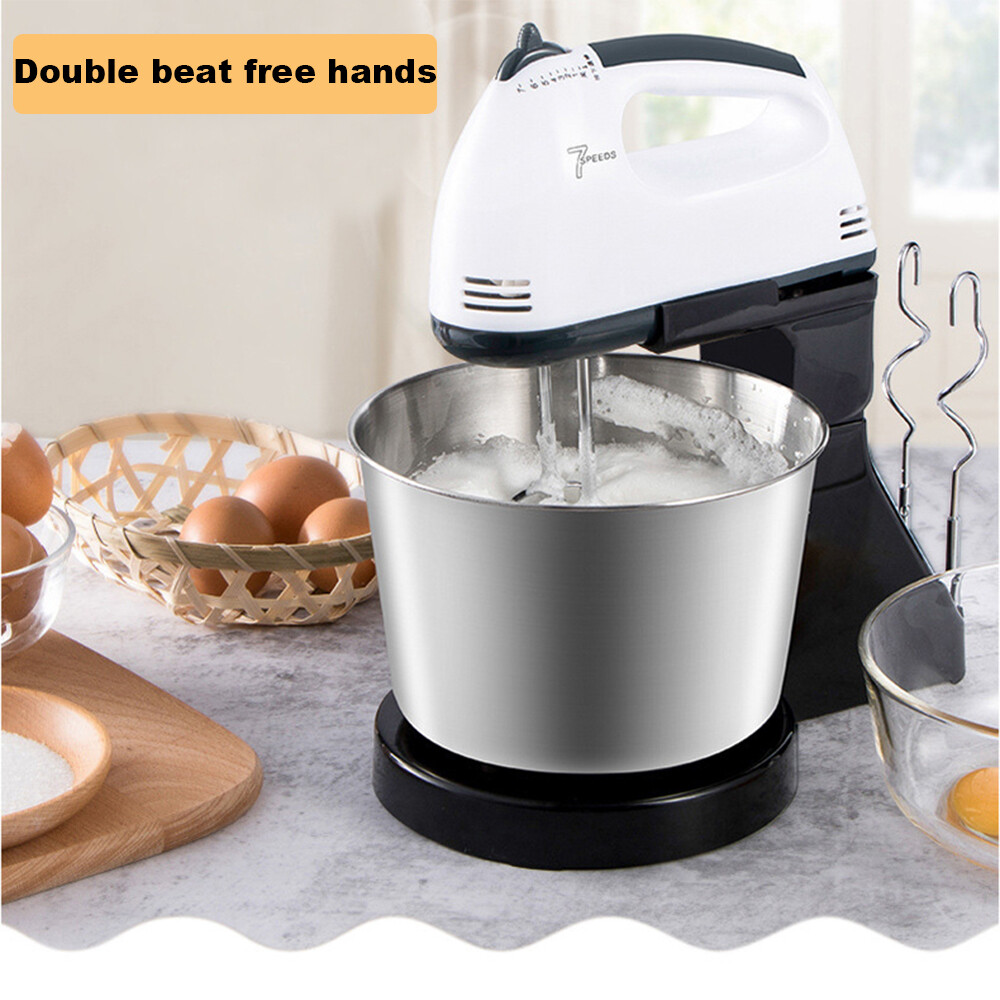
The clever bit on this one is that the motor head detaches and becomes a hand mixer — which means when you're whipping a single egg white you don't have to drag the whole stand out. For renters and people in studio flats with one cupboard for everything, that two-jobs-one-appliance angle genuinely earns it shelf space.
It's a 100W motor, so be honest about what it'll do: cake batters, cupcakes, whipped cream, light shortcrust, sponge meringues. Bread dough is a stretch. The 2L bowl is plastic rather than stainless, which is the corner cut you'd expect at this price.
- Pros: detachable hand-mixer mode, tiny footprint, easy to lift out of a cupboard, sensibly priced.
- Cons: plastic bowl, no real bread-dough capability, the cooling fan is louder than the bigger units.
- Best for: renters, occasional bakers, anyone whose kitchen storage is one shelf.
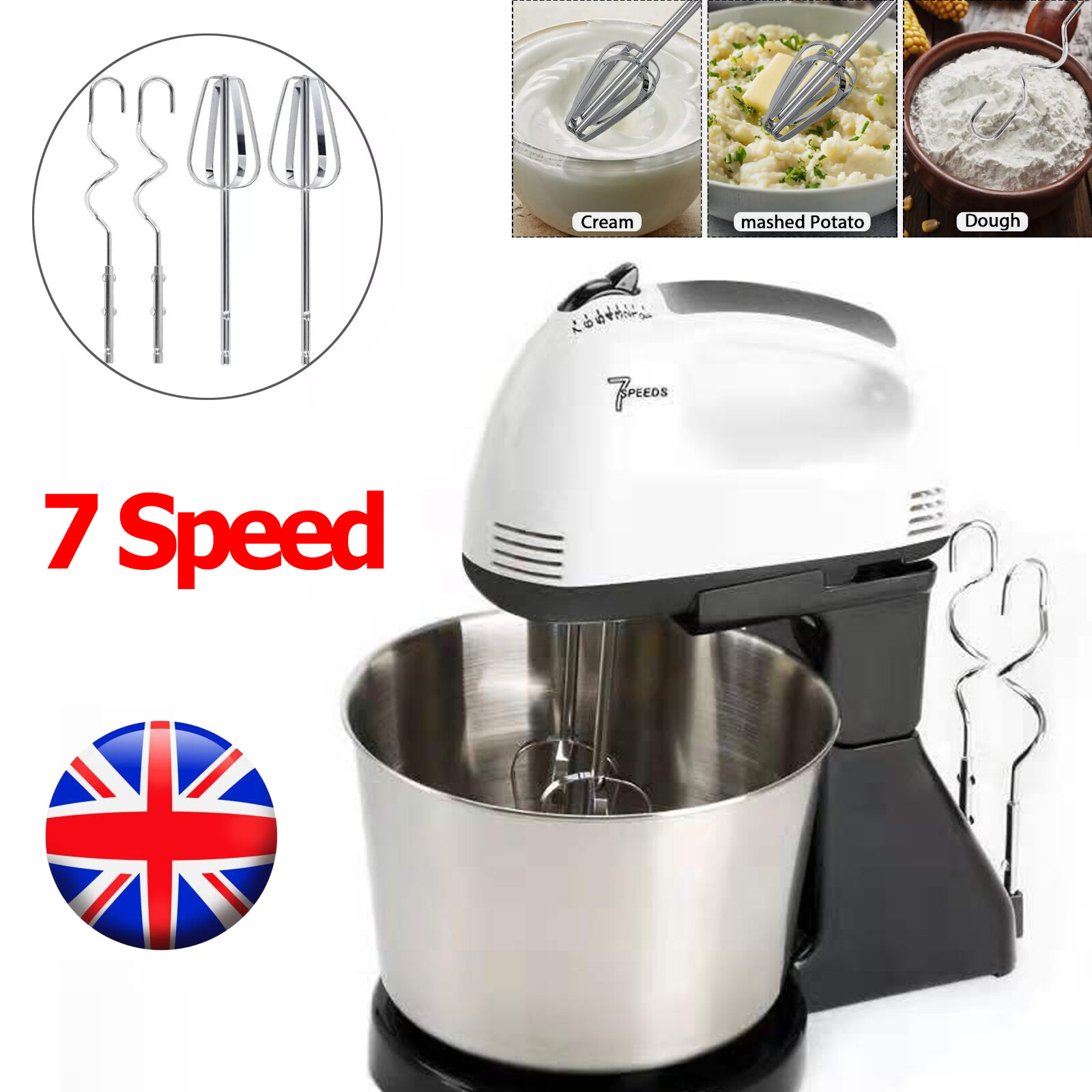
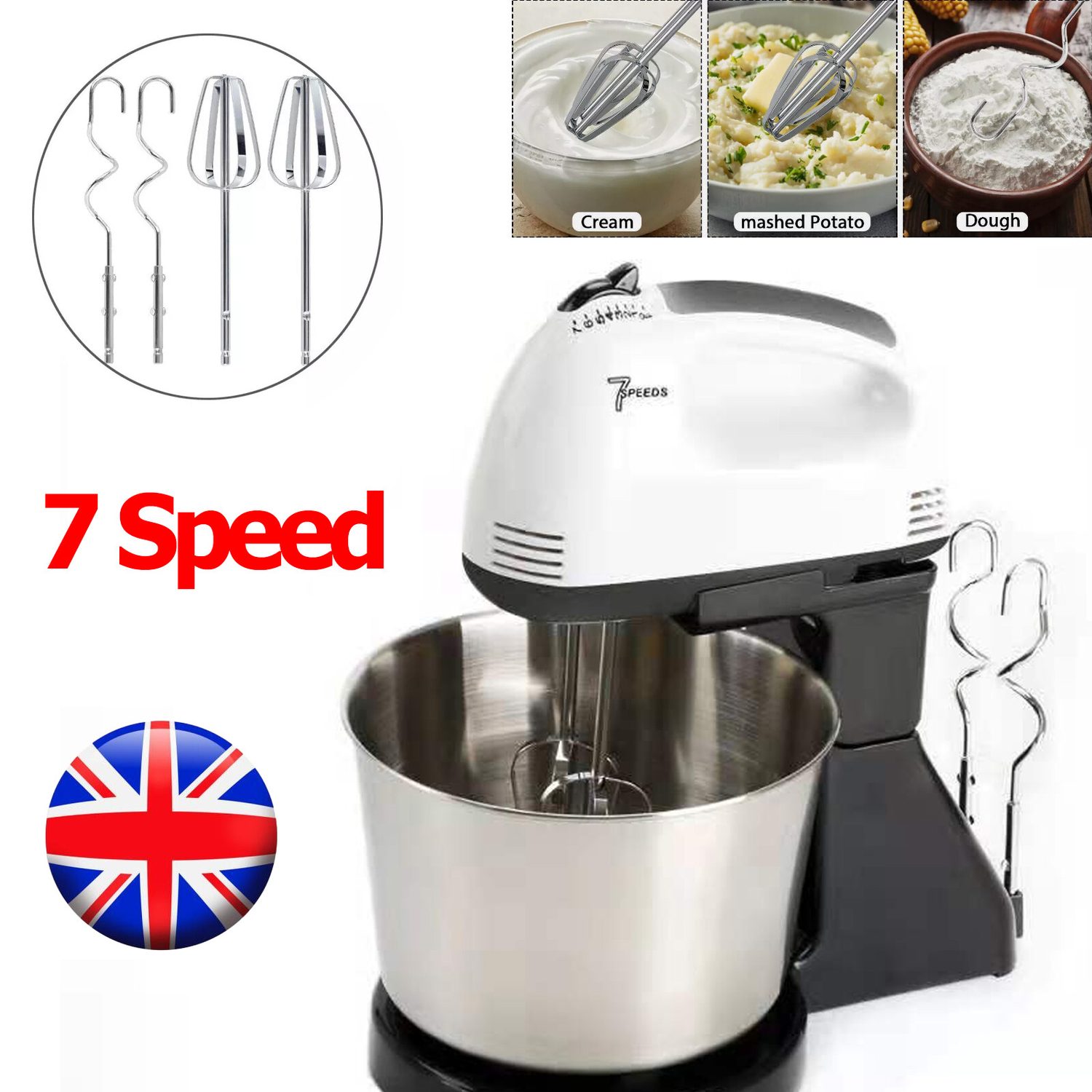
I added this one with a raised eyebrow and ended up genuinely impressed. At 1.2 kg the whole machine is lighter than a bag of flour — you can pull it down from a top shelf one-handed, which sounds trivial until you've tried to wrestle a 7 kg KitchenAid out of a low cupboard. Seven speeds, stainless beaters, and the unusual addition of a proper UK three-pin plug rather than the European one with a bodge adapter you sometimes see at this end of the market.
It is a £13 machine — that needs to be acknowledged. It's for cupcake batters, whipped cream, simple sponges, and the occasional pancake mix. Try and knead a bloomer with it and you'll burn the motor out. But for a student flat, a first kitchen, or a parent who wants the kids to learn to bake without a £400 hand-me-down at stake, it punches well above its price.
- Pros: astonishingly cheap, genuinely 1.2 kg, real UK plug, stainless attachments.
- Cons: 100W motor not for bread dough, plastic bowl, build quality is what £13 looks like.
- Best for: students, first kitchens, baking with kids, anyone who bakes three times a year.
The verdict
If you bake roughly once a week and you've got worktop space, the 1300W 4.5L white is the obvious answer at £68.63 — it does proper bread dough, fits a normal kitchen and you won't outgrow it. If you bake for a family or you're a serious sourdough person, the £82.36 5L earns the extra fourteen quid the first time you do a 1 kg loaf without the motor sulking. If your kitchen storage is one shelf and your baking is one sponge a month, the £12.69 1.2 kg lightweight is the honest pick — and it'll leave £400 in your pocket for actual flour.
By the Villalta Home Editorial team, June 2026. Edited by Juan Antonio Villalta Pacheco.