At 8:15 on a wet Tuesday, the most revealing home gym in Britain is not a garage with a squat rack; it is a yoga mat half-unrolled in the 72 cm strip between the shoe pile and the front door of a rented flat. I keep seeing the same argument play out there: is Pilates enough, or should you lift weights? My answer is blunt. If your goal is measurable strength, Pilates alone is not enough unless it is programmed with progressive resistance; for mobility, control and getting your body to behave after hours at a laptop, Pilates still earns its keep.
The case for Pilates
Pilates is being unfairly flattened into an aesthetic. The backlash has latched onto soft lighting, matching sets and the “Pilates princess” label, then treated the whole method as unserious. That is lazy. A good Pilates session teaches you where your pelvis is, how your ribs move when you breathe, and why your neck is doing the work your mid-back has dodged for years. For a UK home user with a 180 x 60 cm mat and barely enough clearance to avoid kicking the radiator, that is useful.
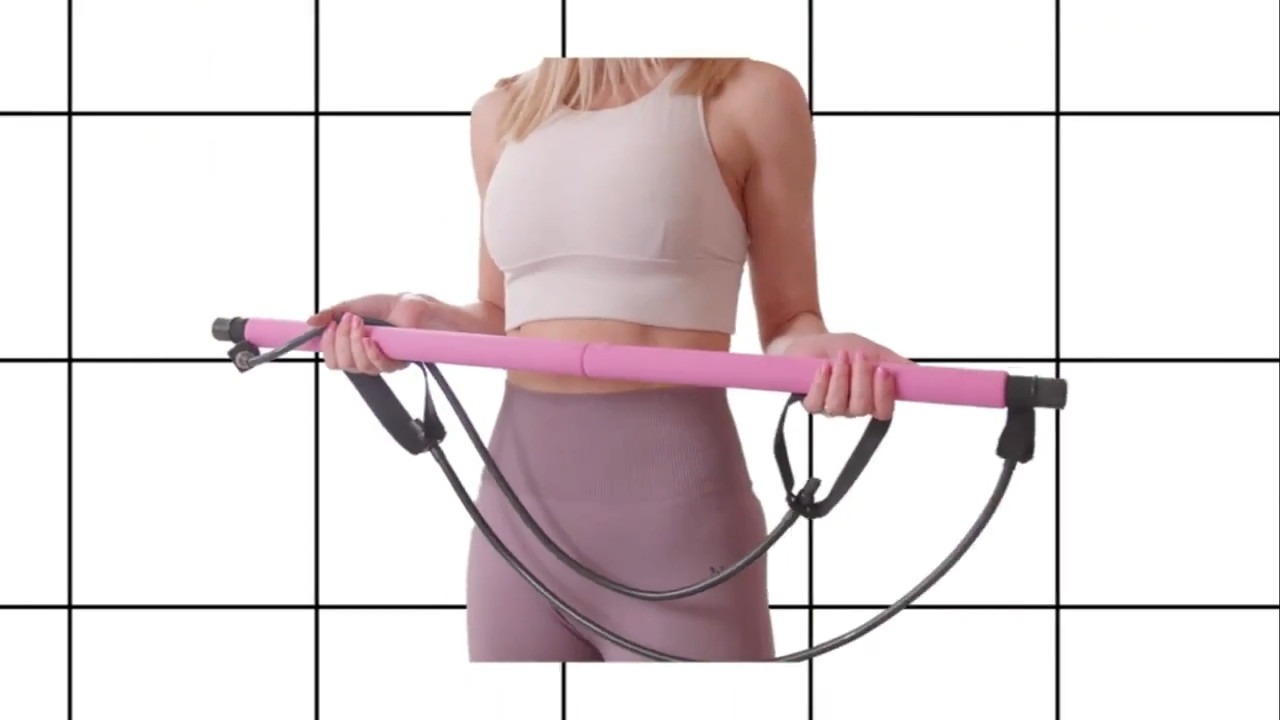
The strongest case for Pilates is not that it replaces lifting. It is that many people need a movement practice before they can load well. If you cannot hinge without rounding, brace without holding your breath, or control your shoulder blades during a press-up, adding a 12 kg dumbbell may just make the dodgy pattern louder. Pilates gives you slow reps, position changes and tension without needing a cupboard full of kit. A £9.99 loop band set or a long resistance band can add challenge, and a Pilates bar kit with six resistance bands can make home sessions less vague if you track which band you used and for how many reps.
The caveat is proper. Pilates becomes wishful thinking if the same 25-minute class feels identical in week one and week twelve. Mat work can be hard, but bodyweight has a ceiling. Reformer work can be heavy through springs, but plenty of studio classes now blur into a general conditioning class with Pilates branding. That does not make them bad. It does make the label less useful than the programming.
The case for weights
Weights win the strength argument because they make progression harder to fudge. You either lifted 8 kg for eight controlled reps or you did not. Next month, you can try 10 kg, add reps, slow the lowering phase, or increase the number of sets. That clarity matters at home, where enthusiasm tends to vanish somewhere between the laundry basket and the council recycling collections.
Women’s Health, in its August 2026 Pilates-versus-strength discussion, put a sensible line between the two: strength training has a clearer role for metabolic health, while Pilates is strong on balance and posture. That distinction should not be controversial. Muscle adapts to demand. A 2 kg hand weight can be a start, especially after injury or a long lay-off, but it is not a long-term plan for stronger legs, glutes or back unless the load rises.
For most homes, lifting does not mean turning the spare room into a gym. A pair of adjustable dumbbells in the 2.5 kg to 20 kg range often costs about £45.00 to £90.00 at mainstream UK catalogue level; a 12 kg kettlebell is commonly around £25.00 to £40.00. Those are not tiny purchases, and they are annoying to store in a Manchester new-build with tight cupboards, but they give you an honest route to overload. Bands can help too, though they are harder to measure because resistance changes through the movement.
The less flattering truth is that weights are less forgiving. Technique matters. Recovery matters. If you chase soreness as proof, you will probably overdo it and spend three days walking down narrow stairs like a pirate. Still, for strength changes you can test, lifting beats vibe-led exercise every time.
The honest trade-off
The counterargument deserves respect: serious Pilates instructors have always used progression. Longer levers, slower tempo, unilateral work, spring tension and cleaner control can make a session brutally demanding. Reddit’s r/pilates thread on 14 September 2026 captured this neatly, with commenters questioning whether some reformer classes now feel more like strength classes using a reformer than classical Pilates. A separate r/pilatesinstructors discussion on 13 September 2026 also flagged rising studio prices and the social-media claim that women are being told Pilates is “not enough” unless they train strength.
My answer is this: if the class is progressively loaded strength work, call it strength work. If it is teaching control and mobility, stop pretending it must also deliver everything a barbell plan can. Psychology Today UK, on 14 September 2026, framed “Pilates princess”, “gym body” and “yoga bod” as new body ideals; that is the problem. Identity has nicked the conversation from training principles.
If you want stronger muscles, choose progression; if you want better control, Pilates is still a decent tool.
Which to pick by use case
- You want visible strength gains within 12 weeks: pick weights. Use a simple plan with squats, hinges, pushes and pulls, then track load or reps. Pilates can support the work, but it should not be the main event.
- Your back feels stiff after desk work: pick Pilates. A 20 to 30 minute mat session, four times a week, is a low-faff way to build awareness around ribs, hips and shoulders without annoying the downstairs neighbour.
- You live in a rented flat under 60 m² with no room for a bench: pick progressive resistance. That might be adjustable dumbbells, a kettlebell or measured bands. The point is not the object; it is the repeatable increase in challenge.
- You are returning after injury, pregnancy or a long break: pick Pilates first. Spend six to eight weeks rebuilding control, then add light lifting once basic patterns feel boring rather than scary. Get medical clearance where needed.
FAQs
Is Pilates enough or should I lift weights?
Pilates is enough for mobility, control and general movement quality, but it is usually not enough for measurable strength gains unless you add progressive resistance. If your goal is stronger legs, glutes, back or arms, lift weights or use bands in a tracked plan.
Can Pilates build muscle at home?
Pilates can build some muscle at home, especially for beginners, but progress slows once bodyweight exercises stop feeling challenging. To keep building, you need harder variations, slower tempo, added resistance or external load.
How many days a week should I do Pilates if I also lift weights?
Two Pilates sessions and two or three strength sessions a week is a sensible home routine for many adults. Keep Pilates as control and mobility work, then let lifting provide the main strength stimulus.
Is reformer Pilates the same as strength training?
Reformer Pilates can overlap with strength training when spring tension is progressed and exercises are programmed like resistance work. If the load, reps or spring settings never increase, it is better understood as movement practice than a strength plan.
What is the best home setup if I have no space?
The best small-home setup is a mat plus one form of progressive resistance, such as adjustable dumbbells, a kettlebell or clearly labelled bands. Storeability matters in UK flats, but the kit still needs to let you make the work harder over time.