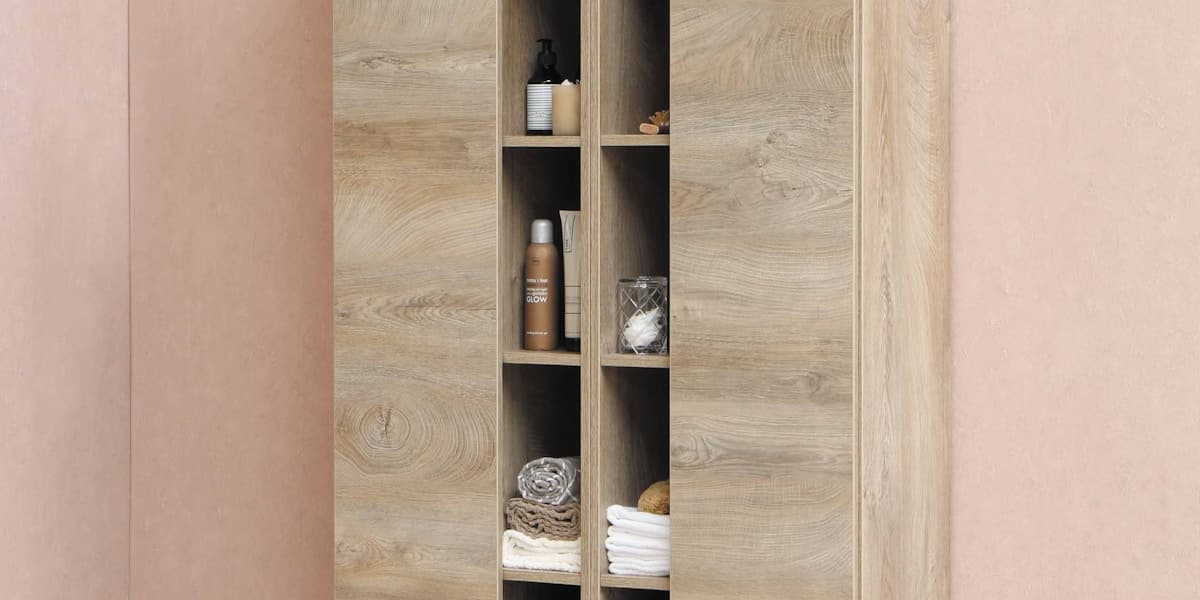
The 82 cm strip between the fridge and the back door in my friend’s Victorian terrace looked made for open shelves: three pale oak boards, jars lined up, coffee mugs pretending they’d never been chipped. Two weeks later, the top shelf had boiler paperwork on it, the pasta jars were half-empty, and every mug showed dust in the morning light. This is the real comparison: open shelving versus closed, scaled-to-fit storage in a small UK home. My thesis is blunt and arguable: in a UK home under about 75 m², open shelving loses as primary storage because it creates cleaning labour and visual noise faster than it creates usable capacity.
The case for open shelves
Open shelving has one genuine advantage: it makes a small room feel less blocked-in. A 20 cm-deep shelf above a worktop or sofa can hold mugs, books, oil bottles or the nice bowl you actually use, without the visual weight of a 35 cm-deep wall cabinet. In a narrow galley kitchen, that can matter. If the gap between your units is only 92 cm, a shallow shelf is less bruising than another door swinging into your hip.
It is cheaper at the start, too. A pair of simple brackets and a 90 cm board can sit in the £35.00 to £90.00 zone, while a made-to-measure cabinet or decent freestanding cupboard can easily run from £180.00 to £600.00 before fitting. Open shelves are also forgiving in awkward alcoves: the 158 cm recess beside a chimney breast, the sloping bit under the stairs, the slice of wall above a radiator where a full cabinet would look daft.
The counterargument deserves a fair hearing. Open shelves can stop you buying duplicates because you can see what you own. They can suit people who cook from scratch daily and keep six pans in rotation rather than twenty gadgets. They are also useful for display, and homes do need pleasure, not just inventory control.
The problem is that social media has sold open shelving as storage, when much of it is set dressing. The algorithmic shelf has three cookbooks, a trailing plant and seven identical jars. Real UK shelves get council tax letters, Calpol, a rogue BS 1363 plug adapter and the lunchbox lid nobody can match. That’s not a moral failing. It’s life.
The case for closed, scaled-to-fit storage
Closed storage wins because it accepts the mess of normal households without making every object audition for a photograph. Doors, drawers and lids do a simple job: they break the line of sight. In a small sitting room, that can be the difference between a room feeling calm at 8 pm and feeling like the school run never ended.
The key phrase is scaled-to-fit. Ideal Home, writing on 2 June 2026, made the useful point that storage should be measured to suit the room, even while noting that open shelving is still trending in kitchens and living rooms. That is the grown-up bit. You don’t start with a moodboard shelf; you start with the wall width, skirting depth, plug position, door swing and the exact height of the thing you’re hiding. A UK king-size mattress is 150 x 200 cm; if your bedroom is 2.8 m wide, pretending a chunky wardrobe won’t dominate it is how you end up side-stepping to bed.
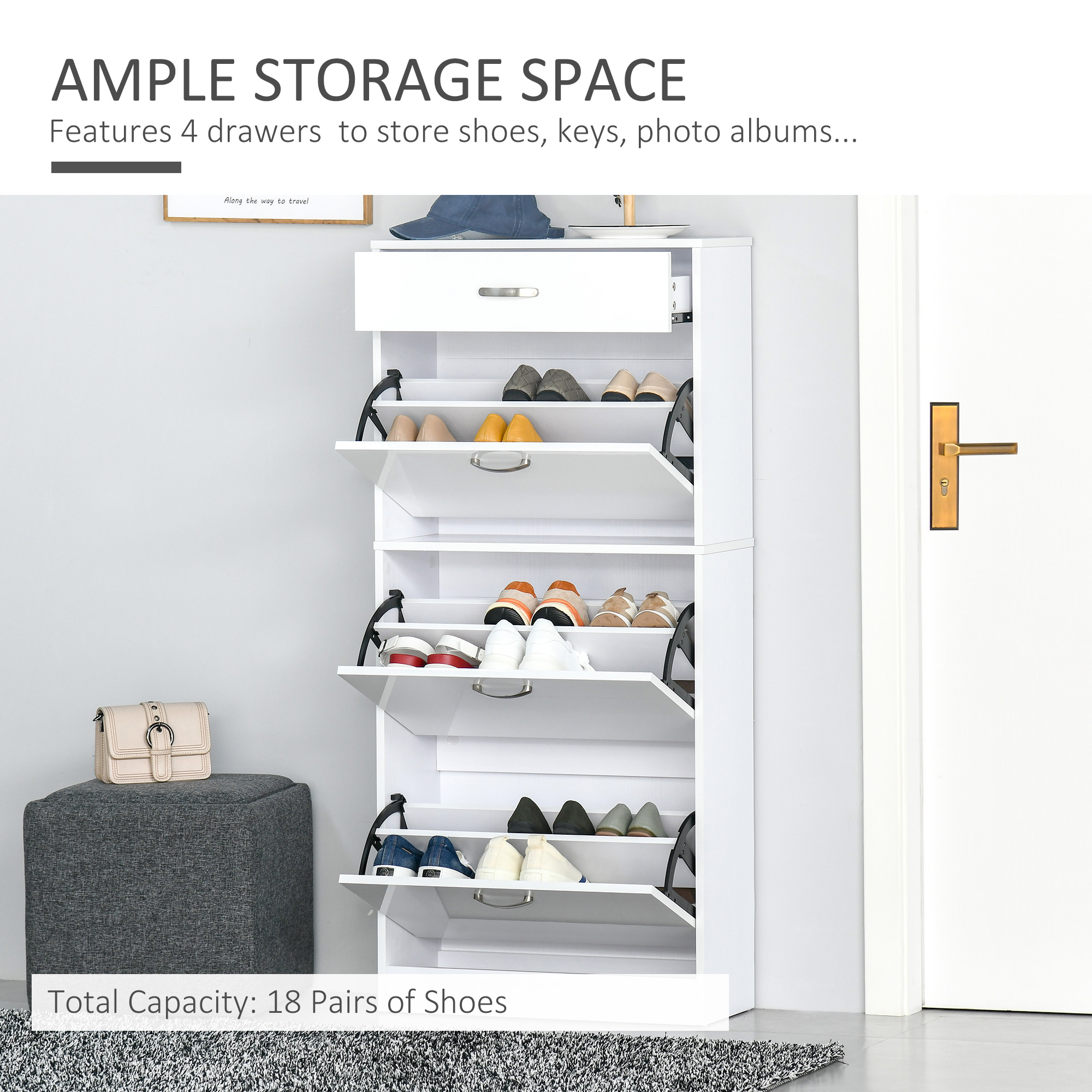
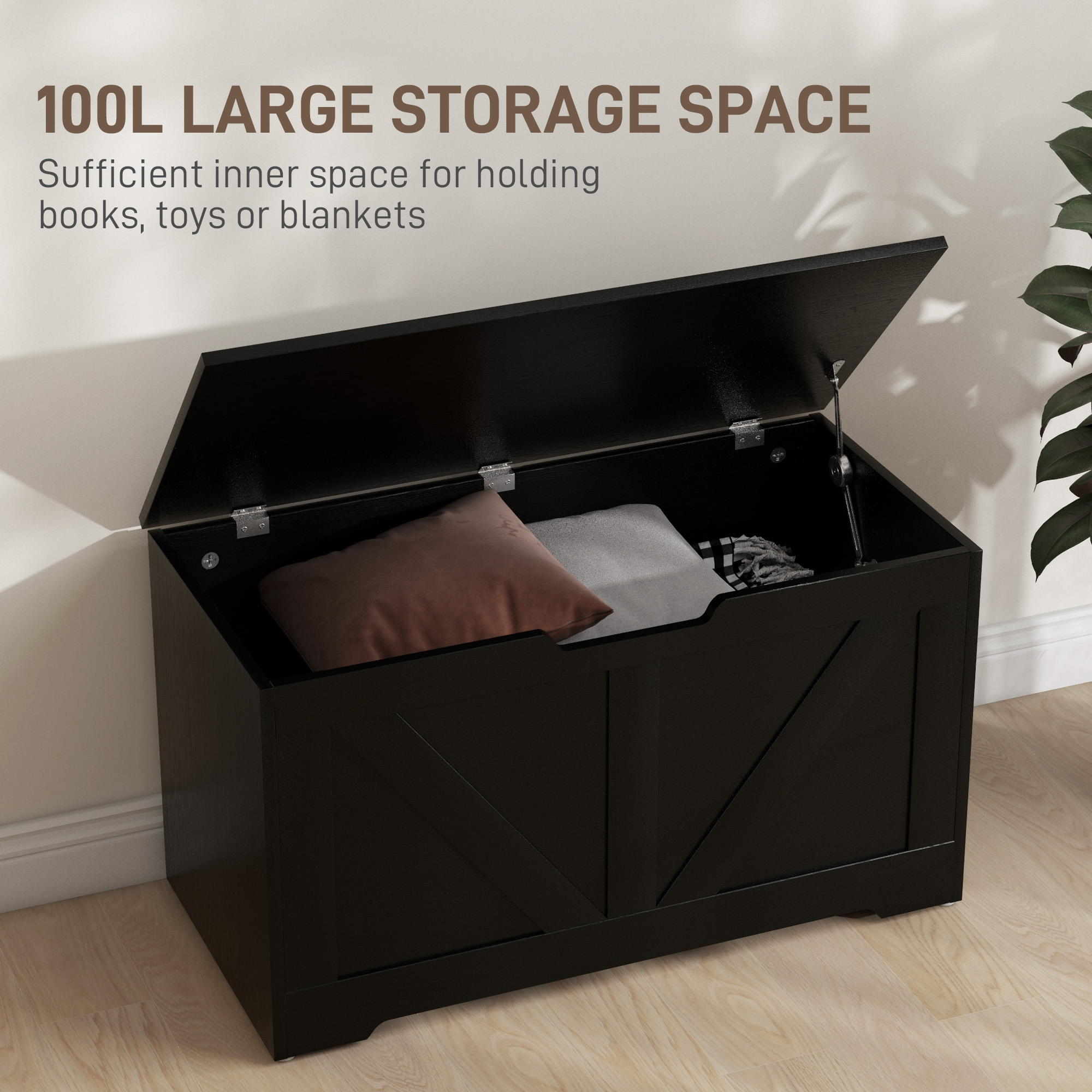
Closed storage also handles categories open shelves hate: shoes, paperwork, cleaning bottles, cables, medicines, pet food, spare bedding. A 100-litre storage bench, such as the sort used in hallways or bay windows, can swallow winter hats and bags while giving you somewhere to sit. An 18-pair shoe cabinet keeps a narrow entrance from turning into a trip hazard. Neither is glamorous in the staged-shelf sense, but both solve the morning faff.
There is another very British constraint: access. A Reddit thread on r/HousingUK from 19 May 2026 had first-flat buyers worrying about furniture needing to come apart to fit lifts and flat doors. That is not a niche concern in Manchester new-builds or converted terraces with narrow stairs. Closed storage is only better if it can physically get in, which is why modular units, flat-pack cabinets and trunks under roughly 120 cm wide often beat one heroic sideboard.
The honest trade-off
Choosing closed storage means accepting more bulk. Doors need clearance. Drawers need runners. A cabinet that hides clutter can make a small wall feel shorter, especially if it is too deep or too dark for the room. Cheap closed furniture can also be depressing: wobbly backs, thin handles, melamine that chips at the corners. If the proportions are wrong, you’ve paid to hide mess inside a new problem.
Choosing open shelves means accepting maintenance. Dust settles. Grease clings in kitchens. Objects migrate. The felt storage basket that looked soft and sorted in January can pill after the second wash, and glass jars only look beautiful if someone keeps refilling them. Open shelves are honest in a punishing way: they show you exactly how a household behaves.
Open shelving is display with a side order of storage; closed storage is storage that lets a home have an off day.
The trade-off is not taste versus taste. It is capacity, cleaning and access against airiness and immediacy.
Which to pick by use case
- Rented flat under 60 m², landlord won’t allow heavy drilling: pick closed freestanding storage. A slim cabinet, lidded trunk or modular drawers will do more than open shelves fixed into questionable plasterboard. Check the full packed width if it has to pass a 76 cm flat door.
- Victorian terrace with alcoves either side of the chimney breast: pick closed storage below, open shelves only above eye level for display. Base cupboards hide board games, routers and cables; one or two shelves can hold lamps or books without becoming a dumping ground.
- Small kitchen with daily cooking and decent extractor fan: pick a limited run of open shelves for high-use items. Keep it to mugs, plates or oils used every day. For packets, pans and the odd dodgy blender attachment, pick closed cupboards.
- Family hallway with school bags, shoes and sports kit: pick closed storage, no contest. A shoe cabinet or storage bench gives the mess a boundary. Open hooks and shelves look overwhelmed by Tuesday.
- Studio flat for one adult, budget under £250.00: pick closed pieces with shallow depth. One 30 cm-deep cabinet and a lidded storage bench will work harder than a wall of shelves, especially if the bed, desk and sofa are all in the same sightline.
FAQs
Is open shelving ever a good idea in a small UK home?
Yes, but as display or quick-access storage, not the main system. Keep it shallow, around 15 to 20 cm deep, and use it for things handled daily so dust does not settle for weeks.
Does closed storage make a small room feel smaller?
It can if the piece is too deep or too tall for the wall. Measure skirting-to-skirting, note plug sockets and leave door clearance. In many small rooms, a 30 to 35 cm-deep closed unit looks calmer than exposed clutter spread across shelves.
What should I measure before buying storage for a flat?
Measure the lift, stair turn, front door, internal door and the route from kerb to room. The r/HousingUK discussion from 19 May 2026 was right to focus on furniture that comes apart; access is part of the purchase, not an afterthought.
How do I stop closed storage becoming a hidden mess?
Give each closed zone a job: shoes, documents, medicines, spare bedding. Drawer organisers help, but the bigger shift is editing. The r/AskUK post-renovation row from 15 April 2026, with a household bracing for a full scale war over what to keep, is painfully familiar because storage decisions are domestic negotiations.
Are open kitchen shelves unhygienic?
Not automatically. Plates used daily are fine. The issue is grease and dust on rarely used items, especially near a hob. If you fry often, closed cupboards are less work.
Where should I start if my home has no proper storage?
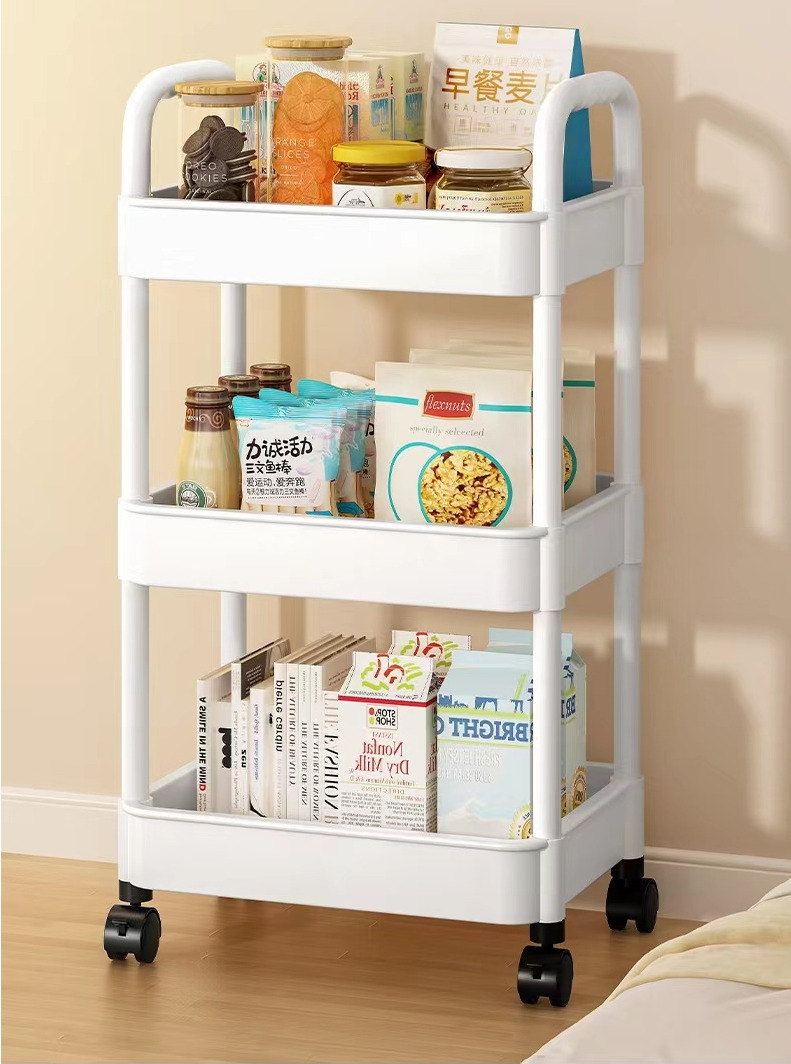
Start with the worst friction point: hallway shoes, kitchen packets, paperwork or laundry. Villalta’s storage solutions are useful as examples of closed categories: a bench for hallway overflow, a shoe cabinet for entrances, or a slim trolley for awkward gaps.