My last flat had roughly one square metre of clear floor between the sofa and the bookshelf — enough for a yoga mat if I dragged the coffee table sideways, and not much else. That was where I did press-ups for the best part of two years, and every January I'd look at Peloton adverts on the tube and quietly seethe. The maths never worked: I could fit a bike, but not a bike and a coffee table and a Christmas tree.
The compromise that actually worked — once I stopped dreaming of a garage conversion — was small stuff that folds, stacks or bolts to a wall. Nothing here replaces a proper gym membership. Everything here has earned its place in a flat where the workout kit has to disappear when friends come round.
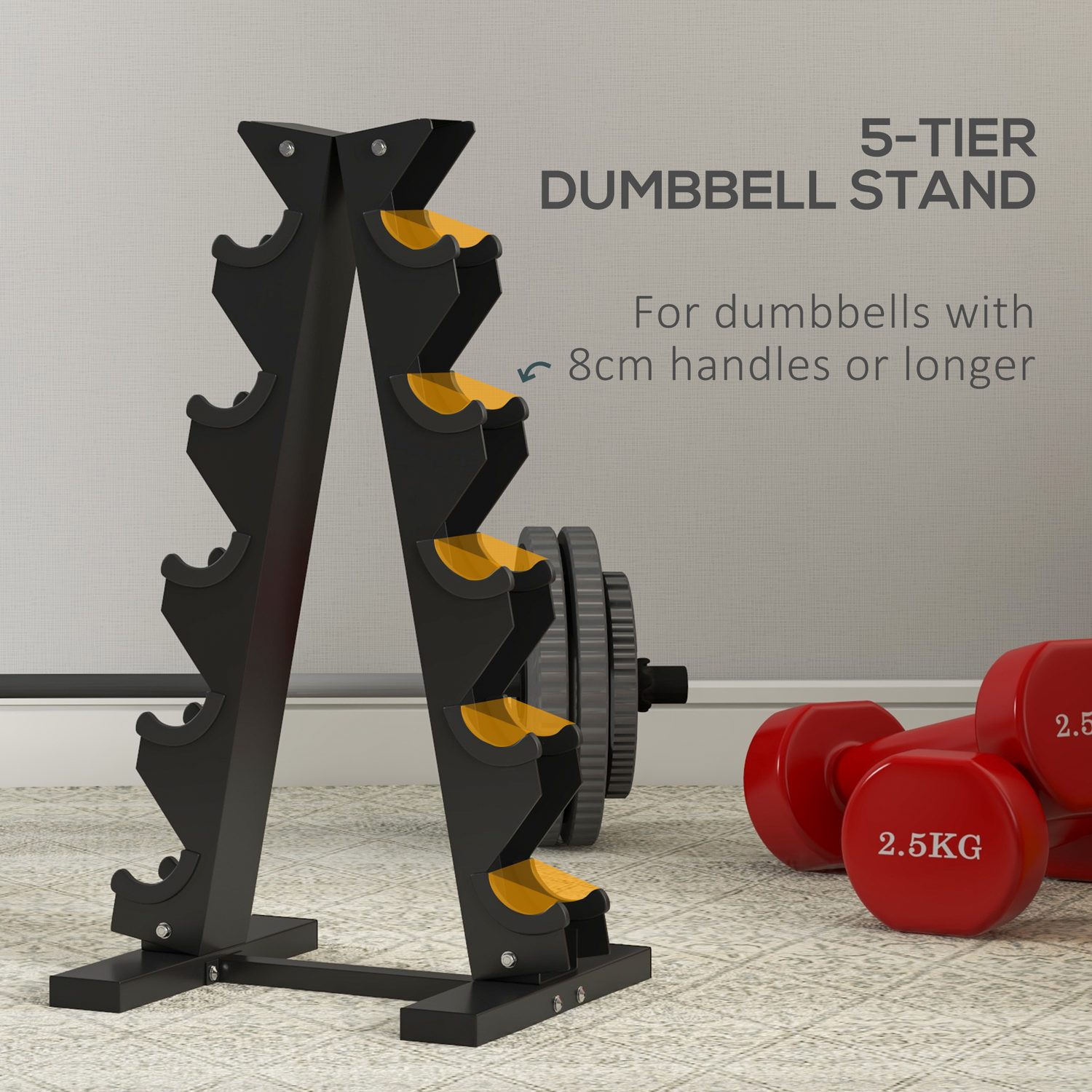
If you only read this: the 5-tier dumbbell rack with three pairs is the honest starter kit — three usable weights and a home for them for under £100. Add the 8kg soft kettlebell and you can swing without cracking a floor.
How I'm thinking about this
- It has to fold, roll or wall-mount. Kit that lives permanently in the middle of the room ends up as a coat rack within a month.
- It has to work on the floor you actually have. Cast iron on laminate is a bad marriage; cast iron on a downstairs neighbour's ceiling ends in a note through the letterbox.
- It has to survive the next move. That means bolts, not glued particleboard, and small enough to fit in the boot of a Corsa.
I've skipped the stuff that's fun to imagine and impossible to house: squat racks, rowers, wall-mounted TRXes bolted through the landlord's plasterboard. Those come with the garage.
The picks
1. The cardio piece — Folding Motorised Treadmill · about £145
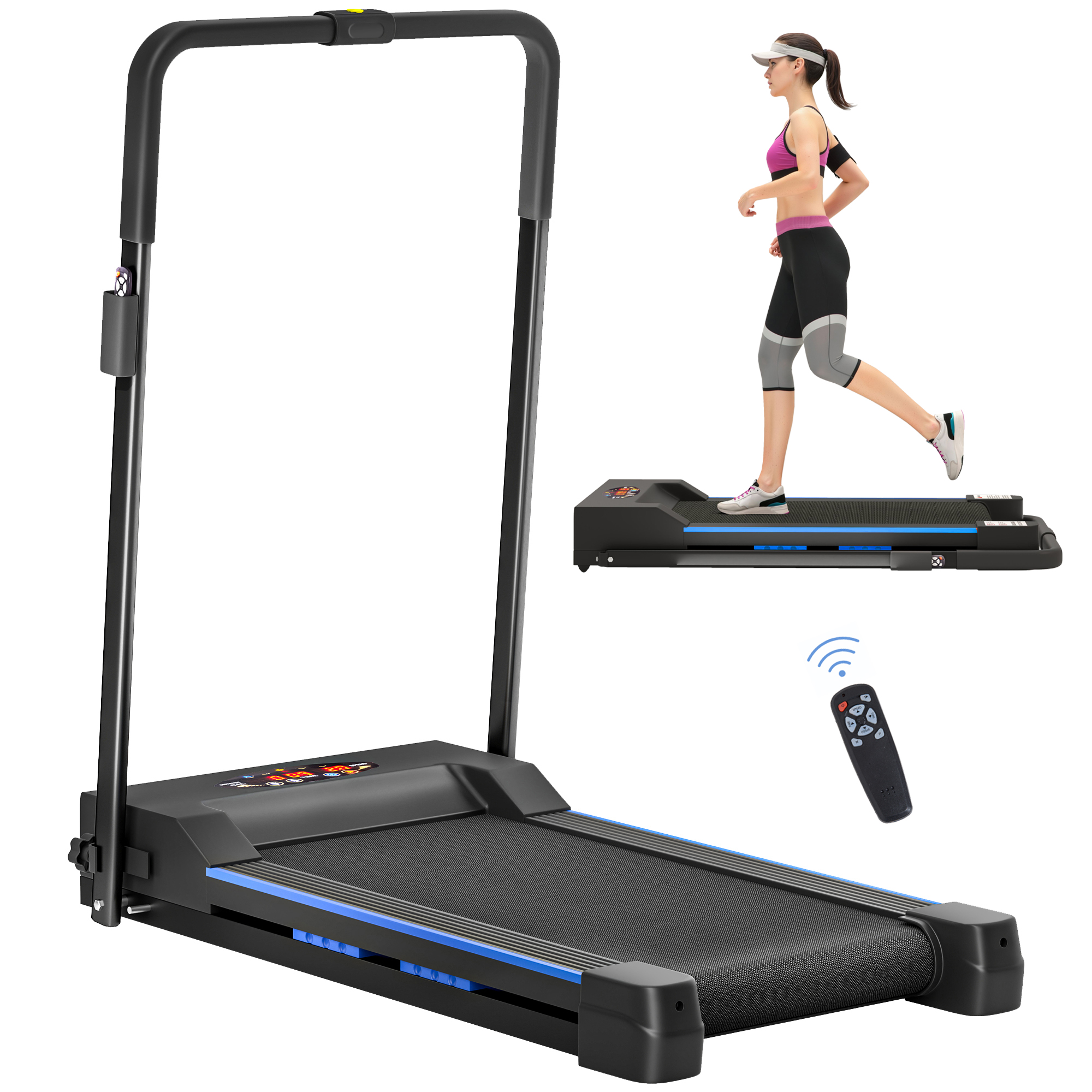
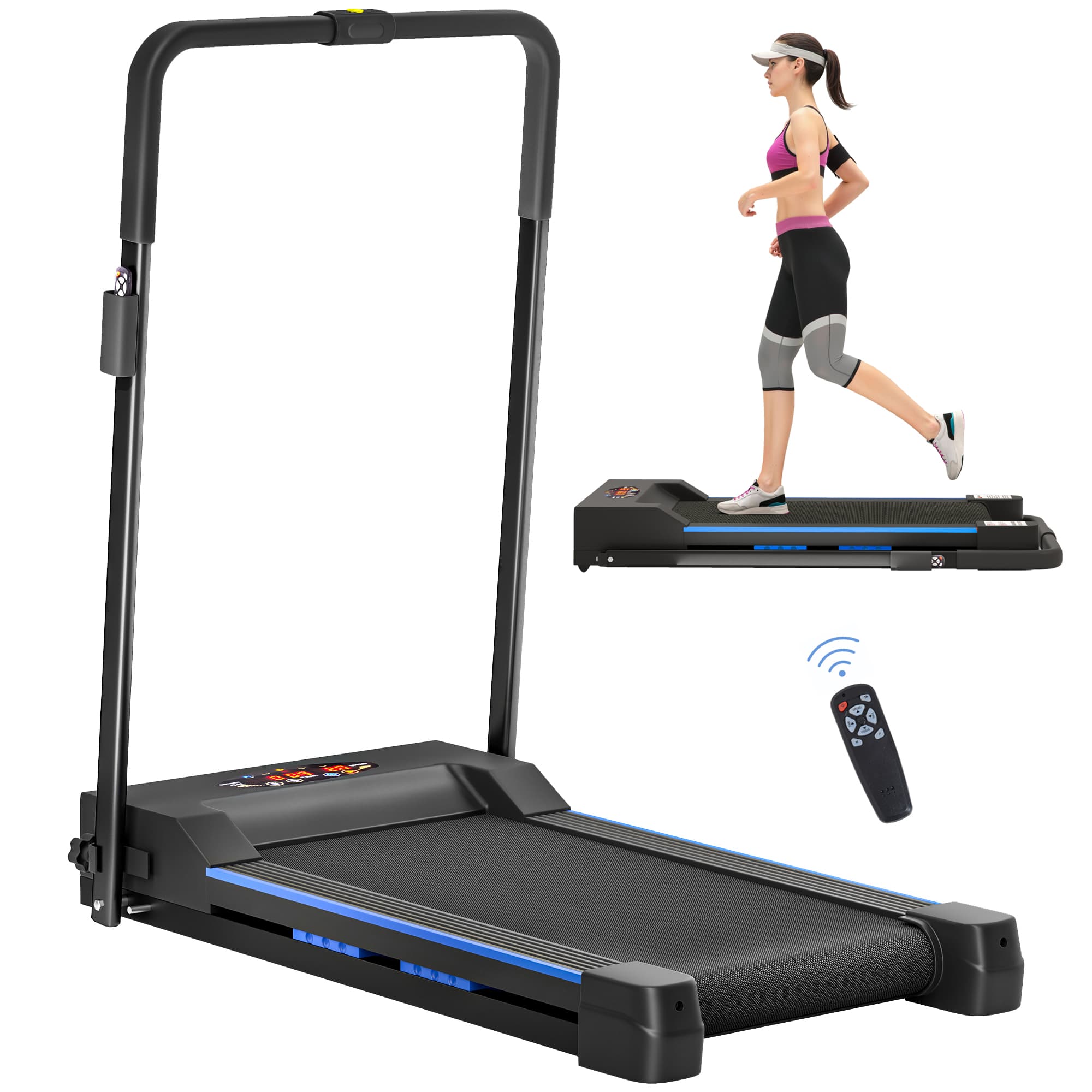
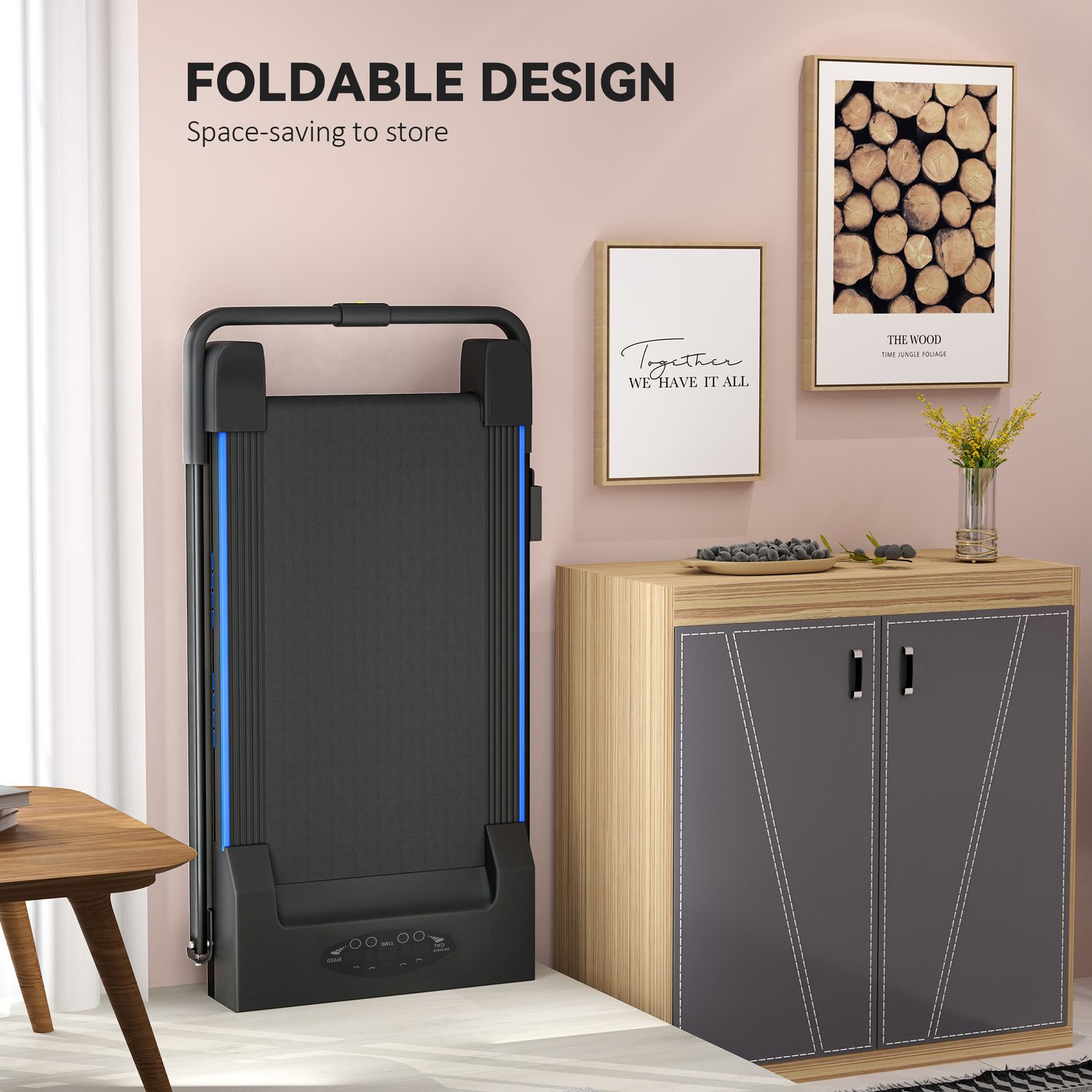
The treadmill I'd actually buy is this fold-flat motorised model because the handlebar collapses fully rather than tilting — you end up with a slab you can wheel under a double bed. The LCD sorts time, distance and speed without shoving a Bluetooth app in your face, and the wireless remote is genuinely useful when your hands are on the belt rather than the console.
Honest caveats: the motor is sized for walking and light jogging, not sub-five-minute miles. Training for a marathon? Not this machine — join the council leisure centre. And be sensible about your downstairs neighbour: walking pace is fine, sprinting at 10pm ends in bad feelings.
- Pros: handlebar folds completely flat, wheels for storage, LCD is legible, wireless remote, emergency safety key
- Cons: not built for sustained running, LED accent strip is a bit tacky if that matters to you
- Best for: the person who wants to walk 30 minutes when it's chucking it down outside without giving up floor space
2. The proper strength buy — 5-Tier Dumbbell Rack with three pairs · about £97
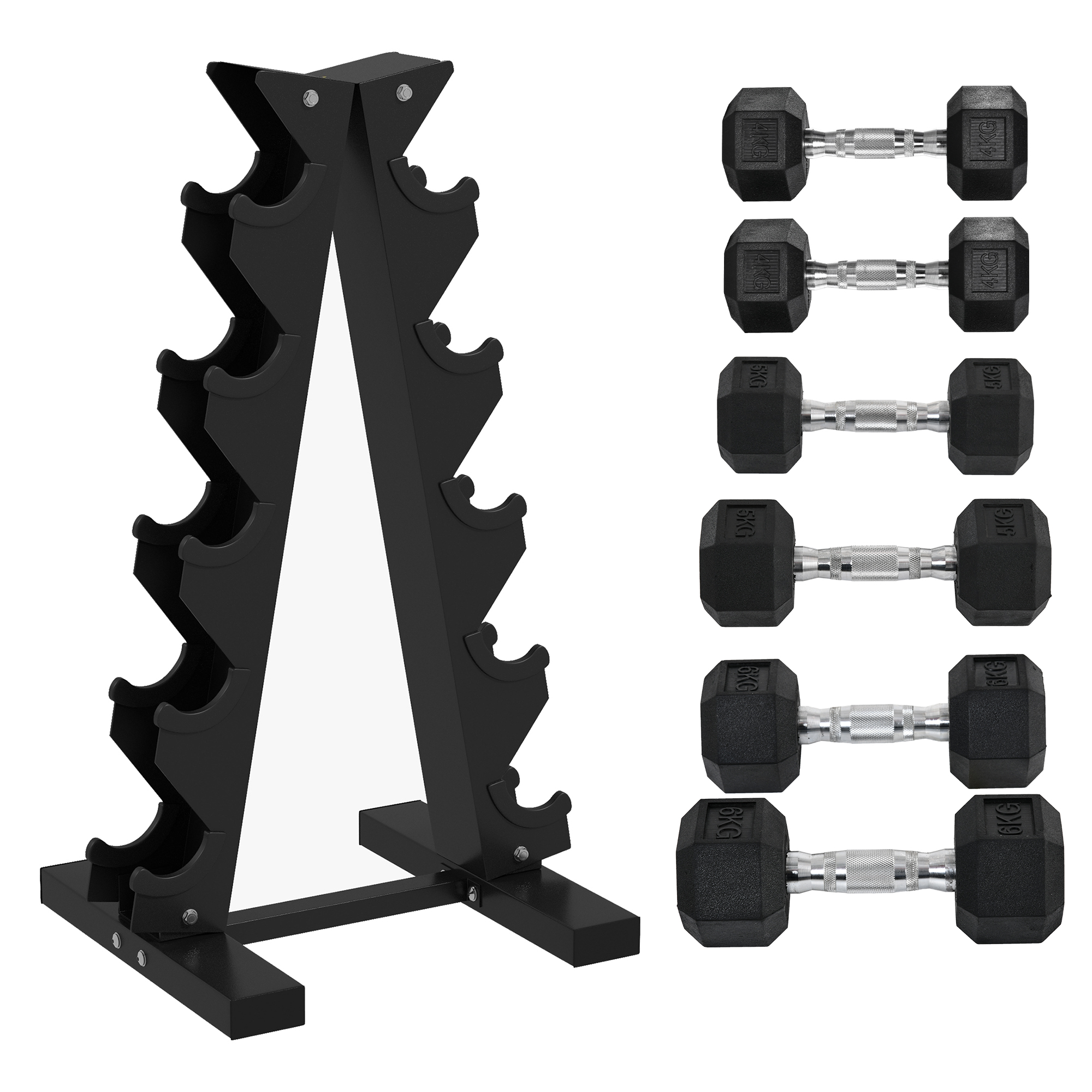
If you're actually going to lift, the honest answer is a fixed set with a home. The 5-tier rack with 4kg, 5kg and 6kg pairs turns "buy dumbbells" and "find somewhere for the dumbbells" into a single delivery. The hex rubber heads mean they don't roll under the sofa mid-set, and the knurled steel handles grip properly through sweaty palms. Rack rated to 100kg total, so the included weights sit well within that.
The catch: 6kg is the top pair, so this is conditioning and toning territory, not hypertrophy. If your lifts are already into the double digits you're the wrong customer. Also give the rack proper clearance — pulling a 6kg off the top tier with your ceiling light 40cm above your head is where the cursing starts.
- Pros: three usable weights, dedicated storage, hex heads don't roll, knurled handles grip properly
- Cons: 6kg ceiling means you'll outgrow it if you get serious; rack needs some assembly
- Best for: first proper strength set, home HIIT led by an app, anyone eyeing a Peloton who suspects they'd actually use dumbbells more
3. The set that lives under the bed — 12kg Colour-Coded Hex Set in a Case · about £38
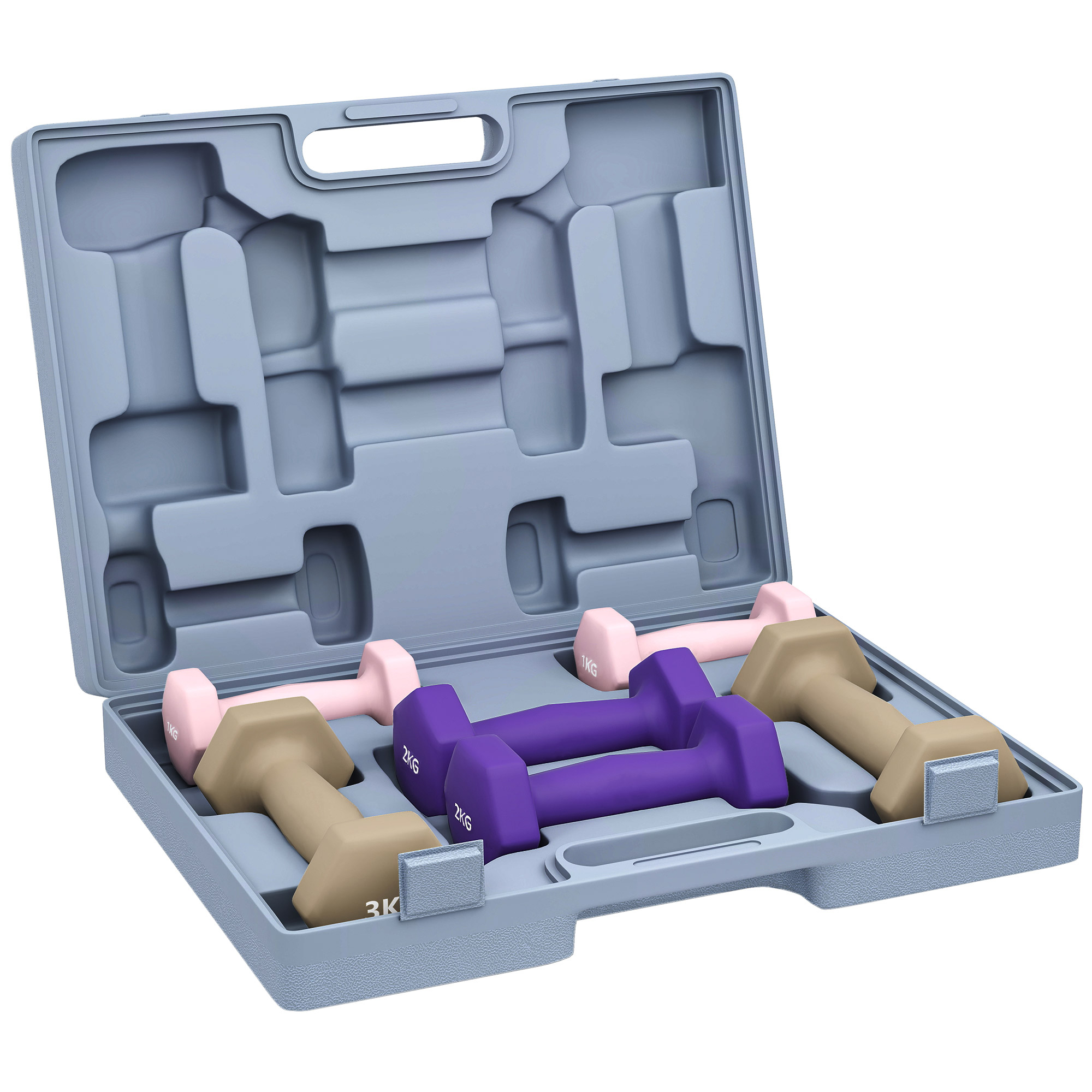
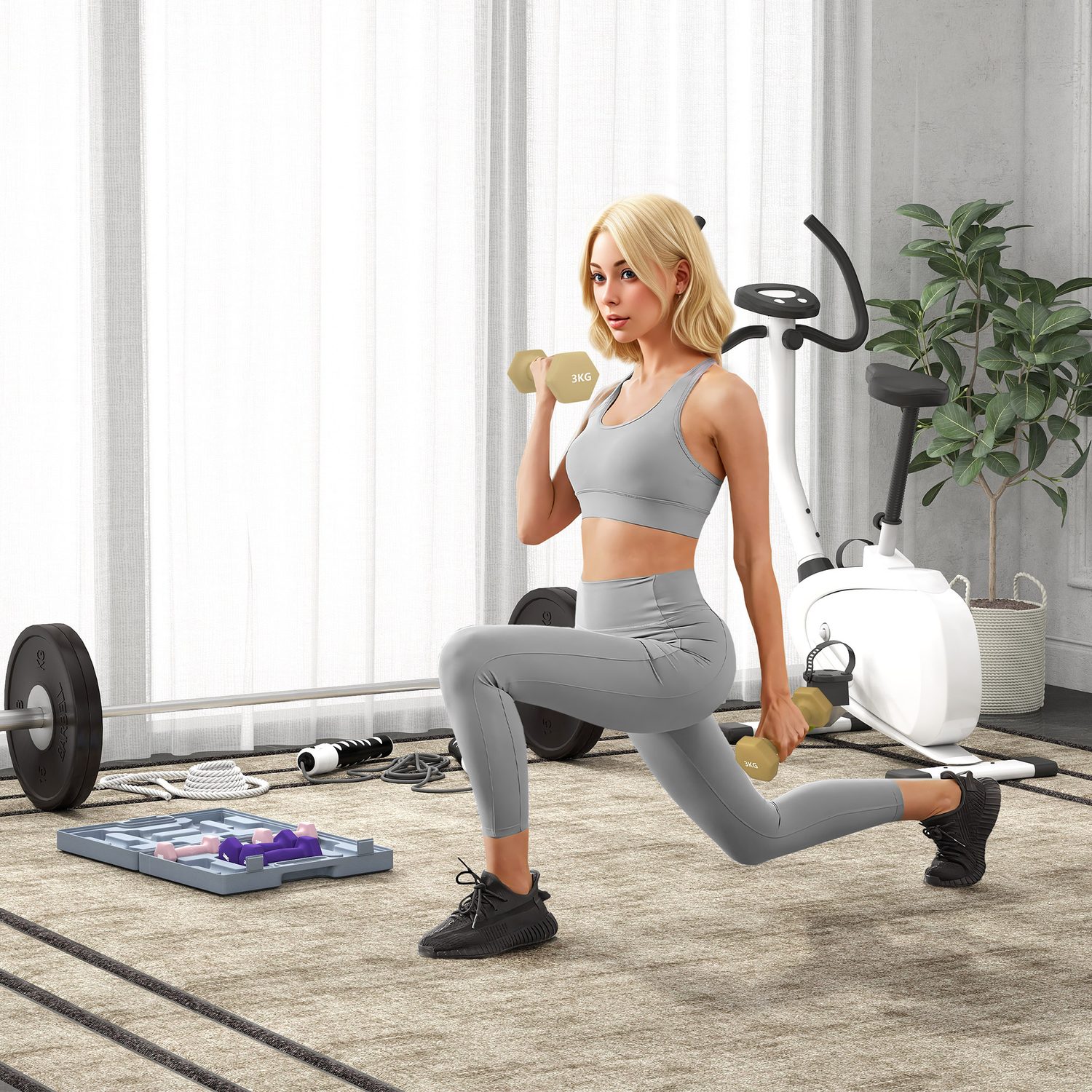
For people who don't want a permanent gym corner at all, the 12kg colour-coded set in a hard case is the sneaky-clever buy. Six dumbbells — 1kg, 2kg and 3kg pairs — clipped into moulded slots in a briefcase-sized shell. Slide the whole lot under the bed and no one has to see it. The PU coating means they won't ping around the room if you set one down carelessly, and the hex shape stops the 1kg pair rolling into the skirting.
The obvious limit is the ceiling weight: 3kg is a Pilates or barre or rehab weight, not a strength weight. What you're paying for is the storage, and for a rented flat where the workout kit has to vanish on landlord-inspection day, that's a proper trade.
- Pros: six weights in a portable case, colour-coded, disappears under a bed, decent for HIIT and light strength
- Cons: 3kg tops out fast; PU coating is smooth rather than grippy
- Best for: tiny flats where the gym has to be invisible, Yoga With Adriene devotees who want a bit of light strength, anyone doing barre or Pilates at home
4. The floor-friendly one — 8kg Soft-Shell Kettlebell · about £24
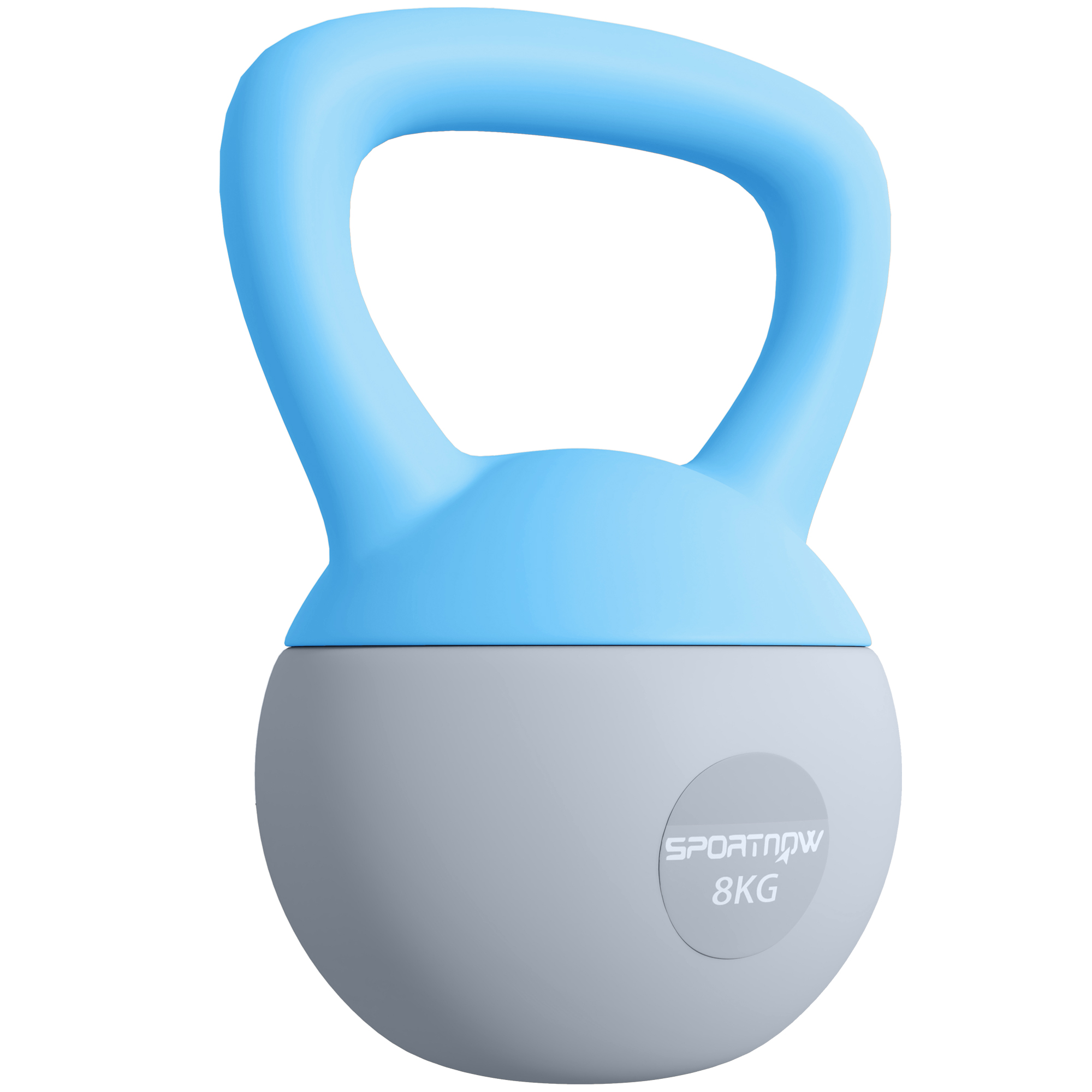
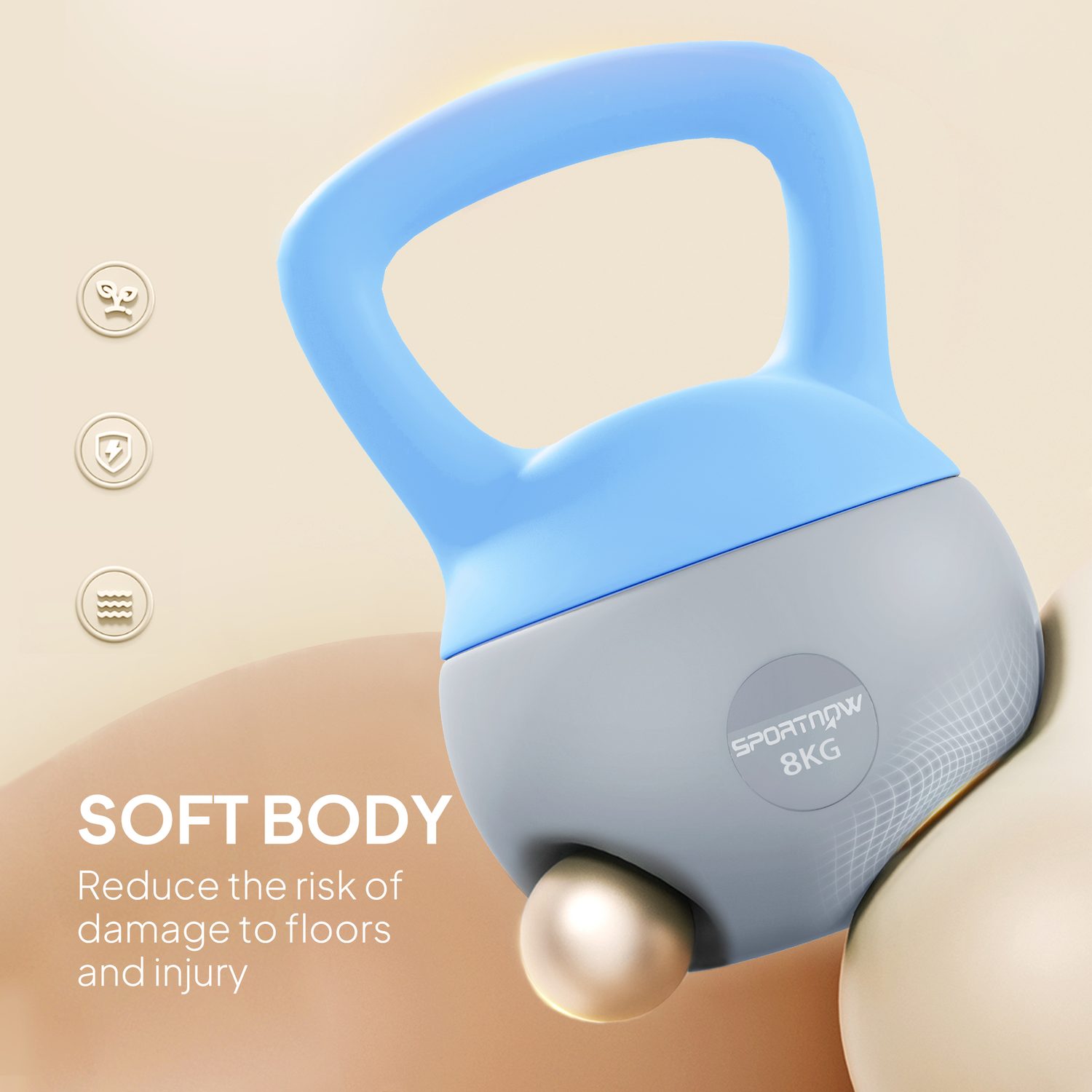
Anyone who's dropped a cast iron kettlebell on laminate flooring only does it once. The 8kg soft-shell kettlebell fills the gap: a soft outer skin over metal-sand fill, so the weight distribution swings close enough to iron that the technique isn't ruined, but a drop won't crack the floor or wake up the flat below. The handle is wide enough for a proper two-handed grip through swings.
Trade-offs: the soft exterior scuffs over time, especially on rough surfaces. And 8kg is a beginner-to-intermediate weight — if you're already doing 20kg Turkish get-ups, this isn't your kettlebell. It's the one for the person setting up a home gym on hard flooring and asking "can I actually do swings here without a disaster."
- Pros: soft shell protects laminate and tile, wide non-slip handle, sand fill balances close to cast iron
- Cons: outer skin scuffs, 8kg tops out quickly for intermediate trainees
- Best for: first kettlebell in a flat with laminate, tile or downstairs neighbours — i.e. most UK flats
5. The space-saver — Wall-Mounted Dumbbell Rack · about £29
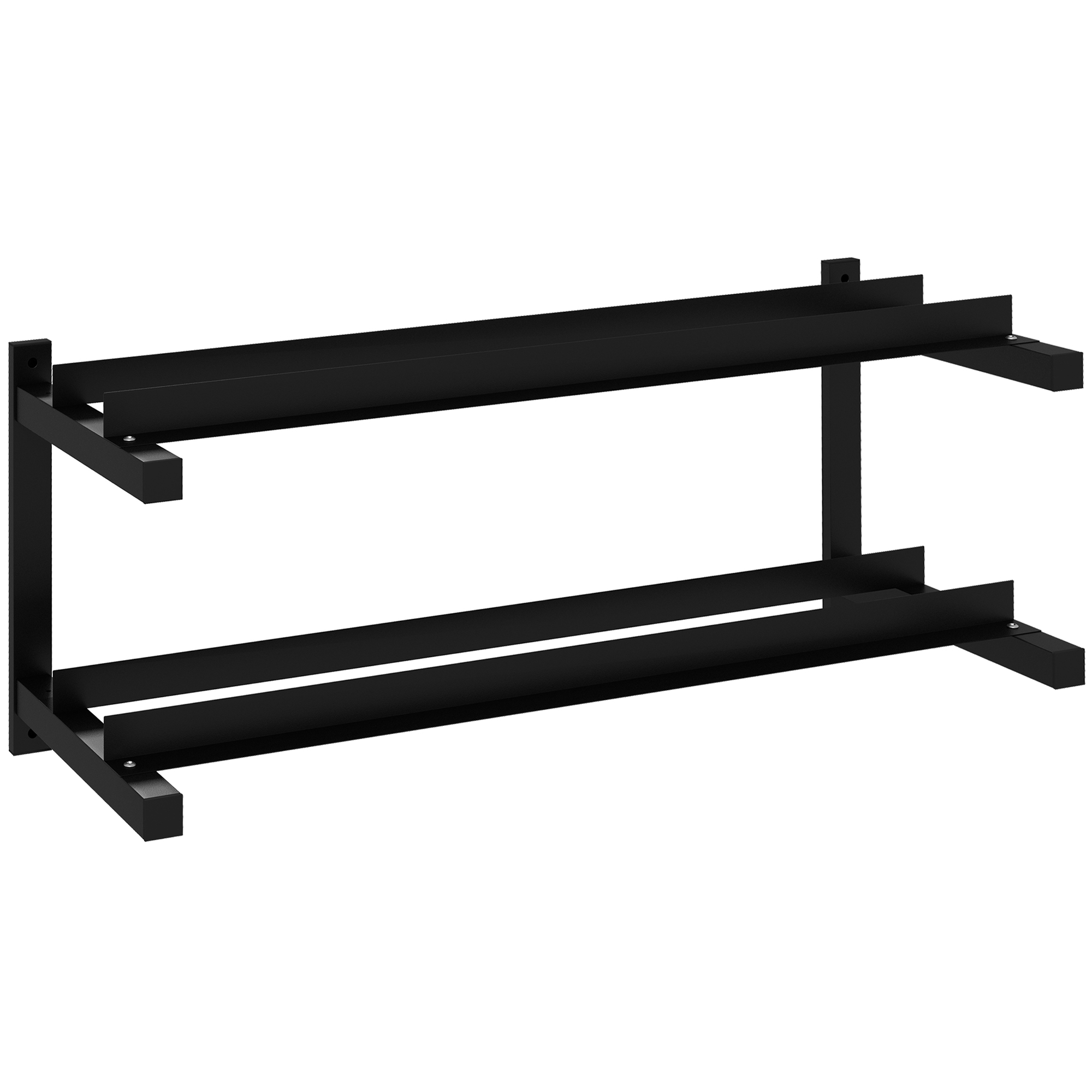
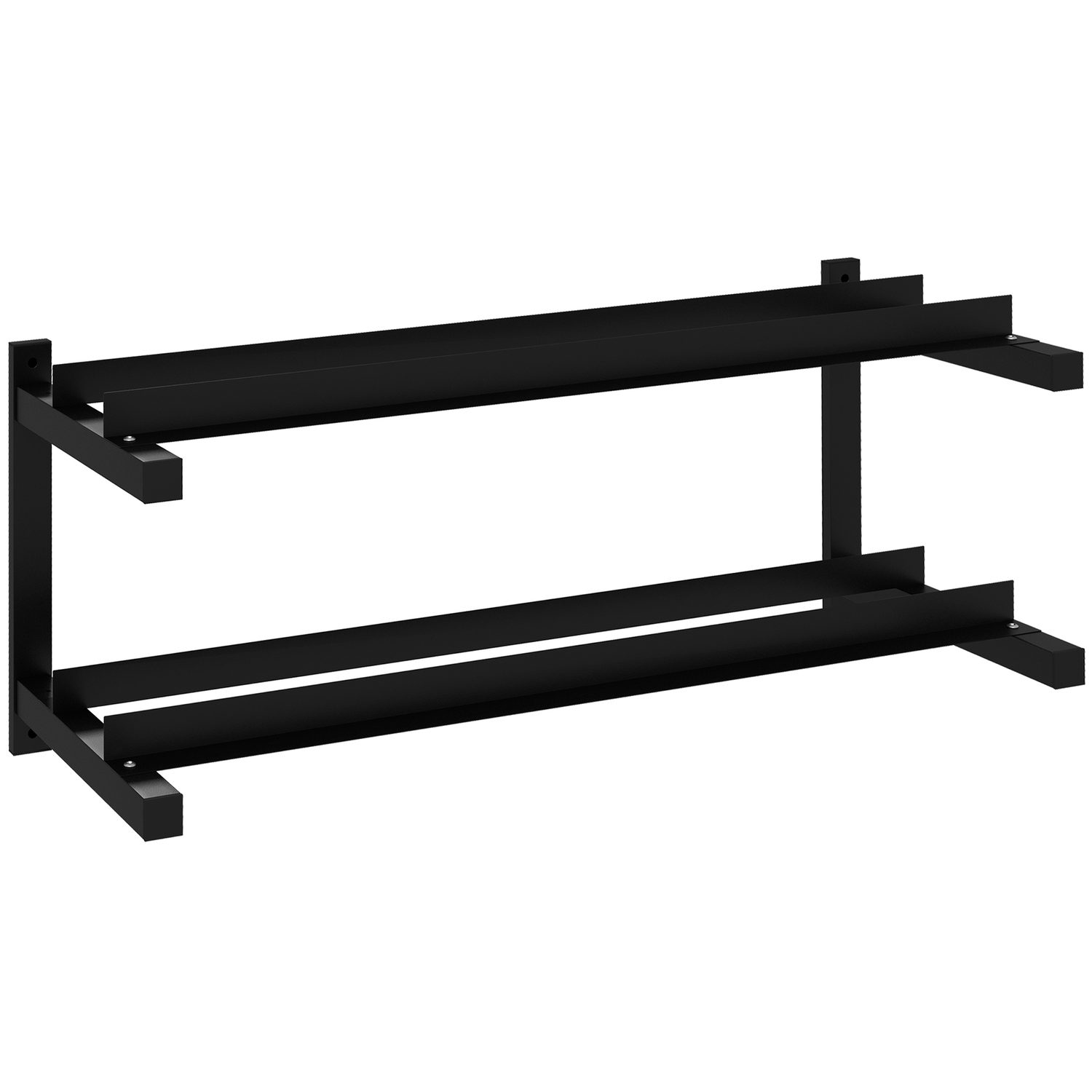
If you already own dumbbells and the problem is where they're living now, the two-tier wall rack is the most under-loved £29 in the whole home-gym section. It's 98cm long, holds up to 70kg spread across the two levels, and turns a corner of the spare room from "dumping ground" into something that resembles a proper kit wall.
The important caveat: the rack's capacity depends entirely on what you fix it to. Plasterboard-with-studs will hold 70kg fine if you catch a stud; plasterboard-with-nothing will not. Stud finder first. And if you're renting, get the landlord's OK before drilling.
- Pros: gets weights off the floor, 98cm gives you room for six pairs, cheap enough to buy on payday
- Cons: needs proper wall fixing (studs matter), not for a rental unless the landlord's fine with drilling
- Best for: anyone who's already accumulated dumbbells and wants them off the floor before someone rolls an ankle
The verdict
Starting from zero in a small flat, my honest three-item kit is the 5-tier rack (£97), the soft kettlebell (£24), and a proper rubber yoga mat. Under £130 all-in, fits in one corner, survives a house move.
If cardio matters more than lifting, swap the rack for the folding treadmill. If cost is the hard limit and the workout has to be invisible, the £38 hex set in its briefcase is the whole home gym you actually need for the first six months. The rest is showing up. That bit's on you.
By the Villalta Home Editorial team, July 2026. Edited by Juan Antonio Villalta Pacheco.