Small UK Homes: Furniture, Storage and Layout Complete Guide
The alcove that started this argument was 158 cm wide, 36 cm deep at the skirting, and sat beside a chimney breast in a rented Stoke Newington flat where the hallway pinched to 70 cm if someone left trainers by the door. A standard TV bench looked harmless online. In the room, it made the sofa shuffle sideways, blocked one double socket, and turned the coffee table into an obstacle course. That is the real business of furnishing a small UK flat or terrace: not finding miniature versions of normal furniture, but working out what each piece steals from the room.
This guide covers the main furniture and storage decisions for small UK homes: sitting rooms, bedrooms, hallways, storage zones, kitchens and bathrooms. It is written for rented flats, Victorian terraces, 1930s semis cut into awkward rooms, and compact new-build apartments where the floor plan says “open-plan” but the dining table still has nowhere sensible to go. It does not really cover four-bed detached homes with double garages, utility rooms and 3 m ceilings; those houses have different problems, mostly about scale and echo.
My thesis is simple and arguable: in homes under about 55 m², furniture should be judged first by what it blocks, not by what it stores. A 100 litre chest can be useful. A 100 litre chest in front of a radiator, doorway or BS 1363 socket is a daily faff. Good small-home buying is less about clever gadgets and more about preserving routes, light and plug access.
Why this matters in UK homes specifically
British homes are awkward in a very particular way. Much of the housing stock was built before 1980, and plenty of it was built before central heating, fitted wardrobes and the modern habit of owning six chargers per person. Victorian terraces often have narrow front doors, steep stairs and chimney breasts that split rooms into polite little zones. A typical terrace lounge of about 3.5 x 4.2 m sounds workable until you place a sofa, TV unit, side table and somewhere to dry laundry.
Flats are tighter still: the median flat is roughly 47 m², which means one bad purchase can dominate the whole place. UK plugs are chunky, BS 1363 sockets need clearance, and council bulky-item collections often require you to get unwanted furniture to the kerb without blocking the pavement. If a wardrobe will not turn on the stairs, that is not a minor inconvenience. It is an expensive Saturday with a scratched bannister and a neighbour giving you the look.
Sitting room: buy for circulation before comfort fantasies
The sitting room in a small UK home is rarely only a sitting room. It is the place you watch telly, eat a takeaway, fold washing, work on a laptop and squeeze guests onto something that may or may not be called a sofa bed. The trap is buying the biggest sofa that fits against the longest wall, then discovering the room has no usable path through it.
Start with circulation. In a 3.5 x 4.2 m terrace lounge, leave at least 70 cm for the main route from door to window or door to stairs. If the coffee table sits in that route, it needs to be narrow, round-edged or easy to move. A compact two-seater around 135-165 cm wide will often behave better than a chaise that looks tempting in a showroom. TV Units are the other offender: 35-40 cm deep is usually enough for media kit, while 50 cm deep can make a room feel oddly blocked.
Measure the door swing and leave 5-10 cm of breathing room beside it; a door that opens into a cabinet will annoy you every day.
Choose Storage Coffee Tables only if the lid opens without hitting knees; lift-tops need about 25-35 cm of clear movement.
Keep TV Units below the window-sill line if the room already feels dark. Low furniture makes a small room read wider.
Expect decent compact Sofas to sit in the £250-£750 band, with cheaper ones often using thinner foam that sags sooner.
The common mistake is treating “fits the wall” as the same as “fits the room”. A sofa can fit perfectly on paper and still ruin the route from hallway to kitchen. Tape the footprint on the floor for two evenings before ordering. It looks daft. It works.
Bedroom: the bed is the room plan, not one item in it
In small bedrooms, the bed decides nearly everything. A UK king-size mattress is 150 x 200 cm before you add a frame, headboard or Bedside Tables. Put that in a box room and you may have 45 cm down one side, which is technically a walkway but emotionally a squeeze. The right question is not “Can I have a king?” It is “Can I make the bed, open drawers and reach the socket without climbing over someone?”
Under-bed storage earns its keep if it is genuinely accessible. Ottoman Beds are excellent where there is clearance to lift the platform, but a lift-up base under a sloping ceiling or beside a radiator can be maddening. Divan drawers work only if you have 50-60 cm of side clearance. In a narrow room, boxes on castors may beat built-in drawers because you can pull them out from the foot.
Allow at least 60 cm on the side you use most; 75 cm feels much less like student accommodation.
Check total bed-frame width, not mattress width. Some upholstered king frames are 165-175 cm wide.
Look for shallow wardrobes, around 45-50 cm deep, if a standard 60 cm wardrobe blocks the route to the window.
Budget roughly £180-£500 for a basic ottoman double, more if you want a headboard that does not wobble.
The common mistake is buying a bed with storage that opens the wrong way. End-lift ottomans suit narrow side gaps; side-lift versions can be better under windows or in rooms where the foot of the bed is tight. Check the hinge direction before you fall for the fabric swatch, because the felt underside on cheaper models can pill and the gas-lift can feel heavy once bedding is on top.
Hallway: the first 90 cm sets the tone for the whole home
Small homes often fail at the hallway. Shoes multiply, coats slump, school bags land where the door needs to open, and the whole flat feels messy before you have reached the kettle. Hallway storage is not about creating a grand entrance. It is about stopping outdoor clutter from leaking into the sitting room.
The useful measurement is the clear walking width left after storage. In a narrow Victorian conversion hallway, anything deeper than 30 cm can be too much. Wall hooks, slim shoe cabinets and bench seats with storage all have a place, but only if they do not create a bottleneck. A cushioned shoe bench can be brilliant for the school run at 8:15, though the seat height matters: 45-50 cm is comfortable for most adults, while very low benches become another shelf for parcels.
Keep shoe cabinets to 24-30 cm deep in tight hallways; tilt-out designs are often better than open racks.
Use hooks at two heights: around 165-175 cm for adult coats, lower for children or bags.
Pick closed storage if the front door opens straight into the living area, because visible shoes make the whole room feel busier.
Check stair turns before ordering tall hall units. A 180 cm flat-pack box can be more awkward than the finished item.
The common mistake is building a “drop zone” that is too generous. A huge basket near the door sounds practical, then becomes a swamp of scarves, bike lights and post. Give every category a small limit. One tray for keys. One row for current shoes. The rest goes elsewhere, or it goes.
Storage: the counterargument for bigger furniture, and where it holds up
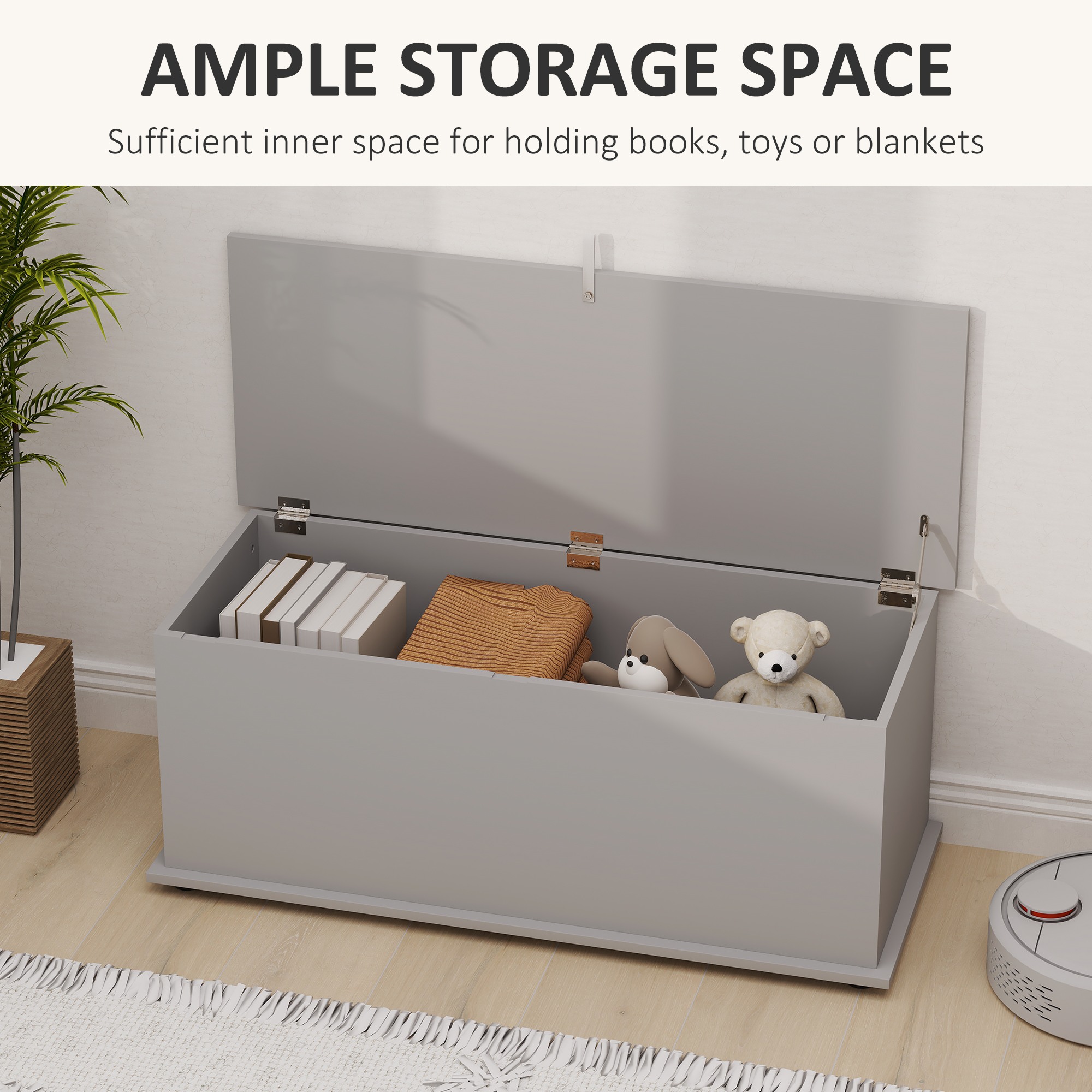
There is a respectable counterargument to the small-furniture gospel: fewer, larger storage pieces can calm a room better than lots of skinny units. I agree with that, up to a point. A single 113 litre storage chest can hide bedding, spare throws or Christmas lights more cleanly than four baskets under four different tables. A fabric dresser with ten drawers may swallow clothes that would otherwise sit in piles. Bigger can be tidier.
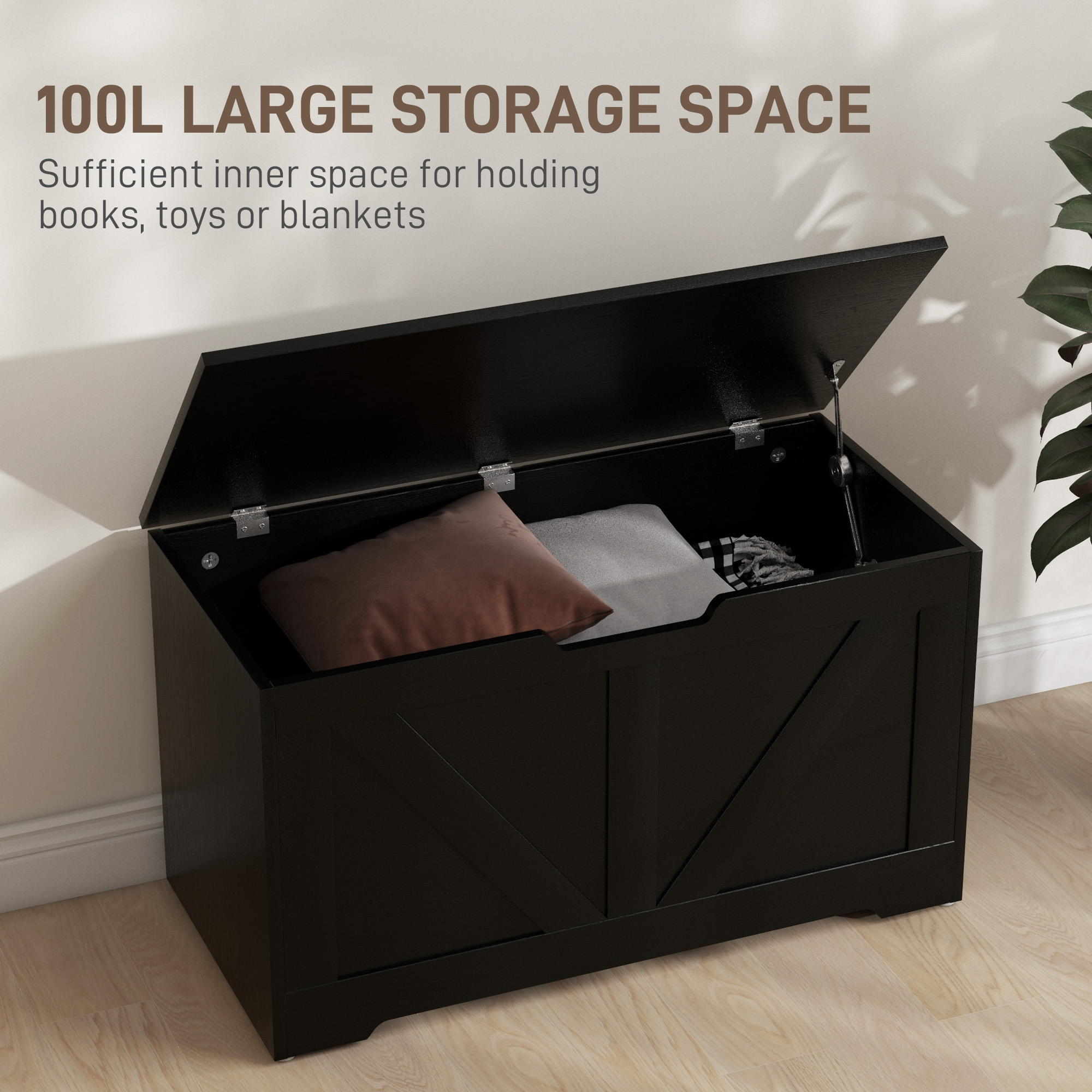
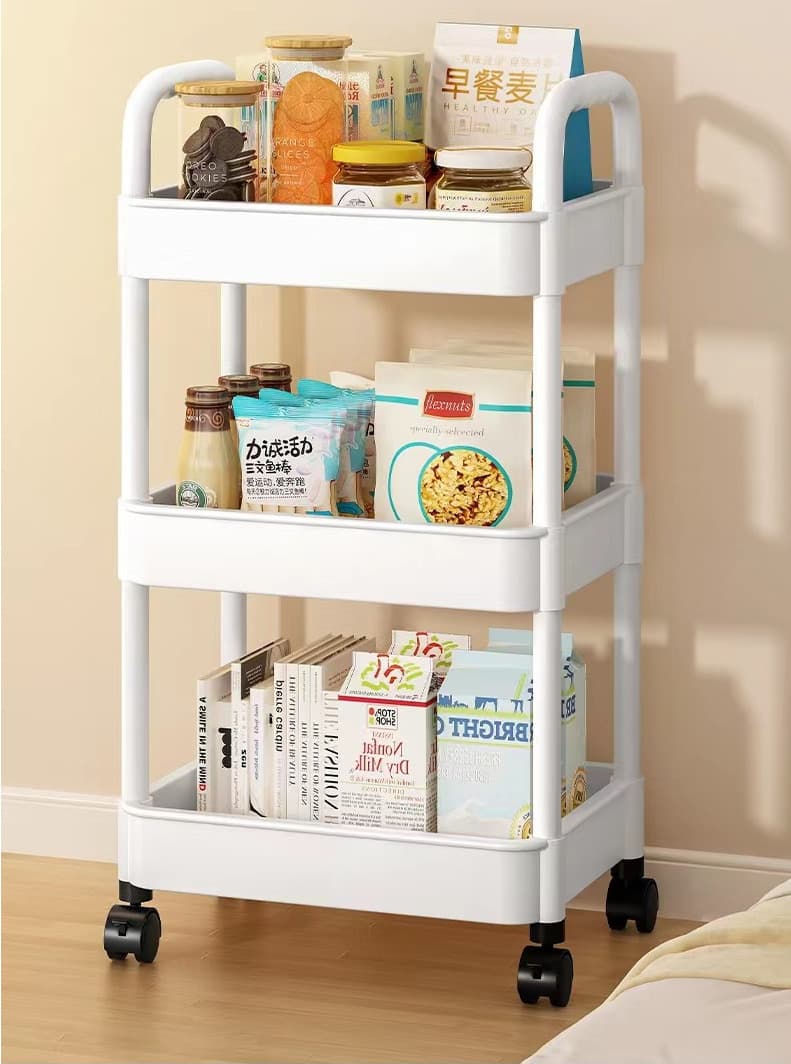
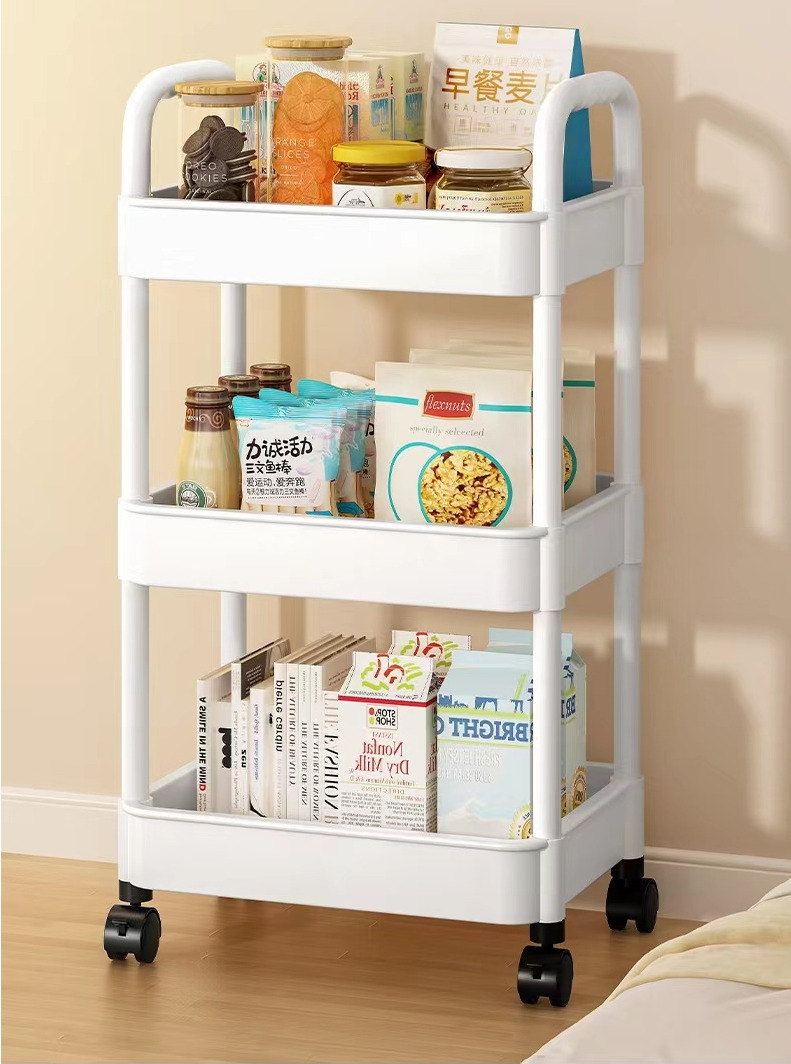
The catch is that storage furniture must earn its footprint in more than one way. A bench trunk that seats one person, stores bulky items and fits under a window is good small-home furniture. A deep chest at the end of a bed that stops a wardrobe door opening is just a box in the way. This is where browsing a focused storage solutions category can help, as long as you shop by measurements rather than by the promise of being “space-saving”. For example, a 100L storage box bench can work in a bay window if it stays below the sill, while a 3-tier rolling storage trolley is useful only if it has a parking place when not in use.
Prioritise dual-use pieces: bench plus storage, side table plus drawers, trolley plus temporary worktop.
Check load ratings. A bench should state a seat load, often around 100-150 kg; vague claims are a dodgy sign.
Leave 2-3 cm at the skirting if a chest sits against an old wall, because Victorian plaster is rarely straight.
Use clear internal dimensions for bulky items. External capacity figures can flatter a piece by 10-20%.
The common mistake is buying storage for things you should have got rid of. Council recycling collections and charity shops are not glamorous, but they are part of small-home design. If the item has not been used for two winters and you are buying furniture to house it, the furniture is not the solution.
Kitchen and dining: choose flexibility, then give it a home
Small UK kitchens often carry the sins of several decades: a boiler boxed into one corner, a washing machine under the only proper worktop, sockets above the splashback and a dining dream squeezed beside a radiator. The furniture has to flex, but flexible pieces still need a fixed resting place. Otherwise a rolling island becomes a trolley permanently parked in the doorway.
Extendable Dining Tables are usually the soundest buy for compact homes that host occasionally. A table around 80 x 80 cm works for two day to day; extended to 120-140 cm, it can handle four without pretending you own a dining room. Rolling Kitchen Islands can help if worktop space is poor, but measure the aisle. You want 90 cm between opposing units for comfortable use, and 75 cm is the lower limit before everything feels tight.
Choose drop-leaf or extendable tables with a closed depth under 85 cm if they sit against a wall.
Look for stools that tuck fully underneath; backs add comfort but steal visual space.
Check socket access before placing storage against a wall. BS 1363 plugs stick out, especially with chunky adapters.
Expect compact extendable tables to sit around £120-£450, depending on veneer, mechanism and leg stability.
The common mistake is buying wheels as if they solve everything. Castors are handy on hard floors, less so on thick rugs or uneven quarry tiles. If you cannot name where the trolley lives when the oven door is open, do not buy it yet.
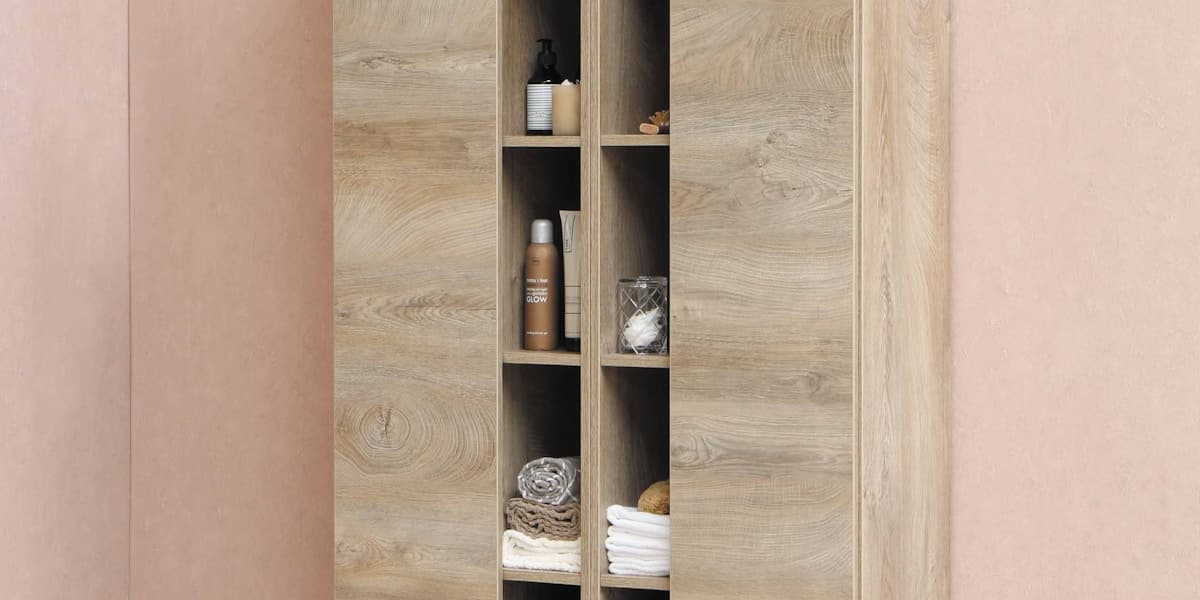
Bathrooms in small flats and terraces are often narrow, damp and already full of fixed objects. The storage has to work around pipe boxing, towel radiators and doors that open inward for no obvious reason. Tall, shallow cabinets are usually better than deep cupboards, because toiletries are small and deep shelves create forgotten layers of half-used bottles.
Wall-mounted storage can be excellent, but renters need to be careful with tiles and fixings. Freestanding slim cabinets, ladder shelves and over-toilet units offer capacity without drilling, though they must be stable on uneven floors. Moisture matters too. Cheap foil finishes can bubble near showers, and chrome shows fingerprints in certain light. Ventilation is part of storage: a packed Bathroom with no air movement soon smells like damp towels.
Keep floor cabinets around 18-25 cm deep in narrow bathrooms; 30 cm can block the basin route.
Choose raised feet if the floor gets wet. Furniture sitting flat on vinyl can swell at the base.
Use lidded boxes for medicines and razors, but avoid sealing damp cloths in plastic.
Budget £35-£120 for slim bathroom cabinets; very cheap hinges tend to rust or loosen.
The common mistake is using bathroom storage for household overflow. Bulk toilet roll, spare shampoo and Cleaning refills are fine. Spare bedding, paperwork and electricals are not. Humidity is a quiet vandal, and it does not care that the cupboard looked tidy on Sunday.
Tight London flat: Assume every item needs permission from the floor plan. Pick a compact sofa without a chaise, a wall-hugging TV unit under 40 cm deep, one serious storage piece and a dining table that shrinks for weekdays. Avoid buying “temporary” storage unless it has a named place; in a 47 m² flat, temporary becomes permanent by Tuesday. Prioritise closed hallway Shoe Storage because visual mess travels fast in one-bed layouts.
Victorian terrace with awkward rooms: Work with the alcoves rather than fighting them. Put low storage into chimney-breast recesses, use shallower wardrobes upstairs where the walls wobble, and be wary of wide furniture that has to turn on narrow stairs. Measure between skirting boards, not just wall to wall. A proper alcove unit can be lovely, but freestanding pieces are safer if you rent or expect to move within two years.
Modern new-build with the opposite problem: New-builds often have fewer nooks, larger blank walls and open-plan rooms that need zoning. Use furniture to create edges: a slim console behind a sofa, an extendable table with defined Lighting above it, and storage that does not all sit at ankle height. Count sockets before settling the layout, because the developer may have put them where a notional TV was meant to go, not where you actually live.
FAQs
What is the best way to start furnishing a small UK flat or terrace?
Start with a measured floor plan and the routes through the home. Mark doors, radiators, sockets, window heights and stair turns before looking at furniture. Then buy the largest fixed pieces first: sofa, bed, dining table and storage. Small accessories can wait.
How much clearance do I need around furniture in a small living room?
Keep about 70 cm for main walking routes if you can. Around a coffee table, 35-45 cm between sofa and table is comfortable enough for most rooms. If the route is used constantly, choose a smaller table or a nesting pair you can move.
Is built-in storage better than freestanding furniture in Victorian alcoves?
Built-in storage can use every centimetre, especially around chimney breasts, but it is costly and not always sensible in rented homes. Freestanding units are less seamless yet easier to move, repair or sell. For many terraces, low alcove storage plus shelves is the savvy middle ground.
Can a UK king-size bed work in a small bedroom?
Sometimes. A UK king mattress is 150 x 200 cm, and the frame may be wider. You need enough clearance to open drawers, reach sockets and make the bed without gymnastics. If that fails, a double with better storage often gives a nicer room.
Are rolling storage trolleys useful in small kitchens?
They can be, particularly where worktop space is poor, but only if they have a parking spot. Check aisle width, castor quality and handle height. A trolley that blocks the fridge or oven door is clutter on wheels.
How do I add storage without making a small home feel cramped?
Keep the sightlines calm. Use closed storage near entrances, low furniture under windows, shallow cabinets in narrow rooms and one or two larger storage pieces instead of lots of little units. Match depth to the room before worrying about capacity.
What furniture should renters avoid in small UK homes?
Avoid oversized wardrobes, heavy items that will not turn on stairs, wall-mounted pieces that need serious fixings, and anything that blocks sockets or radiators. Flat-pack is not automatically bad, but check finished dimensions and boxed dimensions before ordering.
Before buying anything else, take half an hour with a tape measure and your phone camera. Measure the alcoves at skirting height, count the sockets you actually use, photograph the hallway with shoes in it, and note the narrowest stair or doorway. Then choose the one room causing the most daily irritation and fix that first. If storage is the main problem, browse by dimensions in storage solutions, not by the prettiest lifestyle image. A small home rarely needs a grand plan on day one. It needs the next purchase to stop blocking the way.
Villalta Home Editorial is the in-house byline used for buying guides and product roundups on villaltaco.uk. Each guide is written by the editorial team, drawing on the catalogue's measurable data — real dimensions, materials, UK use cases, price bands — and on hands-on research into how products actually perform in UK homes. Every post tagged with this byline is reviewed and approved by Juan Antonio Villalta Pacheco, the founder and editor, before it goes live. See our editorial standards for the full process.