The worst bathroom mirror I tested this winter was in a Walthamstow rented flat: a 1.68 m by 2.04 m box room, one frosted window facing a brick wall, and a £29.99 chrome mirror that made every face look slightly ill at 7:10 am. The pull-cord light was behind your head, the extractor sounded like a small aircraft, and shaving before the school run meant guessing around the jawline. A lit mirror can fix that, but only if the electrics are right and the colour temperature isn’t hospital-blue. I’ve pulled together five sensible options for a dim UK bathroom, with the boring-but-crucial stuff up front: IP rating, CCT and anti-fog performance.
How I’m thinking about this
For bathrooms, I start with safety rather than style. Most lit mirrors you’ll see are IP44, which is usually suitable for zone 2 and splash-prone areas, but not for sitting directly over a bath or inside a shower enclosure. If your mirror is going anywhere near zone 1, you need to be talking to a qualified electrician and looking for IP65 or better. No one wants a dodgy cable run hidden behind a nice bevelled edge.
CCT means correlated colour temperature, measured in Kelvins. Roughly, 2700K to 3000K feels warm and flattering, 4000K is a decent daylight-ish middle, and 6000K to 6500K is cool and clinical. For a dim bathroom, I like a mirror that can switch between at least 3000K and 6000K, because the light you want for a bath at 10 pm is not the light you want for mascara or trimming a beard.
Anti-fog is the other thing I’d pay for. A demister pad doesn’t clear the whole mirror; it warms a central patch, often about A4 to A3 size, so you can actually see yourself after a shower. If you’re reworking a whole room, our bathroom edit has the larger fixtures too, but for mirrors I’d stay focused on light quality and wiring before getting distracted by Bluetooth speakers and touch buttons.
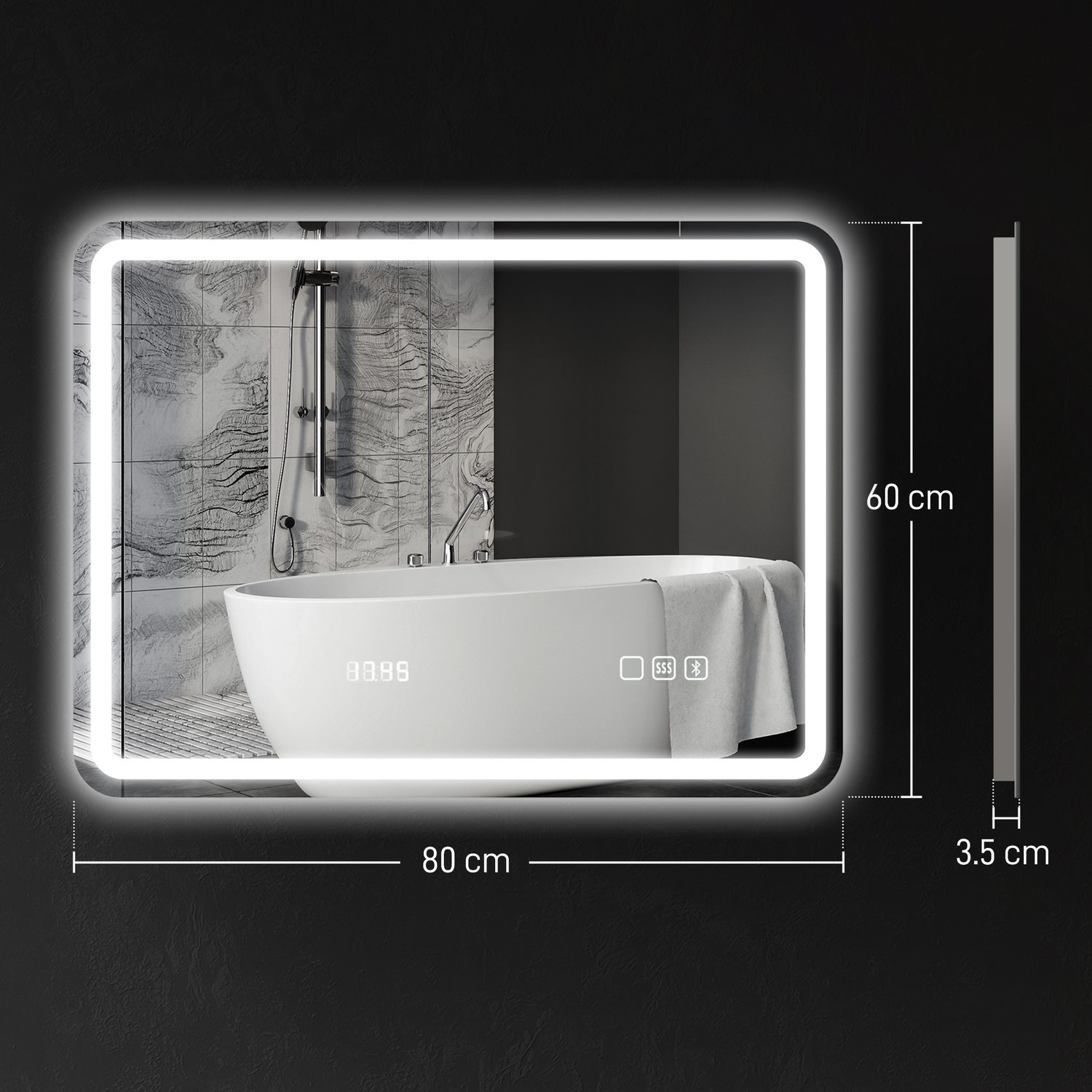
Best overall for a dark ensuite — Villalta 80x60cm Bluetooth LED Bathroom Mirror with Anti-Fog Tech · £89.99
This is the one I’d put in a small ensuite or the gloomy end of a Victorian terrace bathroom. At 80 cm by 60 cm, it has enough width over a 600 mm basin without bullying the wall, and the built-in LED border gives a more even wash than a single ceiling pendant behind you. It also has anti-fog, which matters in a room where the shower, loo and basin are all squeezed into one damp corner.
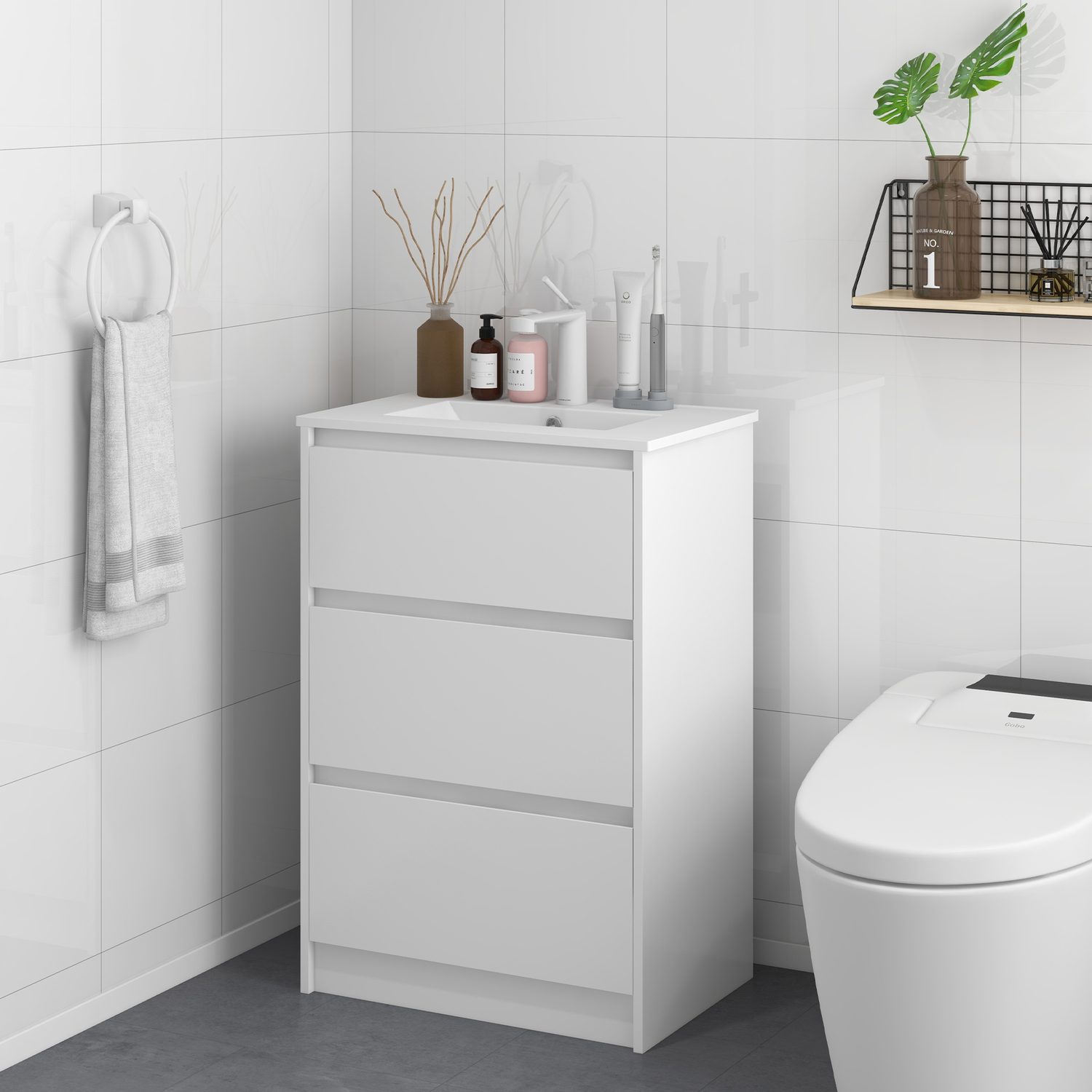
The trade-off is that you’re buying into features you may not use every day. Bluetooth sounds fun while you’re brushing your teeth, but it isn’t the reason to choose this mirror; the reason is the size, the demister and the clean lit edge. Check the live product page before booking an electrician, but for a bathroom mirror with light UK buyers should be looking for IP44 as a baseline in splash zones. If you’re pairing it with a compact basin run, the 600mm white gloss vanity unit is the sort of width that visually lines up well underneath.
Best budget CCT mirror — EMKE 500x700mm LED Bathroom Mirror · £74.99
The EMKE 500 mm by 700 mm mirror is the savvy buy for a narrow cloakroom or a flat where you don’t want to spend three figures on glass and LEDs. It is commonly sold with IP44 protection, a demister pad and three colour settings around 3000K, 4500K and 6500K, which is a lot for £74.99. The vertical format works nicely above a 450 mm or 500 mm basin.
It does feel budget. The touch button is visible, the light output is more useful for face-level fill than lighting the whole bathroom, and the edges don’t have the heavy, expensive feel of the pricier models. Still, if your main problem is a flat, grey face in the morning, it sorts the job without much faff. Bulbs are integrated, so when the LEDs eventually fail you’re replacing the unit, not popping in a new lamp.
Best for make-up and shaving — Pebble Grey 600x800mm CCT LED Mirror · £199.00
Pebble Grey’s 600 mm by 800 mm CCT mirrors sit in the proper middle ground: not designer-money, but better controlled than the cheapest imports. The appeal is the adjustable colour temperature, usually moving from warm white through neutral to cool white, with a memory function so you’re not stabbing at the touch control every morning. In a bathroom with no useful daylight, that matters.
The caveat is brightness. These mirrors make your face easier to read, but they shouldn’t be your only light source in a family bathroom. Keep a ceiling fitting or wall light in the plan, particularly if you have dark tiles, black taps or a deep alcove beside the bath. At £199.00, it is harder to justify if you only need a quick tidy-up mirror in a downstairs loo, but for regular grooming it is the nicest light of the group.
Best mirrored cabinet — HiB Globe 60 LED Cabinet · £365.00
If your sink ledge is a jumble of toothpaste, serum and Calpol, a lit cabinet makes more sense than a flat mirror. The HiB Globe 60 is around 60 cm wide, IP44 rated, and gives you mirror, lighting and storage in one neat block. I like this sort of cabinet in Manchester new-builds where the bathroom footprint is fine but the developer has given you one tiny glass shelf and called it storage.
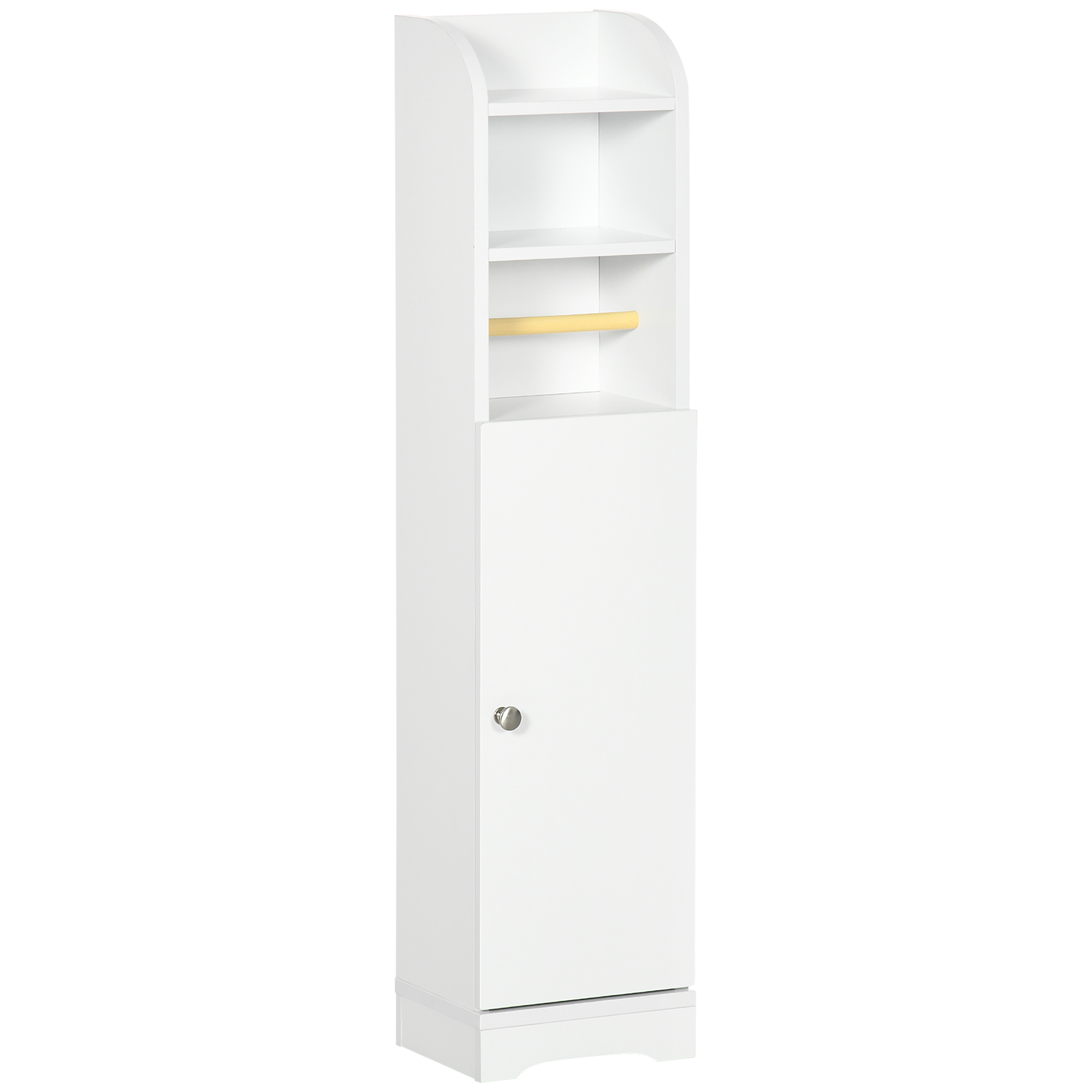
The compromise is depth and weight. A cabinet can stick out 12 cm to 15 cm from the wall, so it may feel imposing above a shallow basin, and you’ll want decent fixings into brick, stud or a prepared pattress. It costs £365.00, which is a jump. If that feels too much, a lit flat mirror plus a slim cupboard such as the narrow white bathroom cabinet can be a more flexible layout.
Best for renters — Croydex Battery LED Mirror Cabinet · £79.99
Hardwiring a mirror in a rented flat is often a non-starter, especially if the landlord starts muttering about making good the tiles. A battery LED cabinet from Croydex is the least dramatic route: no mains connection in the wall, no chasing plaster, and the mirror still gives you some face-level light. Expect a compact cabinet, roughly 45 cm to 50 cm wide, with cool white LEDs rather than adjustable CCT.
This is the pick with the biggest caveats. Battery lighting is weaker, anti-fog is usually absent, and you’ll be changing cells more often if four people use the bathroom every morning. It is fine for a downstairs cloakroom or a rental where you need better light near the mirror, but it won’t mimic a wired demister mirror. Keep it out of direct spray and check the stated IP rating before mounting.
Electrician’s rule of thumb: treat a lit bathroom mirror as a fixed electrical fitting, not a fancy accessory. Confirm the bathroom zone, IP rating and switching arrangement before you buy, because a normal BS 1363 plug inside the bathroom is not the answer.
Mirror
Size
Typical IP rating
CCT
Anti-fog
Best fit
Villalta Bluetooth LED
80 x 60 cm
Check listing; aim for IP44+
Fixed LED tone
Yes
Small ensuite
EMKE LED Mirror
50 x 70 cm
IP44
3 settings
Yes
Budget cloakroom
Pebble Grey CCT
60 x 80 cm
IP44
Adjustable
Yes
Grooming
HiB Globe 60
60 cm wide cabinet
IP44
Adjustable on many models
Yes
Storage-heavy bathrooms
Croydex Battery Cabinet
Approx. 45-50 cm wide
Model-dependent
Fixed cool white
No
Renters
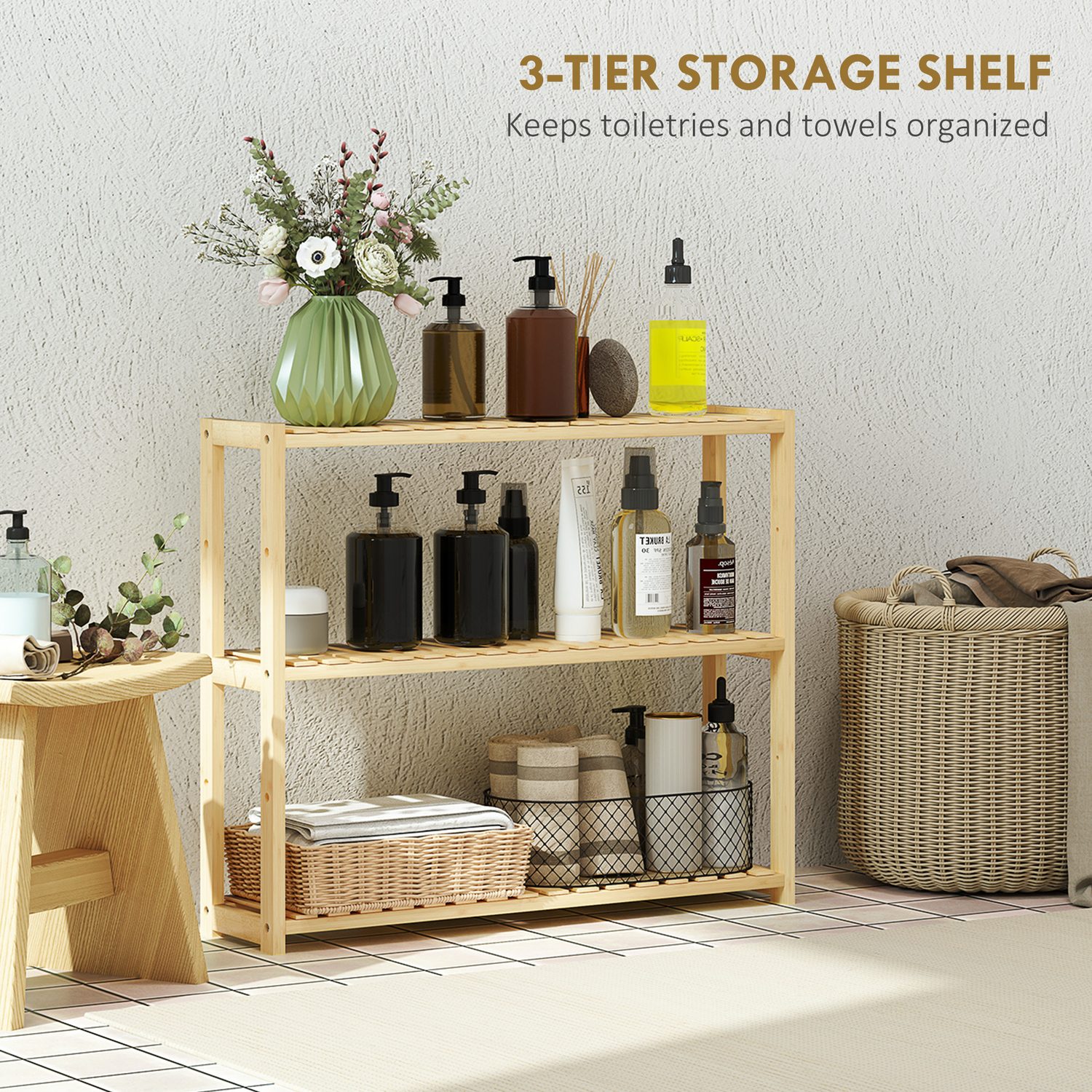
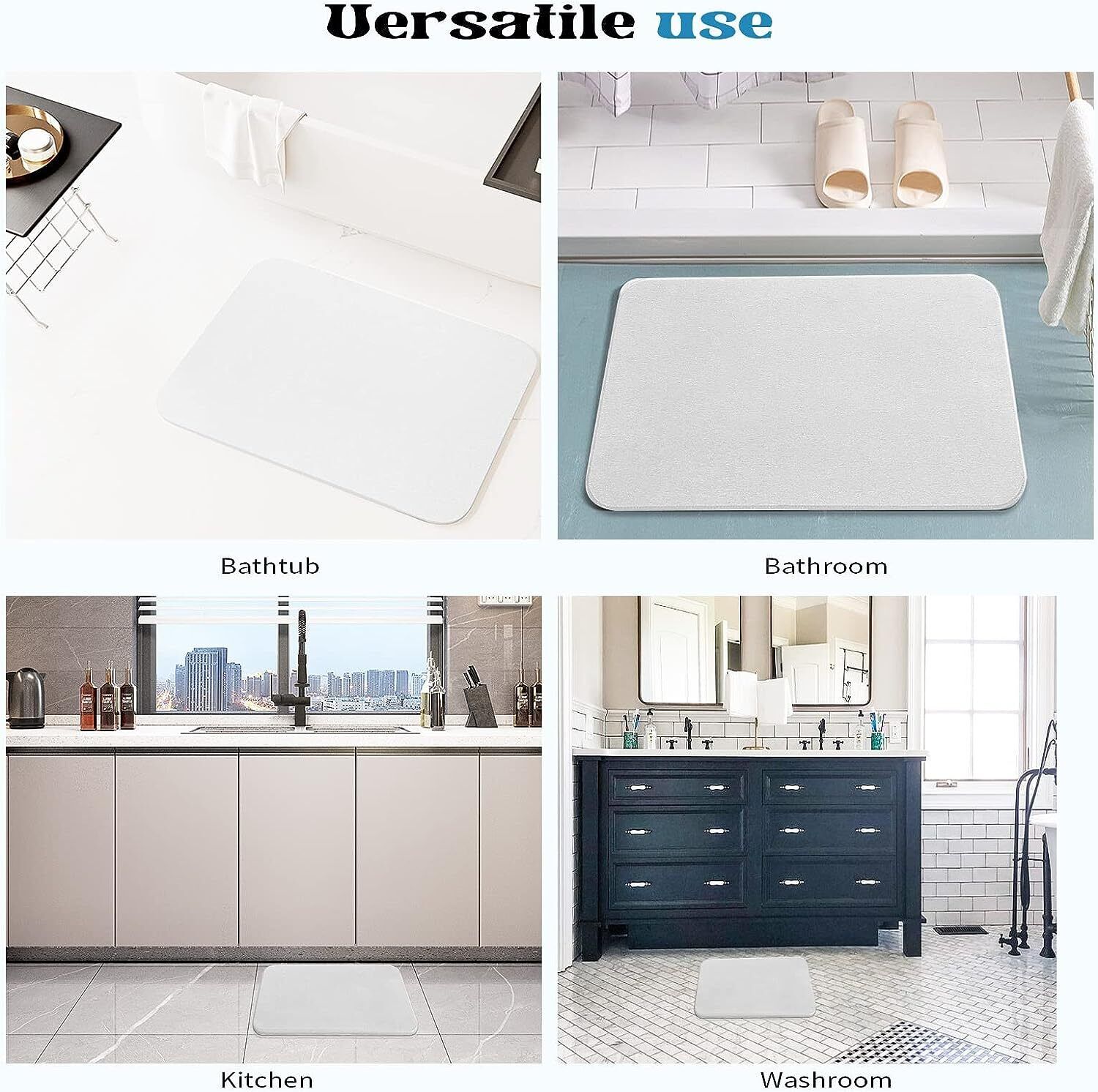
One small visual point: lit mirrors show clutter brutally. If your basin area is already busy, move bottles onto a rack or cupboard before blaming the mirror for looking messy. The 3-tier bamboo bathroom rack works better in a corner than beside a basin, and a quick-drying mat such as a diatomite stone bath mat helps keep the floor from reflecting every overhead shadow back at the mirror.
FAQs
What IP rating do I need for a bathroom mirror with light?
Most lit bathroom mirrors should be at least IP44 for splash-prone areas, especially zone 2. If the mirror is close to a shower or bath, ask an electrician whether IP65 is needed for that exact position.
Is warm white or cool white better in a dim bathroom?
A dim bathroom is easiest to use with adjustable CCT, ideally from about 3000K to 6000K. Warm white is kinder at night, while cool white gives clearer contrast for shaving, make-up and contact lenses.
Do anti-fog bathroom mirrors actually work?
Anti-fog mirrors work by heating a central section of glass, so they clear a usable viewing patch rather than the whole mirror. They are worth it in shower rooms, but less essential in a cloakroom with no bath or shower.
Can I install a lit bathroom mirror myself?
A battery mirror can usually be wall-mounted by a competent DIYer, but a mains-powered lit mirror should be installed by a qualified electrician. Bathroom zones, RCD protection and safe switching all matter.
What size mirror works over a 600 mm vanity unit?
A mirror between 50 cm and 80 cm wide usually looks right over a 600 mm vanity. For a neat, hotel-style line, choose a mirror the same width as the vanity or slightly narrower.
Are Bluetooth bathroom mirrors worth buying?
Bluetooth is a nice extra, not the main reason to buy a bathroom mirror. Prioritise IP rating, CCT and anti-fog first; speakers are only useful if you genuinely listen to music or radio in the bathroom.
If I were buying for a dim small flat, I’d choose the Villalta 80x60cm Bluetooth LED mirror because the size is generous, the anti-fog pad is practical and £89.99 is a decent price for the spec. If grooming light matters more than cost, spend up on the Pebble Grey CCT model. For renters, skip the wiring argument and use the Croydex battery cabinet until you’ve got a bathroom you can properly alter.
Villalta Home Editorial is the in-house byline used for buying guides and product roundups on villaltaco.uk. Each guide is written by the editorial team, drawing on the catalogue's measurable data — real dimensions, materials, UK use cases, price bands — and on hands-on research into how products actually perform in UK homes. Every post tagged with this byline is reviewed and approved by Juan Antonio Villalta Pacheco, the founder and editor, before it goes live. See our editorial standards for the full process.