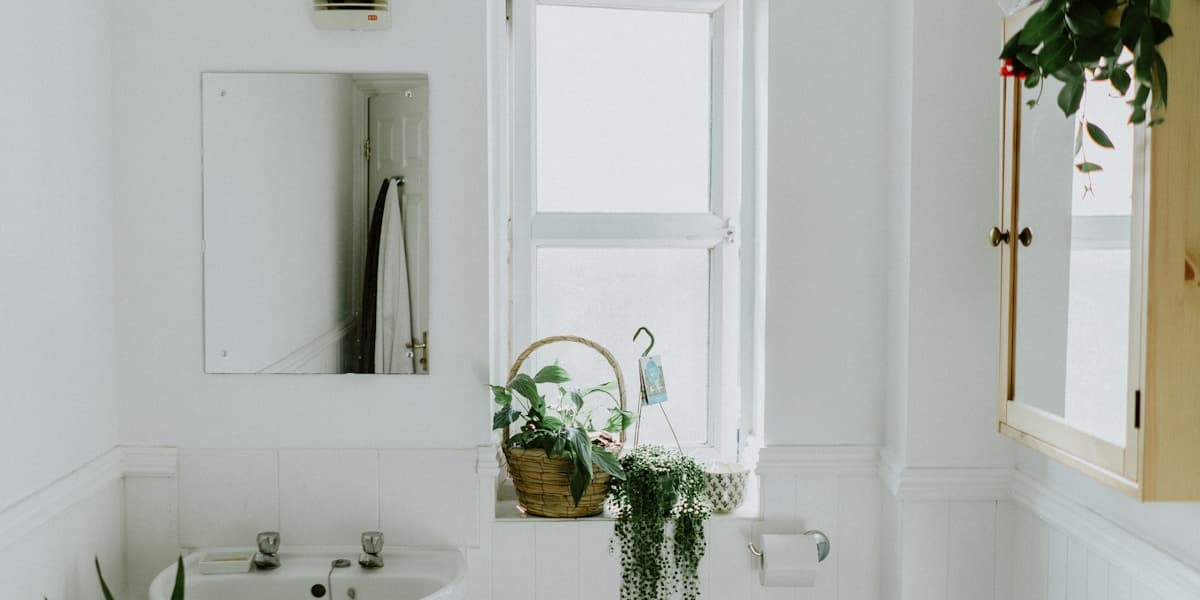
The worst bathroom I’ve lived with was in a rented flat in Lewisham: 1.7 m by 2.1 m, no window, one tired fan above the door and a towel rail that never quite dried anything by the school run. The mirror was dripping by 8:15 and the ceiling paint had started to bubble near the shower head. So, how do you ventilate a bathroom without a window in the UK? My view is blunt: a windowless bathroom is only properly ventilated if mechanical extraction removes moist air at the source; candles, open doors and anti-fog gadgets are comfort tweaks, not ventilation.
The short answer
Fit a correctly sized extractor fan that vents outdoors, give it enough replacement air under the door, and use a timer or humidistat so it runs after showers. For a standard UK bathroom, Building Regulations guidance in England points to 15 litres per second of intermittent extract, which is about 54 m³/h or 32 cfm. PIV can help a damp flat, but it is not a straight substitute for bathroom extraction.
The longer answer
What do UK Building Regulations expect in a bathroom with no window?
In England, Approved Document F treats bathrooms as wet rooms that need extract ventilation. For an intermittent bathroom fan, the commonly quoted rate is 15 l/s, equal to roughly 54 m³/h or 32 cfm. A separate WC is lower, at 6 l/s, but a shower room is a moisture factory and needs the bathroom figure. Wales, Scotland and Northern Ireland have their own guidance, so check the local version if you are doing building work. In plain terms, a windowless bathroom needs a fan ducted to outside air, not into a loft void or ceiling cavity. That last bit matters. I’ve seen Victorian terraces with blackened rafters above a bathroom because the fan was dumping steam into the loft. Proper dodgy, and expensive to put right.
How powerful should the extractor fan be?
Start with the legal-style baseline, then look at the room and the duct run. A small 1.8 m x 2.0 m bathroom with a 2.4 m ceiling is only 8.64 m³, so 54 m³/h sounds ample on paper. But if the fan has to push air through 3 m of flexible ducting, two bends and a grille on the outside wall, performance drops. This is where cfm claims can mislead. A fan labelled 85 m³/h, about 50 cfm, may deliver far less once fitted badly. For a no-window shower room, I’d rather see a decent inline fan in the loft or ceiling void with rigid ducting, insulated where it crosses a cold space, than a pretty wall fan wheezing through a crushed hose. The ceiling rose and bathroom zones also make this an electrician job, not a Saturday faff with a screwdriver.
Does the fan need a timer, humidistat or trickle mode?
Yes, in most homes. A pull-cord fan that stops the second you leave the room is rarely enough, because the wet grout, towels and shower tray keep releasing moisture. A timer overrun of 15 to 30 minutes is a sensible setting after a hot shower. A humidistat is better if the bathroom use varies, though cheap ones can be annoying in winter and may run when the whole flat is damp. Continuous low-rate extract is often the most civilised option in a sealed Manchester new-build, especially where the bathroom sits in the middle of the plan. Look for a low noise rating, ideally around 20 to 30 dB(A) for normal running. Some fans quote wattages around 5 W to 15 W, so the running cost is usually less alarming than the mould damage.
What about the counterargument: can I just leave the bathroom door open?
Leaving the door open helps moisture escape from that one room, so people swear by it. I get why. It costs £0.00 and, in a draughty old house, it might seem to work. The problem is that it moves moisture into the hall, bedroom and wardrobes instead of removing it outdoors. You’ve spread the problem and made it harder to spot. A 10 mm gap under the bathroom door is useful because an extractor needs make-up air to pull against; a sealed door makes the fan struggle. But that gap supports extraction, it doesn’t replace it. If the bathroom smells musty, towels stay wet overnight or black mould appears on silicone within weeks, the door-open method has failed. Sorted homes extract first and air out second.
Where does PIV fit into the picture?
Positive input ventilation, or PIV, is a whole-home system that gently pushes filtered air into the property, usually from a loft unit into the landing. It can reduce condensation in flats and houses where stale air sits for too long, and it can be genuinely useful in older homes with cold external walls. Still, PIV is a pressure strategy, not a bathroom extractor. It supplies air; it does not suck steam out of a shower enclosure at the point it is produced. In a windowless bathroom, PIV works best as supporting cast: it gives the extractor a steadier supply of drier air and can help the rest of the home recover after showers. If someone sells PIV as the only fix for a windowless bathroom, ask where the litres-per-second bathroom extract is coming from.
Related questions
Can you have a bathroom with no window in the UK?
Yes, you can have a bathroom with no window in the UK, but it needs suitable mechanical ventilation. In practice that means an extractor fan ducted to the outside, sized to meet the relevant Building Regulations guidance. Windowless bathrooms are common in flats, loft conversions and under-stairs shower rooms, but they are less forgiving of weak fans and poor ducting.
What is the best extractor fan type for a windowless bathroom?
The best extractor fan type for a windowless bathroom is usually an inline fan with a timer or humidistat, especially if the duct run is longer than about 1.5 m. Inline fans tend to cope better with resistance than basic axial wall fans. For a short duct straight through an external wall, a good axial fan may be enough.
How many cfm does a bathroom extractor need in the UK?
A UK bathroom extractor typically needs at least about 32 cfm for intermittent ventilation, based on the 15 l/s figure in Approved Document F for England. Bigger rooms, long ducts and heavy shower use may justify more capacity. Check the installed performance, not just the number printed on the box.
Will an anti-fog mirror stop mould in a bathroom?
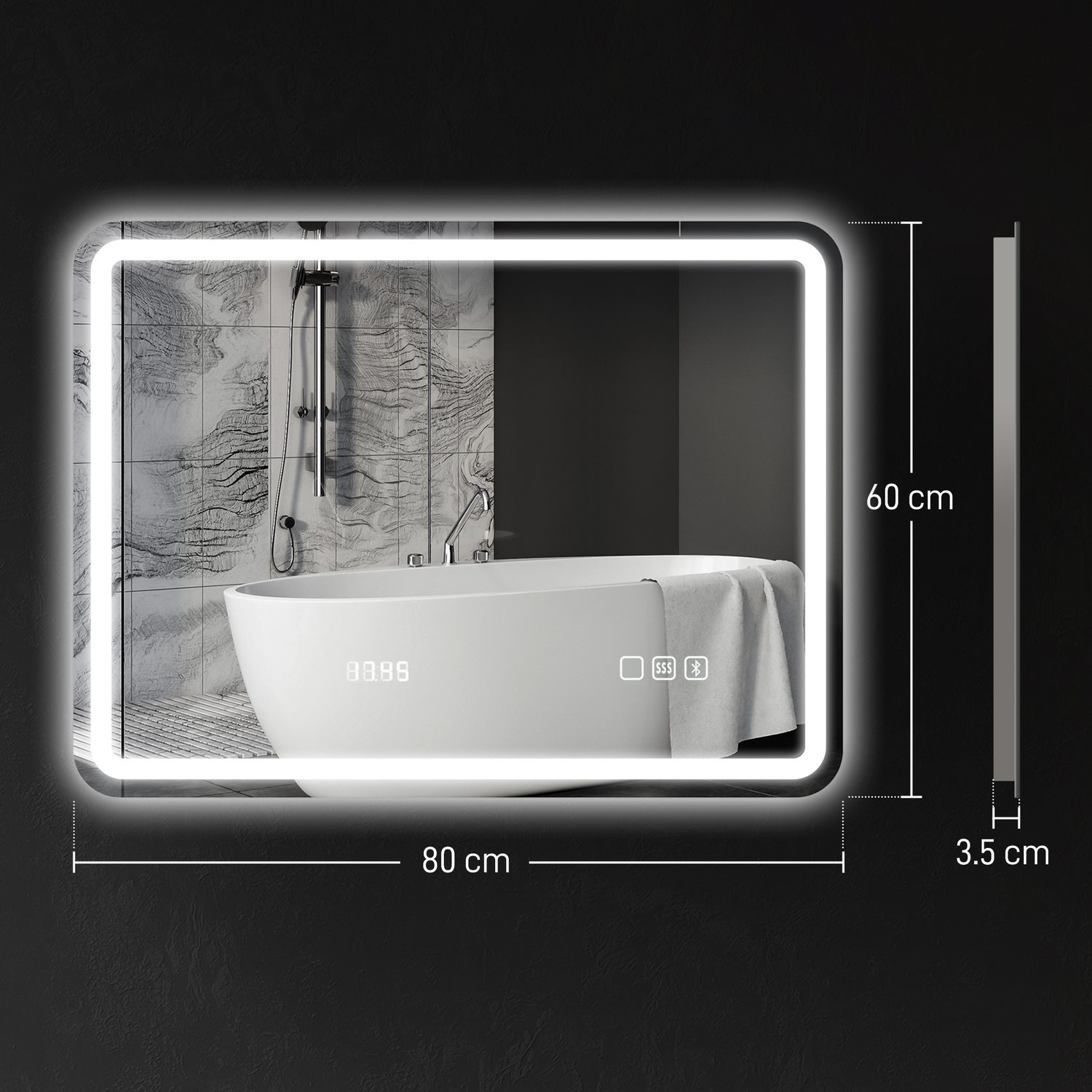
No, an anti-fog mirror will not stop mould in a bathroom because it clears the glass rather than removing moisture from the room. Something like an 80 x 60 cm heated LED mirror can make shaving or make-up easier after a shower, but the extractor still has to carry humid air outdoors.
Do moisture-absorbing tubs work in a windowless bathroom?
Moisture-absorbing tubs can take a little dampness from the air, but they are far too weak to ventilate a shower room. A single hot shower can release hundreds of grams of water vapour. Use tubs for cupboards if you like; don’t rely on them instead of a fan.
Can a bath mat help with bathroom condensation?
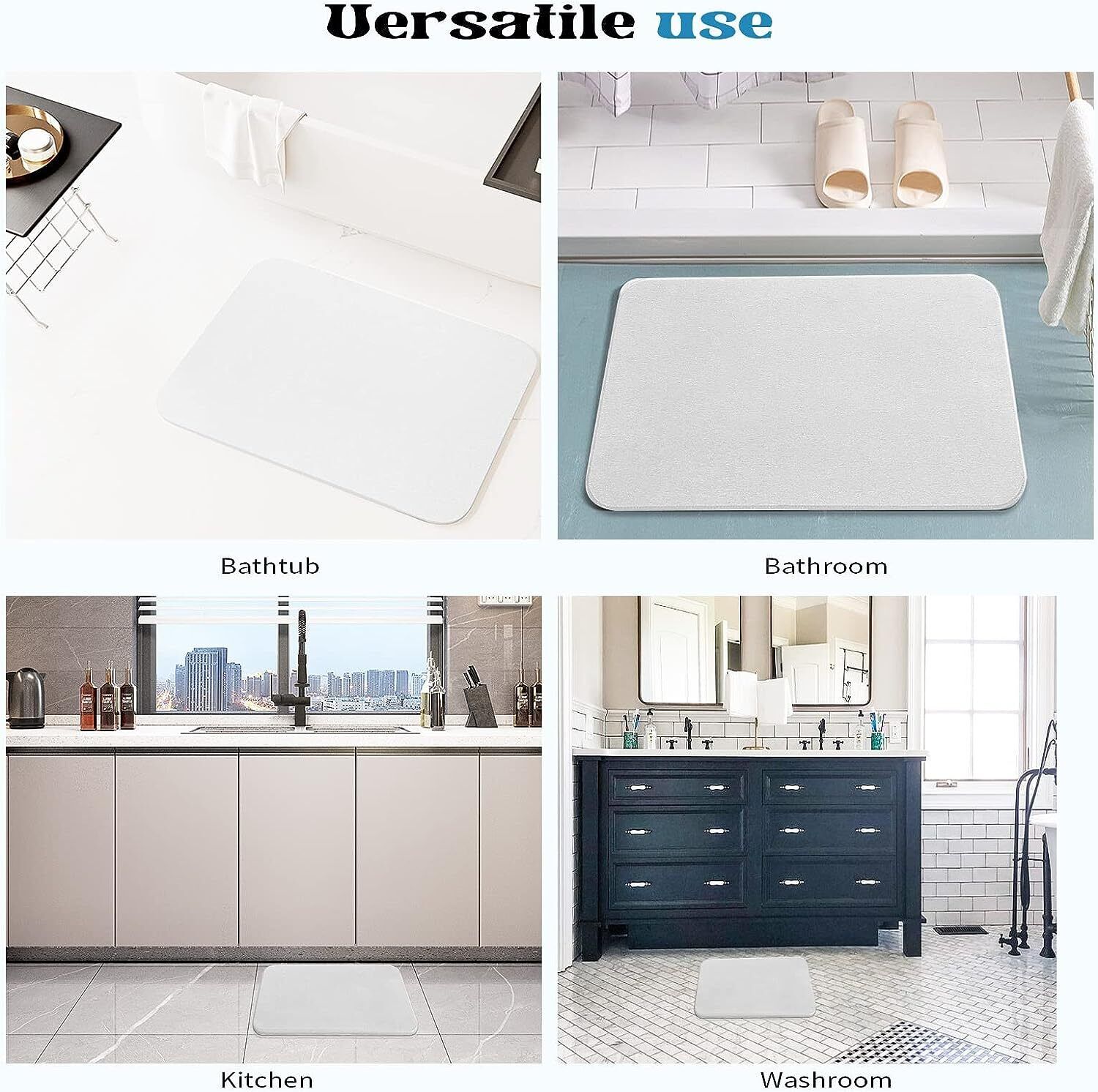
A quick-drying bath mat can reduce lingering wet patches on the floor, but it cannot deal with airborne steam. Stone-style diatomite mats feel tidy in a small bathroom and dry faster than thick cotton, though some mark if you leave shampoo drips on them. Treat them as housekeeping, not ventilation.
If the bathroom has no window, the order of action is simple: extract outdoors, let replacement air in, then deal with comfort details. Aim for at least 15 l/s, keep ducting short and smooth, and choose controls that keep the fan running after the room looks clear. PIV, heated mirrors and quick-drying accessories can all help the home feel less clammy, but the hard-working bit is still the extractor. Get that wrong and every other fix is just moving steam around the house.