Choosing the right bed frame size sounds simple until you start measuring a real UK bedroom. A bed that looks perfectly proportioned in a showroom or online photo can overwhelm a Victorian box room, block a wardrobe door in a new-build, or leave barely enough space to walk around it. If you are searching for a practical UK bed sizes guide, the key is not just knowing the mattress dimensions, but understanding how those sizes work in everyday homes.
In this guide, we will break down standard UK bed sizes, explain who each size suits, and give realistic room size recommendations so you can choose a frame that fits your space as well as your sleep needs. Whether you are shopping for a child’s first bed, upgrading your main bedroom, or planning a guest room with space-saving bedroom furniture, this is the straightforward sizing advice most shoppers actually need.
Why bed size matters more than you think
A bed frame is usually the largest piece of furniture in the room, so getting the size wrong affects everything else. It influences how easily you can open drawers, whether Bedside Tables fit, how much natural light reaches the floor, and even how calm or cramped the room feels.
In UK homes, this matters even more because many bedrooms are modest by modern standards. Period terraces often have narrow rooms and chimney breasts to work around, while flats and newer developments may have awkward door swings, fitted wardrobes or limited circulation space. A larger bed can feel luxurious, but if it leaves only a thin strip of floor around the edge, the room may become frustrating to use day to day.
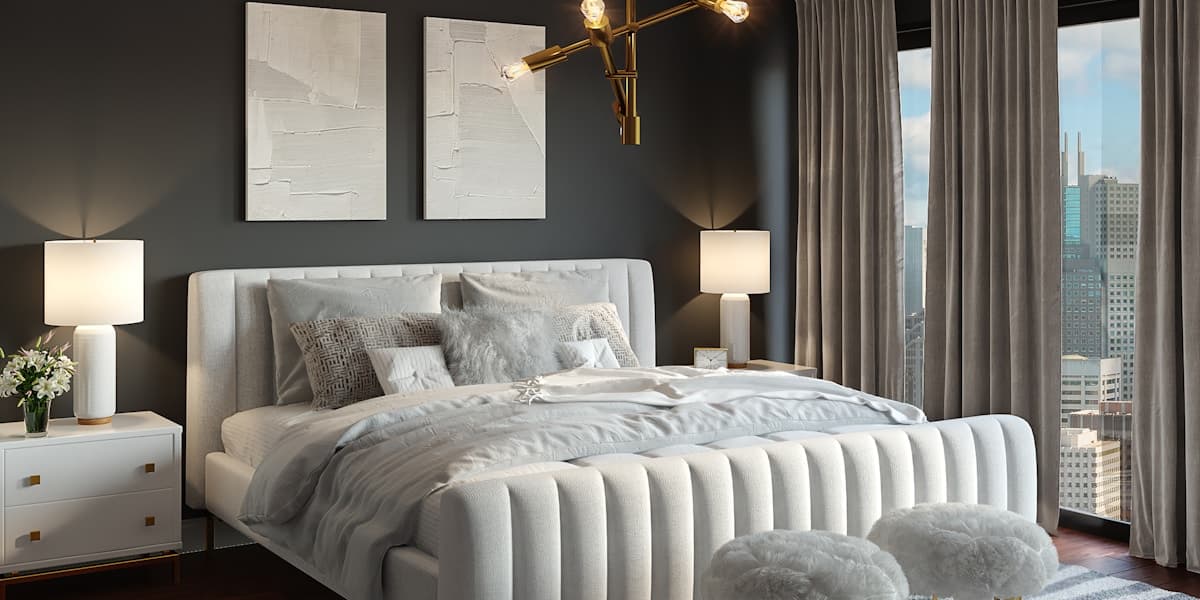
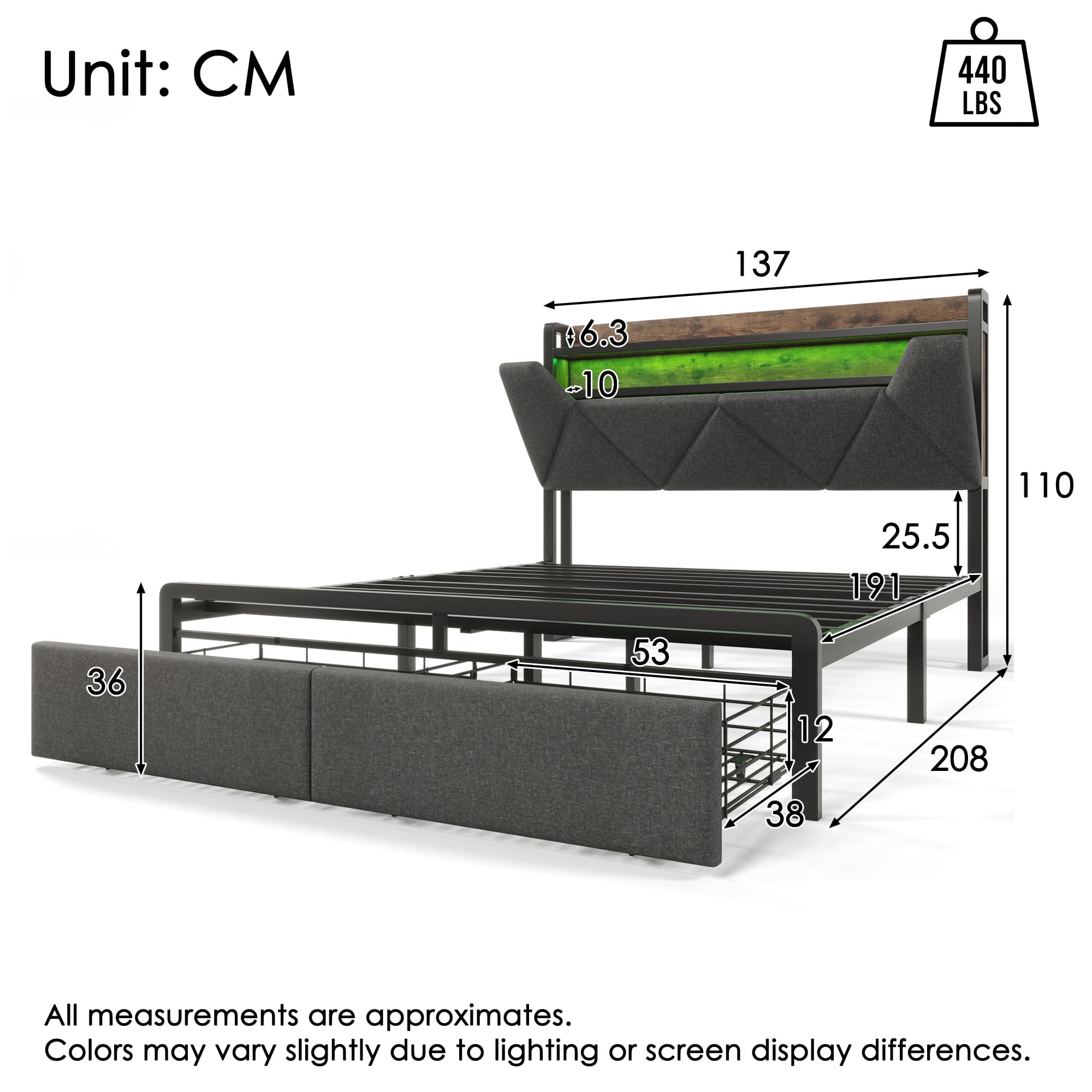
It is also worth remembering that bed frame dimensions are larger than mattress dimensions. Upholstered headboards, chunky side rails, ottoman mechanisms and footboards can all add valuable style and storage, but they also take up extra centimetres. Always check the overall frame size, not just the mattress size.
Standard UK bed sizes explained
The four main sizes most people compare are single, double, king and super king. These are the standard UK mattress sizes you will see most often when buying a bed frame and mattress together.
UK bed size
Mattress size
Best for
Typical minimum room size
Main trade-off
Single
90 x 190 cm
Children, teenagers, solo sleepers, guest rooms
Approx. 2.1 x 2.7 m
Compact, but limited for adults who move a lot
Double
135 x 190 cm
Solo adults wanting more space, couples in smaller rooms
Approx. 2.7 x 3.0 m
Good compromise, but can feel snug for two
King
150 x 200 cm
Couples, taller sleepers, main bedrooms
Approx. 3.0 x 3.3 m
More comfortable, but needs noticeably more floor space
Super king
180 x 200 cm
Couples wanting maximum space, large master bedrooms
Approx. 3.4 x 3.4 m
Luxurious, but can dominate average UK bedrooms
These room sizes are not legal minimums, just sensible planning guidelines that allow for basic circulation and a more balanced layout. If you need wardrobes, drawers or a desk in the same room, you may want more space than the figures above suggest.
Single bed: the practical all-rounder
Who a single bed suits
A standard UK single bed measures 90 x 190 cm, or 3ft by 6ft 3in. It is the default choice for children’s rooms, many teenagers, guest bedrooms and compact box rooms. For solo adults, a single can work in a small flat or occasional-use room, though it is not always the most comfortable long-term option if you like to spread out.
Single beds are often the easiest size to place in British homes because they leave more flexibility for storage, play space or a desk. In smaller rooms, that extra floor area can matter more than the extra width of a larger bed.
When a single bed is the right choice
If you are furnishing a child’s bedroom, a single is usually the most sensible starting point. It allows room for toy storage, wardrobes and movement. It is also a strong option for guest rooms, especially if you are considering a daybed or trundle for occasional visitors.
For example, products such as the bedroom furniture range can work well alongside compact single frames, while a piece like the pink-velvet-single-bed-frame-3ft-flower-headboard is clearly aimed at a child or teen room where style matters but floor space still needs protecting.
The trade-offs
The downside is simple: some adults outgrow a single quickly. If you are tall, restless in your sleep, or simply enjoy more room, it can feel restrictive. A single also offers less flexibility if the room may later be used by an older teenager, lodger or adult guest.
Expert tip: When planning around a single bed, aim for at least 60 cm of clear walkway on the main access side if possible. In a child’s room you can sometimes get away with less, but in an adult room that extra clearance makes the space feel far easier to live with.
Double bed: the UK favourite for smaller main bedrooms
What size is a UK double bed?
A standard UK double bed measures 135 x 190 cm, or 4ft 6in by 6ft 3in. It is one of the most common bed sizes in Britain because it strikes a useful balance between comfort and practicality.
Who should choose a double bed
A double works well for solo sleepers who want more room, and for couples in smaller bedrooms where a king would be too dominant. In many Victorian terraces, semis and flats, the double is still the most realistic choice for the main bedroom.
If you want a bed with built-in storage, double frames are especially versatile. Ottoman and drawer beds can help compensate for the lack of fitted storage in many UK homes. Options such as the double-ottoman-bed-led-usb-storage-beige-linen or upholstered-double-bed-4ft6-storage-drawers-led-beige appeal to buyers who need the bed to work harder in compact rooms.
The trade-offs
The compromise is sleeping space. A double can feel cosy for two adults, particularly if one or both are broad-shouldered, tall, or light sleepers. It is often fine in the early stages, but many couples later wish they had gone up to a king once the room allows.
Storage beds also deserve a reality check. They are brilliant in homes short on cupboard space, but ottoman frames need lifting clearance and drawer beds need room at the sides or foot of the bed. In a tight room, the storage may be there in theory but awkward in practice.
King size bed: the comfort upgrade
What size is a UK king bed?
A UK king size bed measures 150 x 200 cm, or 5ft by 6ft 6in. It is wider than a double and also longer, which makes a genuine difference for taller sleepers and couples who value personal space.
Why many people prefer a king
If your bedroom can comfortably take one, a king is often the sweet spot. It feels more generous at night without reaching the sheer scale of a super king. In practical terms, it can also improve sleep quality if one partner moves around a lot.
For many households, the king becomes worthwhile once the room is around 3.0 x 3.3 metres or larger. That usually gives enough breathing room for bedside tables and basic circulation, though exact layouts vary depending on alcoves, wardrobes and radiator positions.
The trade-offs
The issue is not the mattress size alone, but the frame bulk around it. Upholstered king beds with deep headboards can quickly make a room feel tighter than expected. Bedding costs are also a bit higher, and moving a king frame up narrow stairs can be more complicated in older UK properties.
Before committing, measure the route into the room as carefully as the room itself. Tight landings and narrow terraced staircases catch people out more often than they admit.
Super king bed: luxurious, but only if the room can carry it
What size is a UK super king?
A UK super king bed measures 180 x 200 cm, or 6ft by 6ft 6in. It offers a hotel-like amount of sleeping space and is ideal for couples who want maximum comfort, especially if one partner is a restless sleeper.
When it makes sense
A super king is best in a genuinely spacious main bedroom, not just a room where it technically fits. If the bed leaves no room for bedside tables, forces you to shuffle sideways past the footboard, or blocks wardrobe access, the luxury quickly wears off.
As a rough guide, you will usually want at least 3.4 x 3.4 metres, and often more if you are adding wardrobes, a dressing table or substantial bedroom furniture. In larger detached homes or generous period properties, this can be a fantastic choice. In many average UK bedrooms, it is simply too much bed.
The trade-offs
The most obvious downside is space. Super king frames can dominate a room visually and physically. Bedding is pricier, mattresses are heavier to rotate, and delivery access can be more challenging. If your room is only just large enough, a king often ends up being the better all-round decision.
How to match bed size to room size
Think beyond the mattress footprint
When planning your layout, allow for the full bed frame dimensions plus clearance around the bed. As a rule, try to keep:
At least 60 cm of walking space on the main open sides
Enough room to open wardrobes and drawers fully
A safe gap away from radiators where possible
Practical access for changing bed linen
If the room is especially small, one side of the bed may need to sit closer to the wall. That can work in a child’s room or guest room, but in a main bedroom shared by two adults it is less convenient long term.
Consider the shape of the room
A square room often handles larger beds better than a long, narrow one. Chimney breasts, sloped ceilings and bay windows can all alter what feels comfortable. In many UK homes, the challenge is not floor area alone but usable floor area.
Do not forget storage needs
If the bedroom has no built-in wardrobe, the bed may need to help with storage. This is where ottoman and drawer designs can be practical, but they still need operating space. In a compact room, a slightly smaller bed with easier circulation can be more liveable than a larger bed with theoretically helpful storage you rarely use.
Special cases: children’s rooms, guest rooms and multifunction spaces
Children’s bedrooms
For younger children, a single bed is usually the most sensible choice. If the room is small, a cabin, bunk or storage bed can free up floor space for play and homework. The children-s-bunk-bed-with-storage-staircase-house-frame-3ft and white-wooden-mid-sleeper-cabin-bed-with-storage are good examples of how vertical design can make a compact room work harder.
That said, these styles are not perfect for every family. Raised beds can be less convenient for bedtime routines, sheet changing and younger children who still need reassurance in the night. Always weigh the space-saving benefit against daily practicality.
Guest rooms
Guest rooms often benefit from flexibility rather than maximum bed size. A daybed or trundle can be smarter than a permanent double if the room also functions as a study. Products like upholstered-daybed-with-trundle-3ft-single-velvet-sofa-bed or single-daybed-with-trundle-grey-linen-upholstered-sofa-bed suit homes where occasional sleeping space matters more than a full-time double footprint.
Small flats and multifunction bedrooms
In compact homes, it is often worth asking what the room needs to do during the day. If the bedroom also houses a dressing area, desk or nursery corner, a double may be more practical than a king, even if the king technically fits. Comfort matters, but so does being able to live in the room without frustration.
Common mistakes when choosing a bed frame size
Buying for aspiration, not the room you actually have
Many people choose the biggest bed they can squeeze in. Usually, this is a mistake. A room should still feel usable once the bed is in place.
Ignoring frame thickness
A slim wooden frame and a deeply upholstered storage bed can have very different external dimensions even if both take the same mattress size. Always compare full measurements.
Forgetting delivery access
This is especially relevant in older UK housing stock. Tight staircases, narrow hallways and awkward loft conversions can make large headboards and side rails difficult to move.
Not planning for future use
A child’s room may later become a teen room. A guest room may become a home office. Think about how long you want the bed size to serve the space.
So, which UK bed size should you choose?
If you want the simplest answer, choose the largest bed that allows the room to function properly. For children, guest rooms and compact spaces, a single is often right. For many couples in average UK bedrooms, a double remains the sensible choice. If your room comfortably allows it, a king is often the best balance of comfort and practicality. A super king is wonderful, but only in a room that genuinely has the scale for it.
Measure carefully, check the full frame dimensions, and be honest about how you use the room. In most cases, a well-proportioned bedroom feels better than one dominated by an oversized bed.
FAQs
What are the standard UK bed sizes?
The main standard UK bed sizes are single (90 x 190 cm), double (135 x 190 cm), king (150 x 200 cm) and super king (180 x 200 cm). Always check the full frame dimensions as these are usually larger than the mattress size.
What size room do I need for a double bed in the UK?
As a practical guide, a room of around 2.7 x 3.0 metres is a sensible minimum for a standard double bed. This should allow basic access around the bed, though you may need more space for wardrobes, drawers or bedside tables.
Is a king size bed worth it in a UK home?
Yes, if your bedroom can comfortably accommodate it. A king offers more width and extra length, which is especially useful for couples and taller sleepers, but it can feel too bulky in smaller UK bedrooms.
Can a super king fit in an average UK bedroom?
Usually only in a larger main bedroom. A super king may technically fit in some average bedrooms, but it often leaves too little circulation space and can make the room feel cramped.
Should I choose a storage bed in a small bedroom?
Often yes, especially in homes with limited built-in storage, but check how the storage opens. Ottoman Beds need lifting clearance and drawer beds need enough surrounding space to use them properly.
Villalta Home Editorial is the byline used for guides researched and drafted with AI assistance under human editorial review. Every post tagged with this byline has been reviewed by Juan Antonio Villalta Pacheco before publication. See our editorial methodology for how we combine catalogue data, AI-assisted research and human review.
Last winter I helped a friend reshuffle a north-facing bedroom in a Walthamstow conversion — 3.2 metres on its longest wall, two of those swallowed by the bed.
Five freestanding wardrobes and clothes rails that pull their weight in UK rented rooms — from a £29 fabric box-room fix to a walnut piece you'd happily leave on show. No drilling, no arguments with the landlord.