Spring cleaning is really a storage crisis in disguise
At 8:15 on a wet Tuesday, the hallway in my south London flat tells the truth better than any cleaning checklist: two school bags slumped against the radiator, a mop leaning into the coats, PE trainers under the pushchair, and a cardboard box of Christmas lights that has somehow survived into April. The floor can be scrubbed. The skirting can be wiped. By Thursday, the same objects will be back on the same patch of carpet unless they have a visible, reachable place to go.
This guide is about spring decluttering storage solutions for UK home renovation planning, but the argument is sharper than that phrase suggests. My thesis: if a household keeps more than two categories of repeat mess in opaque, unlabelled boxes, spring cleaning will fail within a fortnight. You can disagree with that. Good. Test it against your own landing.
We are not covering the glossy version of spring cleaning where you already have a boot room, a double garage and a laundry cupboard wider than a Victorian terrace bathroom. This guide assumes a rented flat, a small-square-foot house, a terrace with awkward alcoves, or a renovation where possessions are about to be shoved into temporary boxes. If you are furnishing a four-bed detached new-build with a clean loft hatch, half these constraints won't bite as hard. For everyone else, the job is not to buy more tubs. It is to design storage around the mess that keeps coming back.
Why this matters in UK homes specifically
British homes are unusually good at creating storage denial. A 1930s semi might have decent ceiling height but shallow cupboards. A Victorian conversion can offer a handsome chimney breast and nowhere sensible for a vacuum. Rented flats often ban drilling, while BS 1363 plug sockets sit exactly where a cabinet wants to go. Then there are the narrow front doors, tight stair turns, shared hallways and council recycling rules that make getting rid of bulky items feel like a minor admin project.
This is why spring cleaning advice can feel oddly American in a UK home. “Sort the garage” is no use if your garage is a permit bay on the kerb. “Use the utility room” is a joke in many Manchester new-builds where the washing machine lives in the kitchen and the airer blocks the sofa. Ideal Home’s 10 March 2026 spring cleaning piece framed the season as a post-winter reset, but it also folded decluttering, labels and kitchen containers into the job. That detail matters. The cleaning is the visible bit; the storage system decides how long the room stays decent.
Declutter before you design storage
Decluttering is not the warm-up act. It is the part that prevents a storage purchase from becoming a prettier landfill. If you buy six lidded boxes before you decide what deserves to stay, you have simply given stale objects a longer lease. That is especially risky before renovation, when everything gets packed under pressure and labelled with charmingly useless phrases such as “misc kitchen” or “kids stuff”.
The most useful spring clean starts with repeat mess, not morality. Look for the objects that appear every week: shoes at the door, paperwork on the dining table, laundry stranded on bedroom chairs, DIY tools in the spare room. Ideal Home’s 13 April 2026 coverage of the Doom Diamond decluttering method made a decent point about decision fatigue: stagnant piles block surfaces, then cleaning becomes harder before it has begun. The answer is not to become ruthless for a weekend and then collapse. It is to reduce the number of decisions your home asks you to make on a school night.
Start with one 1 m x 1 m zone: a landing, under-stairs patch or kitchen worktop. Bigger purges tend to sprawl.
Use four exits, not twelve: keep, donate, recycle, bin. Renovation boxes get a separate label only after the purge.
Set a realistic disposal budget. A council bulky waste collection can be far cheaper than months of storing broken furniture.
For sentimental items, cap the container first: one 64-litre box per child or one archive box per life chapter is clearer than “somewhere in the loft”.
The common mistake is decluttering into storage. If the “keep” pile is larger than the space available, the decision has not been made yet.
[CLUSTER_SATELLITES]
Make storage visible, accessible and labelled
Hidden storage sounds tidy, but too much of it turns a home into a memory test. If you cannot see what lives in a box, or reach it without moving three other things, you will either forget it exists or buy another one. Labels are not fussy. They are a kindness to the tired person who gets home at 6:40 and needs batteries, plasters or the tape measure without emptying a cupboard.
Visibility does not mean everything is on show. It means the category is obvious. A clear shoe box, a labelled fabric drawer, a chalk pen on a white trunk, or a shelf edge label inside a cupboard all do the same job. The real test is whether someone else in the household can put the item away without asking you. If the system only works when one storage-savvy adult is supervising, it's not a system; it's unpaid management.
Choose labels large enough to read from standing height: 18 mm to 24 mm text works better than tiny craft labels.
Keep daily-use storage between knee and shoulder height, roughly 45 cm to 150 cm from the floor.
Spend more on access than appearance. A £24.99 open trolley may outperform a £95.00 closed cabinet if it actually gets used.
Allow empty space. A drawer packed to 100% capacity becomes a faff by day three; aim for about 80% full.
The common mistake is buying opaque matching boxes for a whole room. They look sorted in a photo, then become a guessing game.
[CLUSTER_SATELLITES]
Give bulky and awkward objects a proper home
Every UK home has a few objects that defeat normal cupboards: the mop, the ironing board, the vacuum attachments, the winter duvet, the footballs, the scooter, the folding airer. They are not clutter in the usual sense. You probably need them. They become clutter because their shape is annoying and their storage place is imaginary.
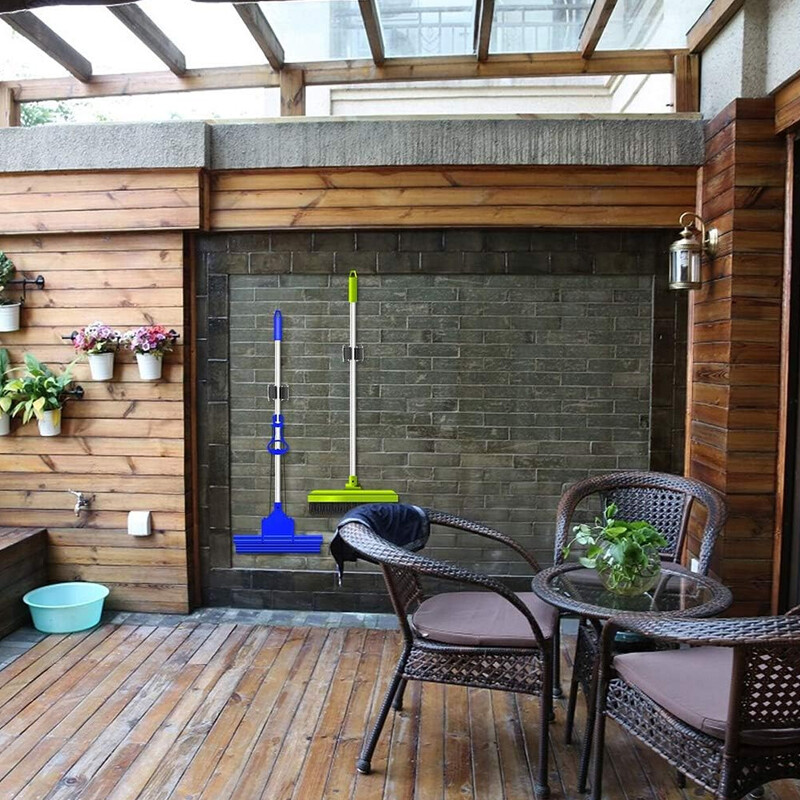
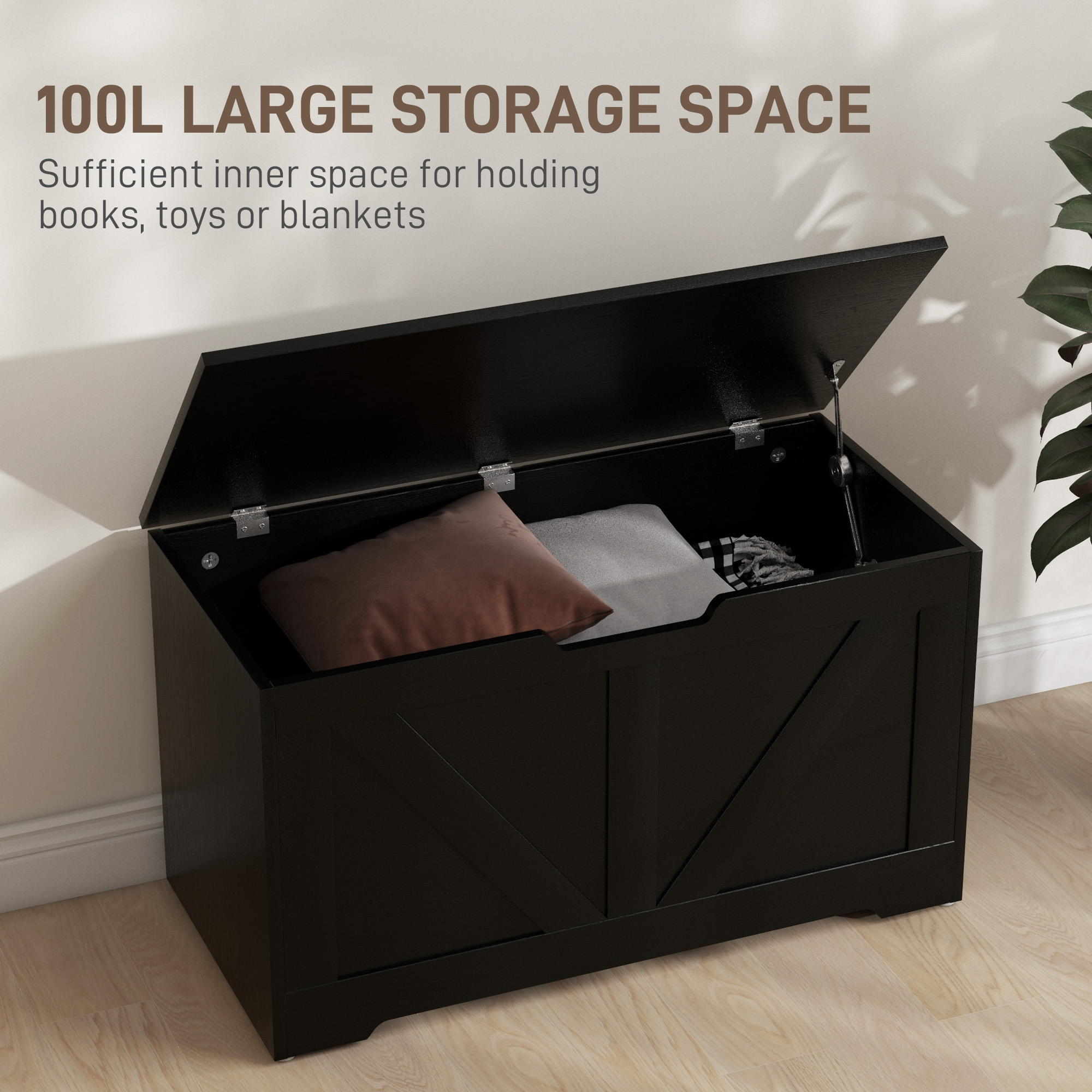
This is where small, specific storage beats big vague storage. A wall-mounted broom and mop holder, for example, is not glamorous, but it stops cleaning tools sliding behind the fridge or living permanently in the hallway. A 100-litre storage trunk can make sense for throws, helmets or out-of-season shoes if the lid opens safely and the contents are labelled. The point is not to hide evidence of family life. It is to stop bulky items from colonising walkways.
Measure depth first. Many hallways in converted flats cannot spare more than 30 cm without becoming a shoulder-barge zone.
For chests and trunks, check internal capacity as well as the outside dimensions; 100 litres is useful, 30 litres is often decorative.
Wall storage needs the right fixing. In rentals, freestanding rails or over-door options may be less risky than drilling into unknown plasterboard.
Leave 75 cm to 90 cm clear for a main walkway if you can. Below that, bags and coats start snagging.
The common mistake is treating awkward objects as temporary. If the mop has lived beside the boiler for nine months, it has declared itself permanent.
[CLUSTER_SATELLITES]
Plan for renovation boxes before they arrive
Renovation has a nasty habit of turning clutter into archaeology. Everything gets boxed at speed, then comes back after the plaster dust settles, carrying the emotional force of “we’ve always had this”. A parent on r/AskUK on 15 April 2026 described putting possessions into storage without a ruthless clear-out, then spending months moving rubbish and children’s plastic tat back into newly renovated rooms. That is the storage crisis in its purest form: paying to preserve indecision.
If you are renovating, the purge should happen before trades arrive, not after the new floor is down. Once boxes leave the room, they gain immunity. You forget what is inside, then feel guilty opening them. Worse, renovation creates a shopping halo: new paint, new handles, new baskets, new everything. Without a hard inventory, the old clutter and the new buys meet in the middle.
Label boxes by future location and category: “kitchen - baking tins” beats “kitchen bits”.
Number every box and keep a phone note. If there are 23 boxes for one living room, you have a data point, not a vibe.
Set a re-entry rule: no box returns to a finished room unless its contents have a defined home.
Budget for disposal before the renovation starts. Skips, charity collections and council slots book up, especially around bank holidays.
The common mistake is renting storage as a pause button. It can be useful, but it charges you every month for decisions you still owe.
[CLUSTER_SATELLITES]
The fair counterargument: sometimes cleaning really is enough
There is a fair objection to all this: some homes do not need a storage rethink. They need a proper clean, a weekend of washing, a charity bag by the door and fewer think pieces about baskets. If your mess is seasonal rather than structural, a spring clean can work. Muddy boots dry out, winter coats go away, windows get opened, and the house feels better without a single new organiser.
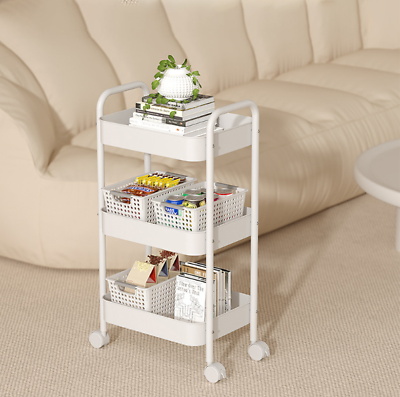
The danger is using that truth to ignore a pattern. If the same surface disappears every fortnight, cleaning is only resetting the stage. Storage needs to change where behaviour keeps repeating. A 3-tier rolling trolley can be sensible beside a dining table that doubles as a homework zone, because it gives pens, chargers and exercise books a movable home. It would be pointless in a room where the real problem is 14 coats for four hooks. The storage has to answer the mess, not flatter the shopper.
Audit frequency: if an item is out daily, it needs open or one-move access.
Watch the dump zones for two weeks before buying. The house will show you where storage should live.
Prefer small interventions first: hooks, dividers, labels and one chest can reveal more than a full cupboard refit.
Resist novelty categories. If you did not own “seasonal tablescape storage” last year, you may not need it now.
The common mistake is mistaking visual calm for functional calm. A room can photograph beautifully and still be awful to live in.
[CLUSTER_SATELLITES]
How to choose for your situation
Tight London flat
Choose storage that earns its floor space twice. A bench trunk near the door can hold shoes or bike helmets while giving you somewhere to sit, but only if it does not pinch the hallway below about 75 cm of clearance. Use vertical space carefully, label everything inside cupboards, and avoid deep boxes under the bed unless they slide out easily. In a rented flat, assume you may move; modular pieces and removable labels beat a bespoke system you cannot take with you.
Victorian terrace with awkward rooms
Work with alcoves, chimney breasts and narrow stairs rather than pretending the house is square. Shallow shelving in a 30 cm alcove can beat one huge wardrobe that blocks the room. Put cleaning tools near where they are used, not in the most historically inconvenient cupboard. If a loft is involved, reserve it for low-frequency items with clear labels; anything needed monthly should stay within normal reach, because loft ladders turn small chores into a proper faff.
Modern new-build with the opposite problem
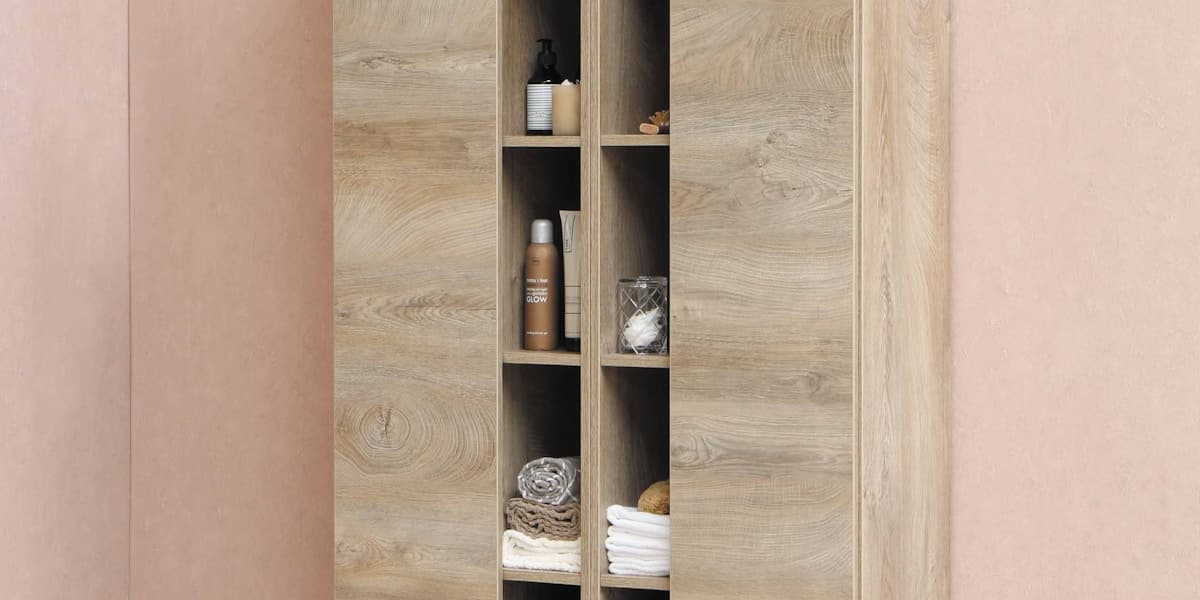
New-builds can have clean walls and decent sockets but surprisingly little built-in storage. The risk is buying free-standing units too quickly because the rooms look blank. Live with the repeat mess for a month, then place storage where the trail forms: school bags by the kitchen door, paperwork near the router, laundry near the bedrooms. Keep proportions in check. A tall black unit may look smart online and oppressive in a 3 m by 3.4 m box room.
FAQs
What are the best spring decluttering storage solutions for a UK home?
The best solution is the one that fixes a repeat mess. For many UK homes, that means labelled boxes for sentimental items, shallow hallway storage for shoes, wall or freestanding holders for cleaning tools, and one accessible place for paperwork. Avoid buying a full matching set before you have measured the space and reduced the contents.
Should I declutter before or after a home renovation?
Declutter before. Once items go into renovation boxes or paid storage, they become harder to question. Sort by future room, label by category, and do not let a box back into a finished space unless the contents have a home. This is especially important if you are renovating with children’s toys, old paperwork or hobby kit in the mix.
How do I store sentimental items without keeping everything?
Set a container limit first. One archive box per child, one 64-litre tub for family keepsakes, or one shelf for inherited objects gives the decision a boundary. Photograph bulky items you do not need to keep physically, and label the box with names and years rather than vague words such as “memories”.
Are clear boxes better than fabric drawers?
Clear boxes are better for low-frequency items because you can see what is inside. Fabric drawers work well in bedrooms, hallways and children’s rooms where the category is simple and the label is obvious. The weak point of fabric is that it can sag if overloaded, so keep heavier tools, books and paperwork in sturdier storage.
How can I add storage in a rented flat without drilling?
Use freestanding trolleys, over-door hooks, under-bed drawers and tension-style options where appropriate. Check your tenancy before using adhesive fixings, because some remove paint from older walls. Keep the system movable and avoid anything so large it will be a nightmare on narrow stairs when you leave.
How much should I spend on storage before spring cleaning?
Spend as little as possible before the first purge. Labels, a marker pen and a few reused boxes may be enough for the sorting stage. After that, buy for the gaps you can name: a trunk for out-of-season bedding, a shoe cabinet for the hall, or a small trolley for homework supplies. Unplanned storage is how clutter gets a nicer outfit.
What should not go into loft storage?
Avoid storing anything you need monthly, anything damp, and anything heat-sensitive unless your loft is properly insulated and ventilated. Paperwork, photos, candles, soft furnishings and cheap plastic boxes can suffer in temperature swings. Use the loft for genuinely occasional items and label them on more than one side.
What to do next
Pick the mess that annoys you most and measure the place where it actually happens. Not the fantasy cupboard. The real drop zone. Write down the width, depth and height in centimetres, then count nearby sockets, doors, radiators and skirting boards. Open every box already in that zone and remove the things you would not pay to move house. If you are planning works, do this before the first sample tile arrives.
Once the purge is honest, browse storage solutions by job rather than by look: hallway shoes, cleaning tools, paperwork, sentimental boxes, renovation holding zones. A decent storage plan should feel slightly boring. That is how you know it might survive next Thursday.
Villalta Home Editorial is the in-house byline used for buying guides and product roundups on villaltaco.uk. Each guide is written by the editorial team, drawing on the catalogue's measurable data — real dimensions, materials, UK use cases, price bands — and on hands-on research into how products actually perform in UK homes. Every post tagged with this byline is reviewed and approved by Juan Antonio Villalta Pacheco, the founder and editor, before it goes live. See our editorial standards for the full process.