Support Pillows for WFH Back and Neck Pain — 4 UK Picks From £10 to £40
Three years into working from a folding desk shoved against the bedroom wall, I've stopped pretending the knot between my shoulder blades is going to sort itself out. Four support pillows I rotated through real use for a month — what held up.
Three years into working from a folding desk shoved against the bedroom wall, I've stopped pretending the knot between my shoulder blades is going to sort itself out. The desk chair is the obvious culprit — but the pillow I sleep on, and the cushion wedged behind my back during afternoon calls, do at least as much damage. Most of the support pillows on offer are either wellness-shop nonsense or rebadged bath cushions with a memory-foam sticker. A few are properly thought through.
I've spent the last month rotating four of them through real use — eight hours of sleep, a working day, a long evening Zoom — and these are the ones I'd actually keep. Prices run from a tenner to forty quid, all available on Villalta Home with UK shipping.
How I'm thinking about this
Before any pick made the shortlist it had to pass four tests:
Honest support height. A contoured pillow that's too tall pushes your head forward and you've got a stiff neck by lunchtime. Too short and you may as well be folding a jumper under your head. Most "ergonomic" pillows ignore that shoulder width is the variable, not body weight.
Doesn't off-gas for a fortnight. Cheap memory foam genuinely smells. The good stuff airs out in 48 hours; the bad stuff lingers for two weeks and gives some people headaches.
Cover comes off and survives a hot wash. WFH means sweat, and box-bedroom WFH means no airing cupboard. Zips and machine-washable covers are non-negotiable.
Fits a UK bedroom. A king-size body pillow is wonderful in theory and a nightmare on a 4ft 6 double. I'm flagging the footprint of each pick because nobody else does.
If a pillow leaned on "premium" marketing without specifying density, support height in centimetres, or care instructions, it didn't make the cut.
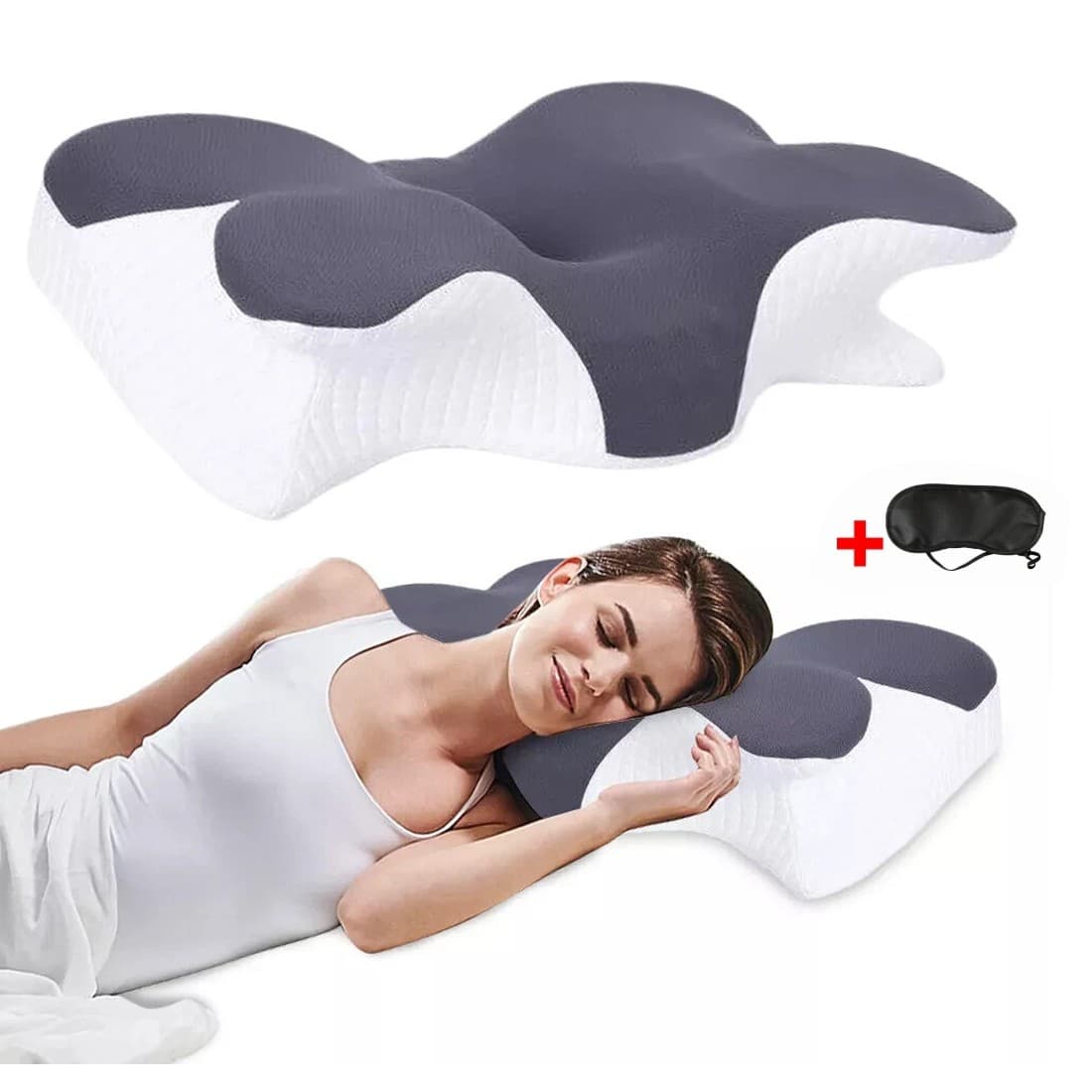
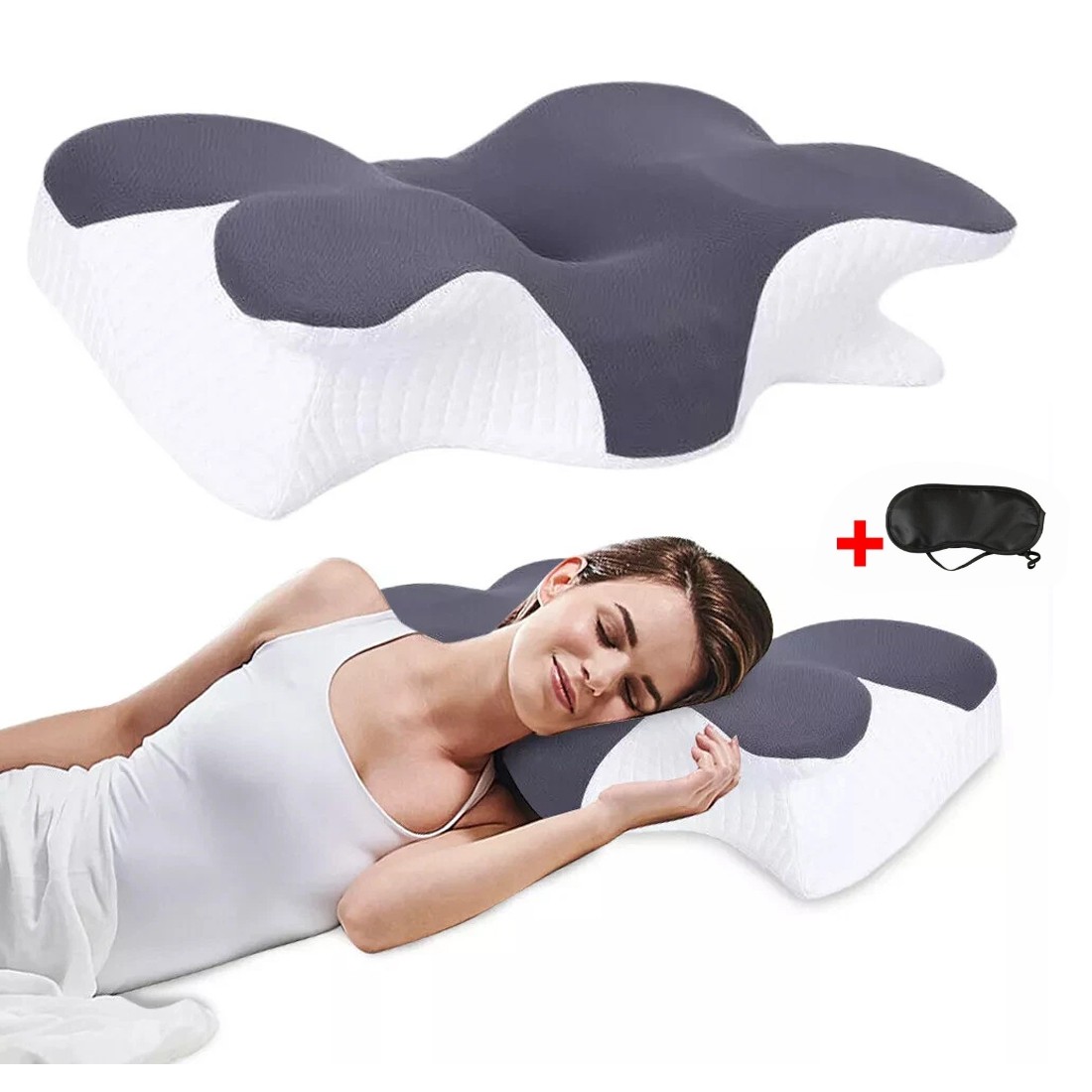
1. The everyday neck pillow — Ergonomic Memory Foam Pillow for Neck and Shoulder Pain Relief, £25.38
This is the one I've kept on the bed. The butterfly contour cradles the neck without forcing the head forward, and the two-height option matters more than the listing makes obvious — the lower side suits back sleepers, the higher side gives side sleepers enough lift to keep the spine roughly straight. Slow-rebound foam means it actually moulds rather than springing back like a gym mat.
The honest caveat: the foam is dense enough that if you've spent twenty years on a flat polyester pillow, the first three nights feel weird, almost like you're sleeping on a small log. Push through it. By night four it's the only pillow you want.
Best for: anyone who switches between back and side through the night. Not great if you're a stomach sleeper — too tall.
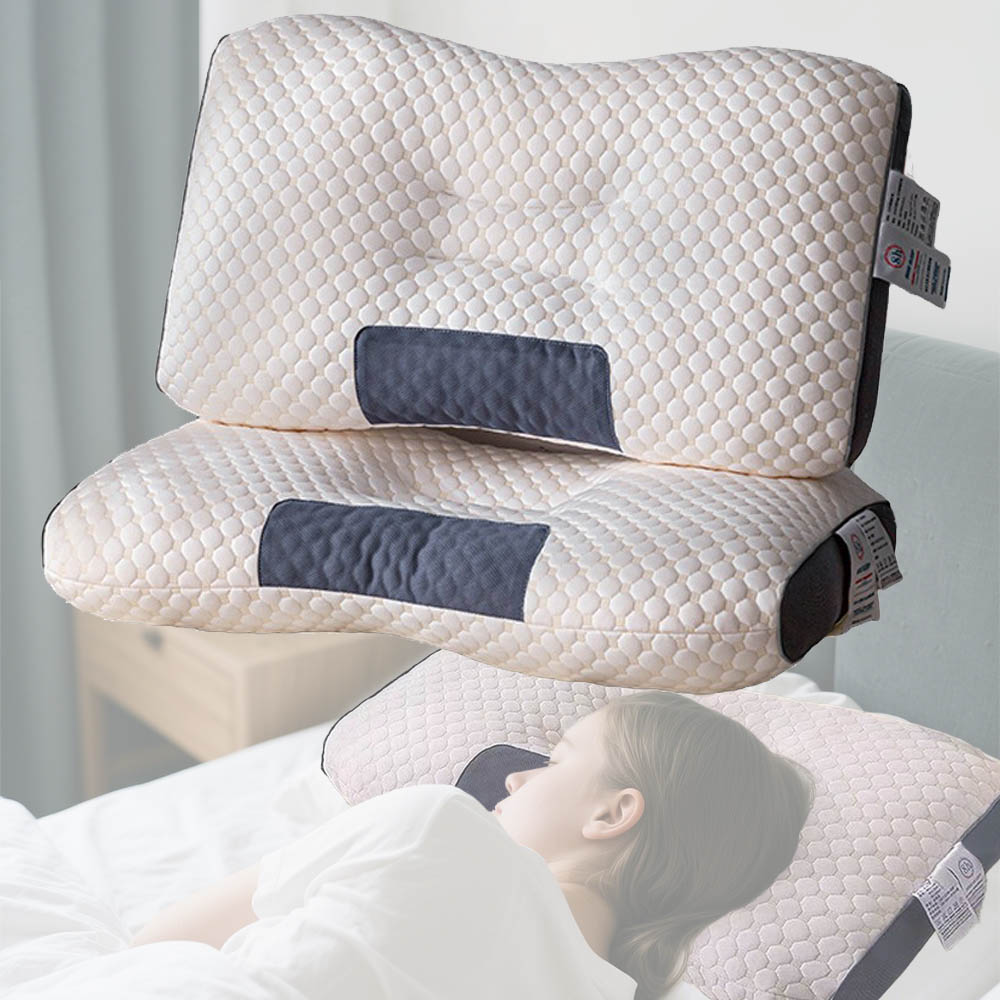
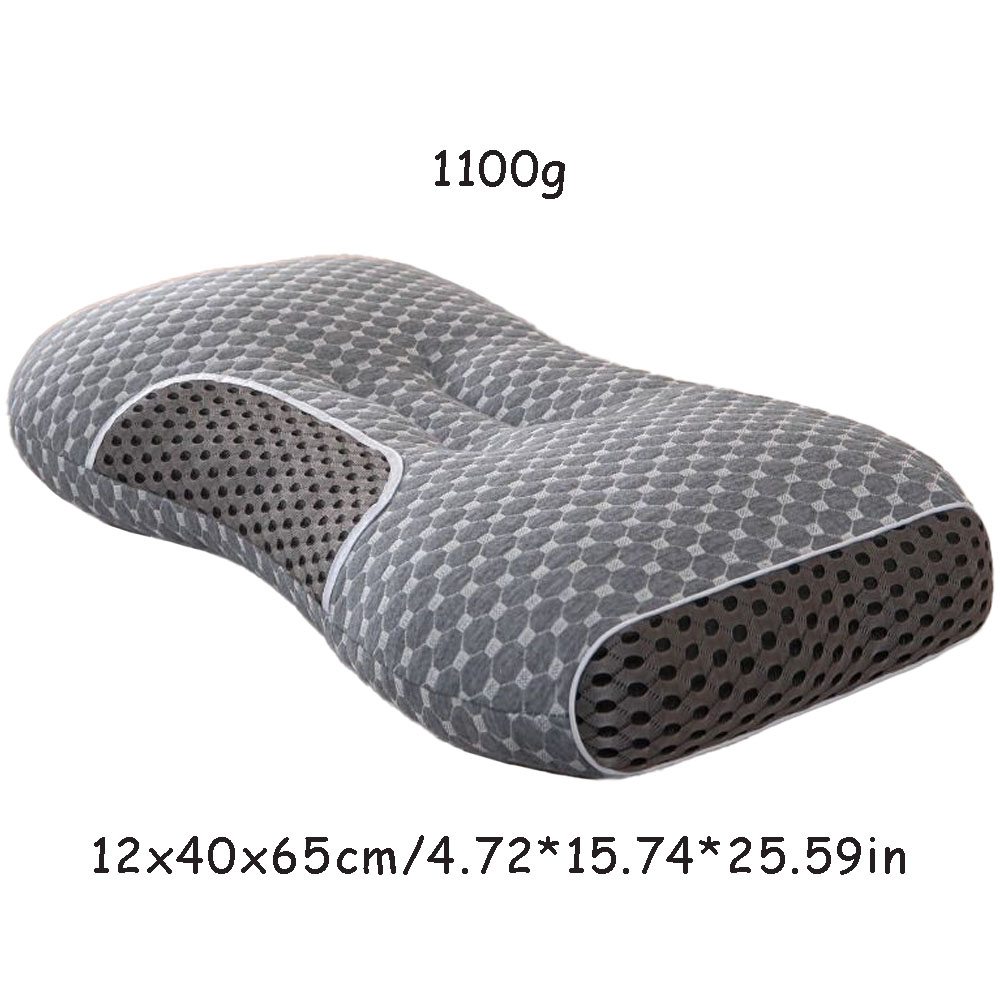
2. The budget cervical — Ergonomic Cervical Neck Support Pillow, Grey Honeycomb, £10.80
At a tenner this is the test pillow — the one to try if you're not sure whether contoured support is even your thing before committing to forty quid. The 12 cm support zone is honest, and the honeycomb-mesh cover is genuinely breathable, which makes a difference if you run hot at night.
The trade-off is straightforward: the foam isn't as dense as the £25 option above, so over months of use the contour compresses a little faster. For a guest bed, a child's room, or a try-before-I-upgrade purchase, it's a savvy buy. As a forever pillow for someone with proper neck issues, the better foam pays for itself.
Best for: trying contoured pillows for the first time. Sorted as a spare-room pillow. Skip if you've got a confirmed cervical problem.
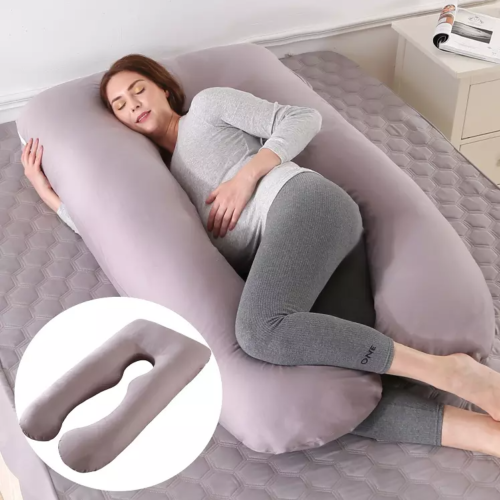
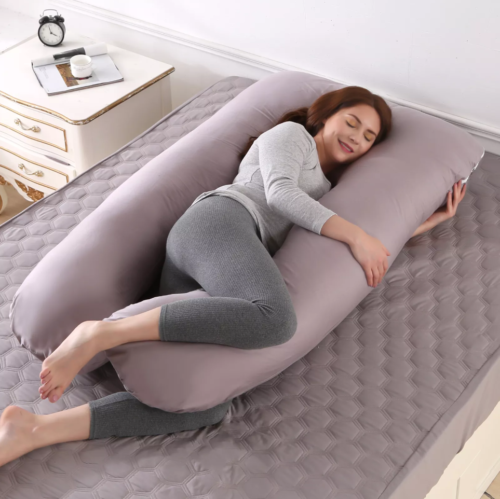
3. The full-body fix — Premium U-Shaped Pregnancy Pillow, £13.77
Don't be put off by "pregnancy" — half of who buys these now is side sleepers with hip pain, people recovering from surgery, and renters who want to prop themselves up in bed for a Sunday film without dragging the duvet into a heap. The U-shape cocoons the spine and gives the knees a proper barrier, which is the single biggest fix for lower-back ache in side sleepers.
The caveat is space. It's a beast — figure on it taking up most of one side of a 4ft 6 double when you're using it. In a box room with a single, your partner sleeps elsewhere. The anti-allergenic fibre fill is soft enough that the first night feels like collapsing into a marshmallow; some people find it too soft and prefer the foam picks.
Best for: side sleepers with hip or lower-back pain. Pregnancy, obviously. Anyone who reads in bed.
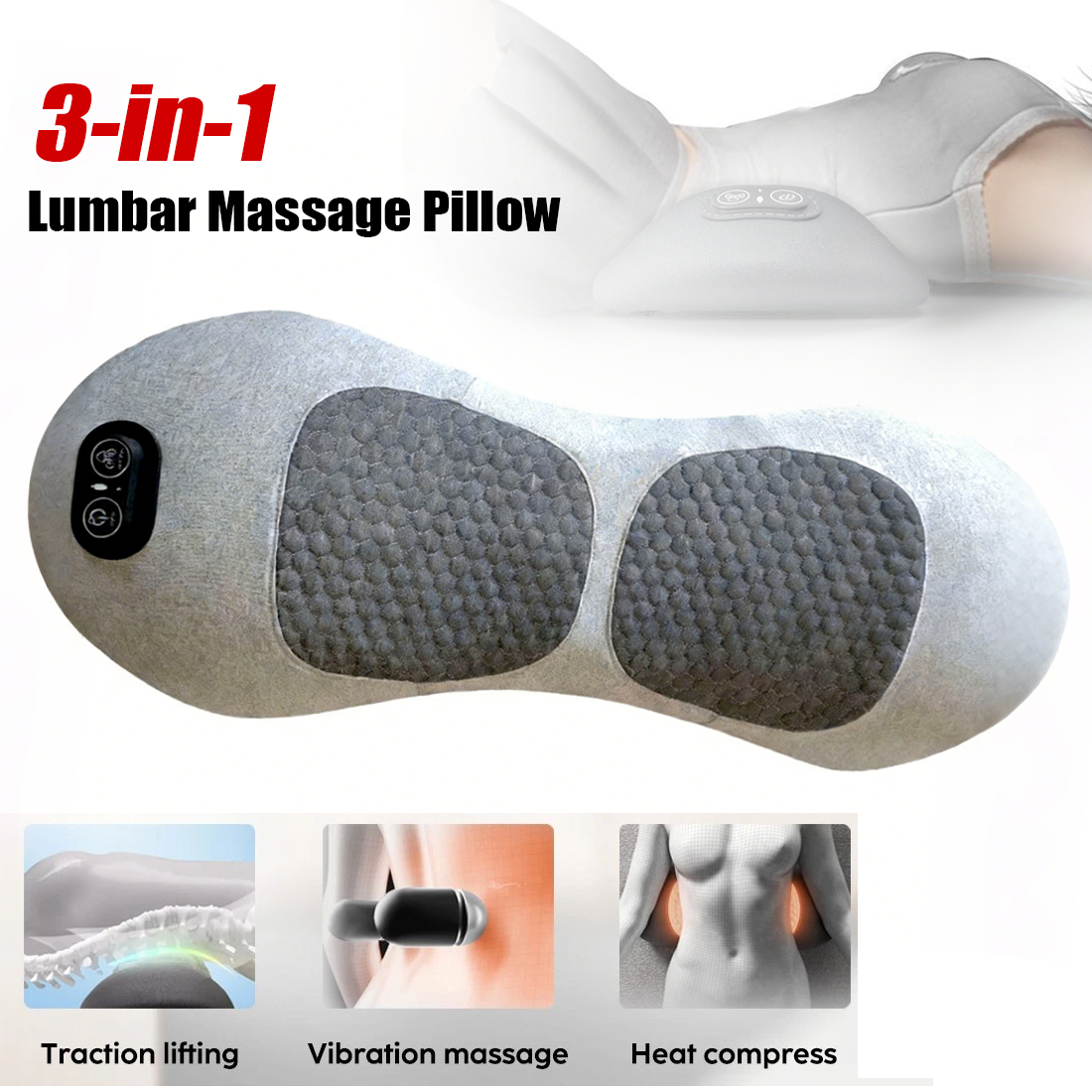
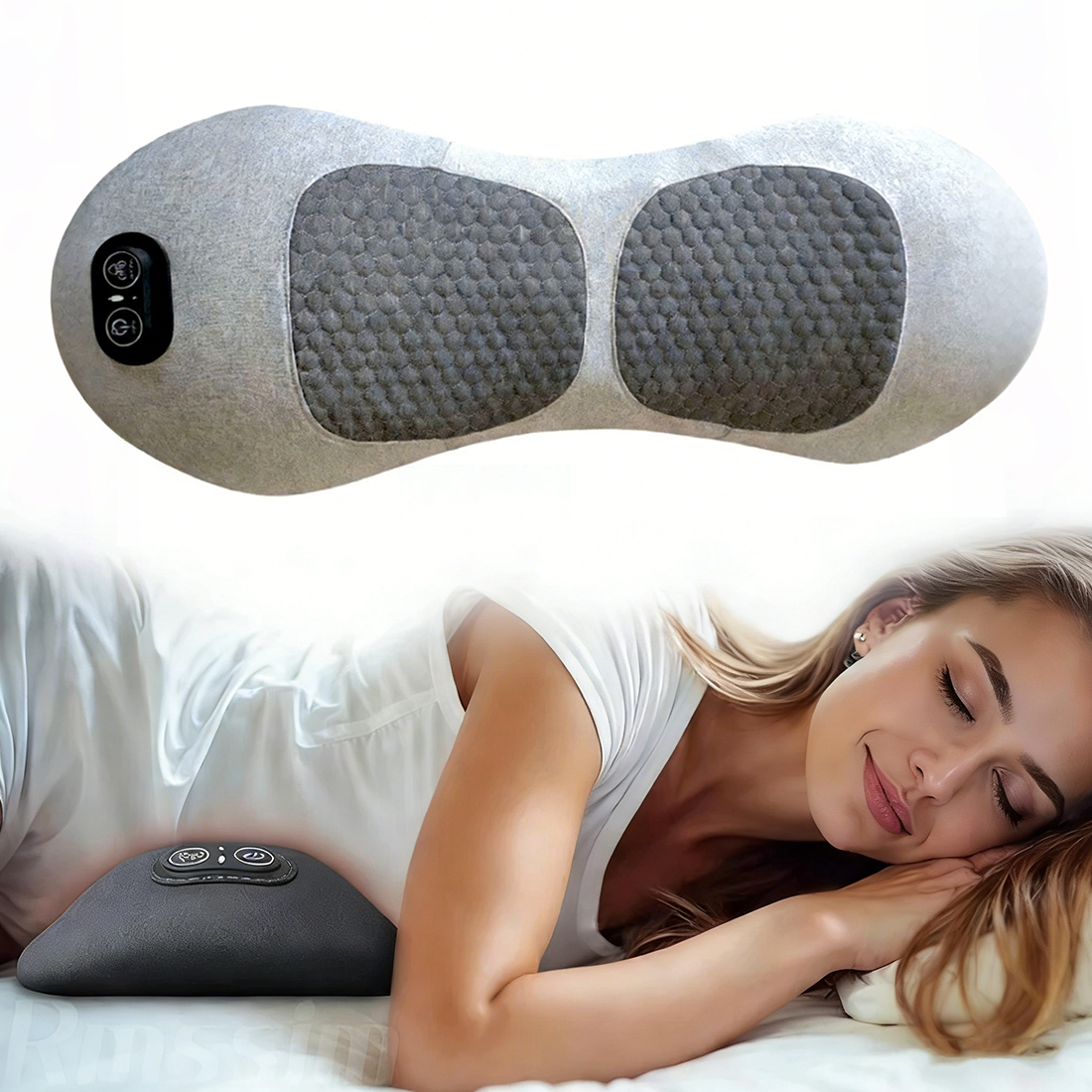
4. The splurge — Electric Lumbar Support Pillow with Heat, Massage and Stretching, £40.36
This is the one I was most cynical about. An electric lumbar cushion with stretching sounded like a gadget that would live in a drawer after a week. It hasn't. The 135-degree contour fits the small of your back properly, and the lifting function — which gently arches you backwards over thirty seconds — is genuinely useful after a long sit. The three heat levels are decent for the price; the lowest is the one you'll actually use day-to-day.
Honest cons: the motor isn't silent, so it's not a stealth gadget for a meeting. The plug is a UK three-pin (good) on a fairly short lead (less good — measure from your desk to the socket before you commit). And it's a desk-chair piece, not a sofa cushion — the shape is wrong for slumping in front of the telly.
Best for: WFH desk users with proper lower-back grief who've already exhausted "fix your chair" advice. The one to splurge on if a back massage is your weekly luxury.
A few things I learned the hard way over the test month:
Pillows sold without a specified support height. "Plush", "supportive", "ergonomic" are not specifications. If the listing won't tell you the centimetres, the brand doesn't know what it's selling.
Anything called a "cooling gel" pillow under £15. The gel layer is usually a 2 mm pad that warms to body temperature in nine minutes flat. Save your money.
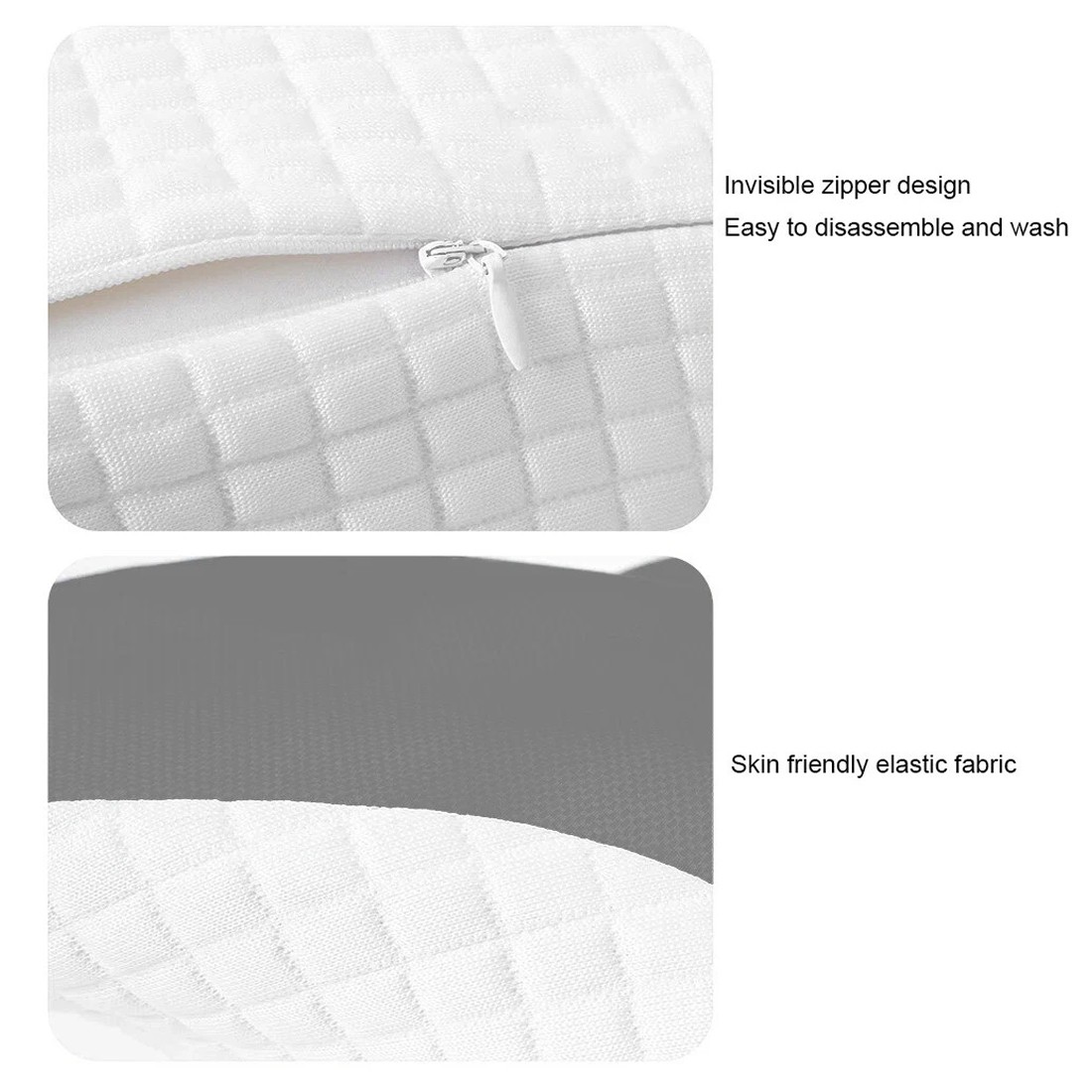
Body pillows with non-removable covers. A pillow you can't wash is a pillow you'll throw out in eighteen months. Always check for a zip.
Memory foam without a stated density. Below about 50 kg/m³ it'll flatten in six months. The good stuff is 60-80.
If you're picking one
If you sleep badly and wake stiff, start with the £25.38 memory foam neck pillow — it's the single change that gave me the biggest improvement, and it's a low-risk bet. If your trouble is hips and lower back rather than neck, the £13.77 U-shaped pillow is the one I'd buy first, assuming you've got room for it. The electric lumbar is the splurge — worth it only if you've already nailed your chair and need targeted heat and stretching during the working day. The cheap cervical is best as a trial run or a spare-room pillow.
Read the support heights, ignore the marketing copy, and don't expect a pillow to fix a chair problem. That's about it.
By the Villalta Home Editorial team, June 2026. Edited by Juan Antonio Villalta Pacheco.
Villalta Home Editorial is the in-house byline used for buying guides and product roundups on villaltaco.uk. Each guide is written by the editorial team, drawing on the catalogue's measurable data — real dimensions, materials, UK use cases, price bands — and on hands-on research into how products actually perform in UK homes. Every post tagged with this byline is reviewed and approved by Juan Antonio Villalta Pacheco, the founder and editor, before it goes live. See our editorial standards for the full process.