Open shelving can look effortlessly stylish in magazines, yet in real homes it often tips into visual noise surprisingly quickly. If you have searched for how to style open shelves, you are probably after something more useful than “add a plant and a candle”. The truth is that good shelf styling is less about buying lots of decorative bits and more about balance, restraint and knowing what deserves space.
One of the simplest ways to get that balance right is the 60-30-10 rule. Used well, it helps shelves feel layered rather than crowded: roughly 60% practical or larger anchor pieces, 30% supporting decorative items, and 10% accent pieces that add contrast or personality. Whether you are styling alcove shelving in a Victorian terrace, floating shelves in a new-build, or a display unit in a compact flat, this approach gives you structure without making the result feel staged. If you are browsing ideas within home decor, think of this as the framework that makes individual pieces work harder.
What the 60-30-10 rule means for open shelves
In interiors, the 60-30-10 rule is often used for colour, but it translates brilliantly to shelf styling too. On shelves, the percentages are less about measuring exact inches and more about visual weight.
60%: anchor pieces
This is the backbone of the shelf. Think stacks of books, storage baskets, ceramic vases, framed art, lidded boxes or larger objects with enough presence to ground the arrangement. These pieces stop shelves looking fussy because they create calm blocks of shape and tone.
In a UK home, where many living rooms and kitchens are narrower than their US equivalents, anchor pieces matter even more. Without them, every object reads individually and the whole shelf can feel busy. A few substantial items usually look better than many small ones.
30%: supporting decor
These are the pieces that soften and personalise the display: a candle, a trailing plant, a small sculpture, a bowl, or a framed photo. They should complement the anchors rather than compete with them.
The mistake most people make is letting this category take over. If every shelf is full of little decorative objects, dusting becomes tedious and the eye has nowhere to rest.
10%: accent pieces
This final layer is where personality lives. It might be a brass object, a pop of deep green, a handmade model, or one unusual item that starts conversation. The key word is one. Accent pieces work because they are used sparingly.
Expert tip: Before you buy anything new, remove at least a third of what is currently on your shelves and group what remains into larger clusters. In most homes, clutter is not caused by a lack of style; it is caused by too many objects of similar size competing for attention.
Why open shelves so often look cluttered
Understanding what goes wrong makes styling much easier. Most cluttered shelves share the same problems.
Too many similarly sized objects
If everything is small, nothing stands out. A row of candles, trinkets and mini plants tends to create visual chatter rather than a composed display.
No empty space
Negative space is not wasted space. It is what gives your shelves shape and lets special pieces breathe. In smaller British homes, this is especially important because packed shelving can make the whole room feel tighter.
Too much colour or contrast
Open shelves already draw the eye. If every item is bright, shiny or patterned, the display can dominate the room. A more restrained palette usually feels calmer and more expensive.
Practical items mixed in without a plan
Open shelves often need to work hard, especially in kitchens, home offices and box rooms. There is nothing wrong with storing useful things on display, but they need some consistency. Matching jars, coordinated boxes or grouped books can make practical storage look intentional.
How to apply the 60-30-10 rule step by step
1. Empty the shelves first
It is difficult to style around existing clutter. Take everything off and wipe the shelves down. In older UK properties, shelves near fireplaces or sash windows often gather dust faster than expected, so this reset is worth doing properly.
2. Start with your 60% anchors
Place your largest or most functional items first. These might include:
Books stacked horizontally and vertically
Storage boxes for paperwork or bits and bobs
Larger vases or jars
Framed prints leaning at the back
A substantial plant or branch arrangement
Try to spread visual weight across the whole unit rather than putting all the heavy items at the bottom and all the tiny ones at the top. A little asymmetry looks more natural.
3. Add your 30% supporting pieces
Now layer in medium-sized decorative pieces. A small bowl on top of books, a candle beside a frame, or a modest plant next to a ceramic vase can all work well. Keep materials varied but connected: wood, glass, ceramic and metal often sit nicely together.
4. Finish with the 10% accents
This is where a distinctive object can give the shelves character. For example, a display piece such as a home decor accessory with sculptural shape or a thoughtful handmade model can add interest without overwhelming the arrangement.
If you enjoy curated, conversation-starting details, products such as the DIY book nook kit miniature bookshelf diorama or the 3D wooden globe puzzle kit can work as accent pieces on shelves in a study or living room. They are best used sparingly, though; too many novelty items together can quickly feel themed rather than stylish.
5. Step back and edit hard
Once everything is in place, walk to the other side of the room and look again. If one shelf feels fussy, remove one or two objects. Shelf styling nearly always improves through subtraction.
A practical shelf styling formula for different rooms
The 60-30-10 rule stays the same, but what counts as an anchor or accent will vary by room.
Living room shelves
Use books, framed art and storage boxes as your 60%. Add candles, a small plant and one or two personal objects as the 30%. Finish with a single accent in a contrasting material, such as dark wood, aged brass or black ceramic.
If you want a more enclosed look with less dusting, a piece like the small black metal glass display cabinet arched offers a similar styled effect while hiding visual clutter better than fully open shelving. The trade-off is that it feels slightly more formal and gives you less easy access.
Kitchen open shelves
In kitchens, practicality needs to lead. Use matching crockery, glass jars and cookbooks as the 60%. Add a wooden board, small plant or ceramic jug as the 30%. Keep the 10% accent simple: perhaps one coloured vase or a brass utensil pot.
Be realistic about grease and dust. In many UK kitchens, especially open-plan spaces with limited extraction, open shelves need more frequent Cleaning than cupboards. They can look lovely, but they are not the lowest-maintenance option.
Bedroom shelves
Bedrooms suit a softer, quieter approach. Folded linens in baskets, books and a jewellery box can make up the 60%. A candle, bud vase and framed photo might form the 30%. One accent item with texture, such as a sculptural object or dried arrangement, completes the look. If you are coordinating with larger bedroom furniture, echo the same wood tone or metal finish for a more considered feel.
Home office or study shelves
This is a good place to mix practical storage with personality. Archive boxes, books and files create the anchor layer. Supporting decor might include a desk clock, small plant or tray. For accents, choose one item that reflects your interests, such as the 3D wooden puzzle wall clock zodiac ROKR or a book nook display. Just avoid filling every shelf with hobby pieces, or the room can start to feel more like a shop display than a working space.
Best shelf styling combinations at a glance
Room
60% Anchor Pieces
30% Supporting Decor
10% Accent
Best For
Living room
Books, storage boxes, framed art
Candles, plant, bowl
One sculptural object
Balanced, relaxed displays
Kitchen
Matching crockery, jars, cookbooks
Jug, board, herbs
Single coloured piece
Practical shelves that still feel styled
Bedroom
Baskets, books, keepsake box
Photo frame, candle, bud vase
Textural decorative item
Calm, softer styling
Home office
Files, books, storage boxes
Tray, small plant, clock
One personality piece
Functional shelves with character
How to choose colours and materials that do not feel chaotic
Stick to a limited palette
A restrained palette is the easiest route to shelves that feel calm. That does not mean everything must be beige, but it helps if most of your objects sit within two or three core tones. In many UK homes, especially where natural light is limited for much of the year, softer neutrals, smoky greens, warm browns and black accents tend to read well without feeling flat.
Repeat materials across the shelves
If you use ceramic once, use it again elsewhere. The same goes for wood, glass or metal. Repetition creates rhythm. It is what makes a shelf look designed rather than random.
Use greenery carefully
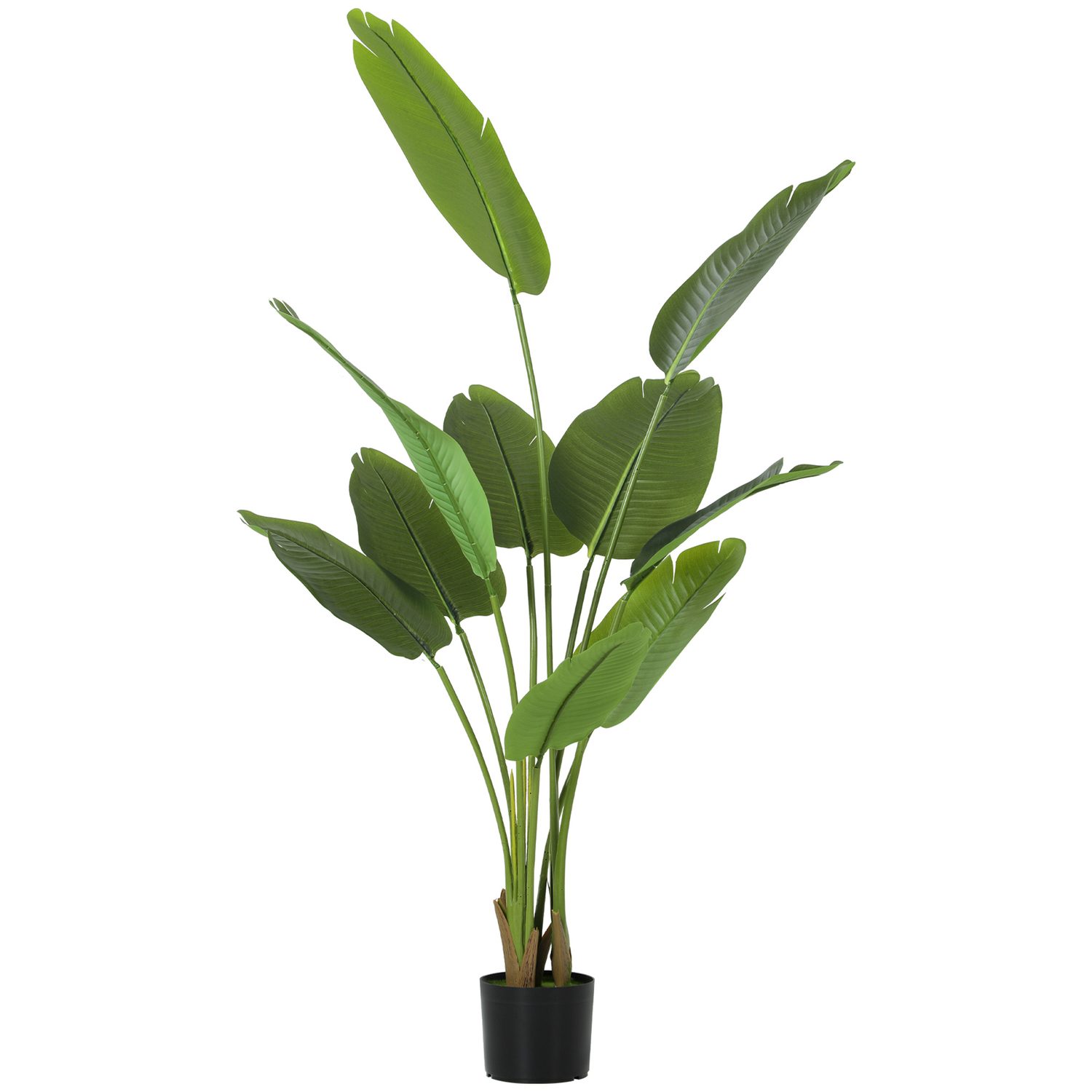
Plants are useful because they soften straight lines, but one larger plant usually works better than several tiny ones. If the shelf gets little natural light, be honest about whether real plants are practical. A good faux option, such as the artificial olive tree, may suit the wider room better than struggling pots on the shelves themselves. The trade-off is that faux greenery needs occasional dusting to stay convincing.
Common mistakes to avoid
Filling every shelf evenly
Perfectly even spacing can look stiff, but overfilling every level looks worse. Vary density from shelf to shelf so the eye moves naturally.
Ignoring scale
Tiny accessories on long shelves often look lost. Conversely, oversized vases on shallow shelves can feel precarious. Check depth as well as height, particularly with floating shelves fixed into plasterboard. Given common UK wall constructions, always make sure shelves are properly installed and not overloaded.
Using open shelves as overflow storage
If the shelves are crammed because there is nowhere else for things to go, styling alone will not solve the problem. Sometimes the answer is adding closed storage elsewhere and keeping open shelves more selective.
Buying decor without a purpose
It is easy to collect attractive objects that do not relate to each other. Before buying, ask what role the piece will play: anchor, support or accent. If you cannot answer that, it may not earn its place.
Product ideas that suit open shelf styling
Good shelf styling is never about stuffing shelves with products, but a few well-chosen pieces can help complete the look.
For decorative height in the room: the artificial olive tree can balance shelving nearby without taking up shelf space.
For a more characterful office shelf: the 3D wooden puzzle wall clock zodiac ROKR adds detail, though it is best in eclectic or creative interiors rather than very minimalist schemes.
As ever, the trade-off is restraint. Even beautiful pieces lose impact when too many compete on one set of shelves.
FAQs
How do you style open shelves without making them look cluttered?
Use the 60-30-10 rule: around 60% larger anchor items such as books or boxes, 30% supporting decor like candles or plants, and 10% accent pieces. Leave some empty space and avoid filling every shelf edge to edge.
What should I put on open shelves in a living room?
Books, framed art, storage boxes and a few decorative objects usually work best. Aim for a mix of practical and personal items, with one or two statement pieces rather than lots of small accessories.
How many items should go on one shelf?
There is no fixed number, because shelf length and depth vary, but fewer items usually look better. Group objects into small clusters and make sure each shelf has some breathing room.
Are open shelves practical in UK homes?
They can be, but they are not always low-maintenance. In compact rooms they can make spaces feel lighter, yet in kitchens and older homes they may collect dust or grease more quickly than closed cupboards.
What colours work best for open shelf styling?
A limited palette tends to look calmest. Neutrals, earthy tones, black accents and muted greens are easy to layer, especially in UK homes where natural light can be softer for much of the year.
If you want open shelves to look stylish rather than cluttered, the simplest approach is to style less and edit more. Start with the 60-30-10 rule, choose a few pieces with purpose, and let the shelves breathe; the result will almost always feel calmer, smarter and easier to live with.
Villalta Home Editorial is the in-house byline used for buying guides and product roundups on villaltaco.uk. Each guide is written by the editorial team, drawing on the catalogue's measurable data — real dimensions, materials, UK use cases, price bands — and on hands-on research into how products actually perform in UK homes. Every post tagged with this byline is reviewed and approved by Juan Antonio Villalta Pacheco, the founder and editor, before it goes live. See our editorial standards for the full process.