The 158 cm alcove beside my chimney breast has hosted, in order, a too-wide bookcase, a toy kitchen, a “temporary” laundry basket and one sideboard that looked elegant online but blocked the door by 4 cm. That is the UK living room problem in miniature: the room is rarely just for sitting. It is a hallway overflow, TV zone, toy pen, work-from-sofa station, drying-rack refuge and the place where school bags land at 8:15.
This guide covers Living Room Furniture and storage for ordinary UK homes: compact Sofas, modular seating, Storage Coffee Tables, side tables, Sideboards, TV Units, armchairs, Shoe Storage, toy storage, laundry kit, fabric chests, lift-top chests and the slightly boring decluttering decisions that make the furniture work. The thesis is simple and arguable: most UK living rooms need 30% less visible furniture and 50% more closed storage than people first plan.
This guide assumes a rented flat, a small-square-foot house, a Victorian terrace, a 1930s semi or a modern new-build where the living room is doing too many jobs. It does not cover full media-room installations, bespoke joinery with a £6,000.00 budget, formal reception rooms that nobody uses, garage storage or a four-bed detached house with a separate playroom and utility room. If you have those, lovely. Half the faff below probably will not apply.
Why this matters in UK homes specifically
British living rooms have awkward constraints that glossy furniture shots quietly ignore. Victorian conversions often have narrow front doors of about 760 mm, angled stair turns and chimney breasts that leave alcoves between 800 mm and 1,600 mm wide. Many 1930s terraces have ceiling heights near 2.35 m downstairs, so tall storage can feel heavy unless it is shallow. Modern Manchester new-builds may have cleaner walls but fewer sensible places for a TV once radiators, patio doors and BS 1363 sockets are accounted for.
Then there is disposal. A bulky sideboard that arrives flat-packed and disappoints is not only annoying; council recycling collections may require booking, fees or kerb placement within a set window. In flats, the lift or communal stairwell decides what “fits”, not the product page. The best living room storage plan starts with the route into the room, then the sockets, then the mess you actually own. Style comes after that, not before.
Start with seating, because a sofa sets the room’s appetite
A sofa is not storage, but it decides how much storage the room can tolerate. A 230 cm chaise sofa in a 3.4 m by 3.8 m living room may look generous for the first week. After that, you notice the coffee table has nowhere to go, the toy box blocks the radiator and every sideboard looks crammed. Compact two-seaters around 145–175 cm, slim three-seaters around 180–205 cm and modular pieces that can split are often more useful in UK rooms than one hulking L-shape.
Armchairs need the same suspicion. A proper reading chair is lovely, but many are 850 mm wide before you add a side table and lamp. If the living room is also the main route to the kitchen, leave at least 750 mm of walking space through the busiest path. Less than 600 mm works on a floor plan and feels dodgy in real life.
Seat depth: 520–580 mm suits most upright sitting; 620 mm-plus is lounging territory and eats floor space.
Leg height: 120 mm or more lets a robot vacuum or low duster get under it, which matters if storage boxes live nearby.
Budget bands: expect £249.99–£699.99 for a decent compact sofa, with modular units often starting nearer £399.99.
Access check: measure the parcel route, not just the wall; a 2 m sofa can still fail on a narrow stair turn.
Common mistake: buying the biggest sofa the wall will take, then trying to solve storage with skinny scraps of furniture around it. The sofa should leave space for one serious storage piece, not several apologetic ones.
Coffee Tables and side tables should earn their footprint
The coffee table is where UK living rooms go to get messy. Remotes, mugs, magazines, children’s books, chargers and half a packet of plasters somehow gather there. A storage coffee table is useful only if it matches the kind of mess you have. Open shelves suit books and trays. Drawers hide cables. Lift-tops help with laptop work, though the hinges can wobble on cheaper models after a year of daily use.
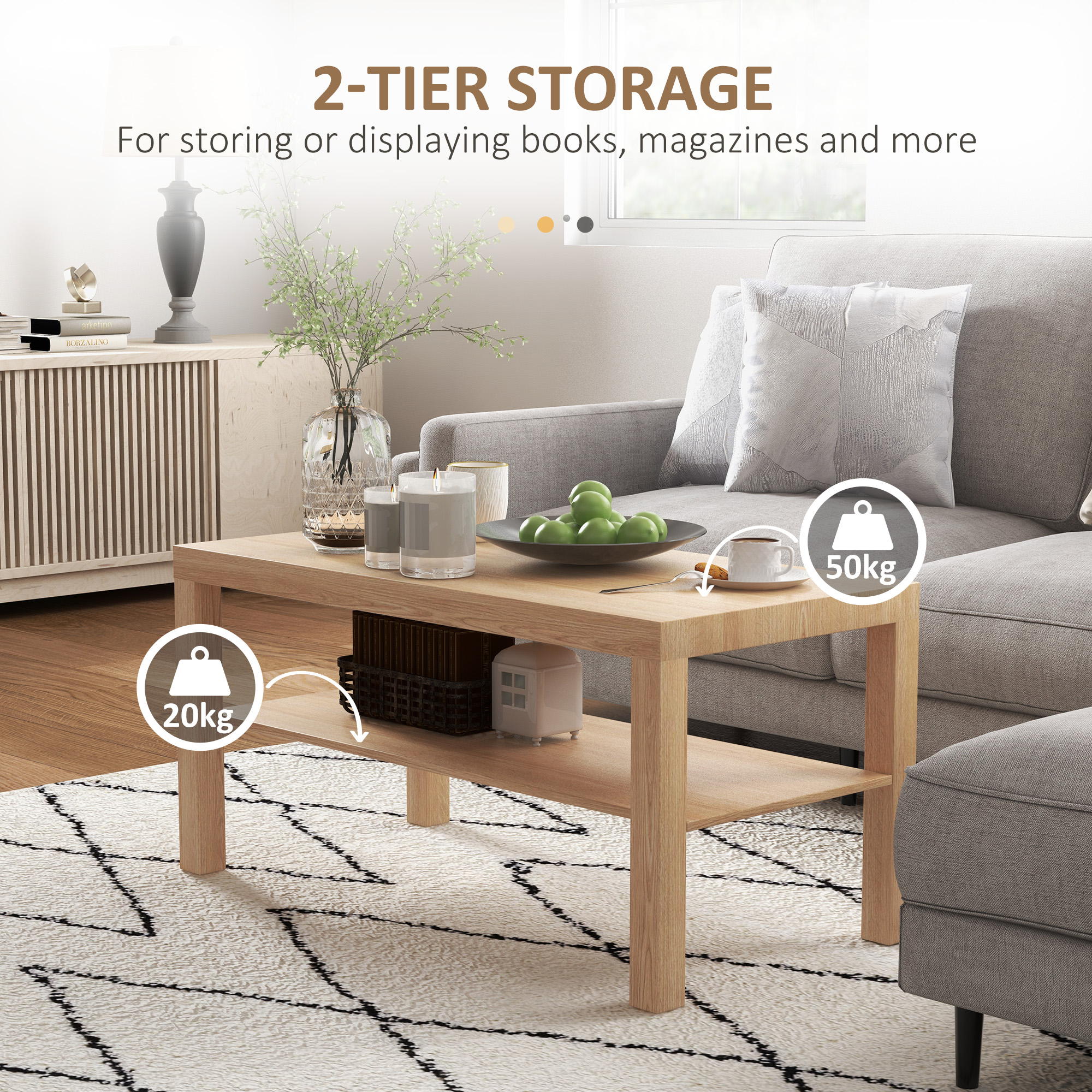
Side tables are easier to underestimate. In a narrow room, two small tables can be better than one large coffee table because they keep the centre clear. A nest of tables can be savvy if you actually pull them out for guests; if not, it becomes three surfaces to dust. A 2-tier natural wood coffee table with a lower storage shelf is a useful illustration of the category: it gives you somewhere to put a basket without pretending to be a filing cabinet.
Clearance: keep 350–450 mm between sofa and coffee table; tighter than that catches shins.
Table size: aim for roughly half to two-thirds the sofa length, so a 180 cm sofa wants about 90–120 cm of table.
Price sense:Storage Coffee Tables often sit between £49.99 and £229.99; lift-top versions below £79.99 can feel flimsy.
Common mistake: choosing a glass table for a family room because it “looks lighter”. It does, until fingerprints and sharp corners make it the most high-maintenance thing in the room.
TV Units: wall-mounted, freestanding or quietly doing both
The TV area is where storage plans often collapse into cable spaghetti. Wall-mounting a screen can free the top of a unit and make a small room feel calmer, but it does not remove the need for somewhere to put a router, games console, soundbar, set-top box, batteries and the manual you will never read until something breaks. In rented flats, drilling into a party wall may also be off the table, or at least a deposit conversation.
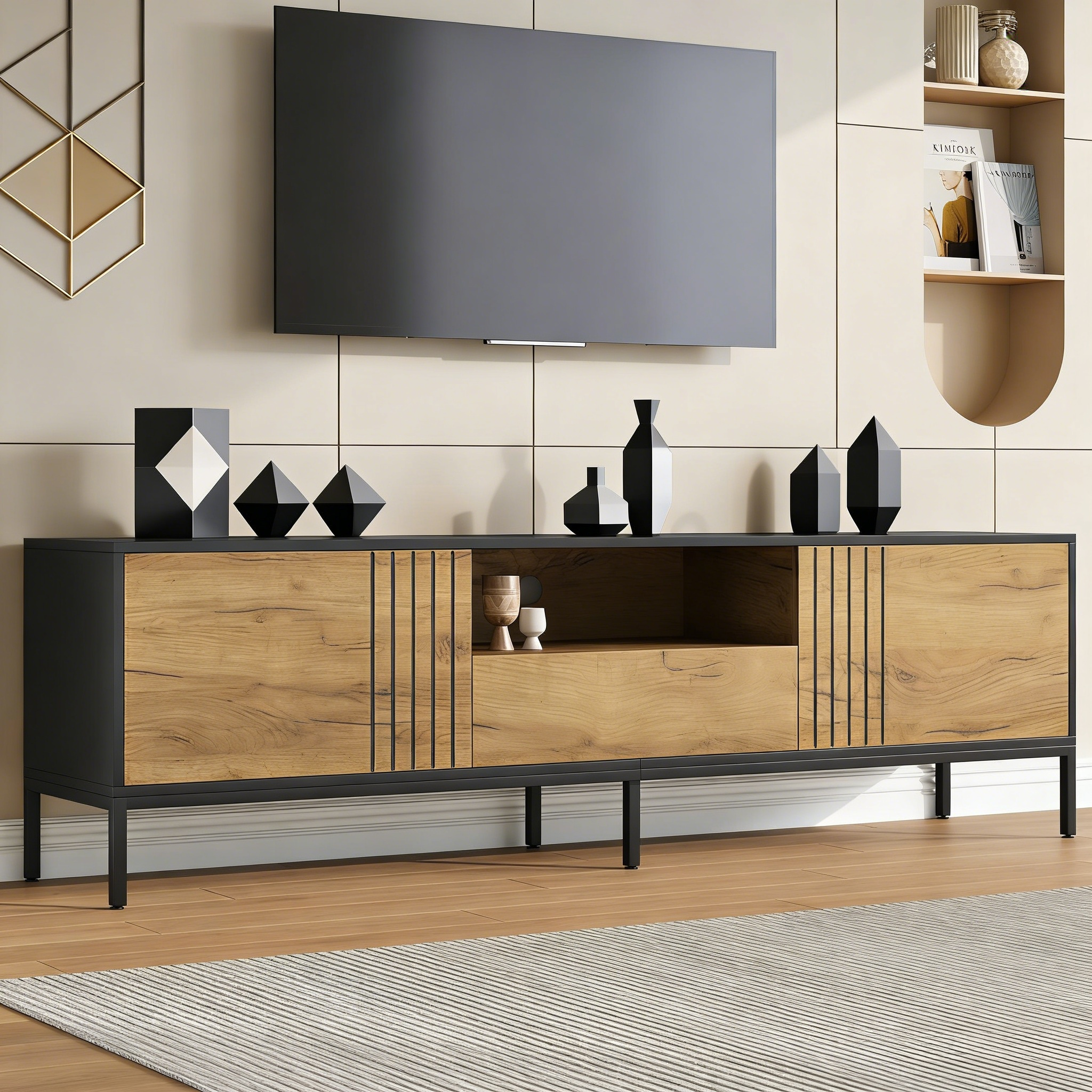
Freestanding TV units still make sense, especially if they are wide enough to visually anchor the screen. A 55-inch TV is about 123 cm wide, so a 140–170 cm unit usually looks balanced. For larger screens, a 170 cm natural wood and black TV unit that fits up to 70-inch screens shows the scale needed; a 180 cm cabinet may be better under a 75-inch TV, but it can overwhelm a 3 m wall. Check depth too. Many media units at 350–420 mm deep are fine for consoles, while shallow 300 mm designs may leave plugs pressed against the back.
Socket position: note the height and distance from the nearest BS 1363 socket before deciding on wall mounting.
Ventilation: leave space around consoles; closed cupboards need cable holes or slatted sections.
Unit width: go wider than the TV by at least 150 mm each side if the wall allows it.
Cable route: rear cut-outs matter more than glossy doors if you use multiple devices.
Common mistake: assuming wall-mounted means minimalist. Without a storage plan below, the router and extension lead simply move to the floor.
A sideboard is the best argument for closed storage in a living room. It can take board games, candles, paperwork, spare throws, children’s craft bits and the cables nobody wants to sort. In open-plan flats, it can also become the hallway substitute: keys, shoes, post, dog lead, umbrella. That is fine if you plan for it. It is depressing if the top becomes a permanent dumping ground.
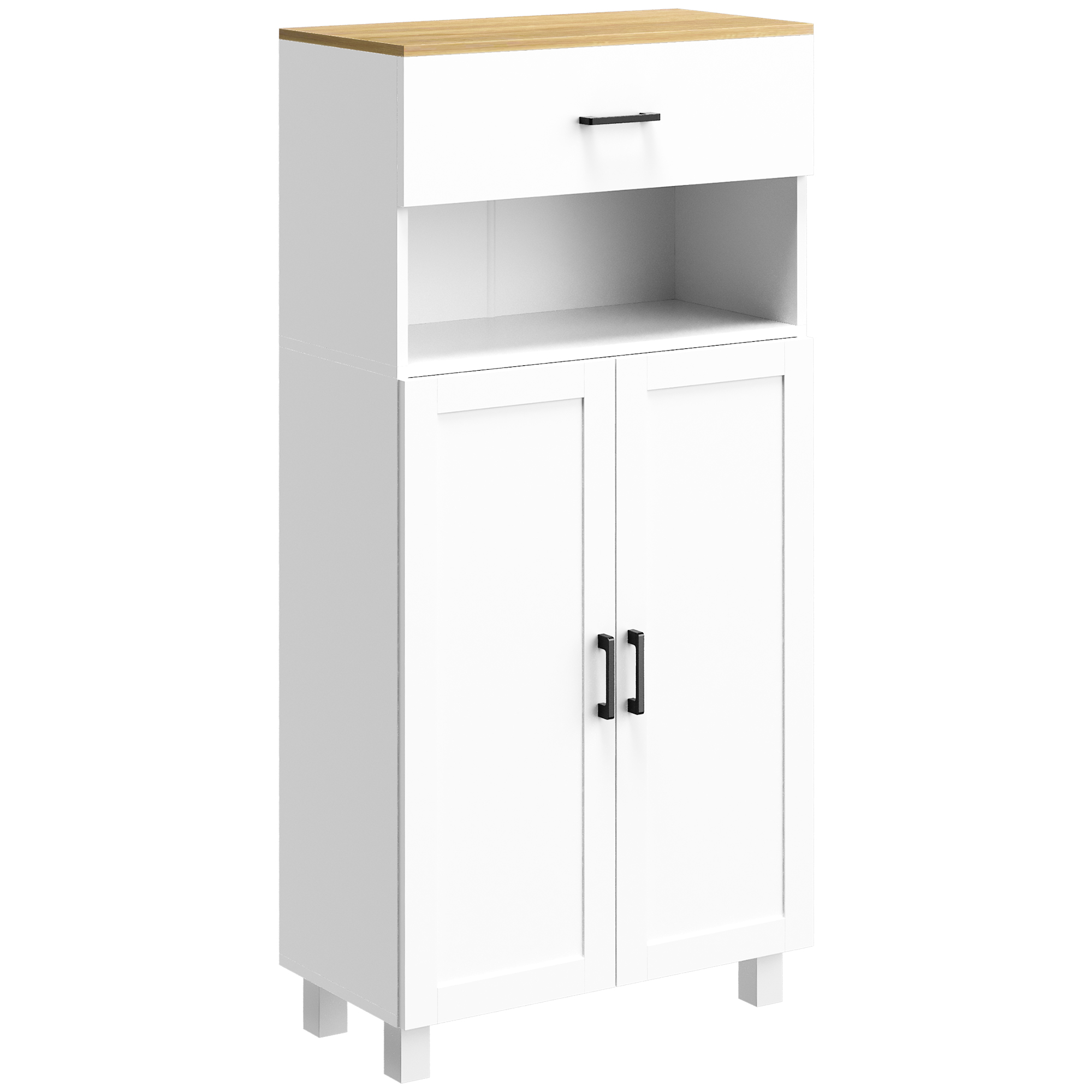
The sweet spot for many UK living rooms is a sideboard between 120 and 160 cm wide, 350–450 mm deep and under 900 mm high. A 130 cm freestanding white storage cabinet, for instance, can sit under artwork or a mirror without dominating the wall. Taller bookcase-style storage is better for display and books, but closed doors are kinder to real life. LED-lit sideboards can work in a sleek flat, yet the wiring often looks fussy unless sockets are nearby.
Depth: 350 mm is good for narrow rooms; 450 mm holds bulkier board games and baskets.
Door swing: allow at least 600 mm in front for cupboards, or choose sliding doors if space is tight.
Mixed storage: drawers for small clutter, cupboards for bags and boxes.
Typical spend: many practical sideboards fall between £119.99 and £399.99; very cheap doors often misalign first.
Common mistake: buying open shelving because it looks airy, then filling it with odd shoes, printer paper and a laundry spray. If the stuff is ugly, give it doors.
Toy storage, laundry baskets and fabric chests need grown-up rules
If children use the living room, toy storage has to be reachable. If adults use the same room in the evening, it also has to disappear visually. Those two needs fight. Low units around 400–600 mm high work because children can use them without calling you over every five minutes, while lidded fabric chests and cube baskets can swallow soft toys quickly. The caveat: fabric boxes sag, and the felt-style ones can pill after a second wash or a few months of being dragged across laminate.
Laundry kit is similar. In smaller homes, the living room may host drying racks, ironing piles and a basket of “to go upstairs” clothes. Pretending that will never happen is how you end up with a heap on the armchair. A lift-top chest or ottoman can hide throws and bedding, but do not use it for damp laundry. You will get that stale cupboard smell, and it is a pain to fix.
Toy height: keep daily toys below 650 mm so children can tidy without climbing.
Basket size: 30–40 litre baskets are easier to lift than one giant 80 litre chest.
Laundry gap: leave a dedicated 450–550 mm wide slot if a basket lives in the room.
Washability: removable liners are worth paying extra for in family rooms.
Common mistake: treating toy storage as temporary and buying flimsy bits every six months. One sturdy low unit with labelled baskets is less wasteful and usually looks calmer.
There is a decent counterargument to all of this: storage furniture can enable clutter. A sideboard full of old chargers, a TV unit stuffed with dead remotes and a chest hiding broken toys are not solutions. They are museums. Minimalists are right that the cheapest storage upgrade is a bin bag, a charity shop box and a hard rule about what stays in the room.
The answer is not to buy nothing. It is to buy storage after a ruthless edit, then size it to the edited life rather than the panic pile. Before ordering, empty the current clutter onto the floor and group it: media, toys, papers, shoes, textiles. If one group does not belong in the living room, move it. If it genuinely lives there, give it a closed home. This is where browsing a focused category such as living room furniture can help, provided you go in with measurements rather than vibes.
Declutter first: remove anything unused for 12 months unless it has sentimental value or a legal purpose.
Assign zones: one unit for media, one place for toys, one basket for textiles.
Cap the capacity: do not buy a 180 cm cabinet if a 120 cm one holds the edited contents.
Leave breathing room: at least 20% empty space inside cupboards makes tidying less of a battle.
Common mistake: using storage as moral cover for overbuying. A calm living room is made by limits, not by another basket.
Tight London flat: prioritise wall width, door clearance and closed storage. Pick a compact sofa under 190 cm, a storage coffee table no wider than 100 cm and one sideboard or TV unit that does the heavy lifting. Avoid matching sets if they force extra pieces into the room. If you rent, check drilling rules before buying a wall bracket or tall unit that needs anchoring.
Victorian terrace with awkward rooms: work with the chimney breast rather than against it. Use alcoves for shallow cupboards, bookcases or a slim sideboard, then keep the centre of the room lighter with side tables instead of a huge coffee table. Measure both alcoves separately; they are often out by 20–40 mm. A modular sofa can help if the front door and hallway are narrow.
Modern new-build with the opposite problem: the room may be a plain rectangle with too few features, so storage needs to create structure. A wider TV unit, a low sideboard behind the sofa or a taller bookcase can stop the room feeling like a waiting area. Watch the scale, though. New-build rooms can look big empty and shrink fast once a corner sofa, dining table and buggy are in.
FAQs
What is the best storage for a small UK living room?
Closed storage usually wins: a shallow sideboard, TV unit with cupboards or storage coffee table with drawers. Keep depths around 350–420 mm where walkways are tight, and avoid too many open shelves unless you enjoy styling them every Sunday.
Should I wall mount my TV in a rented flat?
Only if your tenancy allows drilling and you are confident about the wall type. Many rented flats have plasterboard or shared walls where fixing can be tricky. A freestanding TV unit is less sleek, but it avoids deposit drama and hides cables more easily.
How wide should a TV unit be for a 55-inch TV?
A 55-inch TV is roughly 123 cm wide, so aim for a unit around 140–170 cm if the wall allows it. That extra width stops the screen looking top-heavy and gives room for speakers, remotes and a small lamp.
Yes, if the storage matches the mess. Drawers are good for cables and remotes; open shelves suit books and baskets. Lift-top tables are useful for laptop work, but check hinge quality because cheap versions can wobble.
How do I hide kids’ toys in a living room?
Use low storage children can reach, then hide the visual noise in baskets or cupboards. Keep daily toys below about 650 mm high and rotate the rest elsewhere. One labelled basket per toy type is more realistic than a big mixed chest.
Is a sideboard better than a bookcase for living room storage?
For clutter, yes. A sideboard hides odd-shaped things and keeps the room calmer. A bookcase is better for display, books and height, but it exposes every cable, box and half-finished craft project.
Try to keep 750 mm on main routes and at least 600 mm on secondary paths. Between a sofa and coffee table, 350–450 mm is usually comfortable. Less than that can work on paper but feels cramped day to day.
What to do next
Before you buy anything, measure the wall you want to use, the doorway into the room, the stair turn if there is one, and the socket positions. Write down the five things currently making the room look messy. If they are shoes, toys, laundry, cables and paperwork, you do not need “more style”; you need closed zones for those exact things. Photograph the room from the doorway too, because that is the view that tells you what feels crowded.
Then choose one anchor piece: sofa, TV unit or sideboard. Build around that rather than buying scattered fixes. If you need a starting point for scale and categories, browse living room furniture with your measurements open, not tucked in a notes app you will forget to check. Sorted beats aspirational every time.
Villalta Home Editorial is the in-house byline used for buying guides and product roundups on villaltaco.uk. Each guide is written by the editorial team, drawing on the catalogue's measurable data — real dimensions, materials, UK use cases, price bands — and on hands-on research into how products actually perform in UK homes. Every post tagged with this byline is reviewed and approved by Juan Antonio Villalta Pacheco, the founder and editor, before it goes live. See our editorial standards for the full process.